Low-temperature恒温槽, Shaking Incubator, Centrifuge, Spray Dryer, Sample Pretreatment Equipment
19106728583
The working principle of a photochemical reactor: The photochemical reactor is primarily used for studying photochemical reactions under various conditions, such as in gaseous or liquid media, in fixed or flowing systems, under ultraviolet or simulated visible light illumination, and whether the reaction vessel is loaded with TiO2 photocatalyst. The photochemical reactor can also be referred to as a photocatalytic reactor, photolysis water reactor, photodegradation reactor, photochemical reactor vessel, photochemical reactor system, photolysis water reactor system, and so on.
Centrifuges are devices that separate heterogeneous liquid systems using centrifugal force. The process of separating, concentrating, and purifying substances through the application of strong centrifugal force, based on differences in sedimentation coefficients, mass, and density, is referred to as centrifugation. Centrifugation involves utilizing the strong centrifugal force generated by the high-speed rotation of the centrifuge's rotor to accelerate the sedimentation rate of particles in the liquid, thereby separating substances with different sedimentation coefficients and buoyant densities within the sample.
Temperature cannot be maintained: The machine requires self-tuning. Press and hold the left shift key to display "AT" on the top of the screen and "OFF" on the bottom. Press the up shift key to change "OFF" to "ON," then press the SET key to exit. The self-tuning process takes a long time, usually 20-30 minutes. If the self-tuning process does not end after a long time, turn off the machine, restart it, and perform self-tuning again.
The Three-Gas Incubator Shaker is a laboratory equipment that combines the functions of a three-gas incubator and a shaker. The main product functions of the Three-Gas Incubator Shaker are as follows: Cell Culture: The Three-Gas Incubator Shaker can provide a specific gas environment required for cell culture, such as temperature, humidity, and CO2 concentration, to simulate the growth environment of cells within the body. This is crucial for cell growth, proliferation, and research.
During transportation: The angle of inclination should not exceed 45 degrees to prevent damage to the refrigeration unit. Avoid abrupt shocks and impacts to prevent the glass door from shattering.
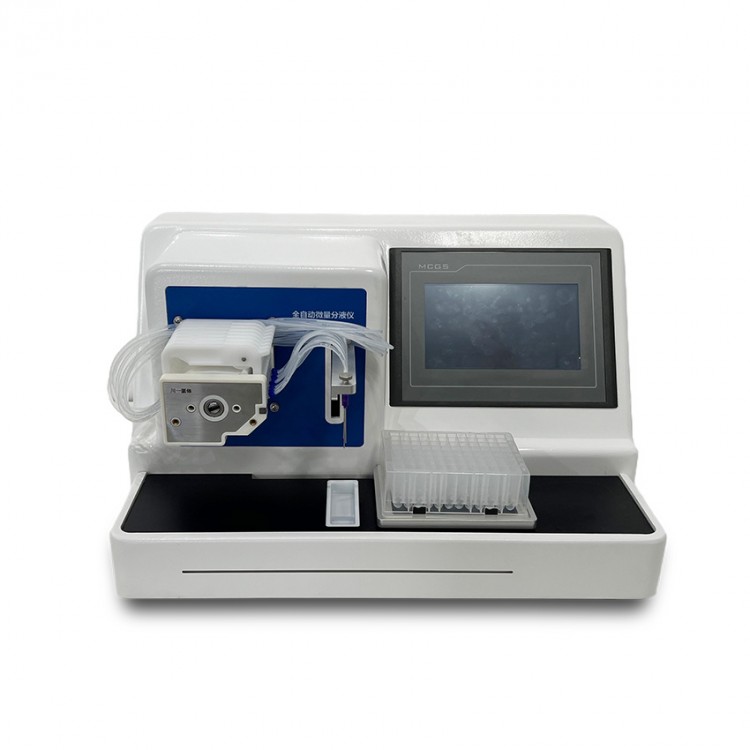
The pipetting workstation is a core piece of equipment in modern scientific research laboratories, playing a crucial role in ensuring experimental quality and enhancing research efficiency with its precise operation.
Conclusion First: Cleanroom workbenches are widely applicable in industries with high requirements for local cleanliness, such as scientific research, healthcare, pharmaceuticals, and electronics. Their core function is to provide a sterile and dust-free operational environment. Core Application Areas Overview Cleanroom workbenches, through the use of HEPA filters and laminar airflow design, can create a Class 100 clean environment, primarily serving scenarios that require the avoidance of dust and microbial contamination. Their applicable industries cover life sciences, precision manufacturing, healthcare, and more, including specific scenarios such as cell culture, electronic component assembly, and sterile preparation. Industry-Specific Application Scenarios Industry Field | Typical Application Scenarios | Core Requirements | Reference Source Biopharmaceutical | Microbial culture, cell passage, vaccine preparation | Prevent contamination of experimental samples, ensure accuracy of results | 110 Healthcare | Blood sample testing, pathological section operation, sterile dressing preparation | Avoid cross-contamination of samples, ensure reliability of testing | 68 Food Industry | Microbial detection, sterile packaging, health product production | Control contamination |
A distillation column is a crucial piece of equipment in chemical production, used for separating mixtures, with its feeding method directly affecting the separation efficiency and production performance. There are primarily two feeding methods for distillation columns: automatic feeding and manual feeding. These two feeding methods significantly differ in terms of operational principles, control accuracy, and applicable scenarios.
Below are the precautions for the three-gas cell culture shaker: - Safe Operation: Ensure the power outlet of the equipment has proper grounding to prevent electric shock accidents; do not use the device in an environment with flammable gases to avoid fire; keep children away from the equipment to prevent accidents.
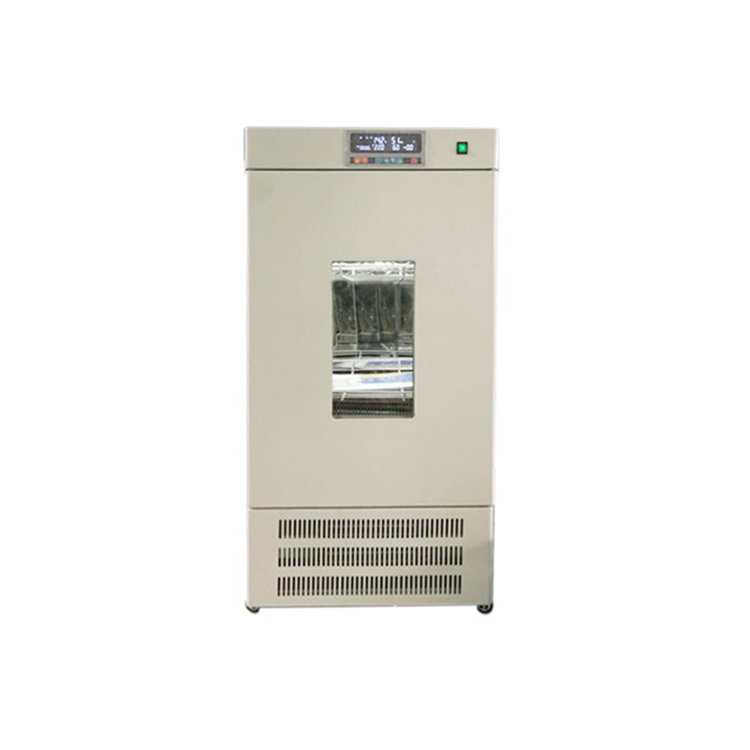
Five Points to Note When Using a Biochemical Incubator: Biochemical incubators are commonly used for seed germination, seedling cultivation, tissue culture, microbial culture, rearing insects and small animals, and BOD determination in water analysis, etc. Here are some points to be aware of during use. 1. After setting the temperature in the biochemical incubator, do not randomly rotate the temperature control knob multiple times, as this may cause the compressor to start frequently, leading to overloading and affecting the lifespan of the compressor.
The vacuum drying oven is specifically designed for drying heat-sensitive, easily decomposable, and oxidizable materials. It maintains a certain vacuum level within the working chamber during operation and can fill it with inert gases. Particularly, it can rapidly dry complex-component items. It utilizes an intelligent digital temperature regulator for setting, displaying, and controlling the temperature. The vacuum drying oven has a wide range of applications across various fields such as biochemical, chemical pharmaceuticals, and food technology. So, what tests can the vacuum drying oven perform?
1. Preparations a. Check that the ultrasonic microwave-assisted extraction instrument is in normal working condition, ensuring all parts are intact and securely connected. b. Prepare the sample to be extracted, weigh it, and record its mass. c. Select appropriate extraction conditions for the ultrasonic microwave-assisted extraction instrument, including parameters such as temperature, pressure, and time, and set them accordingly.
1. Once plugged in, the electric heating constant temperature drying oven can activate two sets of mechanisms. Simply set the control instrument's buttons to the desired temperature, and the indicator light will illuminate while the blower switch turns on, activating the fan. 2. When the temperature reaches the desired level, the indicator light will turn off. During the initial stage of constant temperature, there may be a continued rise in temperature due to residual heat, which will stabilize after about half an hour. During the constant temperature process, the temperature control can be automatically maintained by the temperature controller, requiring no manual management.
The cell culture incubator is an instrument used for culturing cells, tissues, and bacteria. It accurately provides the necessary parameters for cell culture, such as temperature, humidity, and gas environment, with stable performance, rapid response, and high reliability. It also effectively prevents contamination of the cultured cells. The working principle of the cell culture incubator.
1. Install and secure the complementary glass instruments onto the provided glass apparatus支架. 2. Connect all the hoses properly. Familiarize yourself once again with the nitrogen blow control pipeline (optional, required only for sulfur dioxide); the circulating water's inlet (one pipeline) and outlet (one pipeline) routes; the anti-siphon pipeline (four or six-way vacuum valves); and the automatic cleaning pipeline. 3. Get acquainted with the main power switch on the panel, the touchscreen (for startup visual operation), heating control (four or six-way single temperature control; right rotation increases the temperature, left rotation decreases it), and the stir control (four or six-way single control; right rotation increases the speed, left rotation decreases it).
High-Throughput Microwave Digestion: How to Choose the Right Microwave Digestor Currently, high-throughput microwave digestors are widely used in environmental safety testing and food safety testing. "High-throughput" refers to a batch processing capacity of ≥40, which differs significantly from the "Super High-Pressure Microwave Digestor" with only a few or a dozen digestion vessels, in terms of the vessel structure, customer sample preparation, and safety requirements for the equipment!
The short-path molecular distillation system can eliminate thermal decomposition, polymerization, or deterioration during the thermal separation process. Therefore, molecular distillation is the most gentle and safe distillation method among thermal separation products, particularly suitable for polymers, high-boiling-point, high-viscosity substances, and organic mixtures with poor thermal stability. In a high-vacuum environment, molecular distillation equipment boasts advantages such as low distillation temperatures, short heating times, and fast separation. It has been widely applied in the extraction of various natural ingredients, freeing from the constraints of chemical processing methods, truly preserving the natural characteristics of products, and is regarded as a protector and returner of natural quality.
1. The biochemical incubator should be installed in a location with minimal temperature and humidity fluctuations. Use a three-prong plug and ensure the power outlet is properly grounded. 2. Prior to starting the biochemical incubator, it is essential to thoroughly familiarize yourself with the manuals of all associated instruments and gauges, and master the correct operation methods.
Samples and digests are placed in digestion tubes, where they undergo digestion under constant temperature conditions. The digested samples are then used for various instrumental and chemical analyses. The range of digestion samples includes product samples, various water samples, biological samples (blood, urine, hair), cosmetics, and more.
1. Temperature Unstable: The machine requires auto-tuning. Press and hold the left shift key to display "AT" at the top of the screen and "OFF" at the bottom. Press the up shift key to change "OFF" to "ON," then press the SET key to exit. The auto-tuning process takes a long time, typically 20-30 minutes. If the auto-tuning does not end after a long time, turn off and restart the machine for a re-auto-tuning.
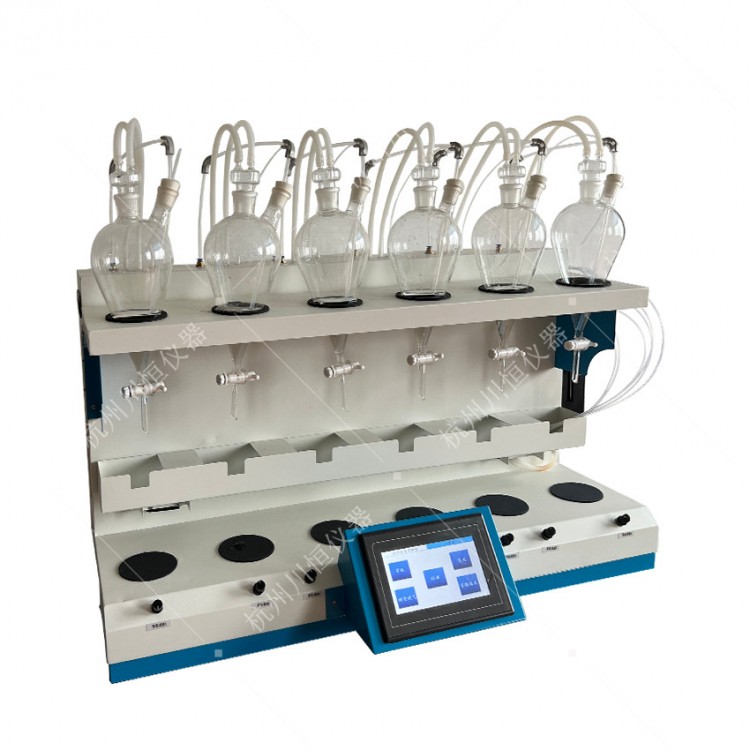
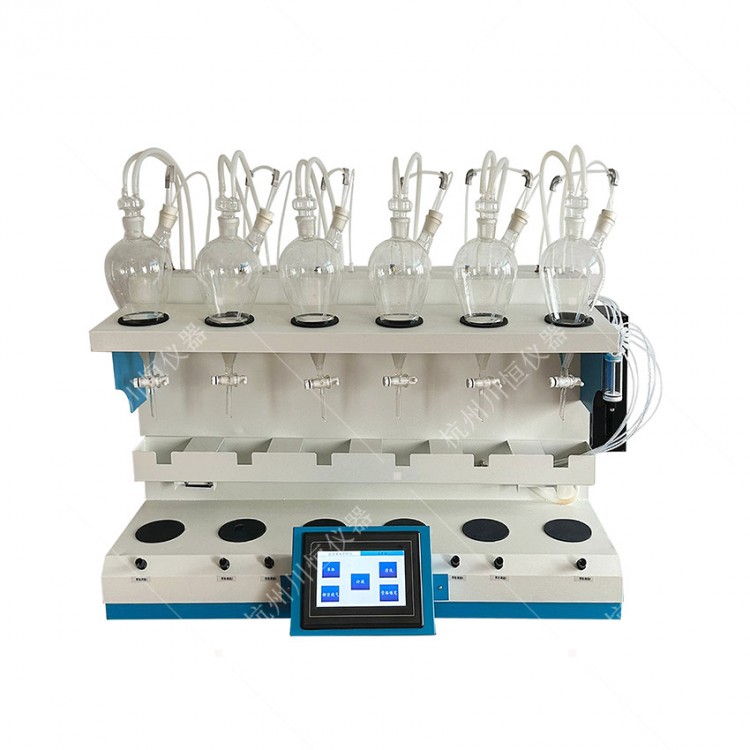
The intelligent fully automatic liquid-liquid extraction instrument utilizes vertical oscillation extraction, with the extraction process automatically degassing and the gas source being centrally collected and processed through a protective core. One-touch start, automatic sample loading, and silent oscillation extraction are featured, with waste gases collected and filtered through a filter core before being automatically discharged, achieving intelligent and automated extraction experiments. This instrument boasts a high degree of automation, enhancing extraction efficiency while effectively avoiding contact between personnel and toxic, volatile gases, as well as preventing secondary pollution caused by the direct discharge of waste gases.
In the event of special circumstances necessitating the temporary discontinuation of use for a humidity and temperature controlled test chamber, protective measures should be taken. The specific methods are as follows: (1) Upon ceasing operation of the humidity and temperature controlled test chamber, remove the items inside, unplug the power cord, and clean the chamber both inside and out.
Short-path molecular distillation is a specialized liquid-liquid separation technology. Under high vacuum conditions, it allows the average free path of vapor molecules to be greater than the distance between the evaporation surface and the condensation surface. This enables the separation of liquid mixtures by utilizing the differences in the evaporation rates of various components in the feedstock. Why are more and more people opting for short-path molecular distillation units?
The Low-Temperature Constant-Temperature Water Bath is widely used in research departments of petrochemical, chemical, electronic instruments, physics, chemistry, bioengineering, medical health, life sciences, light industry and food, physical property testing, and chemical analysis. It is also used in colleges and universities, as well as in quality control and production departments of enterprises. The bath provides a controlled hot and cold environment with uniform and constant temperature for users, enabling constant temperature tests or tests on samples or products, and can also serve as a direct heating or cooling source or an auxiliary heating or cooling source.
The anaerobic incubator is a device used to cultivate fungi and other eukaryotic microorganisms, playing a crucial role in medical experiments. It consists of a heating system, a cooling system, an air humidifier, a culture chamber, control circuitry, and an operational panel. It utilizes temperature and humidity sensors to maintain stable conditions within the culture chamber. Primarily used for cultivating biological and plant materials, it sets specific temperatures and humidity levels in a sealed space to allow fungi to grow within 4-6 hours. This is used to artificially accelerate the propagation of fungi and to test the antifungal capabilities and degree of mold growth in electrical and electronic products.
The intelligent vacuum drying cabinet is designed specifically for drying heat-sensitive, easily decomposable, and oxidizable substances. It can infuse inert gases into the interior, allowing for rapid drying of complex compositions as well. Hot water or low-pressure steam is used as the heating medium, which enters the heating plate. The tray containing the drug to be dried is placed on the heating plate, the cabinet door is closed, and a vacuum is drawn in using a vacuum pump. During the circulation of the heating medium, the heating plate heats the drug to the required temperature, causing water to evaporate and be gradually drawn away by the vacuum. The equipment is easy to control, can condense and recover evaporated solvents, and ensures that the drug is not easily contaminated during the drying process. It can be used for drug drying, packaging sterilization, and thermal treatment. What should be paid attention to during the use of the intelligent vacuum drying cabinet?
Objective: To establish standard operational procedures for the use of digital constant-temperature water bath, ensuring the standardization, accuracy of operation, and reliability of results. I. Operational Procedures 1. Fill the pot with water, making sure the water level is above the surface of the electric heating tube.
Microwaves are a type of electromagnetic wave, with frequencies ranging from 300MHz to 300GHz, corresponding to wavelengths between 100cm and 1mm, placing them between infrared and radio waves. Within the microwave spectrum, the band from 1 to 25cm is specifically allocated for radar, while the rest is used for telecommunications. To prevent interference from civilian microwave power with radio communications, broadcasting, television, and radar, international regulations set the frequency for industrial, scientific research, medical, and household civilian microwaves at ±50MHz around 2450MHz. Consequently, the frequencies used by microwave digestion instruments are primarily 2450MHz, as are those in household microwave ovens.
Lighting conditions are also an important factor during cultivation, particularly concerning light intensity, quality, and duration: 01 Light Intensity - The intensity of light significantly impacts the proliferation of cultured cells and the differentiation of organs. Current research indicates that light intensity has a notable effect on the initial division of explants and cells. Generally, higher light intensity results in robust seedling growth, whereas weaker light intensity can lead to excessive elongation. Under dark conditions, plants exhibit: slender stems, long internodes, fragility (underdeveloped mechanical tissue), small and curled leaves, poor root development, overall yellowing of the plant, a phenomenon known as chlorosis.
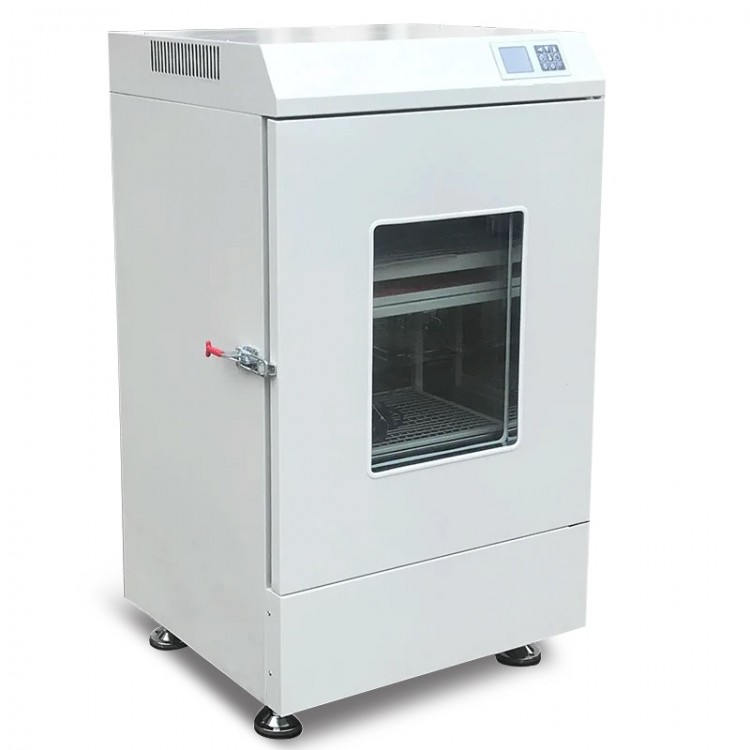
The Taiwan-style low-temperature shaker is a precise laboratory equipment used for oscillating culture under low temperatures. To ensure the accuracy and safety of the experiments, as well as the normal operation and extended lifespan of the equipment, the following points should be noted when in use:
Contact us

Service Hotline
18758857552
Company Telephone
19106728583

WeChat Number
19106728583

Address
No Chinese content provided.
b2b.china9.net © Zhongshang 114 Hebei Network Technology Co., Ltd.Address: Room 6009, Oriental New World Center, No.118 East Zhongshan Road, Qiaoxi District, Shijiazhuang City, Hebei ProvincePlatform Service Hotline: 4006299930