

Product Details
Capillary Rheometer, Torque Rheometer, Voltage Breakdown Resistance, Fully Automatic Melt Flow Index Tester, Dielectric Loss, Dielectric Constant


价 格Negotiable
最小起订0 piece库存0 piece
 Business Card
Negotiable

Negotiable

Negotiable

Negotiable
 Plastic Ball Indentation Hardness
Negotiable
Plastic Ball Indentation Hardness
Negotiable
 Fully Automatic Melt Flow Indexer
Negotiable
Fully Automatic Melt Flow Indexer
Negotiable
 High-molecular-weight material ca
Negotiable
High-molecular-weight material ca
Negotiable
 Masticator-type torque rheometer
Negotiable
Masticator-type torque rheometer
Negotiable
 Alloy Material Capillary Rheomete
Negotiable
Alloy Material Capillary Rheomete
Negotiable
 Melt Flow Index Tester for Fluoro
Negotiable
Melt Flow Index Tester for Fluoro
Negotiable
 Torque Rheometer Manufacturer
Negotiable
Torque Rheometer Manufacturer
Negotiable
 Rubber Capillary Rheometer
Negotiable
Rubber Capillary Rheometer
Negotiable
 Torque rheometer
Negotiable
Torque rheometer
Negotiable
 Shear Viscosity Capillary Rheomet
Negotiable
Shear Viscosity Capillary Rheomet
Negotiable
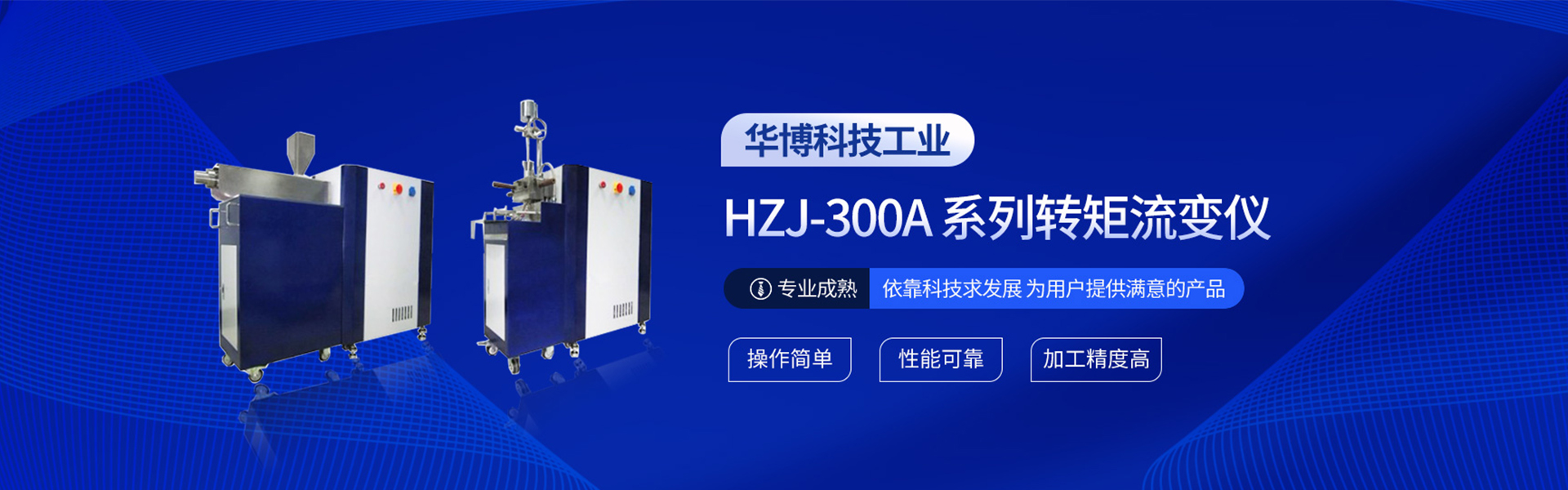
HZJ-300Microcomputer-controlled torque rheometer
One,Primary Functions and Applications
An ideal equipment for studying the flow, plasticization, thermal, and shear stability of materials, this rheometer offers a dynamic measurement method closer to actual processing. It can continuously, accurately, and reliably measure the rheological properties of materials under conditions similar to actual processing, such as mixing of multi-component materials, cross-linking and curing of thermosetting resins, vulcanization of elastomers, material dynamic stability, and the influence of screw speed on system processing performance.
A torque rheometer that is fully computer-controlled, utilizing large-scale integrated circuits, where data collection, control, and experimental data processing are all completed by corresponding software. Not only does it offer convenient operation, precise control, and quick data processing and result output, but more importantly, with the support of the software, it can perform functions that traditional torque rheometers cannot, such as measuring the shear sensitivity characteristics of materials with linear speed increase, pressure entrance correction during viscosity spectrum measurement, and non-Newtonian fluid correction, etc.
Can be used to study the thermal stability, shear stability, flow, and plasticizing behavior of thermoplastic materials. Its most distinctive feature is the ability to continuously, accurately, and reliably measure the rheological properties of the system during processes similar to actual processing. It can also perform curing characteristic tests on thermosetting materials. It holds significant value for teaching, scientific research, and the development of new materials and production processes.
In recent years, there has been significant progress in computer measurement and control technology. We have integrated more new technologies into the testing technology of plasticizers, especially the revolutionary changes brought by the Windows operating system to the information processing capabilities of PCs. Data collection, control, and experimental data processing are all completed by corresponding software, offering features such as strong flexibility, robust information management and processing capabilities, ease of use, and the ability to obtain more physical property information of synthetic materials. This not only manifests in the ease of instrument operation, precise control, quick processing and output of experimental data and results, but also allows for die correction during the measurement of the relationship between material apparent viscosity and shear rate.
Two,Microcomputer-controlled torque rheometerOperating Principle
This equipment is equipped with screws with various parameters, which rotate inside a cylinder at a certain temperature. A feeding hopper is located at the other end of the cylinder. As the material is delivered to 2/3 of the cylinder, it is gradually plasticized. It then enters the remaining part of the cylinder where it is homogenized. Once all particles are fully melted, they can be extruded through a capillary die to form masterbatch or injected into molds for shaping. At the same time, the equipment measures the relationship between the material's apparent viscosity, shear rate, and shear stress.
The software suite for this equipment consists of the Plastic software for apparent viscosity testing and the WinNian software for apparent viscosity test data processing. The Plastic software can individually collect test data and control parameters via the serial port of a PC, as well as establish a human-machine information interaction interface, as shown in Figure 1. This interface is feature-rich, capable of measuring and controlling 6 temperature channels, including speed setting, measurement, and control, as well as torque and pressure measurement. The curve window can display the curves of these data points over time in real-time. These data can be processed by the WinNian software.
When adjusting the screw speed of the extruder, the pressure difference P between the die's inner and outer sides and the extrusion flow rate Q can be altered. Test data can be saved as a file. This file is opened in the software WinNian, where representative data is automatically filtered and the g-h and g-t curves with a double logarithmic coordinate system are output.
Section 3: Main Components
1. System
1. Main Drive System 2. Mixing Unit 3. Plastic Extrusion Unit 4. Master Control System 5. Multi-section Temperature Control System 6. Control System 7. Data Collection System 8. Computer Experimental Software and Data Processing System
2. Configuration
For example, the Polylab OS torque rheometer includes the main unit (main drive system), single-screw extruder, twin-screw extruder (plastic extrusion unit), intensive mixer (mixing unit), drawing system, pelletizer, water tank (post-processing system), and other auxiliary devices. [1]
IV. Main Technical Specifications
1. Portable Measurement and Control Host Platform
◆ Hzj-300 Torque RheometerApplication:
ViscometerCan be used to study the thermal stability, shear stability, flow, and plasticizing behavior of thermoplastic materials. Its most distinctive feature is the ability to continuously, accurately, and reliably measure the rheological properties of the system during processes similar to actual processing. It can also perform curing property tests for thermosetting materials.
◆ Hzj-300 Torque RheometerTechnical Specifications:
Motor Power: 4.4 kW
Motor Speed: 1500 rpm
Reducer: 1:10.15
Power Output RPM: 0 ~ 145
Speed Control Accuracy: 0.5% F.S
Temperature Control: 5-point temperature sensing, with 4 points for temperature control
Static measurement accuracy: 0.1℃
Temperature Control Accuracy: ±1℃
Torque measurement range: 0 ~ 300 Nm
Torque Measurement Accuracy: 0.1% F.S
Melt Pressure Measurement Range: 0.1 ~ 100 Mpa
Melt Pressure Measurement Accuracy: 0.5% F.S
Software:
1. iTest OS Control Software
Polymer Melt Viscosity Data Processing Software
Extruder Data Processing Software
4. Blender Data Processing Software
Machine Dimensions: 80×44×142 cm
Portable Mixing Platform
◆ Application:
The mixer platform allows for various tests including thermal fusion of multi-component thermoplastic materials, curing performance of thermosetting materials, thermal stability testing, shear sensitivity testing, and material blending experiments.
Technical Specifications:
Capacity: 60ml
Material: 304L (Imported)
Rotor Type: Roller
Speed Ratio: 3:2
* High Temperature: 350℃-400℃
High Torque: 200 Nm
Heating Method: Electric Heating
Processing Power/Sheet: 1000W
Heating Zone: 3 Zones
Machine Dimensions: 50×40×162 cm
Portable Extruder Platform
◆ Application:
The extruder platform offers a selection of different compression ratio screws for pellets and powders, paired with flat mold, capillary mold, tube extrusion mold, and wire coating molds for simulating various processes. The capillary extrusion mold can also be used to measure the relationship between material viscosity, shear rate, and shear stress.
Technical Specifications:
L:D: 25:1
Bolt Diameter: 20
Compression Ratio: Particle Material 2.1:1, Powder Material 2.4:1
* High Temperature: 350℃-400℃
Heating Method: Electric Heating
Processing Power/Sheet: 800W
Heating Zone: 4 Channels
Material Temperature Measurement: 1 Channel
Machine Dimensions: 55×40×155 cm
Extruder Die
Capillary Mold: Diameter: Ф1.27 mm, Length-to-Diameter Ratio: 20/1, 30/1, 40/1, Each with a Core
Hose Molding: Outer Diameter: Φ12.5mm, Inner Diameter: Φ10mm
Flat Die Mold: L×W: 50 × 1.8 mm
Insulated Wire Molding: Core: Φ1.5mm, Die: Φ4.0mm
5. Other Technical Requirements
1) Power Data and Environmental Requirements
Low Voltage Supply Standard: 380V, 25A
Environmental Temperature Requirement: 10-40℃
Relative humidity requirement for empty space: max. 80%, no condensation
● Level and flat surface
2) Machine Appearance Color
Control and Measurement Host/Host Platform Supplier Standards
● Blender/Mixing Platform - Supplier Standards
Extruder/Extrusion Platform - Supplier Standards
3) Supplier-provided document and information content
User Manual
Product Compliance Certificate
Product Packing List
Product Software Disc
Phone Consultation