

Product Details
Capillary Rheometer, Torque Rheometer, Voltage Breakdown Resistance, Fully Automatic Melt Flow Index Tester, Dielectric Loss, Dielectric Constant
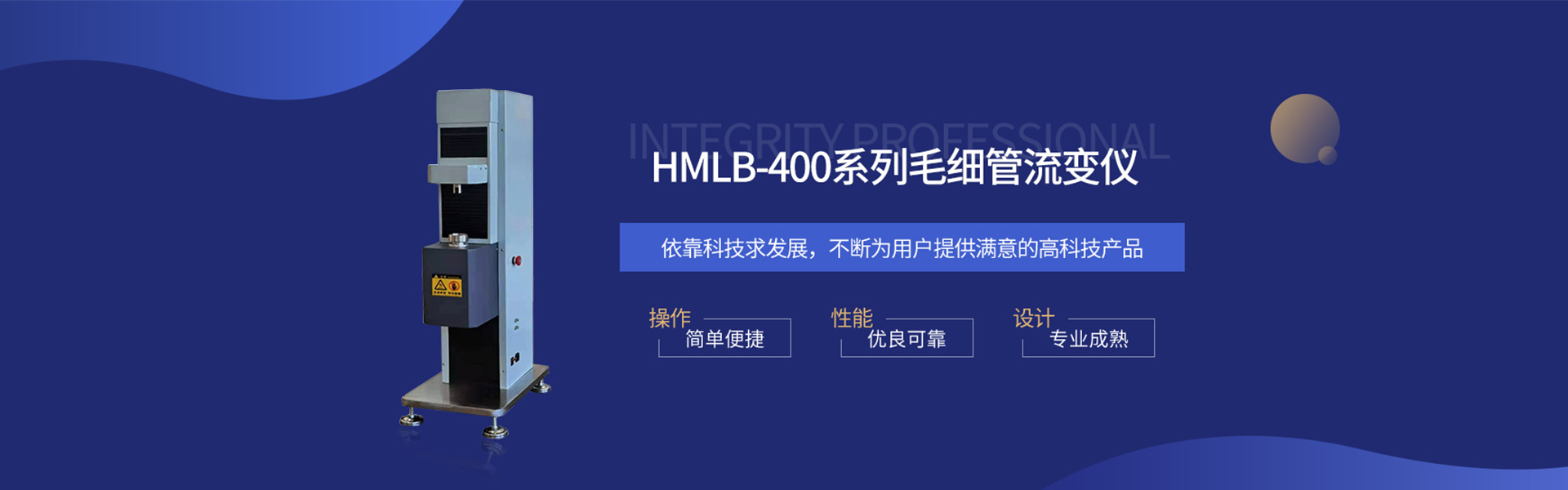
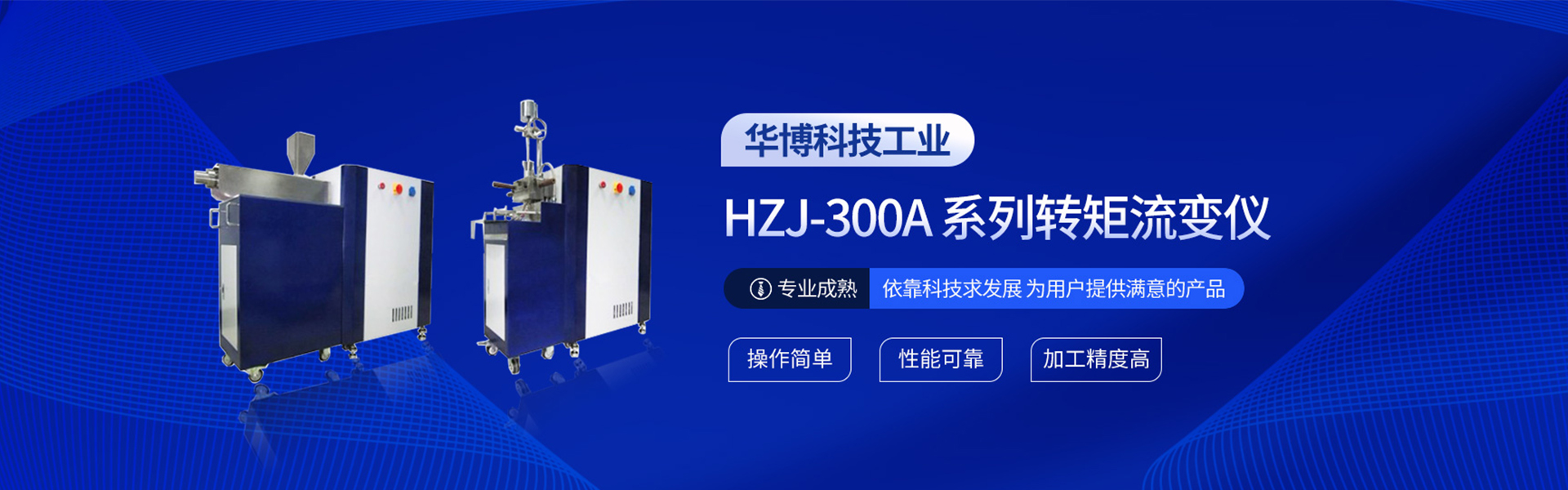


价 格Negotiable
最小起订0 Piece库存0 Piece
 Business Card
Negotiable

Negotiable

Negotiable

Negotiable
Cable material torque rheometer
Negotiable
 Rubber Capillary Rheometer
Negotiable
High-pressure capillary rheometer
Negotiable
Rubber Capillary Rheometer
Negotiable
High-pressure capillary rheometer
Negotiable
 Fluorinated Plastic Torque Rheome
Negotiable
Fluorinated Plastic Torque Rheome
Negotiable
 Masticator-type torque rheometer
Negotiable
Masticator-type torque rheometer
Negotiable
 Melt Flow Index Tester for Fluoro
Negotiable
Melt Flow Rate Tester
Negotiable
Melt Flow Index Tester for Fluoro
Negotiable
Melt Flow Rate Tester
Negotiable
 Microcomputer-controlled torque r
Negotiable
Microcomputer-controlled torque r
Negotiable
 Shear Viscosity Capillary Rheomet
Negotiable
Shear Viscosity Capillary Rheomet
Negotiable
 Plastic Capillary Rheometer
Negotiable
Plastic Capillary Rheometer
Negotiable

In the process of molding and forming rubber and plastic materials, their fluidity is almost always involved. For instance, during extrusion, injection molding, blowing film, calendering, and other processes, the flow behavior of the material is crucial. The material's fluidity not only affects the processing behavior but also influences the mechanical properties of the final product. For example, molecular orientation significantly impacts the mechanical properties of molded products, films, and fibers. The type and extent of molecular orientation are primarily determined by the characteristics of the flow field during the processing and the material's flow behavior.
The PVC material torque rheometer is an ideal device for studying the flow and deformation, plasticization, thermal shear stability, dynamic rheological properties, and plasticizing behavior of PVC and polymer materials, with results presented in graphical forms such as torque vs. time and torque vs. temperature. It is widely applicable in scientific research and production, serving as a crucial instrument for scientific research and production guidance. Compared to general-purpose instruments like viscometers for studying material fluidity, this rheometer offers a more dynamic measurement method that closely resembles actual processing. It allows for continuous, accurate, and reliable measurement of material rheological properties under conditions similar to actual processing, such as mixing of multi-component materials, crosslinking and curing of thermosetting resins, vulcanization of elastomers, material dynamic stability, and the influence of screw speed on system processing performance.
The PVC pipe material torque rheometer is used to study the thermal stability, shear stability, flow, and plasticizing behavior of thermoplastic materials. Its most distinctive feature is the ability to continuously, accurately, and reliably measure the rheological properties of the system during processing processes similar to actual production, and it can also perform curing characteristic tests for thermosetting materials.
1.3 Application Fields
1. Research on UPVC Processing Properties and Material Development
2. Development and processing properties of thermoplastic materials
3. Cross-linking and Thermosetting Resin Curing Performance Study
4. Educational and Research Applications
PVC Pipe Material Torque Rheometer

Composed of a dense torque rheometer, extrusion capillary rheometer, capillary test die, data acquisition and measurement system, electronic computer, and operating software, etc.
Intensive torque rheometer
The PVC Pipe Material Torque Rheometer mainly consists of imported servo motors, high-precision dynamic torque sensors, gearboxes, intensive mixing chambers, temperature modules, measurement modules, computers, and control software, as shown in Figure 2 for the principle:
Figure 1 Compounding Torque Rheometer
The enclosed mixer is akin to a miniature extruder, consisting of a removable "∞"-shaped mixing chamber and a pair of rotors rotating in opposite directions at different speeds. Inside the mixing chamber, the rotors rotate in opposite directions, applying shearing force to the material, forcing it to be mixed within the chamber; the differing speeds of the two rotors result in a dispersible mixing in the gap between them.
The unit boasts overall aesthetics, featuring a color scheme of off-white and blue for the main sheet metal. Color customization is available upon customer request. The stainless steel parts are made of SUS304 stainless steel.
Computer software with data collection, storage, calculation, analysis, and output functions, capable of printing test reports according to user requirements.


Figure 2: Compacting Torque Rheometer Figure 3: Various Rotors

Figure 4: Schematic of a Compacting Torque Rheometer
1. Rod; 2. Charging port; 3. Mixing chamber; 4. Material leakage; 5. Intensive mixer; 6. Emergency braking switch.
7 - Manual Panel; 8 - Drive and Torque Sensors; 9 - Switches; 10 - Computer

Figure 5: Test Curve of the Compounding Torque Rheometer

PVC Blending PVC Heat Stabilization
XLPE Cross-Linked PVC Blended
Extrusion Capillary Rheometer
The extrusion capillary rheometer is mainly composed of imported servo motors, reducers, extrusion screws, dies, measurement and control modules, temperature modules, pressure sensors, electronic computers, and measurement and control software. Its principle involves the rotation of the screw, which drives the material through the die. During this process, the shear rate and shear pressure of the material are measured, and the viscosity of the material at the specified temperature is calculated by the computer. Additionally, the extrusion capillary rheometer can also serve as an instrument for production process testing. By replacing different types of dies, actual production processing can be carried out with a small amount of material. During this process, the production process is verified through various means, such as controlling the extrusion speed, melt temperature, and formula ratios.
The core of the extrusion capillary rheometer is a set of exquisite capillaries with various length-to-diameter ratios (typically L/D = 10/1, 20/1, 30/1, 40/1, etc.). By comparing tests through capillaries with different L/D ratios (while keeping other conditions constant, such as temperature), various pressure values are obtained, and the material's viscosity is calculated.
Capillary Specifications:
ID | Diameter D (mm) | Capillary Length L (mm) | Length-to-diameter ratio (L/D) | Note |
1 | 1.27 | 25.4 | 20 | Standard Configuration |
2 | 38.1 | 30 | ||
3 | 50.8 | 40 | ||
4 | 1.5 | 30 | 20 | Optional accessories |
5 | 45 | 30 | ||
6 | 60 | 40 | ||
7 | 2.0 | 40 | 20 | Optional accessories |
8 | 60 | 30 |
Table 1: Common Capillary Specifications
Figure 6 Capillary Die
This equipment is equipped with screws with various parameters, which rotate within a cylinder at a certain temperature. A feeding hopper is located at the other end of the cylinder. As the material is delivered to 2/3 of the cylinder, it is gradually plasticized, then homogenized in the remaining part of the cylinder. Once all particles are fully melted, they can be extruded through a capillary die to form masterbatch or injected into molds for shaping. Simultaneously, the equipment completes the measurement of the material's apparent viscosity, shear rate, and shear stress relationship.
Extruders can select different types of screws based on the characteristics of various materials. The compression ratio of the screws varies, which significantly affects the material's test properties. Screws can be easily interchanged to facilitate rapid testing of different materials.
Figure 6: Various Types of Screws
Can be used to study the thermal stability, shear stability, flow, and plasticizing behavior of thermoplastic materials. Its most distinctive feature is the ability to continuously, accurately, and reliably measure the rheological properties of the system during processes similar to actual processing. It can also complete curing property tests for thermosetting materials.
Motor Power: Panasonic 3.0kW Servo Motor
2. Motor Speed: 3000 rpm
3. Motor Driver 3.0 kW
4. Gearbox: 1:20 imported
5. Power Output Speed: 0 ~ 150 rpm
6. Speed Control Accuracy: 0.05% F.S.
7. Temperature Control: 5-point temperature sensing, with 4 points for temperature control
8. Static Measurement Accuracy: 0.1°C
9. Temperature Control Accuracy: ±1°C
Torque Measurement Range: 0 ~ 250 Nm
11. Torque Measurement Accuracy: 0.1% F.S.
Melt Pressure Measurement Range: 0.1 ~ 100 Mpa
13. Melt Pressure Measurement Accuracy: 0.5% F.S.
14. Software: Measurement and control software, polymer melt viscosity data processing software, extruder data processing software, blender data processing software.
15. Graphical Display: RPM, Torque, Temperature, Pressure
16. Voltage: AC380V, 7.5 kW
The mixer platform is capable of conducting a variety of tests, including thermal fusion tests for multi-component thermoplastic materials, curing property tests for thermosetting materials, thermal stability tests, shear sensitivity tests, and material blending experiments.
Capacity: 60ml, 200ml (optional)
Material: 304L
3. Rotor Type: Roller
4. Rotor Treatment: After high-precision polishing, surface chrome plated
5. Speed Ratio: 3:2
6. Maximum Torque: 250 Nm
7. Maximum Temperature: 400°C
8. Temperature Sensor: Type K Thermocouple
9. Heating Method: Electric Heating
10. Heater: Heating tube
11. Total Heating Power: 1700W
12. Heating Zone: 3-way
The twin-screw extrusion unit is primarily used for filling, blending, modification, reinforcement, chlorinated polypropylene, and dehydration treatment of high absorbent resin; extrusion of degradable masterbatch, polyamide condensation, and polyurethane polymerization; granulation of carbon powder and magnetic powder; preparation of cable insulation materials, sheath materials, low-smoke, low-halogen flame-retardant PVC cable materials, and various silane crosslinking materials.
Plastic Single Screw Extruder (Material: 38CrMOALA) (optional, price to be negotiated)
1、L:D: 25:1
2. Screw Diameter: φ20mm
3. Screw Compression Ratio: 2.5:1
4. Maximum Temperature: 350°C
5. Heating Method: Electric Heating
6. Heating Zone: 5 Channels
7. Total Heating Power: 4200W
8. Temperature Sensor: K-Type Thermocouple
9. Machine Dimensions (Length x Width x Height): 1600×450×1300 (mm)
10. Capillary mold: one core each for φ1.27, with length-to-diameter ratios of 20:1, 30:1, and 40:1.
(φ1, φ2, and other optional specifications; prices to be negotiated separately)
Cylinder Die (optional): Inner Diameter: φ5, Outer Diameter: φ10
Parallel Co-rotating Twin Screw Extruder (optional, price to be negotiated)
1. Screw Type: Parallel Co-axial Double Screws
2. Screw Diameter: 42 mm
3. Screw Effective Length: 276mm
4. Effective Screw Length: 276mm
5. Temperature Range: Room Temperature to 350℃
6. Temperature Control Accuracy: ±0.5% F.S.
7. Temperature Sensor: Type K Thermocouple
8. Total Heating Power: 2500W
9. Molding Mouth Specifications: 60×1.5mm
Serial Number | Composition | Model No. | Quantity | Manufacturer |
1 | Main Engine | HZJ-300A | 1 unit | |
Servo motors and drives | 3.0kW | 1 unit | Panasonic of Japan | |
High-precision reducer | 1:20 | 1 unit | Imported | |
High-precision torque sensor | 300Nm | 1 unit | Joint Venture | |
Intensive mixer | 60mL | 1 unit | Self-manufactured | |
Temperature Control Module | Room temperature to 350℃ | 1 set | Self-manufactured | |
Data Collection Module | 1 set | Japan | ||
High-precision melt pressure sensor | 0~100MPa | 1 unit | Shanghai | |
Double-screw | L/D = 40/1 | 1 unit | Self-manufactured | |
3 | Computer | Mice, keyboards, data interfaces | 1 unit | Branded Computers |
4 | Material Cleaning Tools | 2 sets | Self-manufactured | |
Hexagon wrench | 1 set | Market Procurement | ||
Adjustable Wrench | 1 piece | Market Procurement | ||
Screwdriver | 1 piece | Market Procurement | ||
5 | Software package for testing software (compatible with Win 7, 10) | 1 set |
Phone Consultation