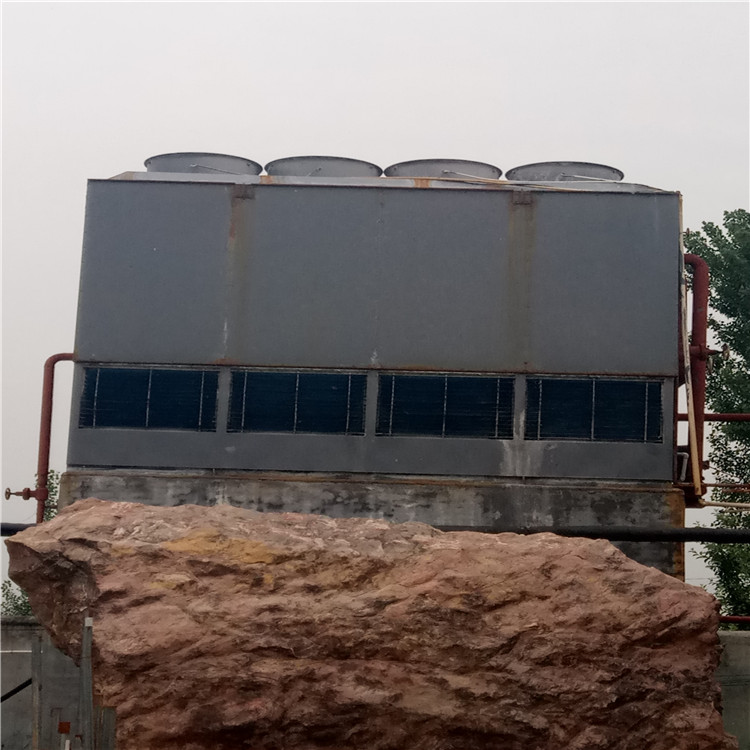
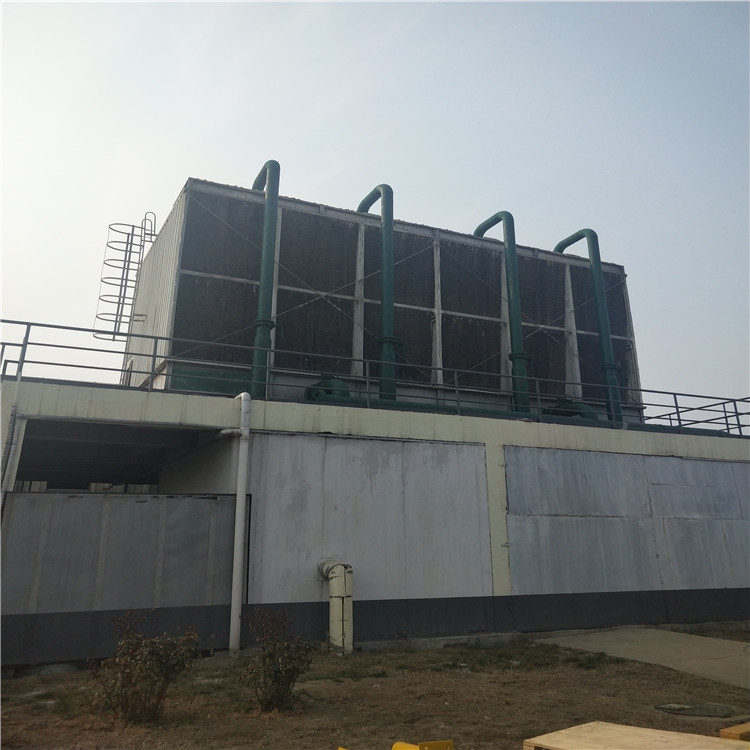

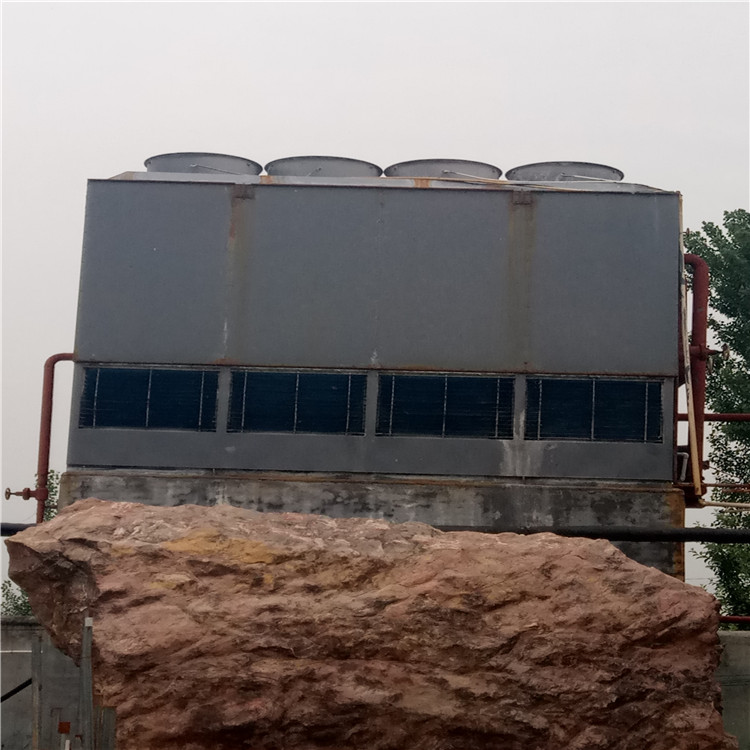









Cooling towers dissipate heat by the contact of water and air, utilizing the process of evaporation.IndustrialA device for dissipating waste heat generated from air conditioning or refrigeration systems. The basic principle is: drying(Low enthalpy value)The air, after being drawn by the fan, enters the cooling tower through the air intake mesh; the high-temperature water molecules with a high saturated steam partial pressure flow towards the lower-pressure air, moist and hot.(High enthalpy)Water is sprayed into the tower from an auto-watering system. When water droplets come into contact with air, evaporation occurs due to both the direct heat transfer between air and the droplets and the pressure difference between the water vapor surface and the air. Under the influence of pressure, the latent heat of evaporation is utilized to carry away the heat from the water, thereby achieving the purpose of cooling.
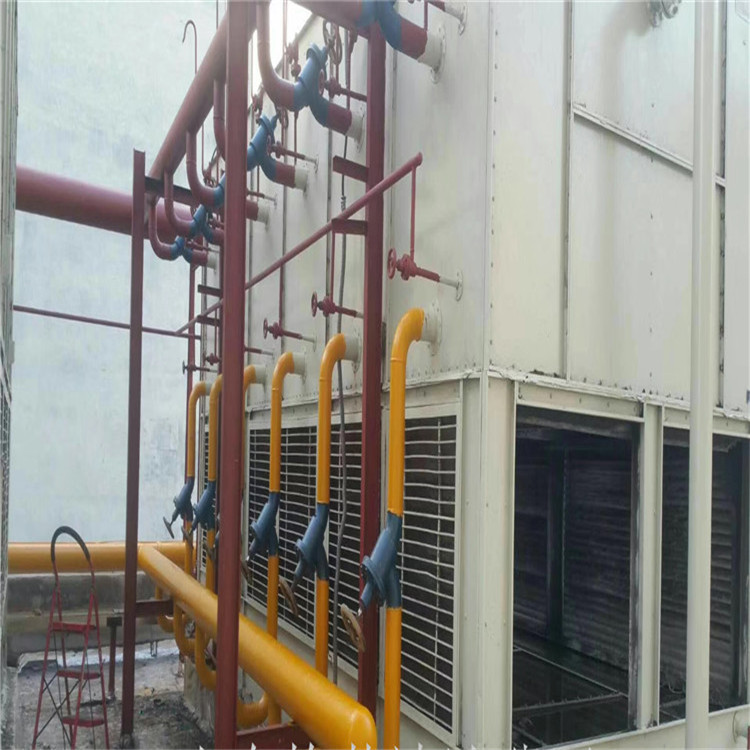
Cooling Tower Operation: Taking the circular counterflow cooling tower as an example, hot water is pumped from the machine room at a certain pressure through pipes, cross throat, curved throat, and central throat to the spray system of the cooling tower. The water is evenly distributed over the packing material through small holes in the spray pipes. Dry, low enthalpy air is drawn into the tower from the bottom air inlet by the fan. As the hot water flows over the packing material, a water film is formed for heat exchange with the air. The high humidity, high enthalpy hot air is then extracted from the top. The cooled water drops into the basin and flows into the main unit through the outlet pipe. Generally, the air entering the tower is dry with a low wet bulb temperature, and there is a significant difference in the concentration of water molecules and kinetic pressure between the water and air. When the fan operates, under the influence of static pressure within the tower, water molecules continuously evaporate into the air, becoming vapor molecules, which reduces the average kinetic energy of the remaining water molecules, thereby lowering the temperature of the circulating water. From the above analysis, it can be seen that the evaporation cooling is not related to whether the air temperature (commonly referred to as dry bulb temperature) is lower or higher than the water temperature, as long as the water molecules can continuously evaporate into the air, the water temperature will decrease. However, the evaporation of water into the air will not continue indefinitely.
When the air in contact with water is unsaturated, water molecules continuously evaporate into the air. However, when the air on the water vapor surface reaches saturation, water molecules cannot evaporate, as the number of water molecules evaporating equals the number returning to the water from the air, maintaining the water temperature constant. It can be observed that the drier the air in contact with the water, the easier evaporation occurs, and the water temperature is more likely to drop.