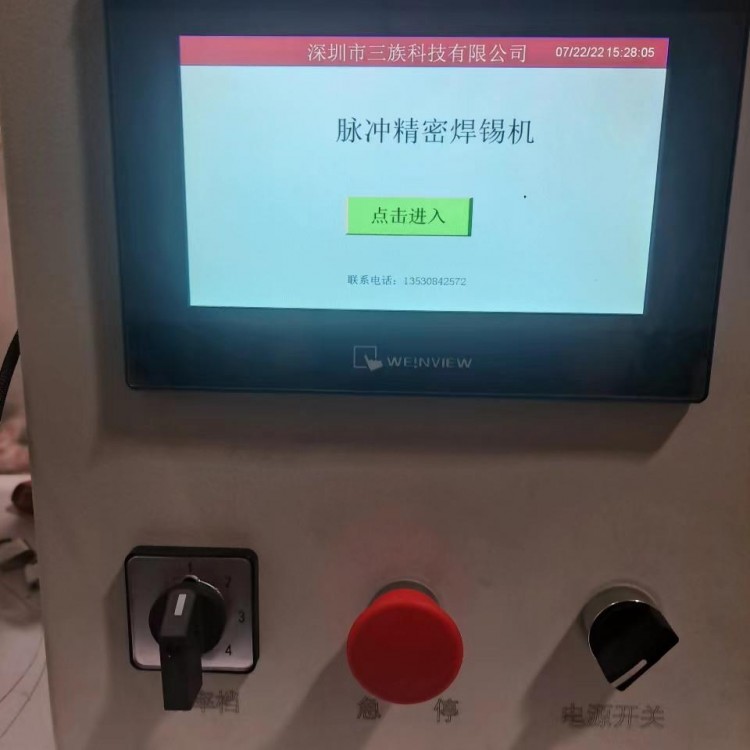

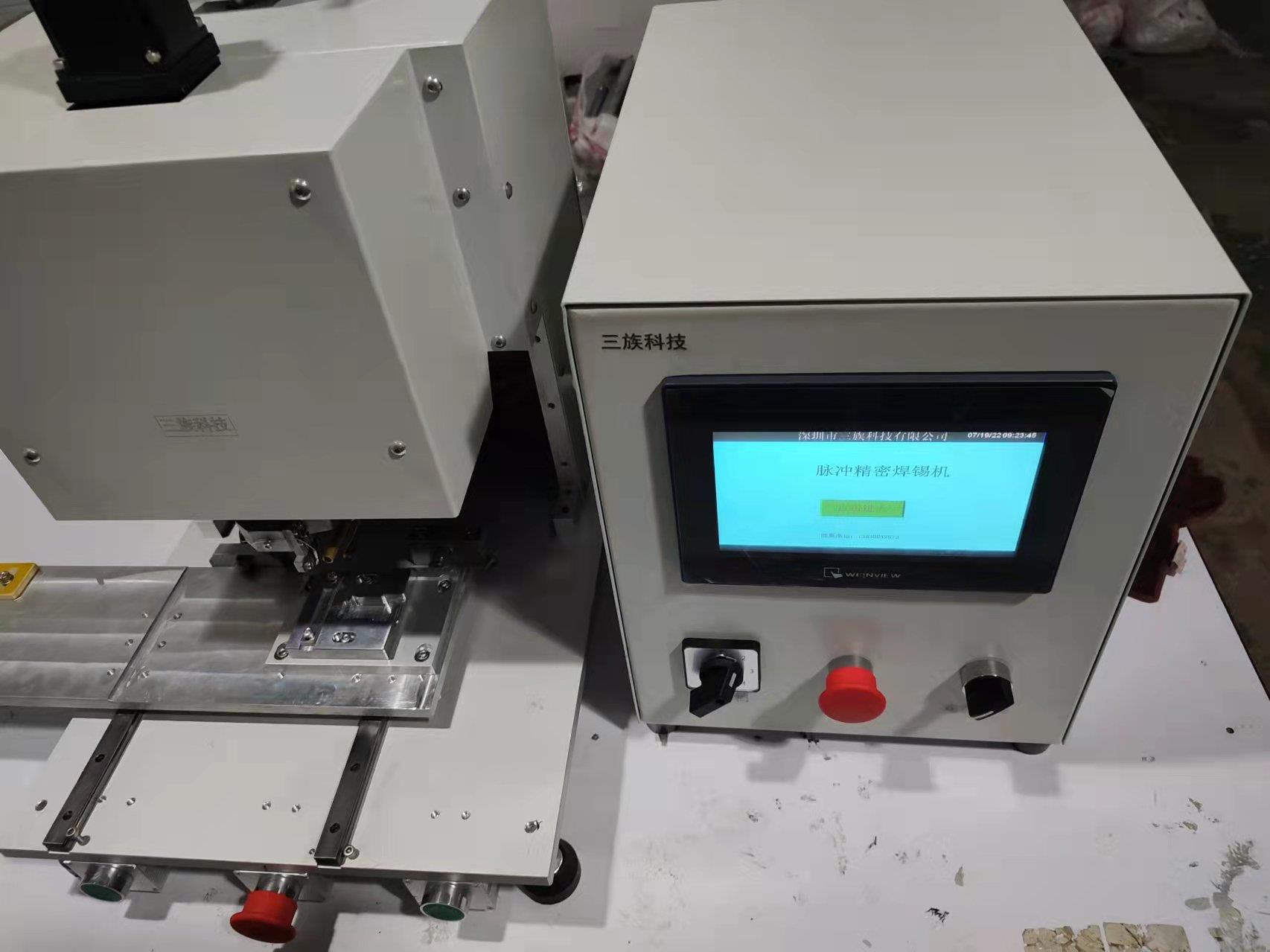
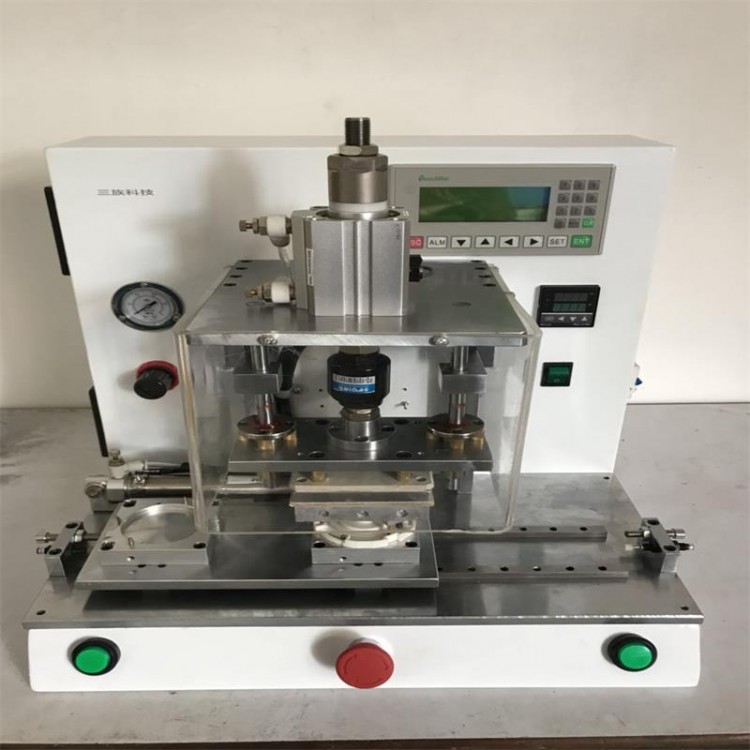


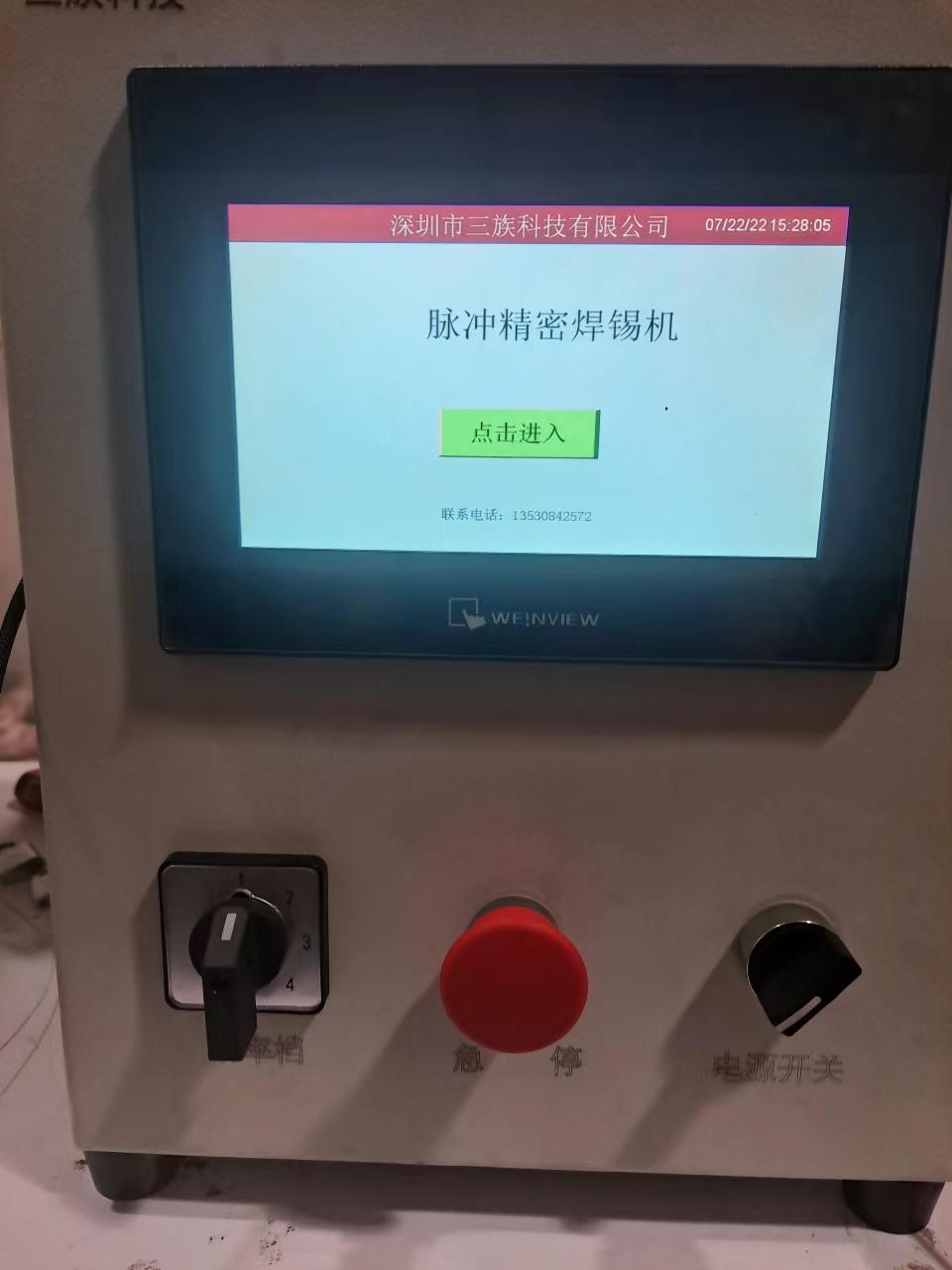
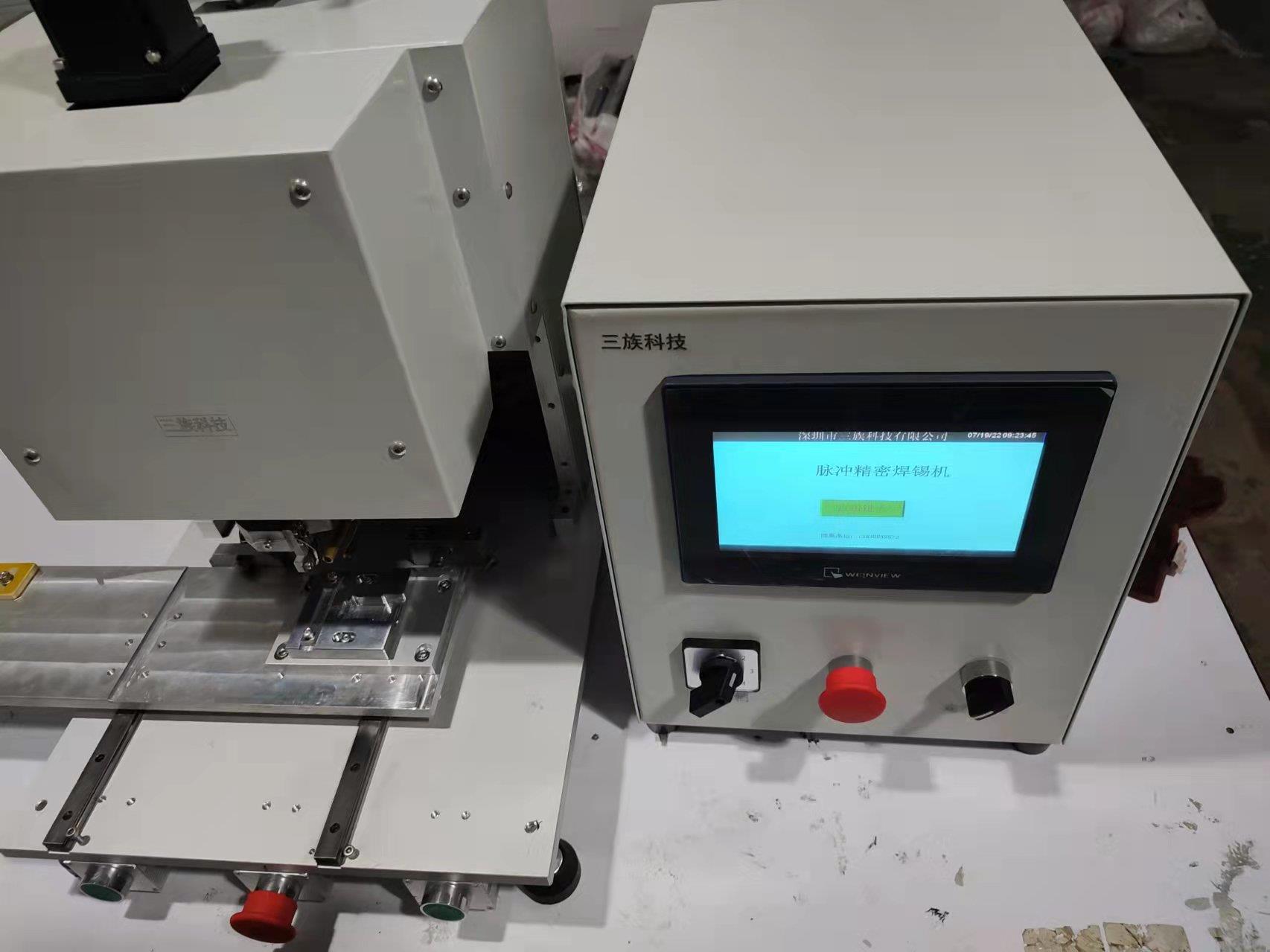
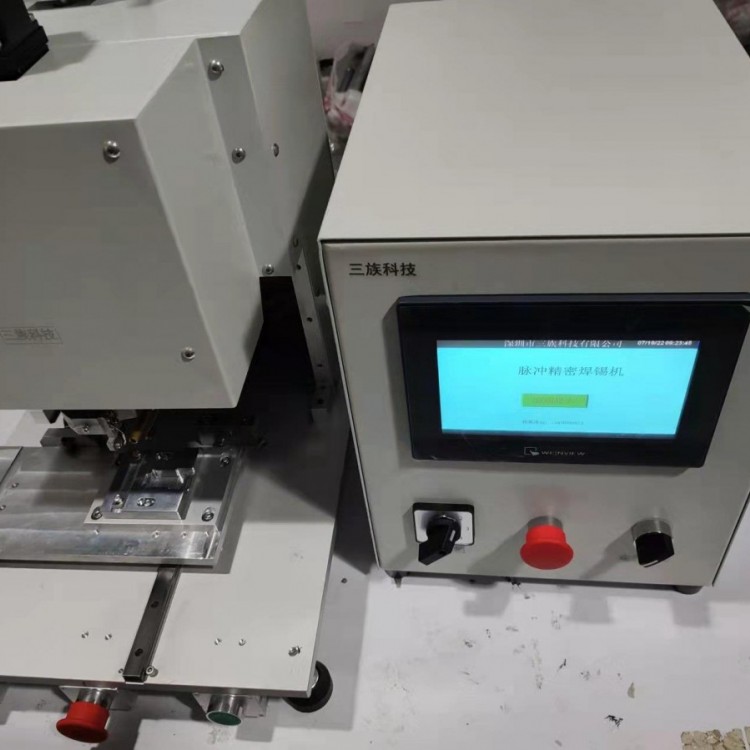
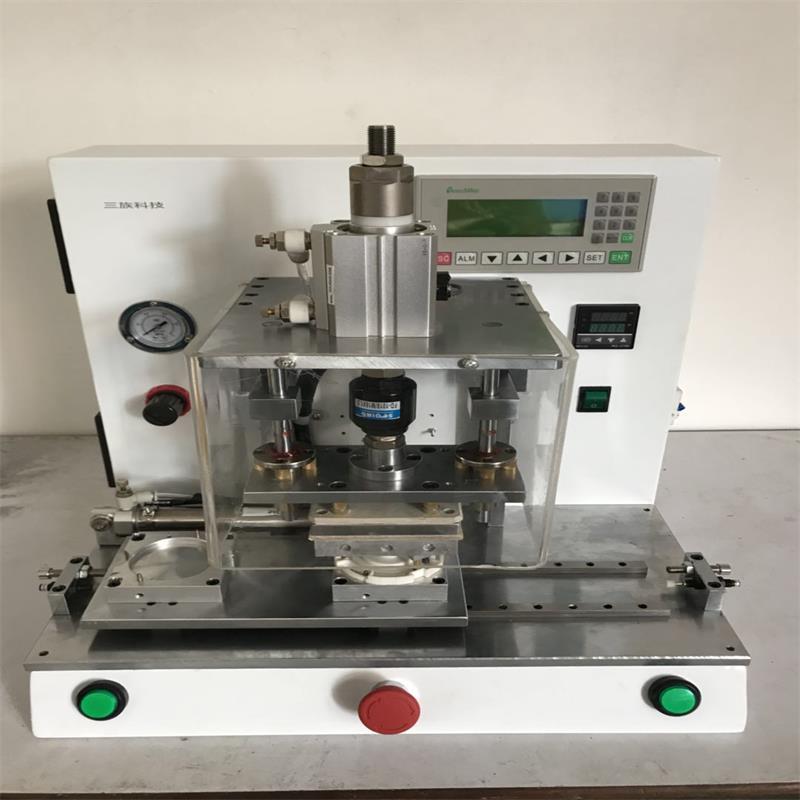





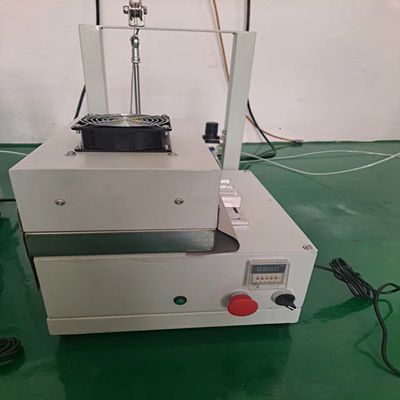
Advantages:
Pulse heat presses can reach the desired temperature instantaneously upon power-on, and can return to room temperature instantly once the voltage is removed from the welding head ends; plus, the welding head is flat, ensuring the appearance of the welds is even and consistent, with minimal instances of poor welding.
Application:
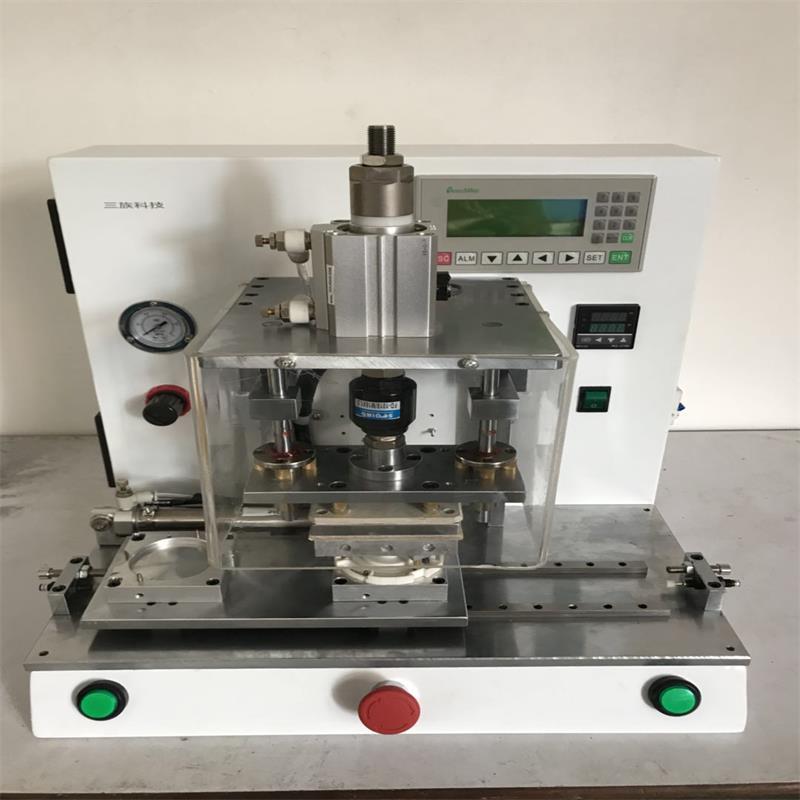
Pulse heat press machines are used in the production processes of the following products: USB cable welding, soft cable FFC and flexible printed circuit (FPC) or rigid printed circuit board (PCB) welding, TCP and PCB or FPC welding, and FPC and PCB welding, etc.
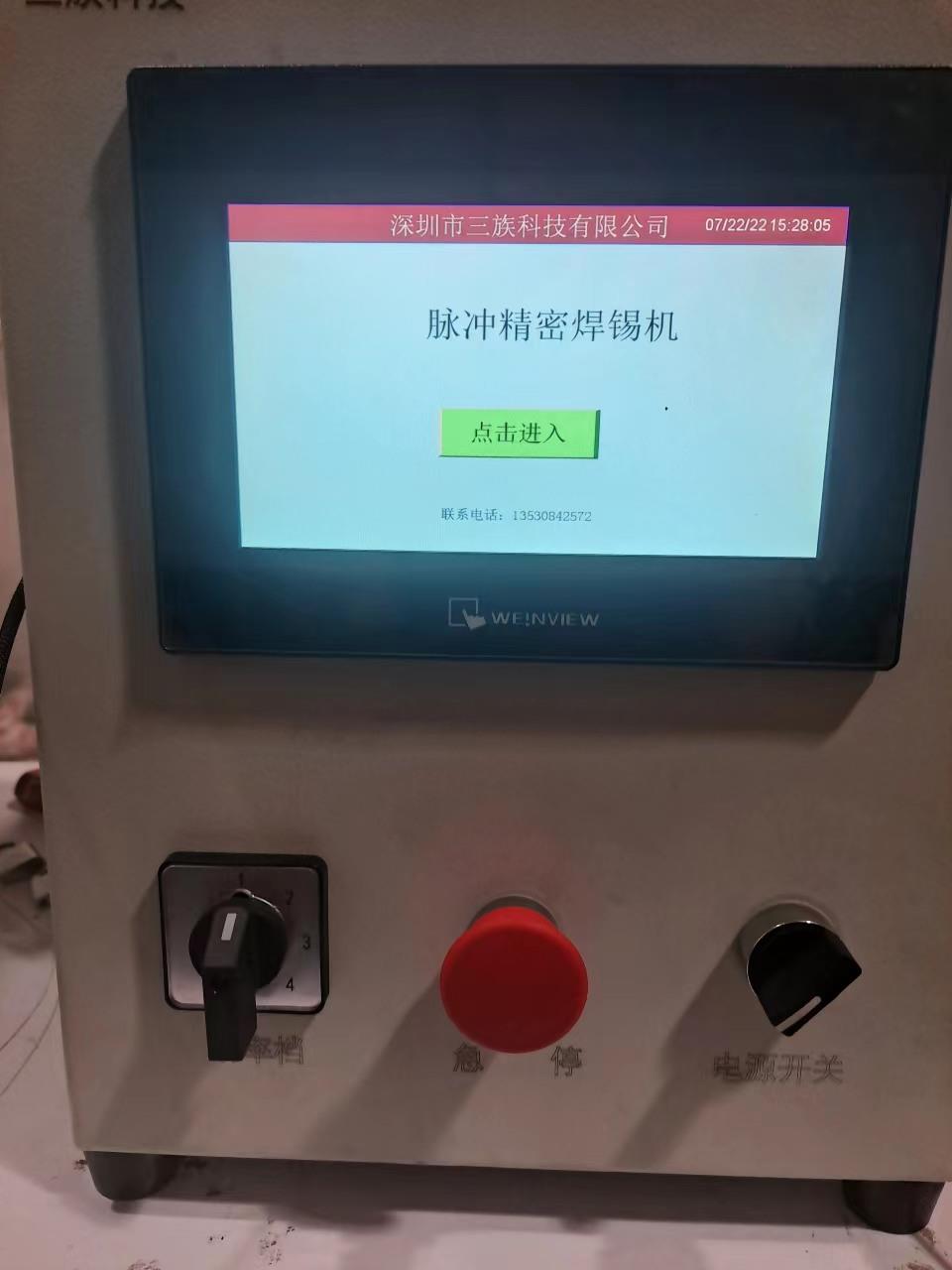
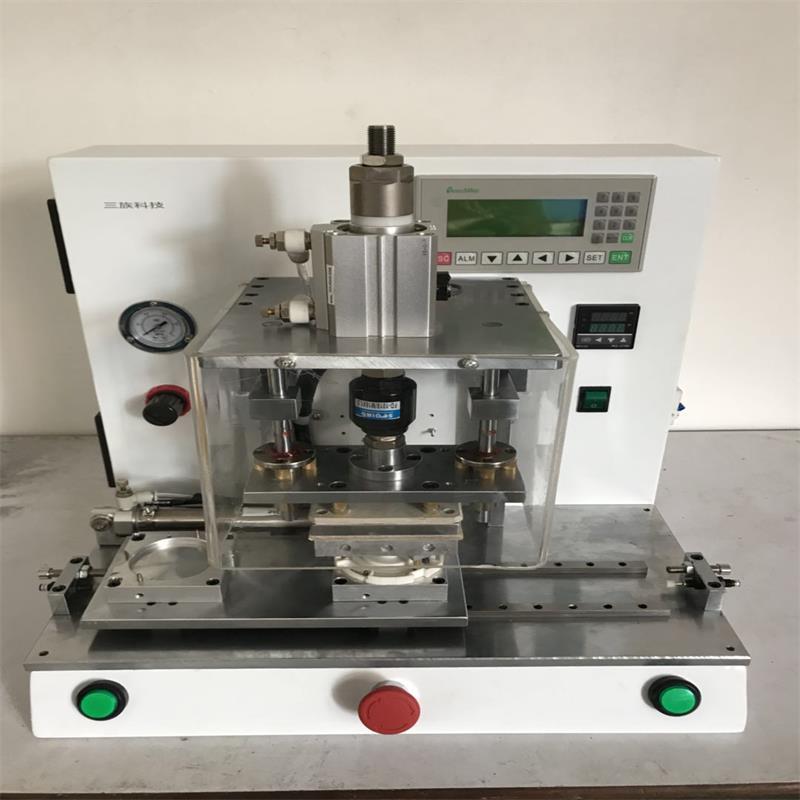
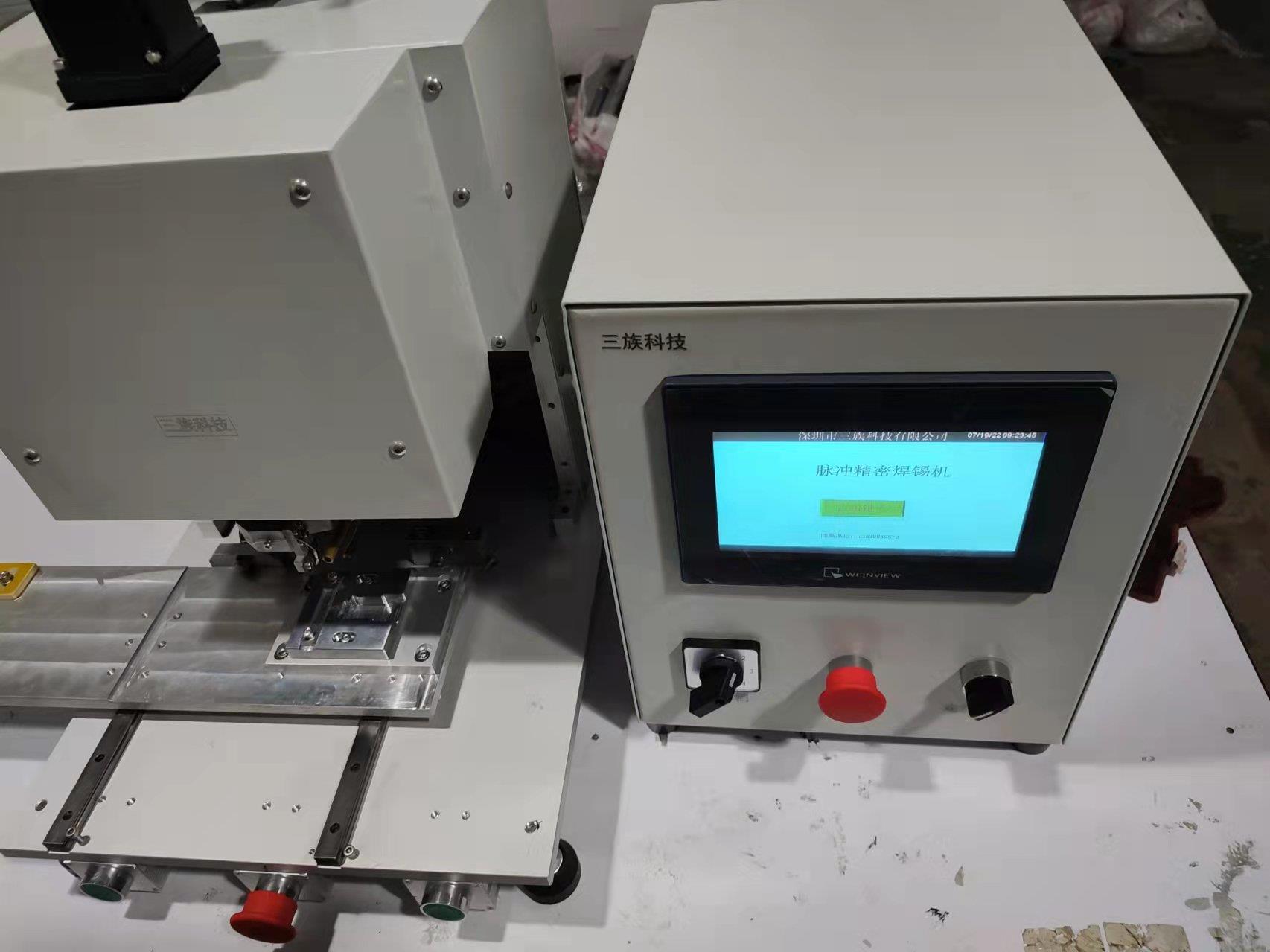
The pulse heat press machine utilizes a transformer to generate a low-voltage, high-current pulse, which is quickly heated through the welding head. The larger the pulse current output, the faster the welding head heats up. Place the workpiece in the fixture, lower the fixture under the welding head, press the start button, and the welding head presses down on the workpiece to begin heating. The temperature rises rapidly and maintains a precise constant value. At this point, solder reflows, blows cool air for cooling, the welding head rises, the soldering points are even, without bridging, and the welding is complete.


The heating speed of the pulse hot press is adjustable. It utilizes a titanium alloy hot press head, which heats up faster, lasts longer, and ensures consistent temperature. The pulse hot press head allows for better temperature control with varying voltages, and a digital pressure gauge ensures the pressure range. During operation of the pulse hot press, the work surface should be cleaned, check for oil leaks in the oil path, preheat before use, with the specified pressure typically around 100-150 pa and temperature at about 100℃, wait for about 5 minutes, then the glued workpiece can be placed into the hot press.