







Discuss my views on the quality inspection of weld seams:
Inspection of internal weld defects quality
Section 5.2.4 of the "Code for Acceptance of Construction Quality of Steel Structure Engineering" (GB50205) stipulates that full penetration welds of grades one and two, as required by the design, should be inspected for internal defects using ultrasonic testing. If ultrasonic testing cannot make a determination, radiographic testing should be employed.
1.1 Number of inspections
The inspection ratio for first-class welds is ..., and for second-class welds, it is 20%. The factory should calculate the percentage for each weld, with the inspection length not being less than 200mm; for on-site installation welds, the percentage should be calculated based on the number of welds of the same type and welding conditions. This is because steel structure welds are generally longer, and inspecting each weld according to the specified percentage is beneficial to the quality of each weld. Welds during installation are usually short, so calculating by the number of welds is feasible. It is incorrect for some inspection reports to not differentiate between manufacturing and installation, and only fill in the inspection ratio, or only conduct one inspection.
How to understand "Design requirements for fully melted first and second-class welds"?
Weld joints come in three types: butt joints, corner joints, and corner-butt combination joints. Corner joints do not have the issue of incomplete penetration, whereas butt and combination joints do, involving partial and full penetration concerns. Weld quality grades are categorized into levels one, two, and three. Only full-penetration welds at levels one and two require internal inspection tests. Full-penetration welds can be classified as level three, which do not require internal inspection; corner joints can be level two, referring only to the visual quality being inspected at level two, without the need for internal inspection.
Section 1.3 Common Areas Requiring Internal Inspection
Due to the abstract nature of the specified areas for internal inspection, common parts requiring internal inspection during operations include: the weld seams at the web and flange plates of beams and columns, the butt weld seams for extending beams and columns, the corner joint combination weld seams between beams, columns, and end plates, and the corner joint combination weld seams for connecting beams and columns in frame structures.
1.4 Non-Destructive Testing Methods
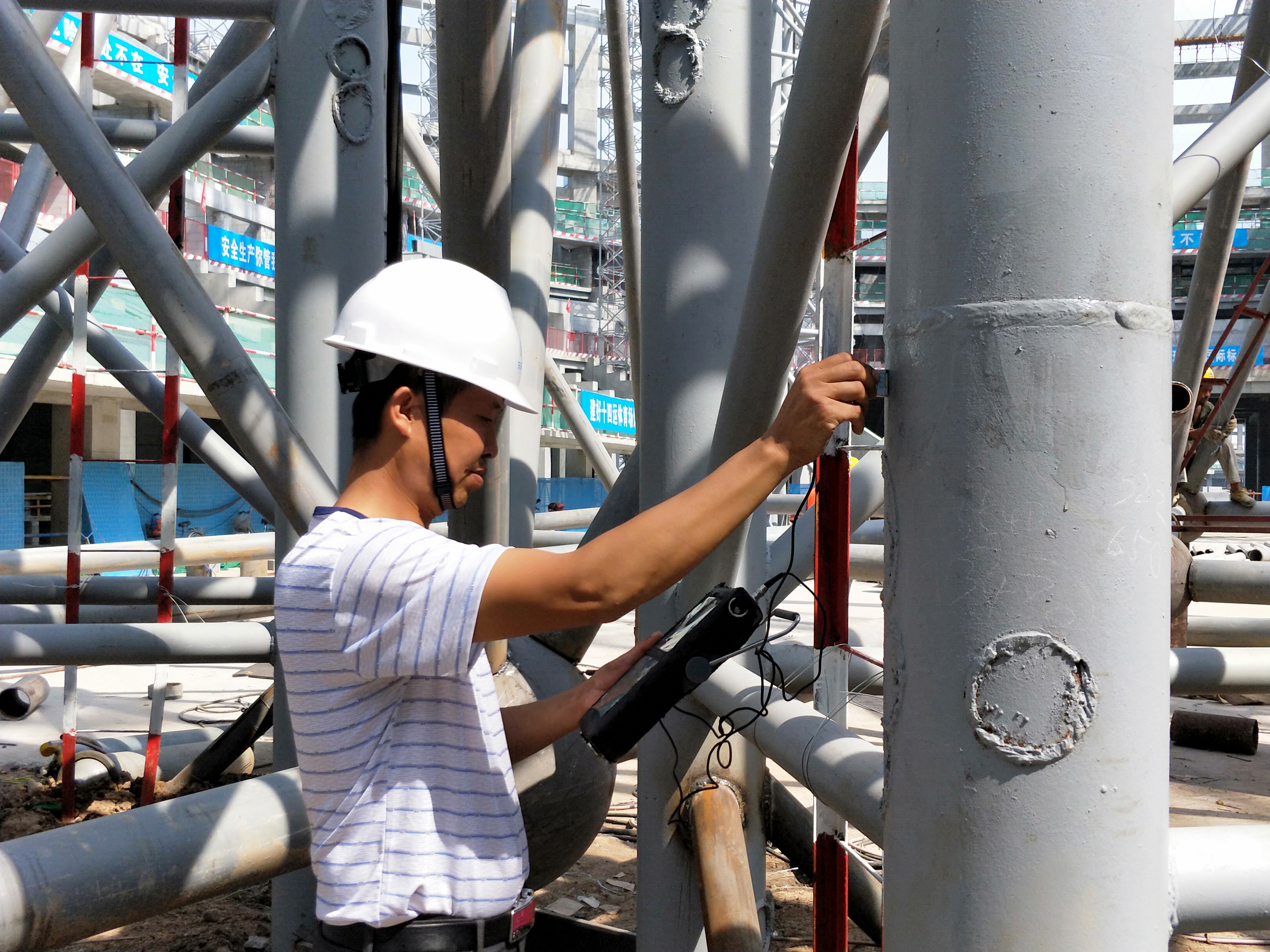
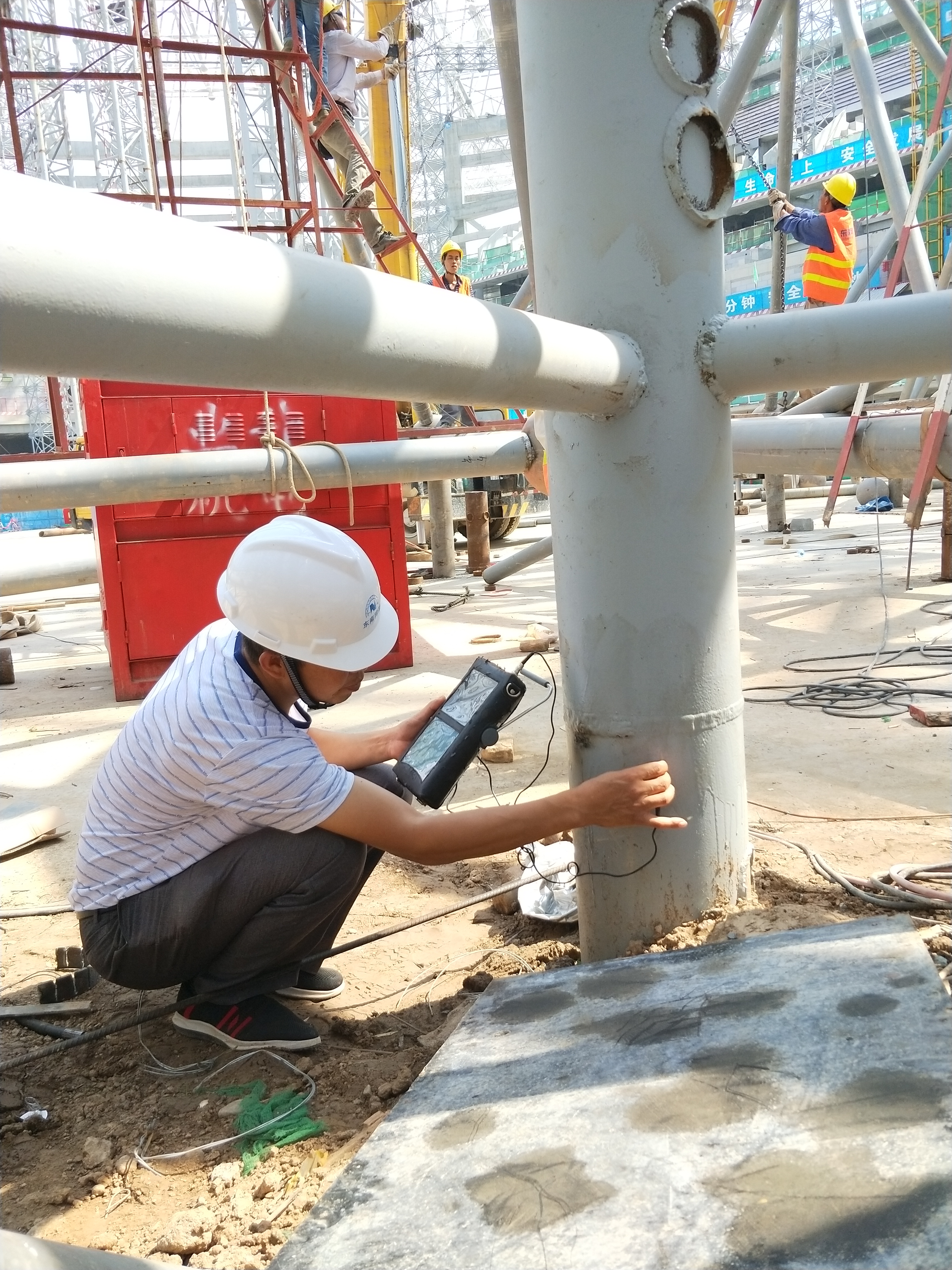
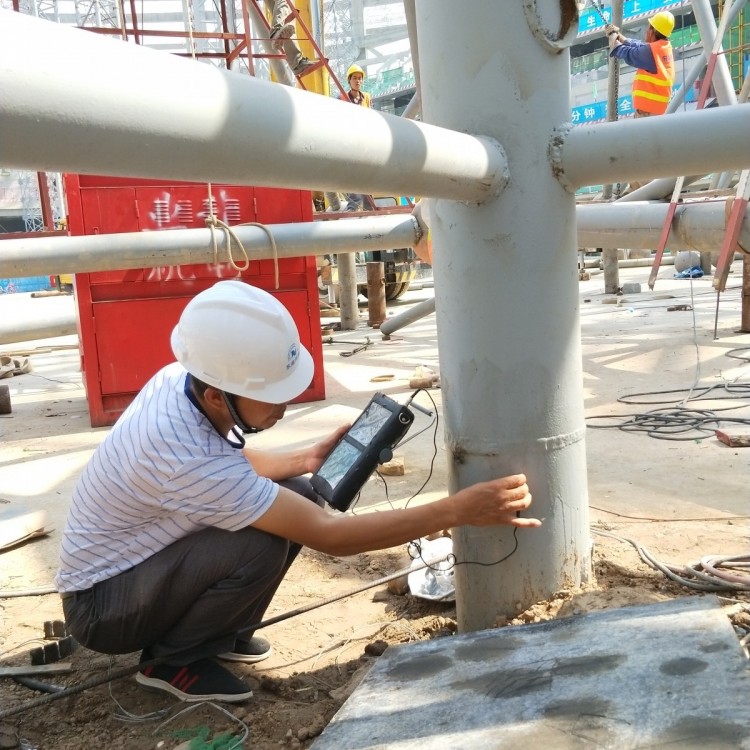
Ultrasonic flaw detection is simple and quick to operate, with good adaptability to various joint types and high sensitivity in detecting cracks and incomplete fusion. Therefore, internal flaw detection is preferably carried out using ultrasonic testing, and when ultrasonic testing cannot make a determination, radiographic testing should be employed. The "Code for Design of Steel Structures" (GB50017) stipulates: For butt joints of steel with thickness less than 8mm, ultrasonic testing should not be used to determine the weld quality grade; radiographic testing should be used instead. Otherwise, the strength design value for butt joints of steel with thickness less than 8mm can only be adopted as a Class 3 weld.
Evaluation of Weld Seam Quality Grade 1.5
The evaluation grades for weld defect detection are divided into Grades I, II, III, and IV. Grade I welds are evaluated according to Grade II, and Grade II welds are evaluated according to Grade III.
The internal quality of the 1.6 seam is concealed, and construction technical supervision is required.
For instance, Q345 should ideally be welded using E5016 welding rods, but if E4303 rods are used instead, the price is lower and the internal defects in the weld seam are reduced. The quality is deemed acceptable after an inspection, but the strength of the weld seam is actually decreased.
Xi'an Olympic Sports Testing.jpg
2. Inspection for weld seam surface quality
Section 5.2.6 of GB50205 stipulates: The weld surface shall not have cracks or other defects. When in doubt, use penetrant or magnetic particle inspection.
2.1 Under what circumstances is surface flaw inspection required?
The "Code for Welding Technology of Steel Structures" (JGJ81) stipulates: Surface inspections should be conducted under any of the following conditions: ① When cracks are found during visual inspection, surface inspections should be carried out on similar welds in the batch; ② When cracks are suspected during visual inspection, surface testing should be conducted on the suspected areas; ③ When surface testing is specified in the design drawings; ④ When deemed necessary by the inspector.
2.2 Inspection Methods
Magnetic materials are applied for surface defect detection using magnetic particle inspection. Penetrant inspection should only be used if it is structurally or material-wise impossible to use magnetic particle inspection. Magnetic particle inspection is highly sensitive to surface and near-surface defects in magnetic materials; penetrant inspection is suitable for inspecting open defects on non-magnetic materials. The surface to be inspected must meet a certain level of smoothness.
2.3 Crack Defects
Crack defects are not permitted under any quality grade requirements for welds, and cracks are not allowed in any type of weld. This is because the ends of cracks are extremely thin, and they can propagate under very low stress during use. Additionally, apart from arc pit cracks (which are permitted to be less than 5mm in size in grade 3 welds), the formation of other cracks is not due to the welder's individual operation but rather issues with material selection (main material, welding material), design of weld density, and welding techniques. Therefore, the occurrence of cracks is batch-oriented.
Don't assume that weld surfaces tested with X-ray or ultrasonic inspection are crack-free; due to sensitivity limitations, these methods are far less effective than magnetic particle inspection for detecting surface cracks. Any cracks found should be removed entirely, along with an additional 50mm on both ends.