








Building Renovation, Addition, and Storey Addition Inspection
1. Pre-Conversion Inspection of Residential Properties: Refers to the assessment of the structural components' load-bearing capacity and technical parameters to ensure they meet safety requirements after the property's original design use and function have been altered. It also provides reasonable reinforcement recommendations for components that do not meet safety standards.
2. Pre-construction inspection for house renovation: Refers to the detection conducted before a building user seeks to expand the internal usable space, add elevators, fire stairs, and other structural facilities. During the renovation process, it is generally necessary to alter some load-bearing components of the house structure. Before making alterations, it is essential to understand whether the changes will affect the structural safety of the house and whether reinforcement can meet the renovation requirements, providing the client with a feasibility recommendation.
3. Buildings for Increased Load Use: Typically includes industrial factories, warehouses, production workshops, archives, and machine rooms. Before installing cranes, filing cabinets, machinery, containers, signs, etc., on the building floors or other load-bearing components to meet operational needs, a test is required to determine if the current floor's load-bearing capacity meets the safety requirements for the additional equipment. Recommendations for reasonable reinforcement should be provided for components that do not meet the load-bearing or safety requirements.
In accordance with the relevant documents published by the China Earthquake Administration and Dongguan Bureau of Education, among other authorities, school buildings' safety projects for primary and secondary schools must strictly adhere to national standards and specifications such as the "Building Seismic Standard," "Building Structural Inspection Technology Standard," and "Civil Building Reliability Standard." These include inspections of the reliability of school building structures, seismic capacity, and comprehensive disaster prevention capabilities. Additionally, before the opening, transfer, or annual qualification review of public places such as educational training institutions and student drop-off/pick-up stations, the safety of the buildings must be ensured.
What parts should not be randomly removed during building renovation and remodeling?
1. Load-bearing wall
Brick walls over 600px thick are generally load-bearing walls and cannot be easily removed or altered. Load-bearing walls support the entire building's weight, maintaining the structural balance of the house. Destroying a load-bearing wall is like disrupting this balance of forces, which could have severe, life-threatening consequences. 2. Door frames embedded in concrete If there's a real need to remove or modify them, it poses certain risks to the building structure, reduces the safety index of the house, and reinstallation of new doors is also quite challenging.
3. Low Wall
Typically, there's a door and a window between the room and the balcony, which can be removed. However, the wall below the window cannot be taken down, as it serves as a "counterweight wall." This wall functions like a weight in a scale, supporting the balcony. Removing this wall would decrease the balcony's load-bearing capacity, potentially causing it to collapse.
Beams and columns
Beams and columns are used to support the upper floor slabs. Disposing of or modifying them arbitrarily may cause the upper floor slabs to collapse, which is extremely dangerous. Beams and columns must never be removed or altered.
5. Wall Reinforcement Steel
Load-bearing wall
When laying pipelines, if the rebar is damaged, it will affect the bearing capacity of the walls and floors, leaving potential safety hazards. Therefore, it should not be removed arbitrarily.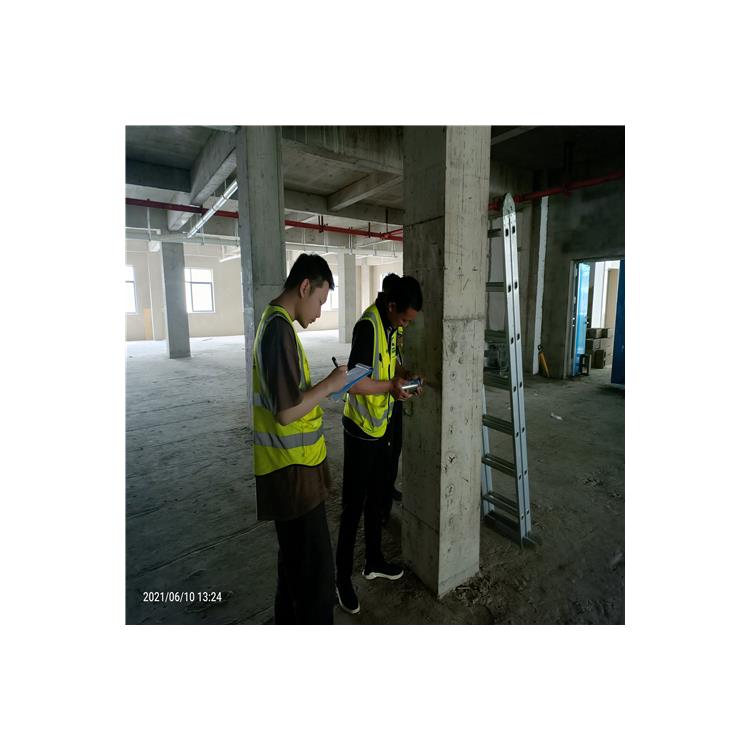 Inspection of Reinforcement Rust Condition in Construction Engineering Quality
Based on the measured results of concrete carbonation depth, longitudinal crack width on the concrete surface, and the thickness of the concrete protective layer, the corrosion condition of steel in each component is predicted. For components with severe expansion cracks or delamination of the concrete protective layer, random sampling is conducted based on the component type and surrounding environment, in accordance with the on-site conditions. The concrete protective layer is then chiseled away, and the size of the remaining steel reinforcement is directly measured using a caliper. The predicted results are then reviewed and corrected.
Through the above damage condition inspections, meticulously record the damage status, location, and extent of each surrounding house. Compile and draw a damage distribution map of the houses. Analyze the trend of house damage based on the damage distribution map drawn after each inspection.
Dilapidated building safety is categorized into four levels: A, B, C, and D. In layman's terms,
A - No quality issues; B - Some components have minor issues that do not affect the main structure or living conditions; C - Partial load-bearing structures fail to meet normal usage requirements, with localized risks, forming local dilapidated buildings; D - Indicates that the entire house is in danger, with little to no reinforcement value, residents must evacuate immediately.
Building Inspection Content: 1) Concrete structure strength field inspection (ultrasonic rebound comprehensive method, rebound method, core drilling method, etc.); 2) Field masonry mortar strength inspection (penetration method, rebound method, etc.); 3) Field masonry strength inspection (in-situ axial compression method); 4) Reinforcement cover thickness detection (non-destructive testing); 5) Concrete component structural performance static load test (deflection, crack resistance, bearing capacity, crack width); 6) Concrete post-anchor pullout bearing capacity detection (tension test); 7) Structural deformation detection (tilt, cracks, etc.); 8) Concrete appearance quality and defect detection (ultrasonic testing); 9) Masonry structure deformation and defect detection (cracks, weathering, spalling, verticality); 10) Structural dynamic testing; 11) Chloride ion content detection; 12) Reinforcement corrosion detection.
Another method is the addition of an outer cabinet frame structure, which involves constructing a new foundation and cabinet frame on the exterior of the original building. This approach is less related to existing structures and is not commonly used. The foundation is set up separately, bearing all the loads of the newly added layer, as long as the original structure still retains its usability. Harbin Medical University's inpatient building has adopted this method, which offers flexibility in the number of intermediate layers but is relatively expensive.
WeChat Official Account

Scan to follow Official Account













