








Any alterations to or changes in the current usage of the building must be justified. This primarily depends on the structural integrity of the old building, assessing whether the change in use could affect safety due to increased loads or structural modifications, and determining if the structure can meet the new functional requirements prior to the change of use.
Structural cracks can be classified into brittle failure cracks and plastic failure cracks based on the nature of stress and the form of failure. Brittle failure cracks occur suddenly without any obvious warning, and once they appear, they significantly impact the structural strength, necessitating reinforcement measures and other safety precautions. Plastic failure cracks show clear deformation and crack precursors beforehand, allowing for timely corrective actions, thus posing less danger. Commonly observed stress component cracks include tensile cracks in the cross-section of tensile components, tensile cracks in bending and large eccentric compression components, etc. Whether these cracks affect the safety of the structure depends on their location, length, depth, and progression. If the cracks have stabilized and do not exceed the allowable limits, they are considered permissible and no reinforcement is needed.
Existing buildings refer to those that have been completed and put into use, typically having passed the acceptance inspection. The safety inspection and evaluation of existing building structures generally require on-site review of structural layout and loading conditions, material property testing, crack damage inspection, settlement deformation measurement, and structural calculation and analysis to assess the safety of the structure and to propose necessary reinforcement treatment recommendations. It is necessary to inspect and evaluate the safety of existing building structures when the following situations occur: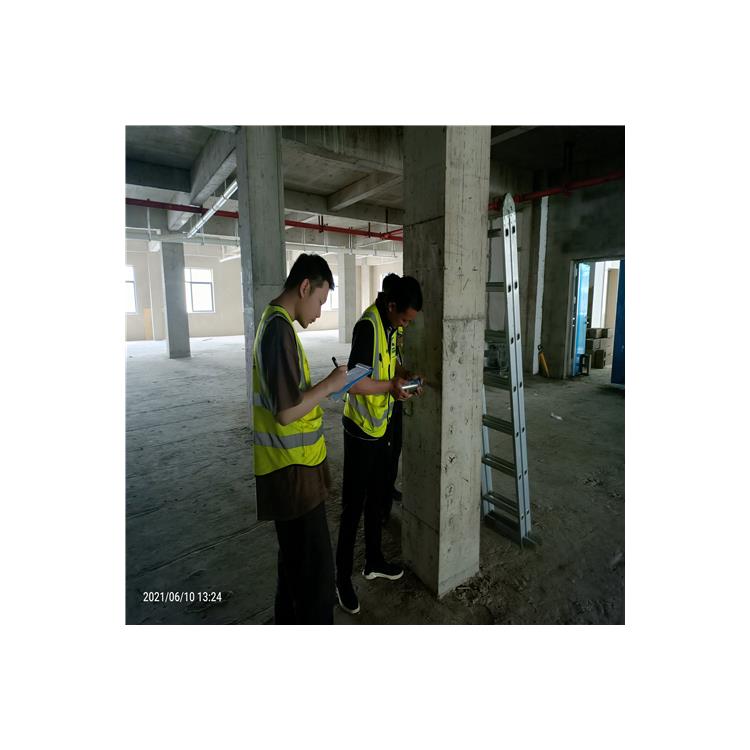 How to determine if a residential property requires structural safety assessment? Generally, if there are tall structures, shelves, or hanging objects installed on the building, it falls under altering the building structure, significantly increasing the load on the house, or setting up tall structures like billboards on the roof. In such cases, it is necessary to find a structural safety agency that has approved the property, and only after confirmation of safety conditions can the structures be set up. Severely damaged houses are generally not allowed to be decorated or remodeled. If decoration or remodeling is absolutely necessary, the house must be deemed structurally safe, and repair and reinforcement measures should be taken based on the structural safety report. Only after meeting the safety conditions for habitation and use can decoration or remodeling proceed.
Reinforced concrete structural components may deform. Influenced by loads, temperature, humidity, and foundation settlement, deformation and displacement of the structure may occur. Not only does this affect aesthetics and usability, but it also impacts the structural load-bearing and stability. Severe deformation can alter the structural load conditions, eccentricity of the load, and generate additional stresses at component cross-sections and connection nodes, thereby reducing the load-bearing capacity of the components, causing cracks, and potentially even collapse. For the measurement items related to structural deformation, select based on the requirements and objectives of the measurement. The deflection and displacement that must be tested are crucial. Additionally, the measurement of deformation should be combined with crack measurement. Excessive deformation of the structure can produce corresponding cracks, which in turn can expand the structural deformation. Therefore, the safety of structural components should focus on the deformation conditions of the structure.
The observation of the building's main structure inclination should determine the tilt angle, direction, and rate of tilt between the top observation point and the bottom fixed point, or between the upper and lower observation points. The overall tilt of a rigid structure can be indirectly determined by measuring the differential settlement between the roof and the foundation.
WeChat Official Account

Scan to follow Official Account













