








House Safety Assessment Categories: Primarily divided into hazardous house assessment, reliability assessment, completeness and damage grade evaluation, seismic assessment, safety impact assessment, structural evaluation, and rural hazardous house assessment.
Building Structure Reliability
(1) Comprehensive inspection prior to building renovation.
(2) Regular inspections must be conducted on significant structures to assess their safety and usability.
(3) Conduct safety and usability assessments on the building prior to any changes in use or conditions.
(4) When a building reaches its designed service life but needs to continue use, conduct safety and usability assessments for the building.
(5) Conduct a safety assessment of the building prior to expansion or renovation to provide recommendations for further decisions or reinforcement design.
(6) After structural damage to buildings due to natural disasters, chemical erosion, accidental impacts, and ground deformation, conduct a safety assessment to provide recommendations for further decisions or reinforcement design.
(7) Inspections of buildings suspected of having quality issues or structural safety concerns, including structural load calculations and safety assessments.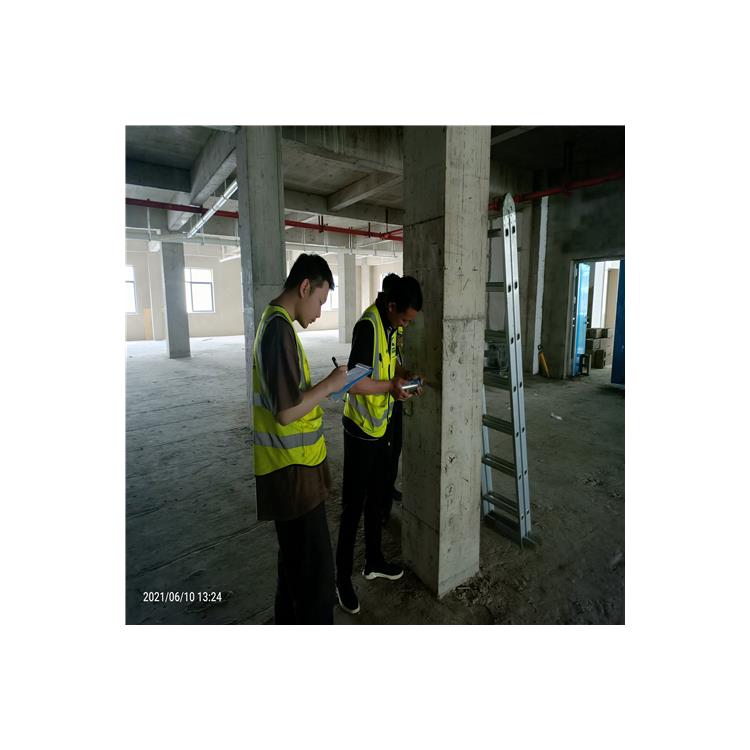 Building safety inspections typically require inspectors to first formulate an appropriate inspection plan based on the actual on-site conditions. General inspection items include material strength testing, reinforcement configuration testing, building deformation testing, crack testing, and other inspections.
In the construction of buildings, concrete structures are ubiquitous, from the foundations to the walls and roof structures. When working with the concrete structure of a building, the following aspects can be specifically addressed:
1. Field surveys for structural floor plans and frame elevation drawings. The survey of the building's floor plans and frame elevations is to ensure the concrete structure meets the requirements for gravity and equilibrium forces.
2. Composition ratio of concrete structures. Generally, to meet the residents' requirements for the strength and durability of walls, the ratio of steel reinforcement to concrete used in constructing walls should be 1:2 or 1:2.5. With this requirement in mind, there is a basis for personnel to determine the composition ratio of concrete structures.
3. Condition of concrete columns or beams. In the process of house structure, if the concrete structure shows tilting or cracks, the house can be classified as a dangerous building.
4. Load capacity of concrete structures. Concrete structures within building structures do not exist in isolation; they are combined with masonry and steel structures. Determining the load capacity of concrete structures is beneficial for managing their service life. During the process of constructing the masonry structure within the building structure, it is necessary to assess the seismic performance, resistance to tilting, and wind resistance of the masonry structure.
How to select a sampling plan during the safety assessment of building structures: When conducting safety assessments for building structures, the sampling plan should be chosen based on the characteristics of the inspected items, adhering to the following principles:
1. For the identification and inspection of external defects in buildings, a full inspection plan should be chosen.
2. For structural connection assessment and testing of buildings, sampling should be conducted on parts that have a significant impact on the structure.
3. For the actual load testing and inspection of the structural performance of building components, it is advisable to select components from the same category that have relatively higher load effects and poorer construction quality, or representative components that have been affected by disasters or environmental erosion for sampling inspection.
4. For the identification and detection of geometric dimensions and dimensional deviations within a house, it is suitable to choose a one-time or two-time counting sampling plan.
5. For items inspected by batch, random sampling should be conducted, and the smaller sample size must comply with the provisions of Section 3.3.13 of this standard.
6. During the safety assessment of building structures, sampling inspections should be conducted according to the sampling plan specified in the "Unified Standard for Construction Quality Acceptance" G300 or the corresponding construction project quality acceptance specification.
House inspection methods on-site:
主要有: the rebound method, ultrasonic method, and core sampling method. Each testing method has its own advantages and disadvantages, and all have varying degrees of impact on the damage to concrete. Below is a detailed introduction to several concrete on-site testing methods.
WeChat Official Account

Scan to follow Official Account













