








Many users are curious about how to determine if a house is a dilapidated building. When conducting inspections and certifications for dilapidated buildings, how can one obtain a dilapidated building certification report? The grades of dilapidated buildings: Depending on the severity of the quality issues, they can be categorized into four levels: A-grade: No dangerous components; the building structure meets safety requirements for use; B-grade: Some structural components are rated as dangerous but do not affect the safety of the main structure, and can generally meet safety requirements for use; C-grade: Some load-bearing structures do not meet safety requirements for use.
After completion of major, moderate, and comprehensive repairs, houses must be re-evaluated for their condition grades. Houses currently undergoing major, moderate, or comprehensive repairs can be temporarily graded based on their condition before the repairs. A house's condition grade assessment is also used for evaluating dilapidated housing areas. The conditions for initiating a renovation project for a large area of dilapidated houses are: the total floor area of Class 3 (general damage), Class 4 (severe damage), and Class 5 (dangerous) houses in the entire area should exceed 70% of the total floor area of the entire area, with the total floor area of Class 4 and 5 houses exceeding 30% of the total floor area of the entire area.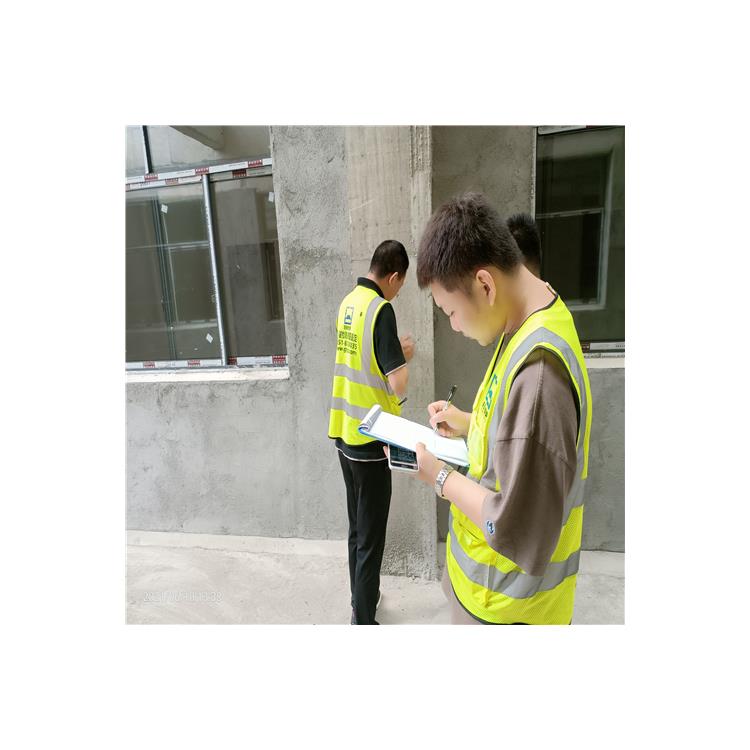 Definition of House Condition Grades: A comprehensive evaluation of the entire building is conducted through visual inspection, detection, and quantitative and qualitative analysis. Detailed checks and research are carried out during the assessment, and tests and calculations may be supplemented as necessary to determine the condition grade of components or the building, as well as whether they are classified as dangerous components or dangerous buildings. Classification of House Condition Grades: To assess the condition grade of a house, it is first necessary to identify the items to be evaluated.
1. Sound Housing (1) The structure, decoration, and equipment meet the sound condition standards; (2) or, in decoration and equipment, one or two aspects meet the basic sound condition standards, with the rest meeting the sound condition standards; in this case, the house can be rated as sound housing. 2. Essentially Sound Housing (1) The structure, decoration, and equipment meet the essentially sound condition standards; (2) in decoration and equipment, one or two aspects meet the standard for general damage, with the rest meeting standards above essentially sound; (3) in the structure, excluding the foundation, load-bearing components, and roof, one aspect can meet the standard for general damage, along with one aspect from decoration or equipment, with the rest meeting standards above essentially sound; in this case, the house can be rated as essentially sound housing.
Each level is divided into four safety grades and three usability grades. Starting from the layer components, proceed layer by layer, and comply with the following provisions: (1) Individual components should be classified according to Appendix B of this standard, and the grade of each individual component should be determined based on the evaluation results of each inspection item; (2) The grade of the sub-unit should be determined based on the evaluation results of each inspection item for the sub-units and the sets of components; (3) The grade of the identification unit should be determined based on the evaluation results of each sub-unit.
Brick and wood construction primarily utilizes bricks and wood for construction, but this type of structure is not suitable for high-rise buildings and is mostly used in rural areas. The construction process for brick and wood structures is simple, and they are economically priced.
WeChat Official Account

Scan to follow Official Account













