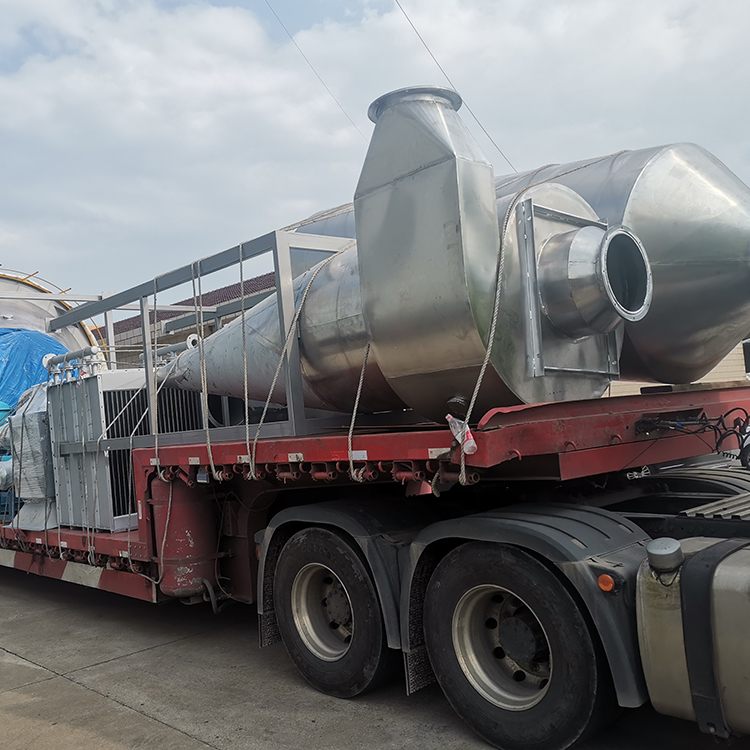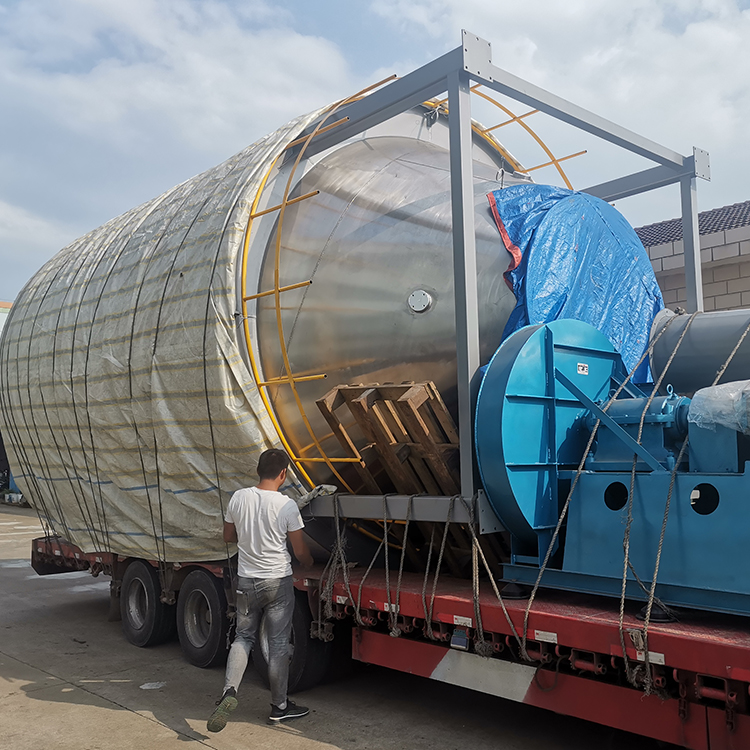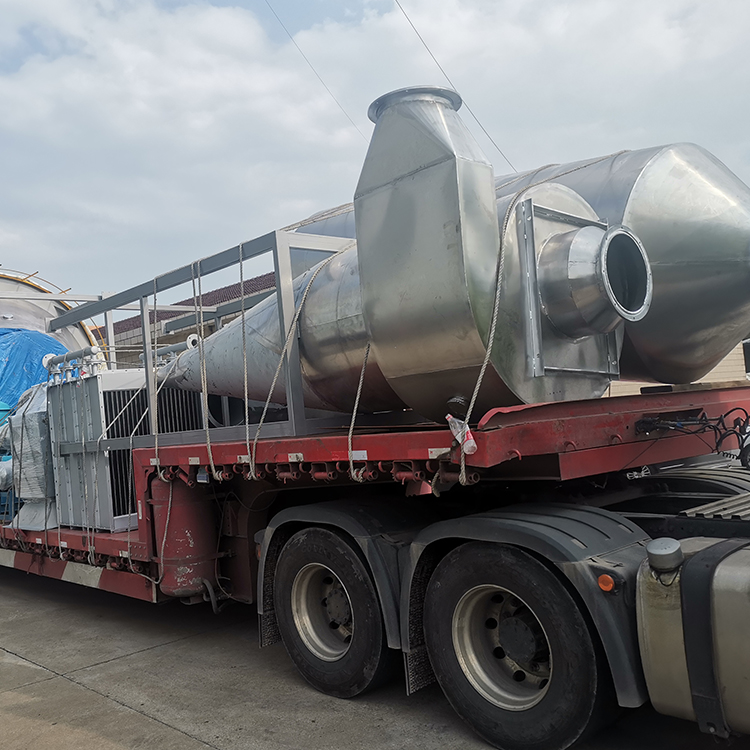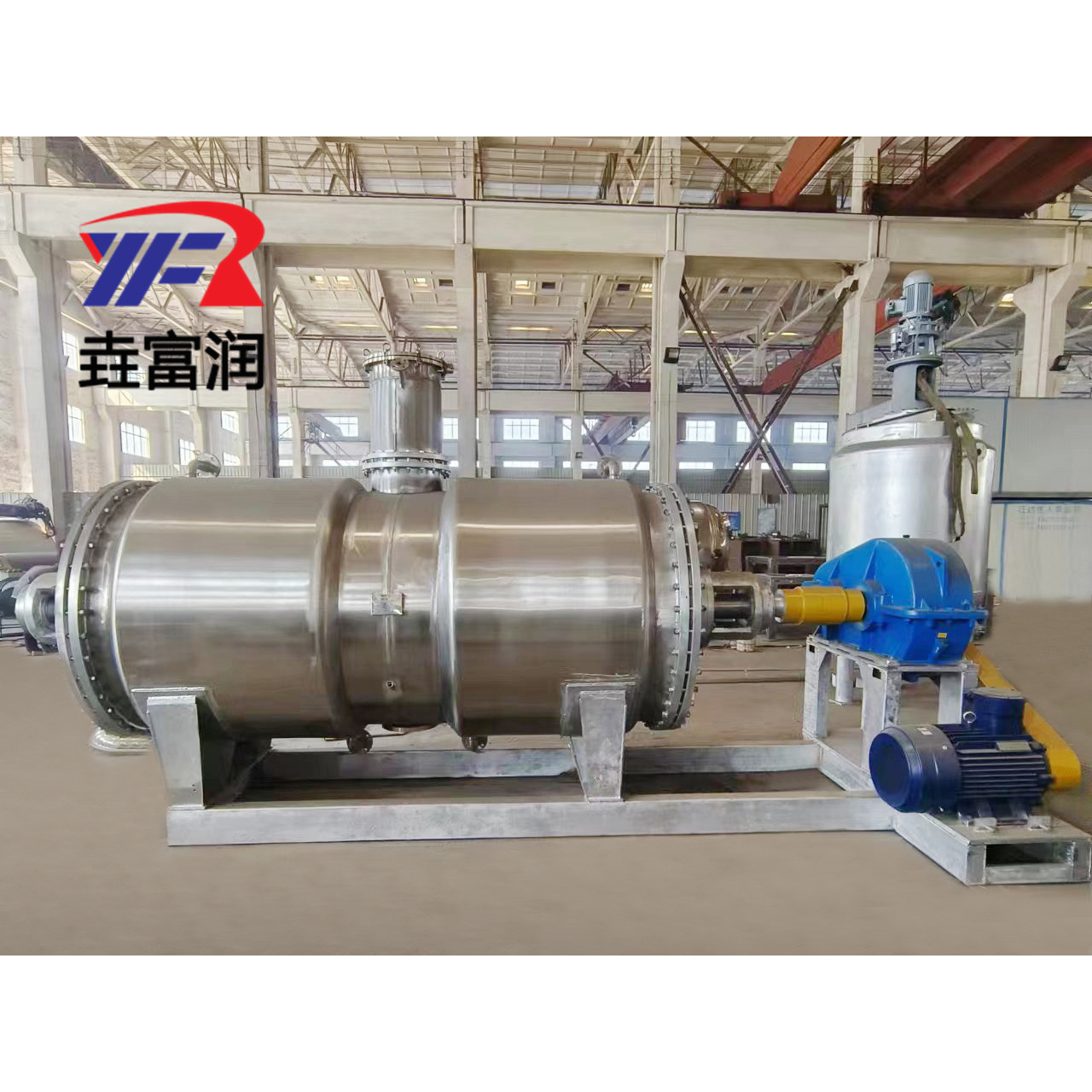









Product Introduction:
A spray dryer is a type of continuous atmospheric pressure dryer. It uses special equipment to spray the liquid into a mist, allowing it to come into contact with hot air and dry. It is used for drying liquids, suspensions, and viscous liquids that are heat-sensitive, such as milk, eggs, tannins, etc. It is also used for drying fuels, intermediates, soap powder, and inorganic salts, among others.
A spray dryer is a type of continuous atmospheric pressure dryer. It uses special equipment to spray the liquid material into a mist, which then contacts hot air for drying. It is used for drying heat-sensitive liquids, suspensions, and viscous liquids such as milk, eggs, tannins, etc. It is also used for drying fuels, intermediates, soap powder, and inorganic salts.
Principle of Spray Drying Machine:
A spray dryer is a drying method that uses an atomizer to disperse the raw liquid into droplets and then dries the droplets using hot gases (air, nitrogen, or superheated steam) to obtain the product. The raw liquid for spray drying can be a solution, emulsion, suspension, or even a molten or paste-like substance. The dried product can be made into powder, granules, hollow spheres, or pellet-like forms as required. The atomizer that converts the liquid into droplets is a key component of the spray drying process.
Safety Precautions for Spray Drying Machine:
1The drying cabinet should be placed in a dry indoor location for optimal use, and the outer shell must be properly grounded.
2In the power circuit of the laboratory small spray dryer, the user should install a switch with the current corresponding to the drying chamber for this box.
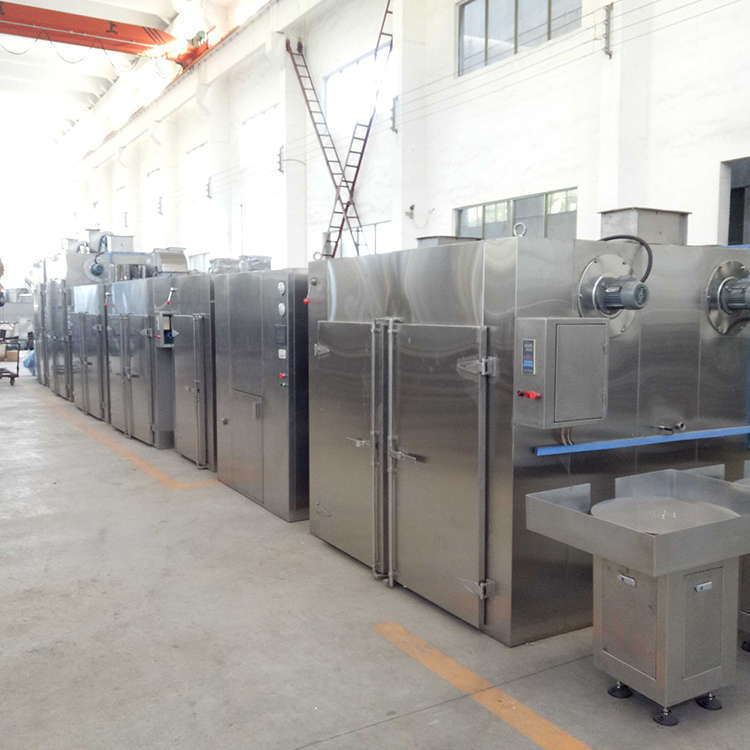
3Each drying cabinet comes with two adjustable shelf grids for arranging samples, and the spacing between the shelves can be adjusted according to the size of the samples. Samples should not be arranged too closely to ensure proper airflow. It is strictly prohibited to place samples on the bottom plate of the workroom to prevent damage due to overheating.
4This unit is a digital temperature controller. When setting the desired temperature, simply press the temperature setting button on the control panel to the required temperature and you can start the process.
Product Specifications:
Project/Parameters | 5 | 25 | 50 | 150 | 200-2000 |
Inlet Temperature (°C) | 140-350 Self-Control | ||||
Export Temperature (°C) | 80-90 | ||||
Moisture Evaporation Rate | 5 | 25 | 50 | 150 | 200-2000 |
Centrifugal spray head drive type | Compressed Air Transmission | Mechanical Transmission | |||
RPM (revolutions per minute) | 25000 | 18000 | 18000 | 15000 | 8000-15000 |
Spray Disc Diameter (mm) | 50 | 120 | 120 | 150 | 180-240 |
Heat source | Electricity | Steam + Electric | Steam and electricity, fuel oil, gas, hot blast air | ||
Electrical Heating Power (kW) | 9 | 36 | 72 | 99 | |
Dimensions (m) | 1.8×0.93×2.2 | 3×2.7×4.26 | 3.5×3.5×4.8 | 5.5×4.7 | Determine as per actual circumstances |
Dry Powder Recovery (%) | ≥95 | ||||
Note:
The amount of water vaporization is related to material characteristics, solid content, and the temperature of the hot air at the inlet and outlet. The data in the table is for reference only. Users can select the heating method based on local energy conditions and choose the dust collection method according to the material characteristics.