









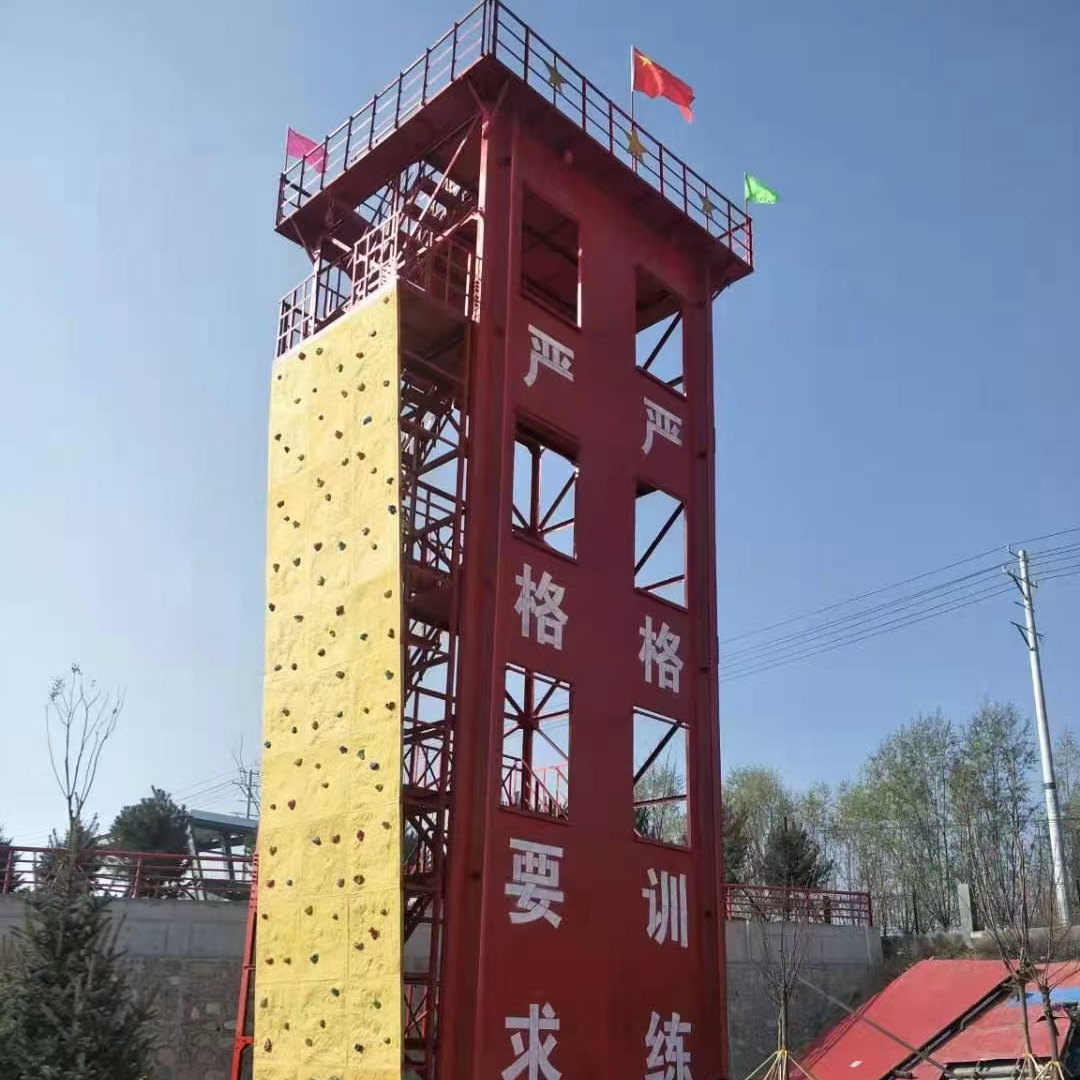

The fundamental principle of the modular tower lies in its modular construction. Each unit can be independently designed and manufactured, then assembled using connectors. This method offers significant advantages over a monolithic structure. Units can be produced in a standardized manner, reducing manufacturing costs. The assembly method is flexible, allowing the height and functionality of the tower to be adjusted as needed. Maintenance and replacement are also simplified, requiring only the handling of specific units.
In structural design, a combination tower requires considering multiple factors. First, material selection is crucial, as different materials offer varying strengths and durability. Metal materials have high strength but are heavy, while composite materials are lightweight but more costly. Designers need to weigh the characteristics of various materials based on specific requirements. Next, the method of connection, such as bolted joints, welding, and plug-in connections, each has its own advantages and disadvantages. Bolted joints are easy to disassemble but require regular inspections, while welding offers high strength but is irreversible. Wind loads and seismic effects are also multifaceted considerations. Rational structural design can effectively resist these external forces.
The process of constructing a combination tower involves multiple steps. First is the foundation construction, a stable foundation being crucial for the tower's safe operation. Next comes the unit hoisting, which must be carried out in strict sequence to ensure each unit is positioned accurately. Lastly, there's the overall debugging, checking all connection points and functional systems for proper operation. The entire process requires the collaboration of a professional team.
The modular tower has a wide range of applications. In the communication field, it serves as a supporting structure for signal transmission. In the energy sector, wind turbine generators often adopt this form. In industrial facilities, observation towers and lighting towers frequently utilize the modular structure. Different application scenarios have varying requirements for towers; communication towers need to ensure stability, while wind turbine towers must be adaptable to harsh weather conditions.
The evolution of the composite tower has been a lengthy process. Initially, simple tall structures were built using wood and stone. With the development of the steel industry, metal structural towers began to emerge. Advances in modern materials science and engineering technology have continuously increased the height and complexity of composite towers. Computer-aided design has made structural optimization more precise, and construction techniques are also continuously improving. Environmental adaptability is a key consideration in the design of composite towers. In coastal areas, special corrosion protection treatments are required. In cold regions, the impact of low temperatures on material properties must be considered. Seismic design standards vary by region, all of which need to be thoroughly considered during the design phase. Maintenance and management of composite towers are also crucial. Regular inspections can promptly identify potential hazards, and preventive maintenance can extend the service life. Maintenance activities include structural inspections, corrosion treatments, and component replacements, etc. Establishing a comprehensive maintenance system is vital for ensuring the safe operation of the towers. Future development of composite towers may focus on several directions. The application of new materials will improve tower performance, intelligent monitoring systems can provide real-time structural status, modular design will further enhance construction efficiency, and green and environmental concepts will be more integrated into the design.
1. The modular tower is constructed using a modular principle, forming an integrated structure through unit assembly, offering flexibility and cost-effectiveness.
2. Structural design requires considerations of material selection, connection methods, and environmental loads. The process includes foundation construction, unit hoisting, and overall debugging.
3. Combination towers are widely used in communication and energy sectors, benefiting from advancements in materials science and engineering technology. Future trends include the application of new materials and intelligent monitoring.