








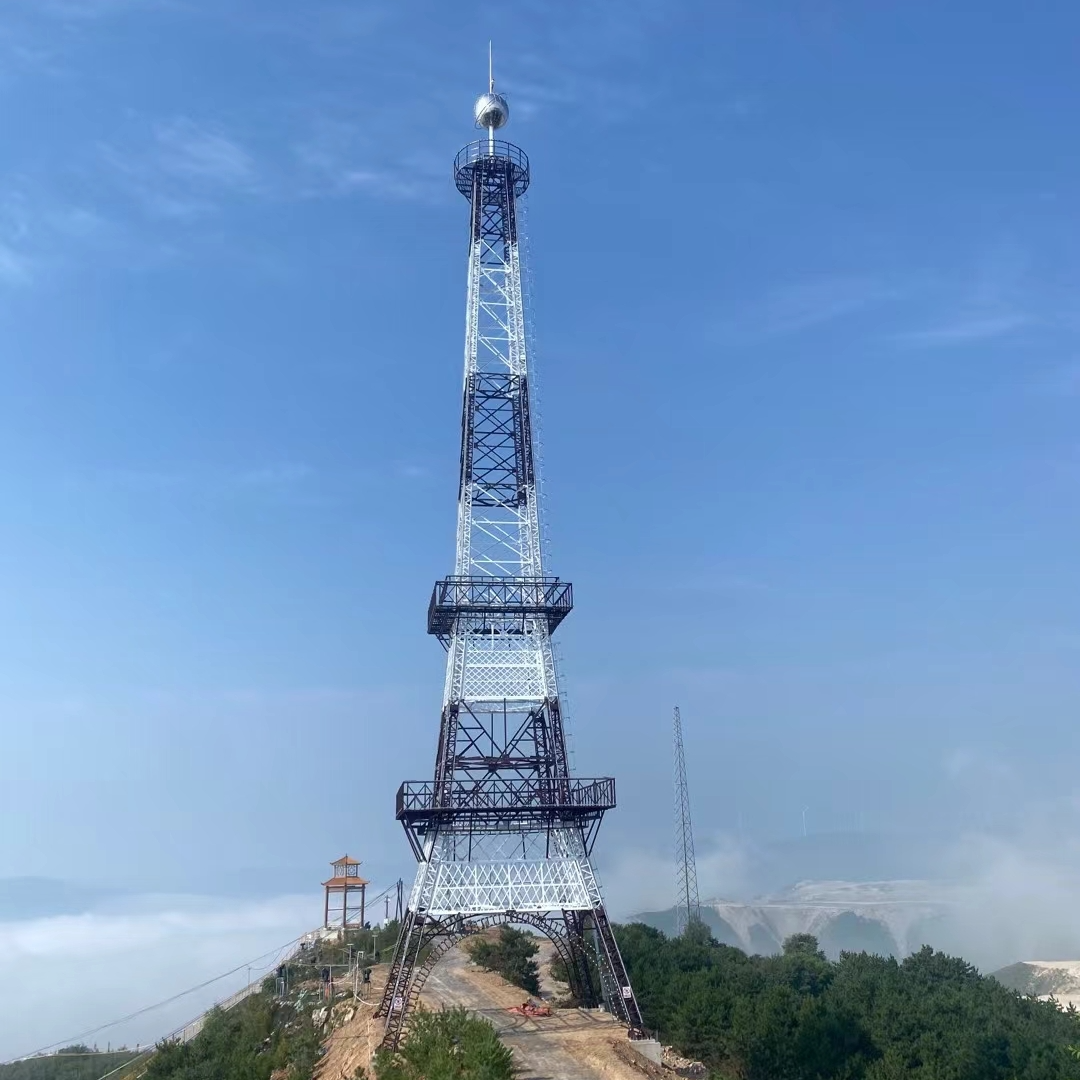


Wind measurement towers are tall structures used for measuring wind energy parameters, essentially a type of tower structure designed for observing and recording near-ground airflow movements. They were previously mostly constructed by wind power companies, meteorological, and environmental protection departments for meteorological observations and atmospheric environmental monitoring.
The components of a wind measurement tower include the base, tower column, crossbar, diagonal brace, wind speed gauge bracket, guyed pin (not applicable for self-supporting towers).
Wind measurement towers are a new type of tower that has emerged for the purpose of collecting data on wind resources. These towers are installed within the target wind field to analyze the actual situation of wind energy resources within that field. Wind measurement devices are installed at different heights on the tower body.Anemometer、Compassionate Indicatorand temperature,PressureMonitoring equipment. Continuously observes the wind conditions at the site around the clock, with measured data recorded and stored on the tower.Data recorderToday, a 3-5 year wind energy resource observation program is required to meet the assessment needs for wind conditions within the wind farm. Wind measurement towers are typically installed on the site of the wind farm, usually in triangular or cylindrical structures.Steel wire ropeCable-stayed reinforcement method, with a height typically ranging from 80 to 200 meters.
In recent years, with the widespread global focus on wind energy resources and the rapid development of the wind power industry, companies and wind farm developers have begun to invest in constructing wind measurement towers to gather first-hand wind data for future wind farm investments and construction.
Wind speed gauges, wind vanes, and equipment for monitoring temperature and air pressure are installed at various heights on the tower. The site's wind conditions can be continuously observed around the clock, with the measured data recorded and stored in data recorders mounted on the tower.
Wind Turbine Tower Structural DesignCommon wind tower structures include self-supporting and guyed types.
The self-standing anemometer tower has a wider base section, requiring more material for the tower frame and a higher foundation requirement. The guyed anemometer tower is structurally sound with high reliability, featuring a smaller cross-section and less material usage for the tower frame. However, it has a greater number of guyed foundations and a more complex construction process.
The wind tower tower frame can be made of a single steel pipe, triangular truss, or rectangular truss, etc.
Single steel pipe structure requires larger steel pipe diameter, larger windward area, and more material; triangular truss structure is more stable, with less wind load on the tower, making it the most economical; rectangular truss structure is also stable, and can be chosen for the tower when the triangular truss does not meet the force and deformation requirements or is not cost-effective.
The primary function of the anemometer tower:Environmental monitoring, data collection of resources such as wind, air pressure, and humidity. Supports the installation of corresponding instruments and equipment.
Applicable Unit:Power plant preliminary planning, island wind measurement, meteorological data collection, environmental monitoring departments.
Advantages:Low wind load coefficient, strong wind resistance. The tower body has a small windward area, which is conducive to accurate and objective data collection, minimizing the gap between measured and actual data. The column of the collection tower is connected with an external flange, with bolts under tension, making it less prone to damage, and reinforced with steel strands.
The tower columns are arranged in an isosceles triangle, saving steel, with a smaller footprint, reducing land use, and low cost (only 1/3 or less of a corner steel自立 tower). Easy to locate. The tower has a light self-weight, making transportation and installation convenient, and shortening the construction period. The tower design varies with the wind load curve, with smooth lines, making it less likely to collapse during rare wind disasters, and high safety factor. The design complies with national steel structure design specifications and tower design regulations, ensuring structural safety and reliability.
Standard of Execution:Wind Energy Resource Measurement Methods for Wind Farms (GB/T 18709-2002)
Wind Resistance:Maximum wind resistance: 60 m/s; seismic intensity: 8 degrees
Wind data is used for wind resource assessment and investment prospect prediction.
Key Parameters
Basic Design Criteria: Steel Structure Design Specification (TJ17-74).
Basic Parameters: Design Wind Speed: 60 m/s
Verticality: 1/1000
Appropriate Temperature: -45°C to +45°C
Corrosion Treatment: Hot-Dip Galvanized