
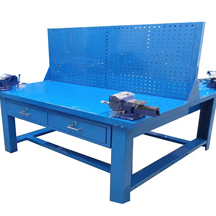


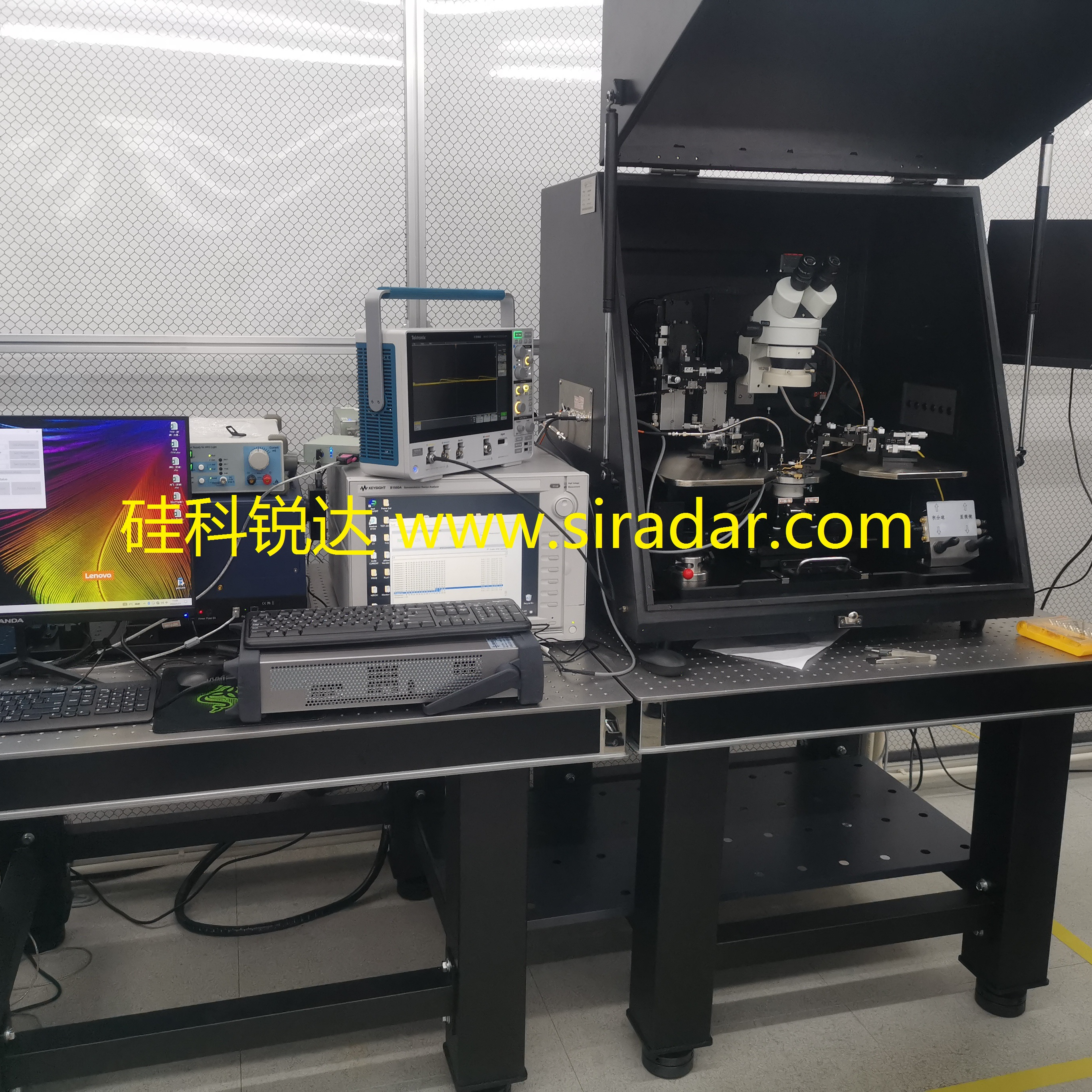
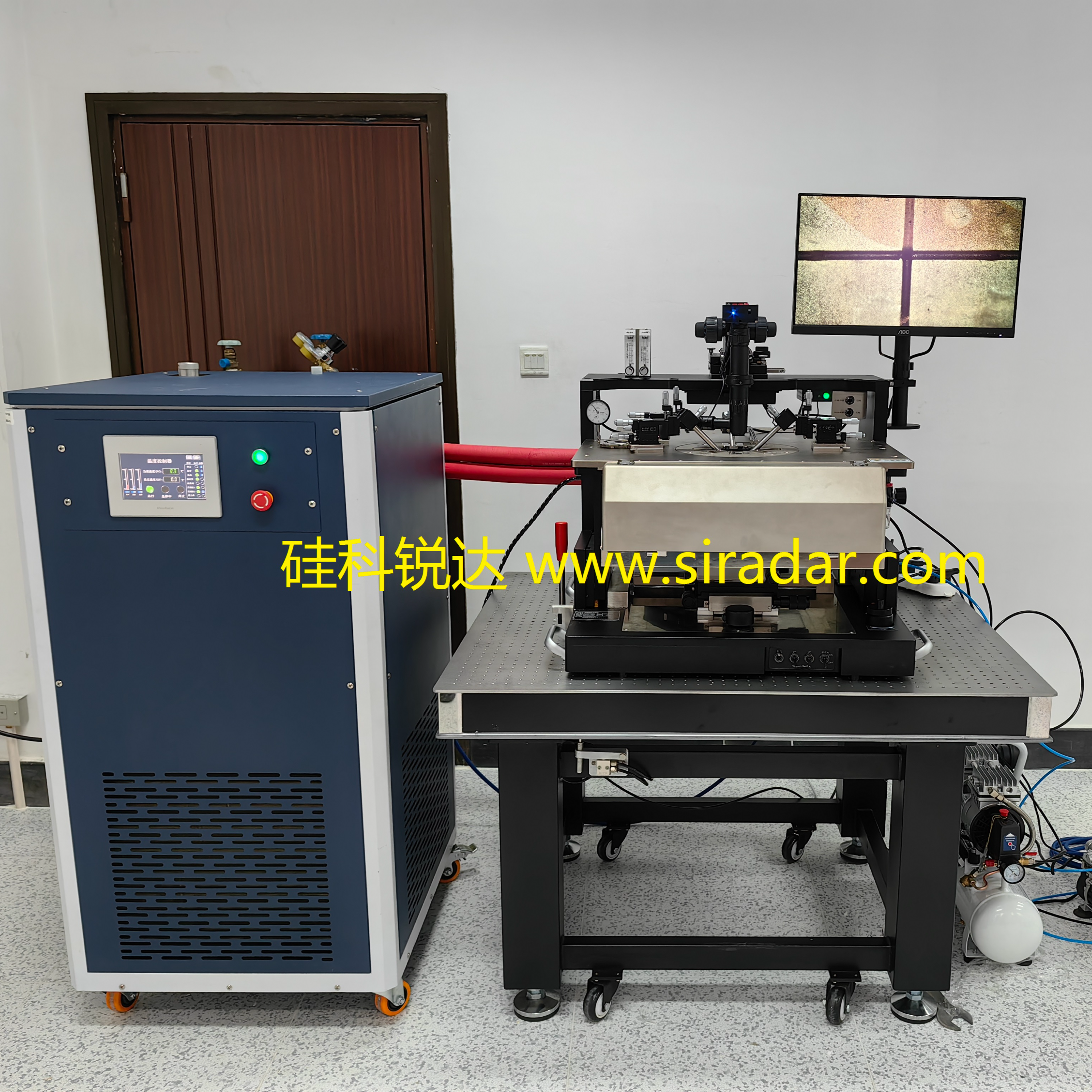
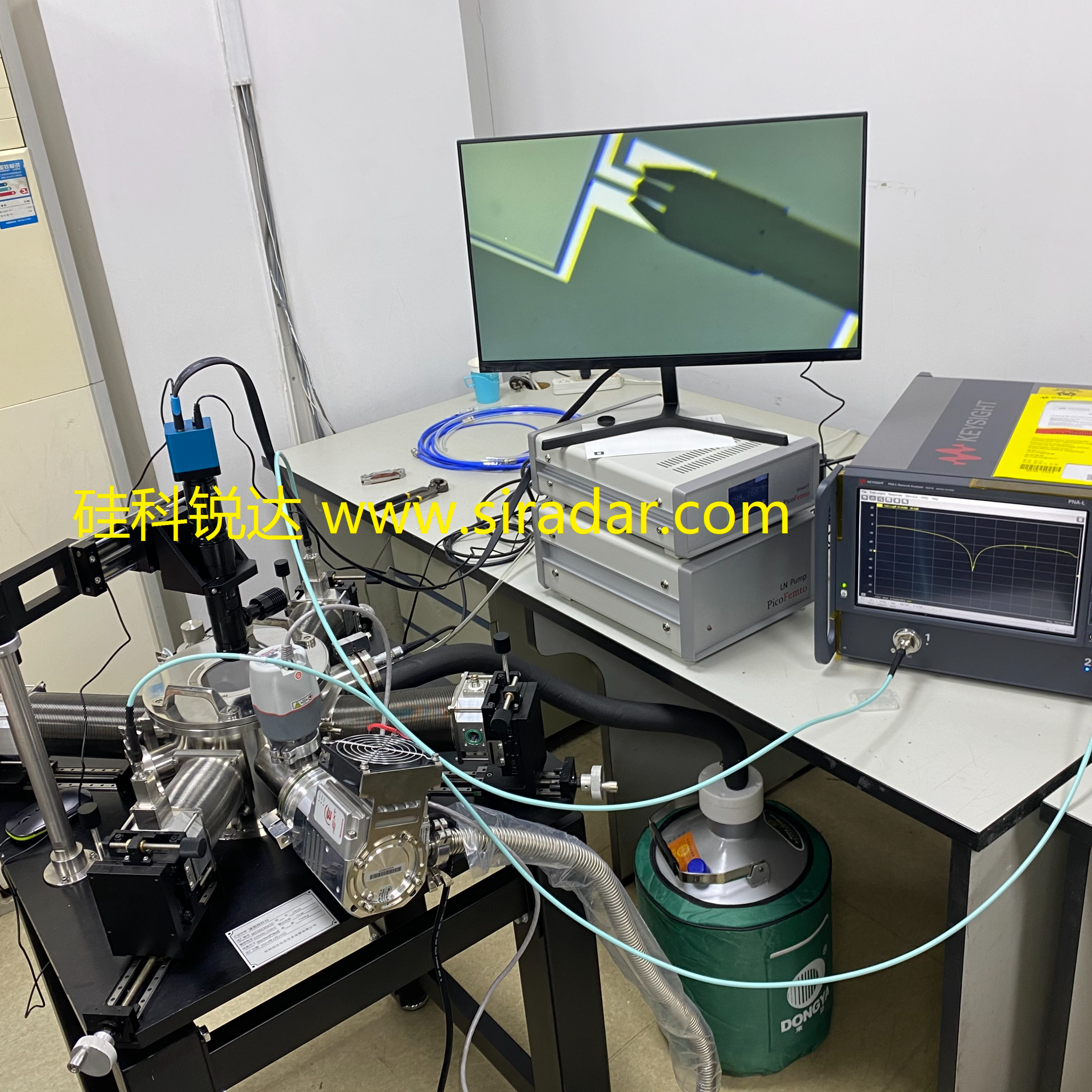
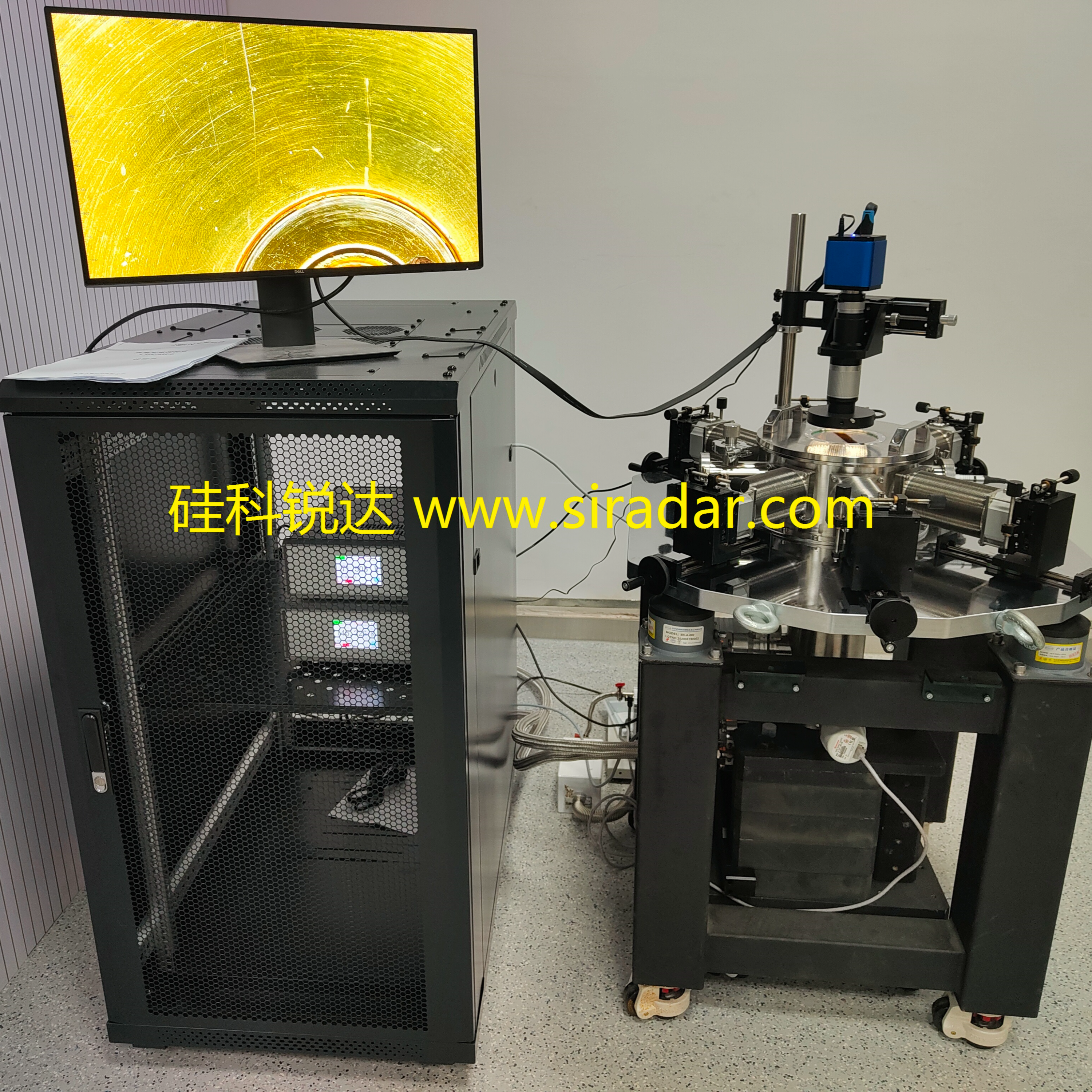





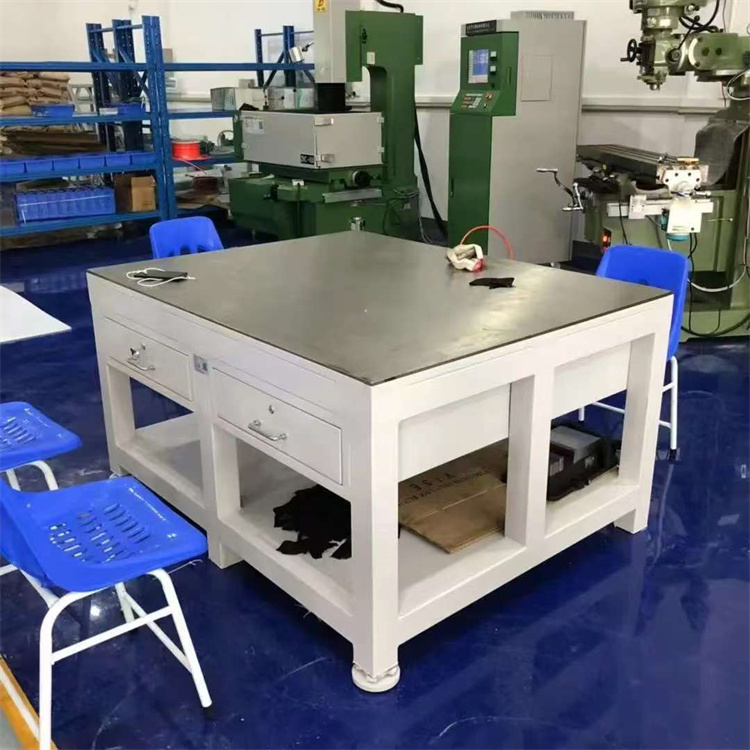
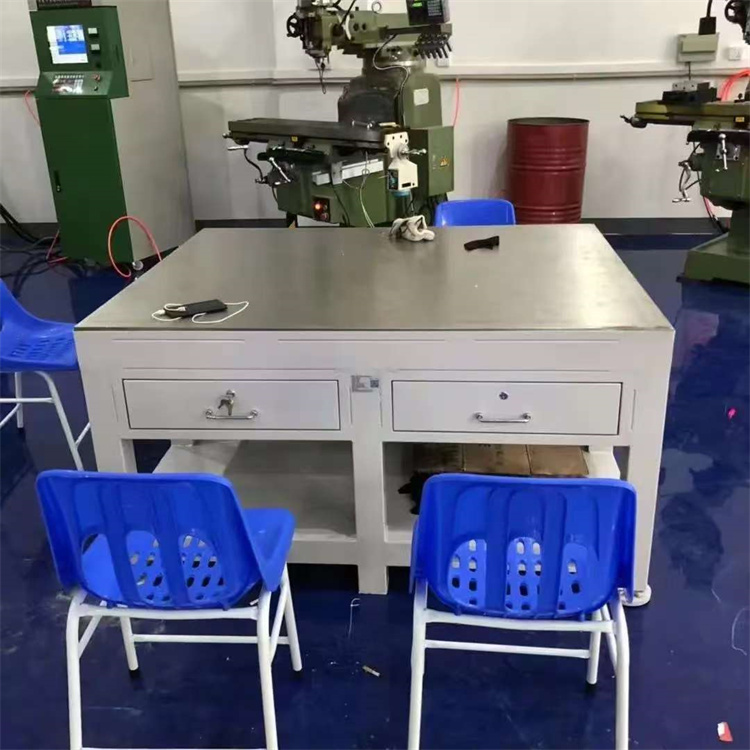
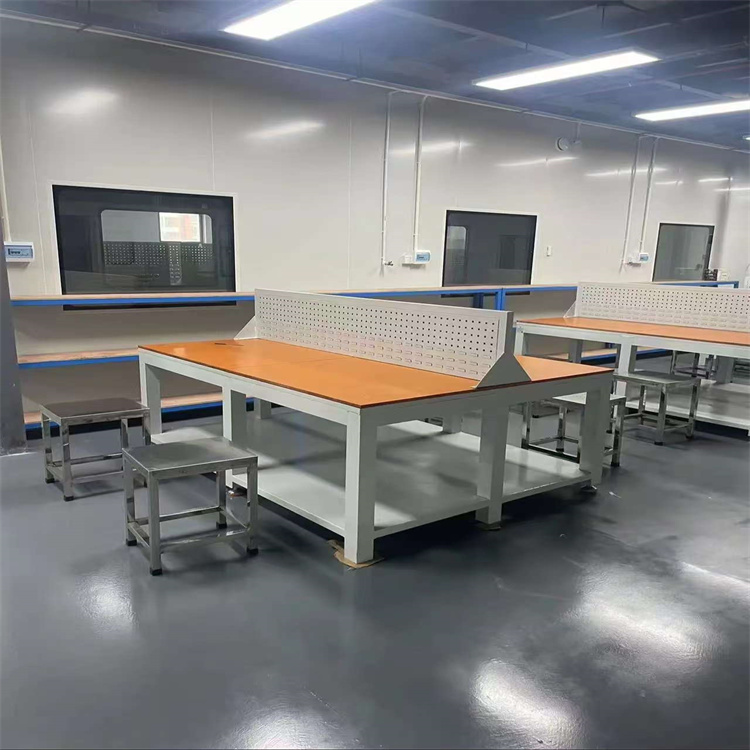
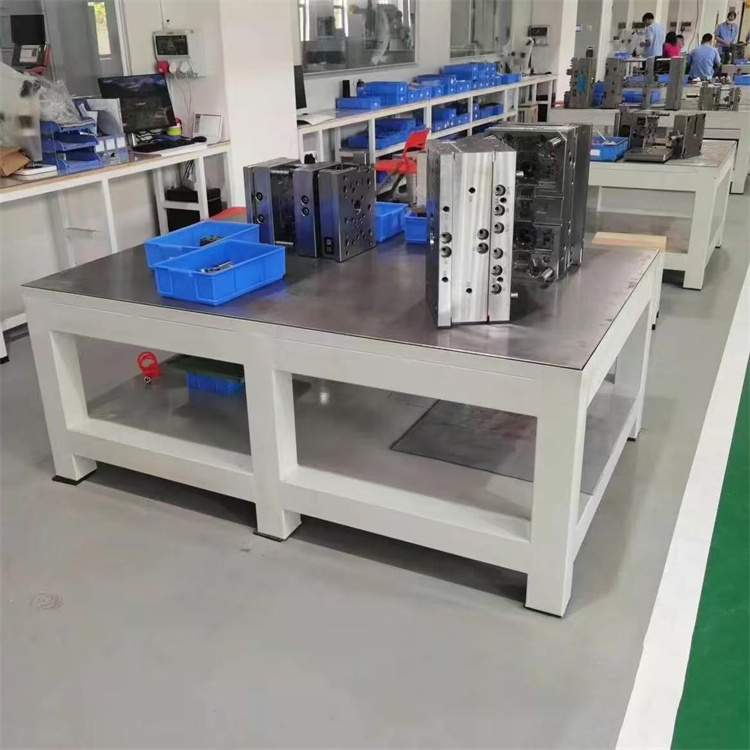
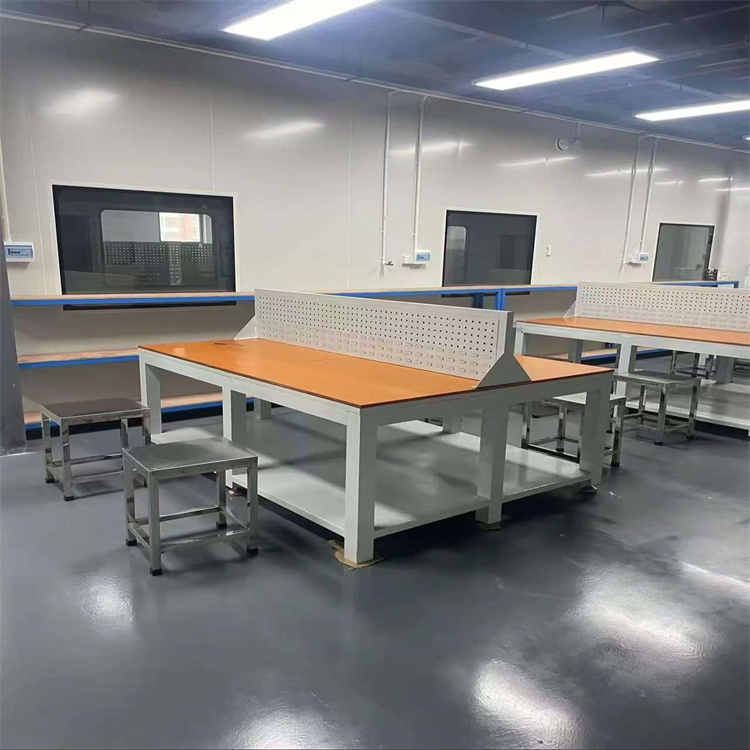
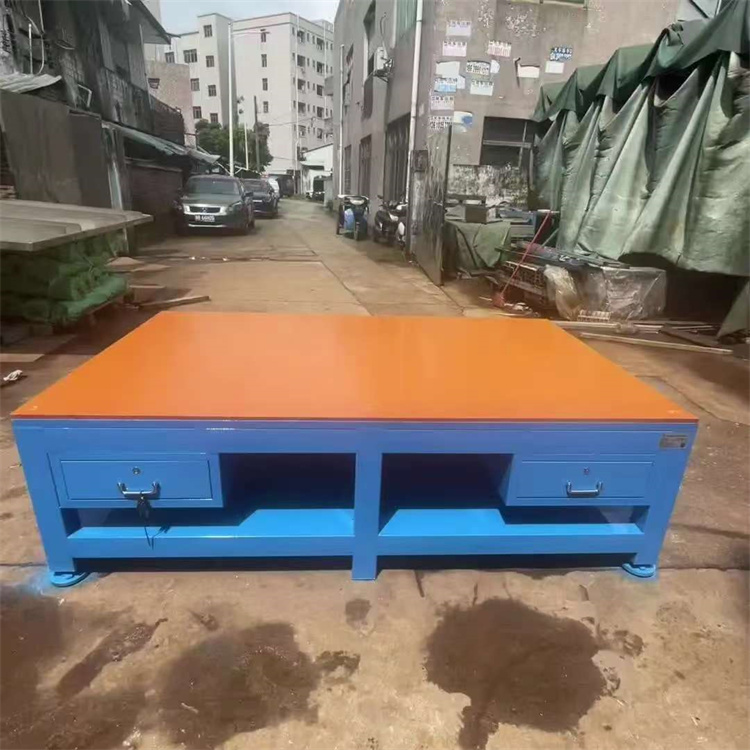
Workbench for Fitters: Also known as a fitting bench, mainly divided into assembly, marking, and inspection platforms for fitters. Assembly Platform: Equipped with T-slots for securing workpieces, primarily used by fitters for adjusting and assembling equipment, serving as the fundamental base platform. Inspection Platform: Suitable for various inspection tasks, it provides a precision measurement reference plane for machine tool mechanical inspections, checking part dimensions and behavior deviations, and for precise marking. It is an indispensable basic tool in mechanical manufacturing inspections. Marking Platform: The flat surface is marked with reference lines, used by fitters to inspect workpieces and for marking during assembly. The specific size of the marking lines is determined by the user based on their usage. Fitter's Workbench Material: Grey cast iron HT200-300, working surface hardness HB170-240, treated twice manually (artificial aging at 600-700 degrees Celsius and natural aging for 2-3 years), ensuring good precision and wear resistance. Fitter's Workbench Specifications: 200×200 to 2000×4000 (special specifications are produced according to customer drawings or agreed upon by both parties).
Tool cabinets, as specialized storage solutions for spare parts, offer the unique functions of high storage capacity and weight-bearing capability. Additionally, their distinctive separation and classification features provide a strong visual effect. Material: High-quality cold-rolled steel plate; Surface Treatment: After acid pickling and phosphatizing, the surface is spray-painted.
Products produced by Shenzhen Oubidi Industrial Equipment Co., Ltd. include (available for customization):
Cast Iron Platform: Cast iron flat plates are specifically designed for the foundation platforms of large equipment, featuring reasonable design, strong structure, high precision, and wear resistance. They can be spliced to achieve flatness from 3000mm to 6000mm, and are manufactured through scraping or grinding. They are widely used in machine processing, tool shops, machine (inspection) repair workshops, large equipment bases, metrology rooms, and for precision inspection, measurement, and grinding. They are also capable of measuring and inspecting the flatness, straightness, and angular tolerance values of workpieces.