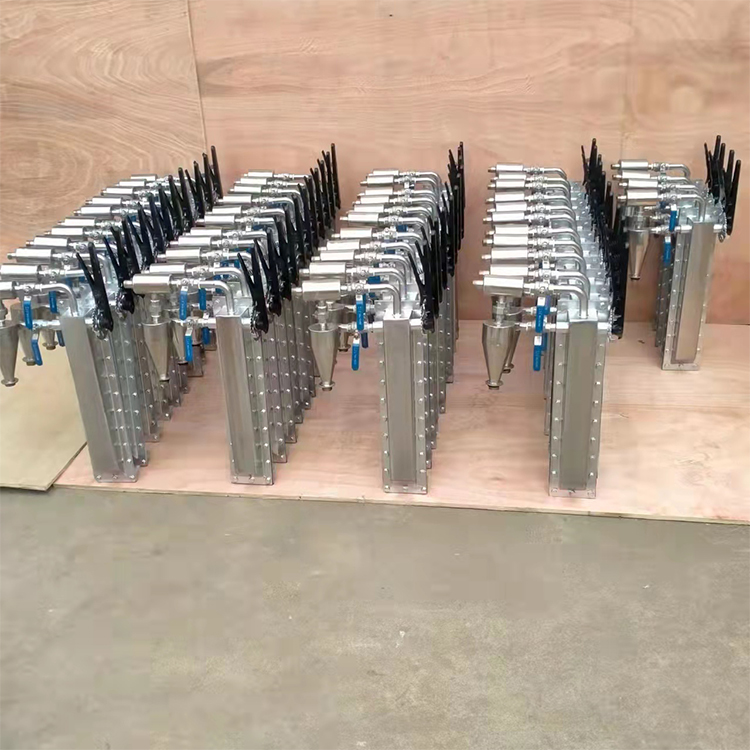

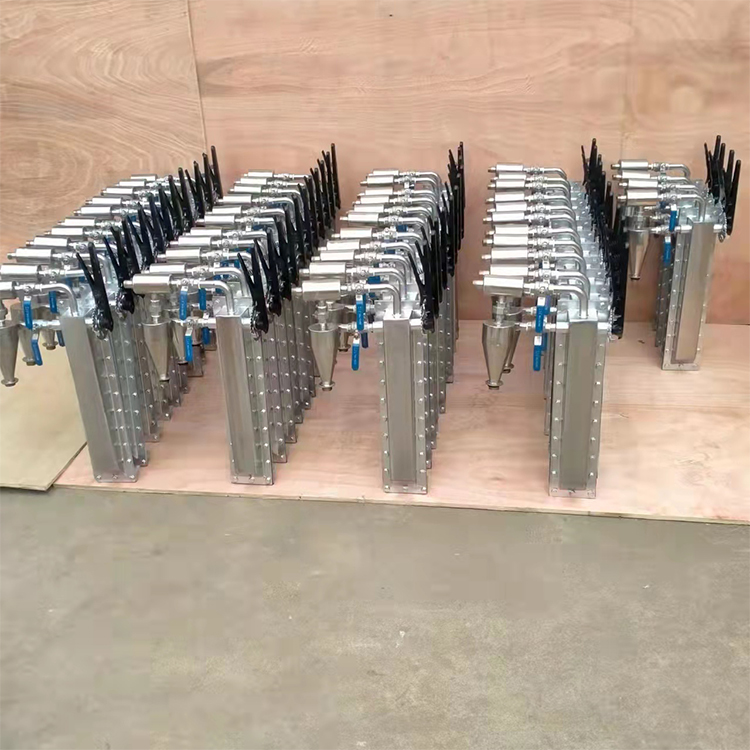














I. Fixed Coal Powder Sampling Equipment Overview
Stationary coal powder sampling device, primarily used for regular coal powder sampling from the primary coal-powder pipe of a straight-blown coal powder system. Due to the wear of the coal mill grinding parts, changes in coal type and size, the fineness of the coal powder can vary significantly, directly affecting the efficiency of boiler combustion. Therefore, regular sampling and testing of coal powder fineness is necessary. When the fineness of the coal powder exceeds the designed value, it is essential to promptly adjust the opening of the separator's deflection door or replace the grinding components.
Currently, there is no fixed coal powder sampling device for direct blowing pulverization systems internationally. Some domestic power plants have independently developed and installed them, but most have been abandoned due to coal powder blockages.
This design utilizes compressed air blowing and a vacuum pump for sampling, thus avoiding blockage issues at the sampling point and making sampling easier. The sampling speed is controlled by adjusting the pressure of the compressed air. This method allows for more accurate coal powder fineness measurements. Generally, the fineness of medium-speed coal mills varies significantly. It would be too labor-intensive and unnecessary to take separate samples from multiple coal powder pipelines, as the fineness distribution in each coal powder pipe is relatively fixed and follows a conversion relationship. Therefore, by calibrating the coal powder samples taken from a sampling device installed on 1 to 2 coal powder pipes and using the conversion relationship, a more accurate coal powder fineness value can be calculated.
Section 2: Fixed Coal Powder Sampling Device Structure
The fixed coal powder sampling device is mainly composed of the following parts:
1. Sampling Head – Inserted into the coal powder pipeline, the sampling orifice faces the direction of the coal powder airflow, allowing coal powder to enter the sampling device through this orifice.
2. Sampling Tube - Transports coal powder from the sampling head to the cyclone separator.
3. Separator - Separates coal dust and gas. The coal dust is flung to the wall by the rotating air flow due to gravity and then falls into the dust collector. The gas, however, spirals downward along the wall to the bottom and then rises along the central path to the top, exiting through the exhaust outlet at the top, thus achieving the separation of coal dust and gas.
4. Collector - Concentrates the fixed coal powder samples separated by the separator for calibration purposes.
5. Sampling Valve - When sampling coal powder, open this valve. The negative pressure formed by compressed air exhausting from the exhaust outlet draws air from the separator, allowing the coal powder in the coal powder pipeline to enter the sampling device through the sampling port for collection.
6. Sweep Valve - To clean residual coal dust from the sampling tube, close the sampling valve and pressure-regulating valve, then open the sweep valve to blow through the sampling pipeline with compressed air.
7. Pressure Regulating Valve - Adjusting the opening of this valve can alter the sampling speed of the sampling device.
8. Pressure Gauge - Provides a direct reference for the operation of pressure regulators.
III. Fixed Coal Powder Sampling Device Working Principle
The fixed coal powder sampling device is developed by utilizing the principle of negative pressure suction and cyclone separation to extract coal powder from the coal powder pipeline and achieve solid-gas separation. The coal powder sampling process is explained below.
During coal powder sampling, the blowing valve remains closed while the pressure regulating valve and the sampling valve are open. When compressed air is ejected from the outlet pipe, its jet action inevitably creates a vacuum at the pipe connection with the sampling valve, drawing out the gas inside. The separator and its lower dust collection bottle are sealed connections. The only accessible port for external connection is the sampling head and the sampling tube. Thus, the vacuum causes coal powder in the coal powder tube to enter the sampling device via the sampling head. The coal powder is then separated in the separator and collected in the dust collection bottle, while the gas is expelled through the upper outlet of the separator, carried away by the compressed air.
The purpose of increasing the purge valve function is: before and after coal powder sampling, close the pressure regulating valve and sampling valve, open the purge valve, and blow the remaining coal powder out of the sampling tube to prevent the tube from being blocked by coal powder. And ensure accurate sampling.
IV. Fixed Coal Powder Sampling Device Operating Procedure
1. Preparation Before Sampling: ①Close the pressure valve; ②Close the sampling valve; ③Open the blowback valve for 1-3 minutes; ④Close the blowback valve; ⑤Clean the coal powder in the collection bottle; ⑥Place the collection bottle back in its original position, ensuring a sealed connection between the collection bottle and the separator.
2. Sampling Procedure: ① Open the pressure regulating valve, check the pressure gauge, and adjust the pressure to the desired value; ② Open the sampling valve, begin sampling, and observe the sample quantity in the collection bottle; ③ Close the sampling valve once the required sample quantity is reached; ④ Close the pressure regulating valve; ⑤ Remove the collection bottle and pour out the sample; ⑥ Return the collection bottle to its original position, ensuring a sealed connection.
3. Sampling Operation Complete: ① Open the blow-off valve; ② Close the blow-off valve after 1 to 3 minutes.
4. Model: MF-XXX
Model Description: MF: Coal Powder Sampling Device. XXX: Coal Powder Pipe Diameter.