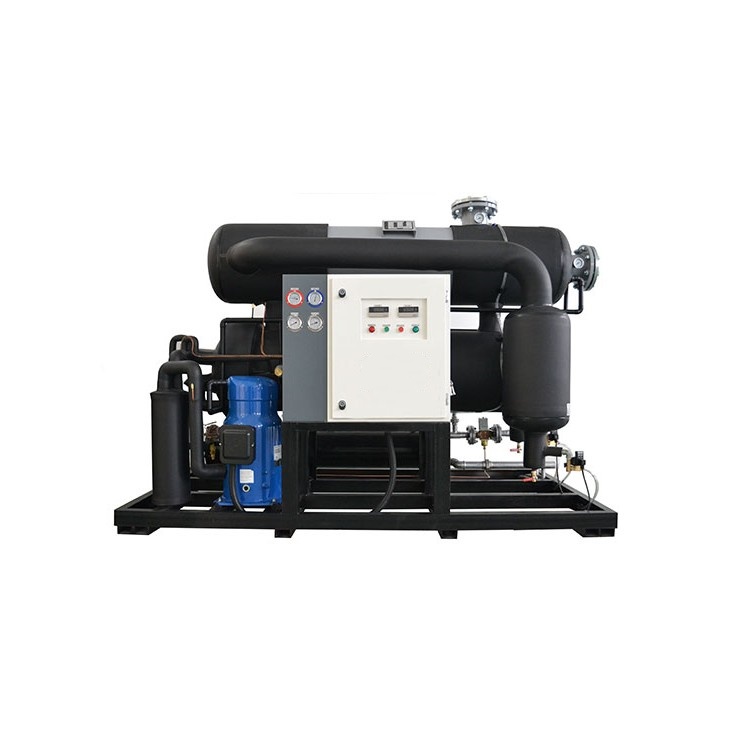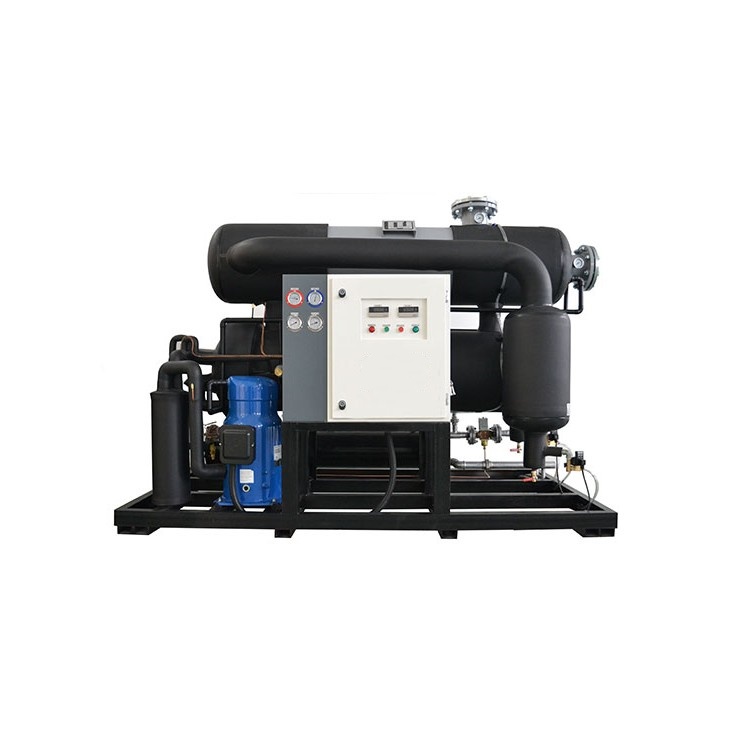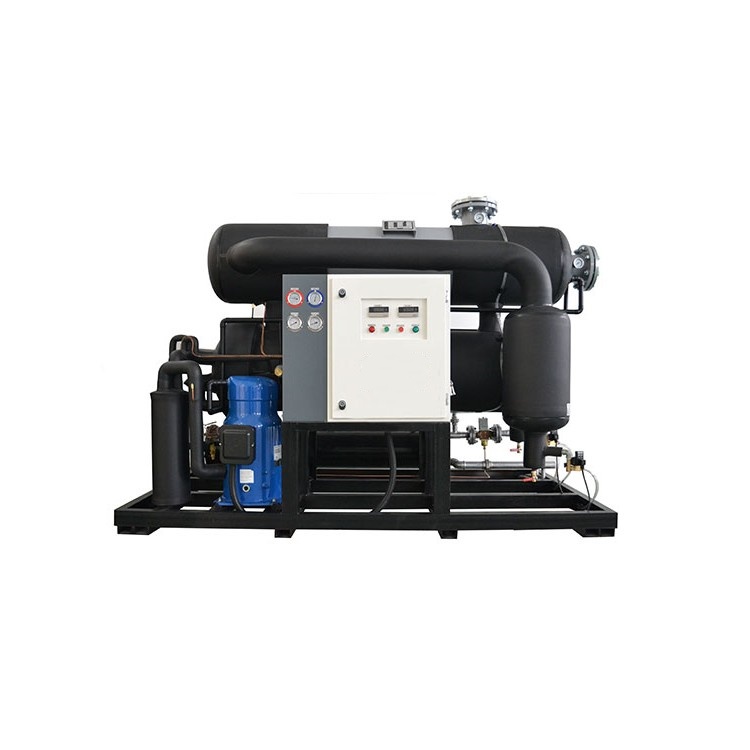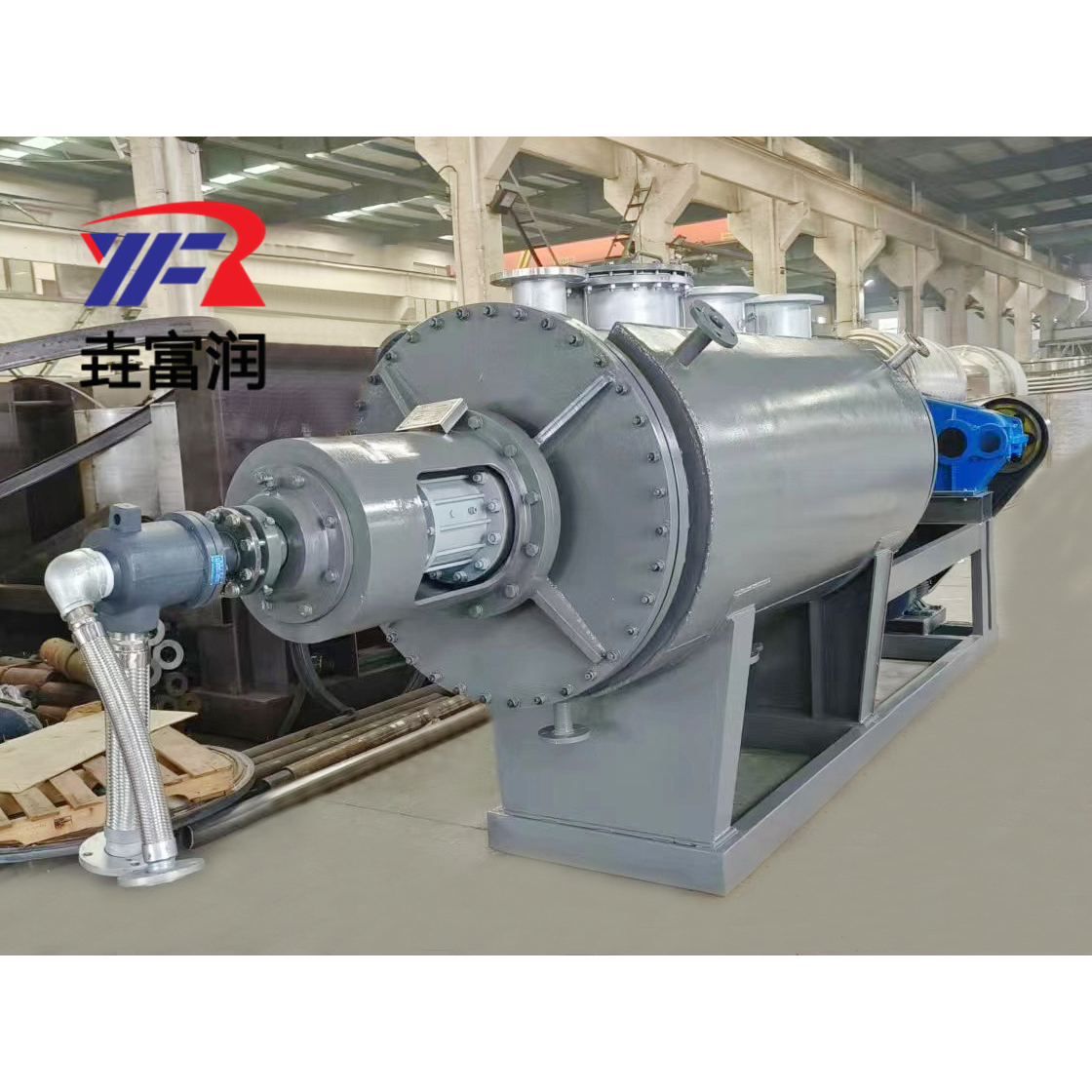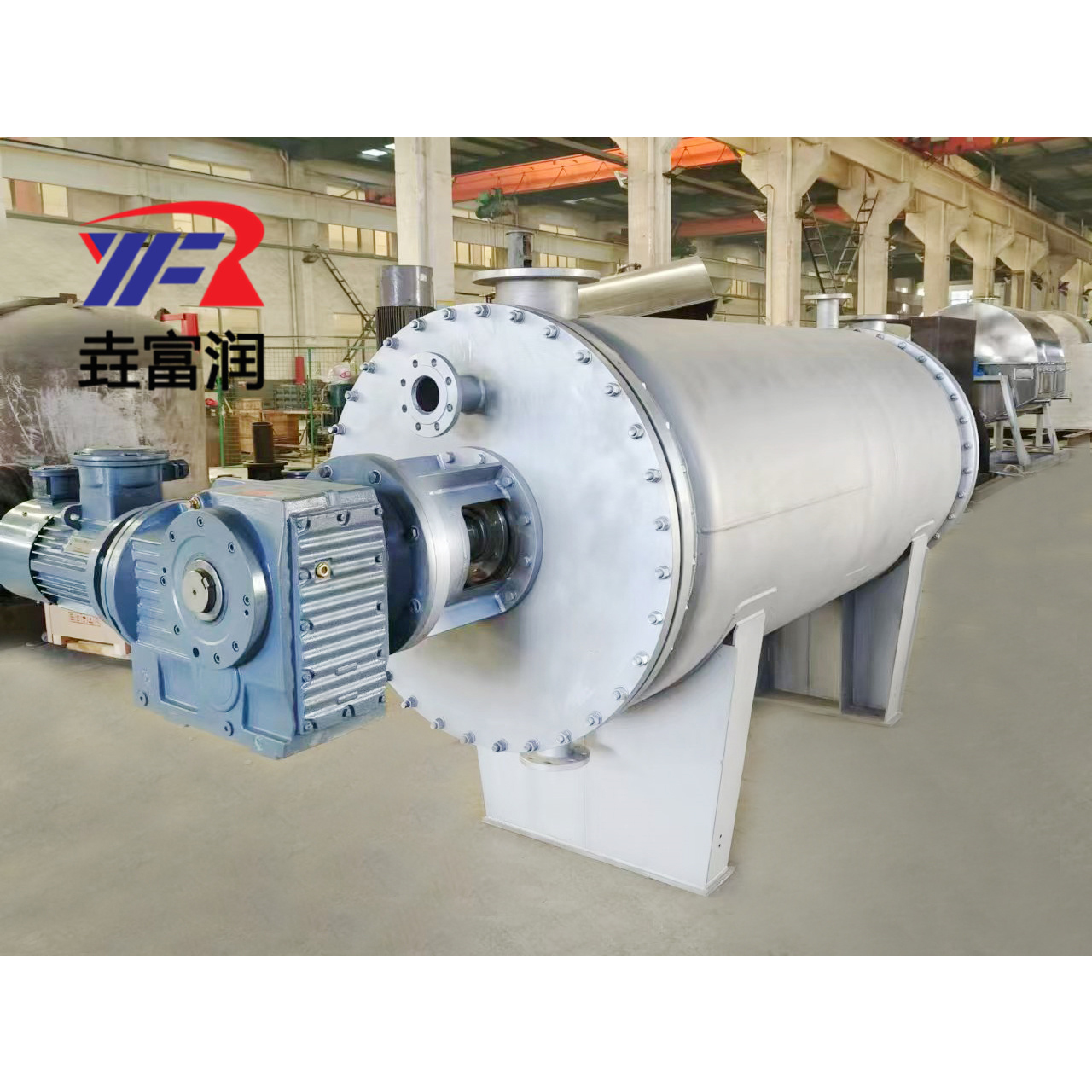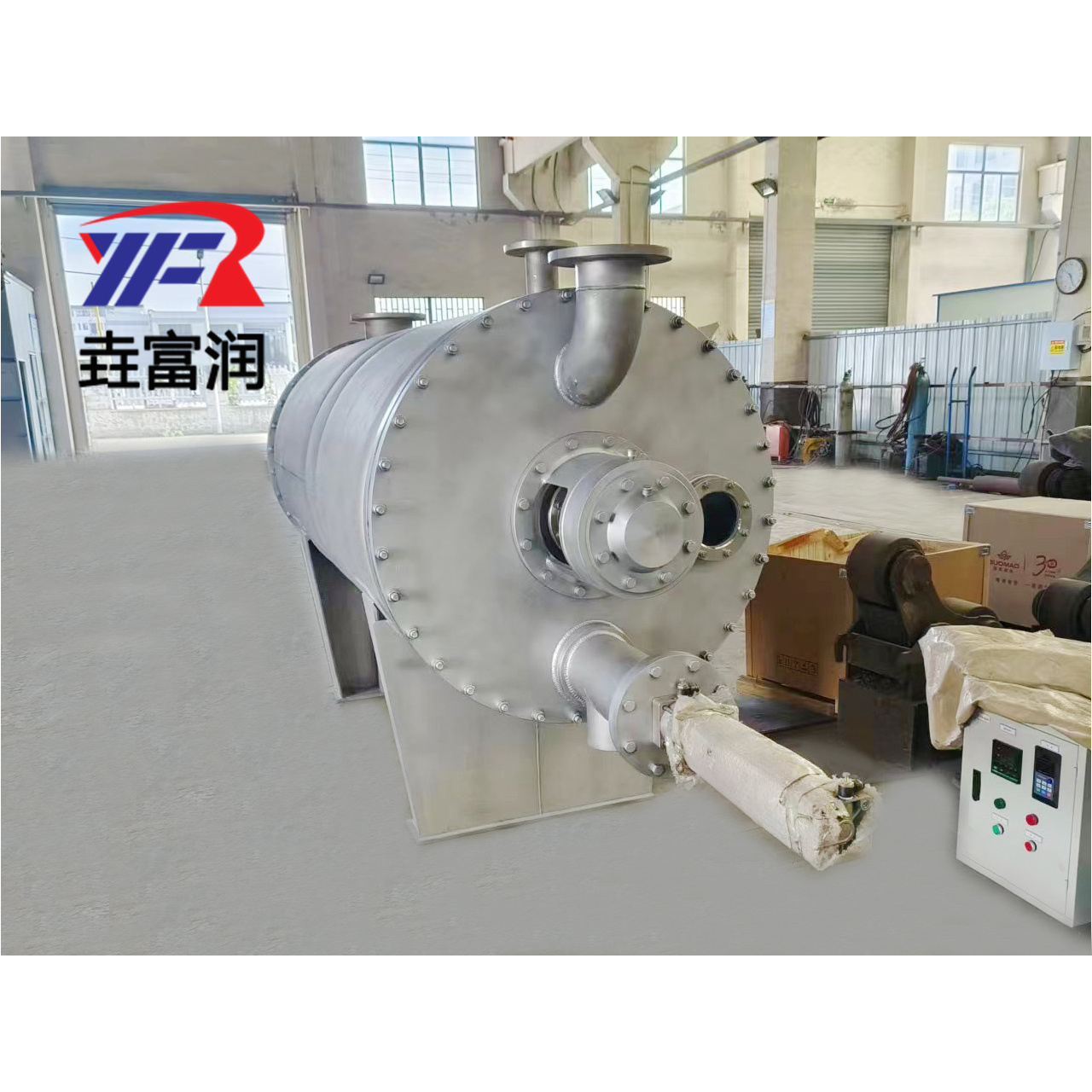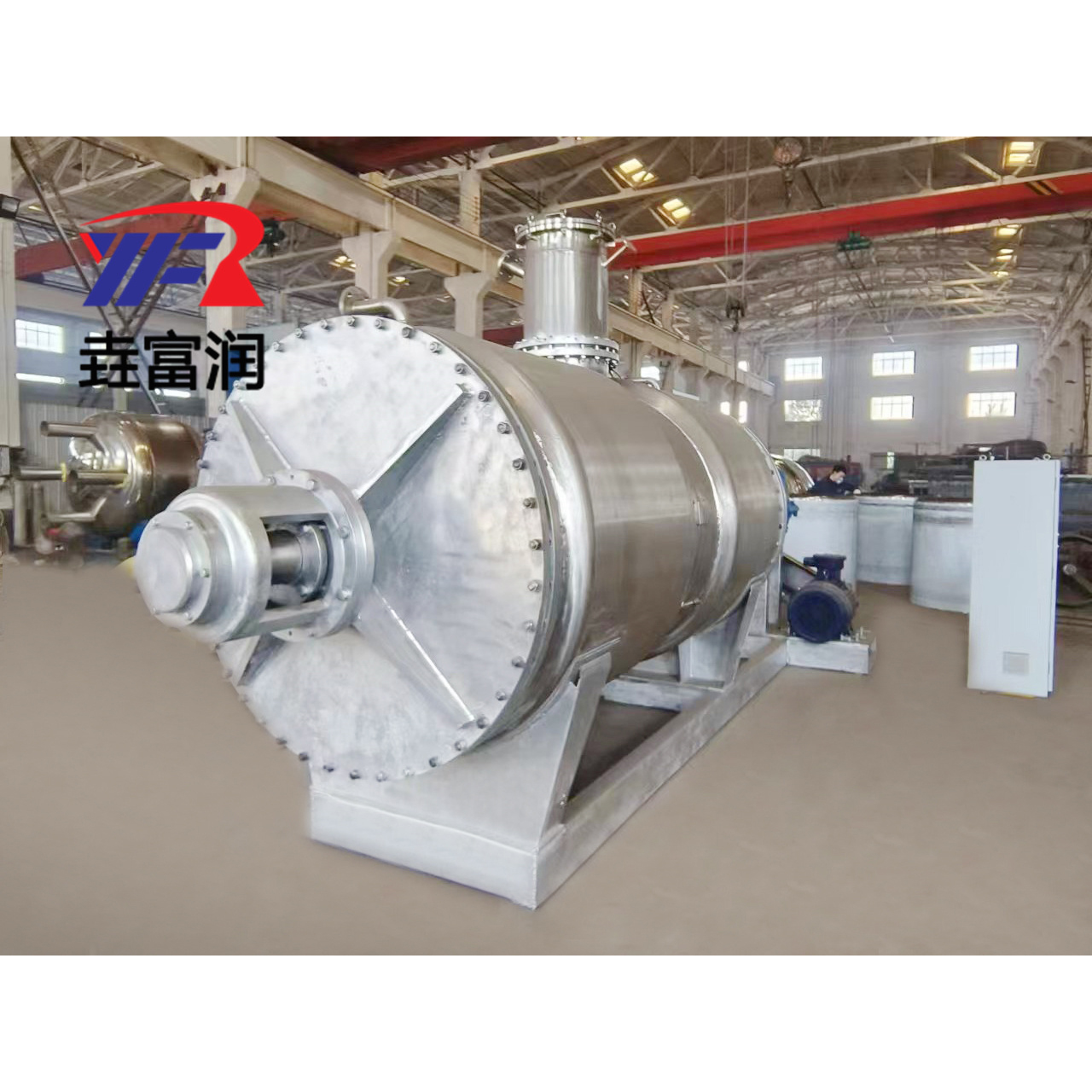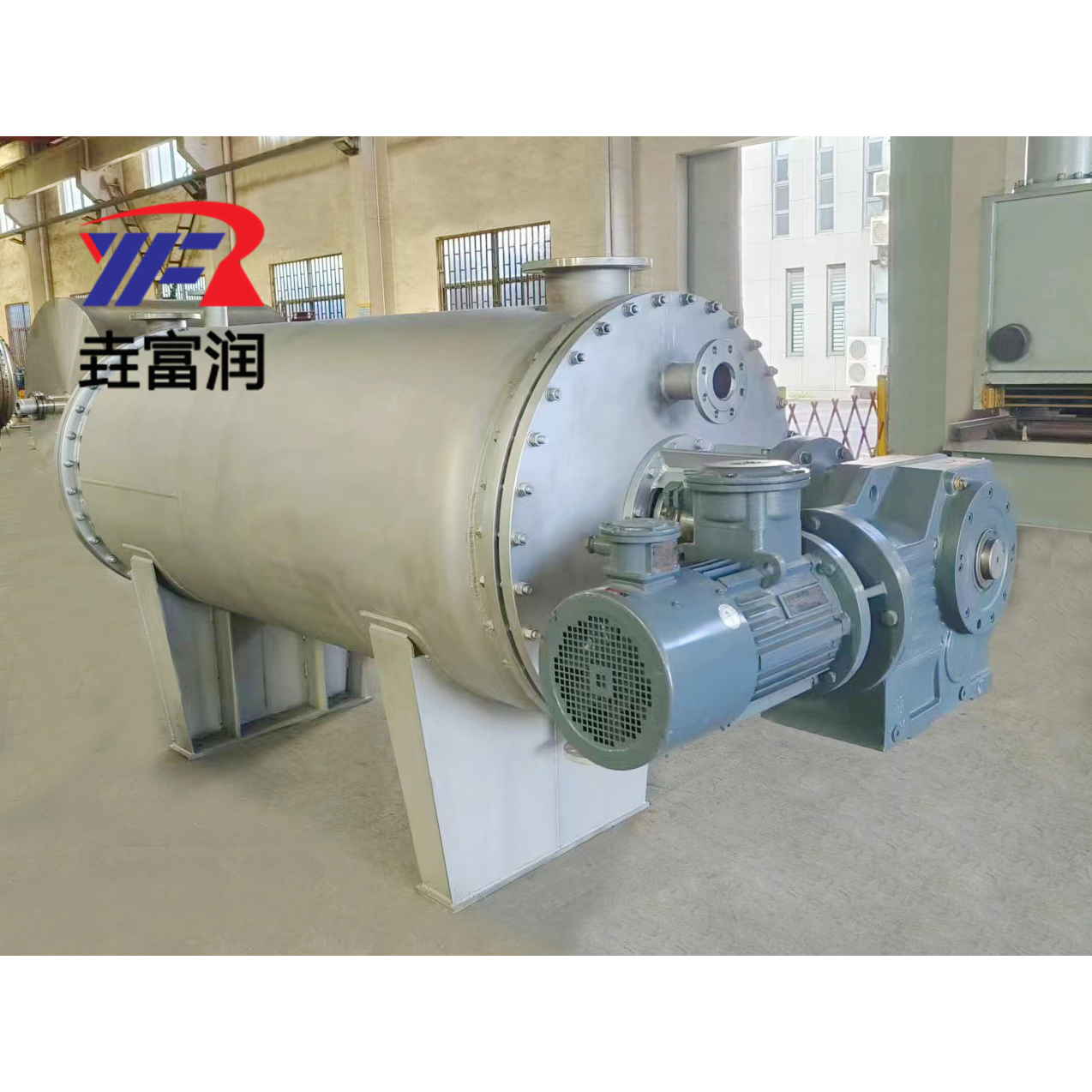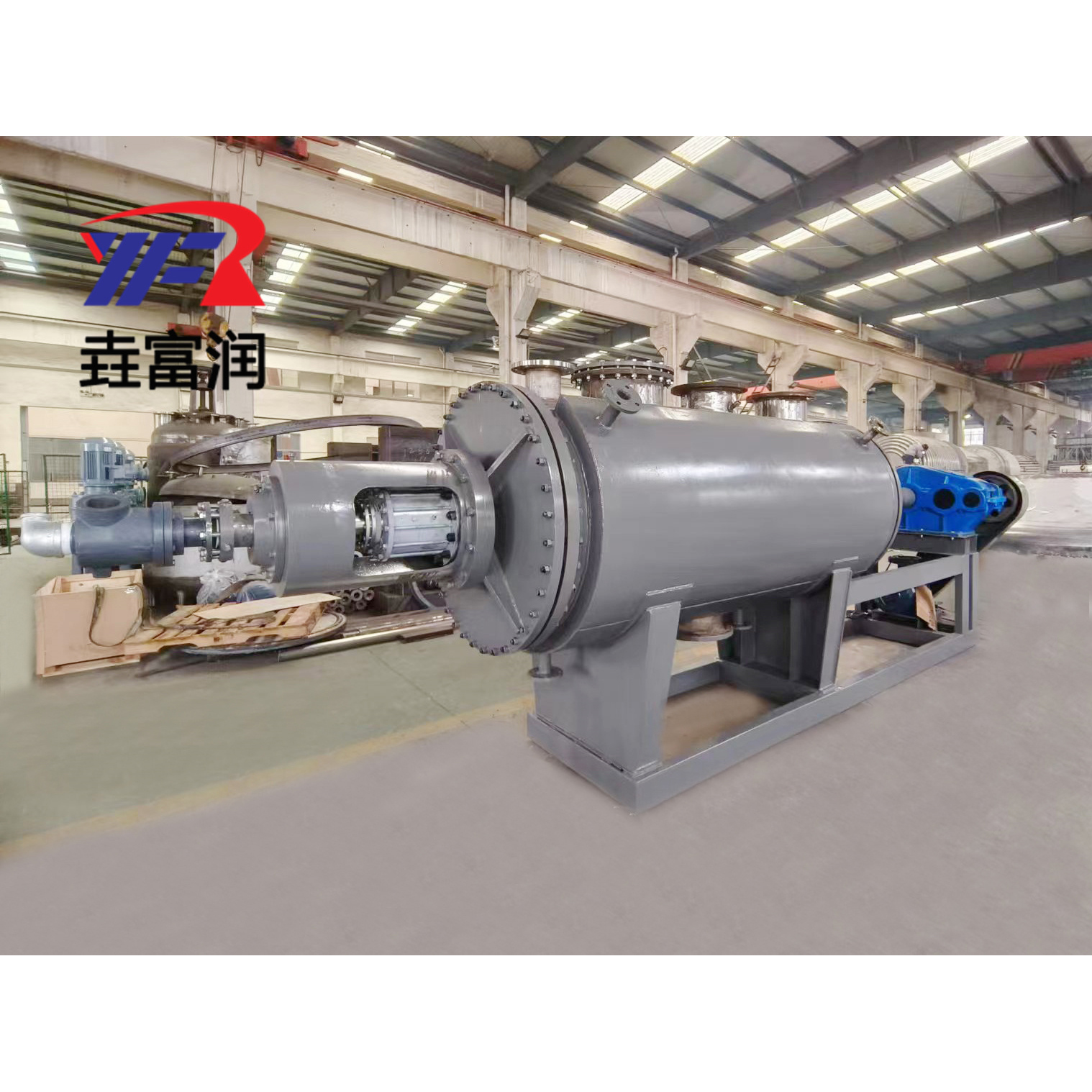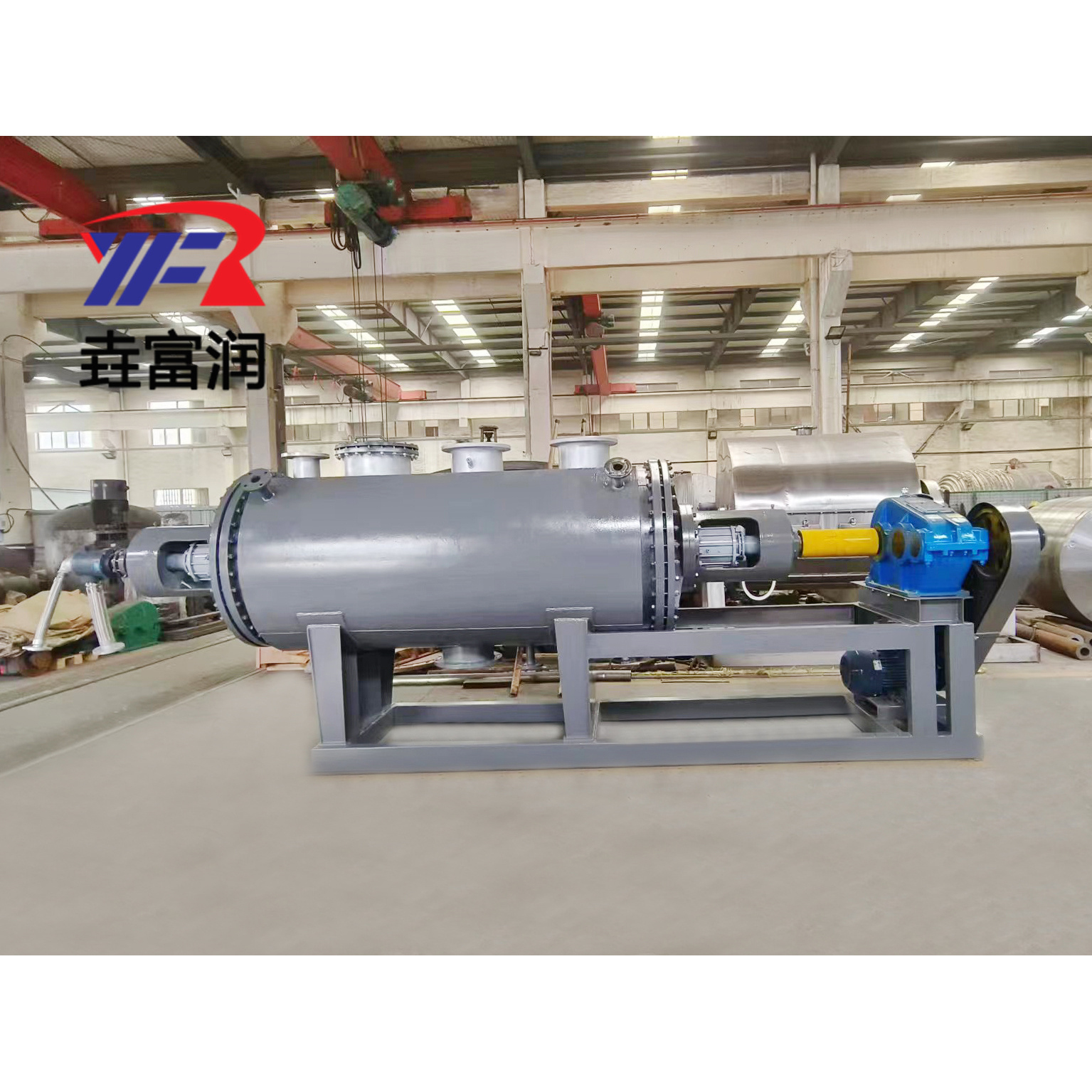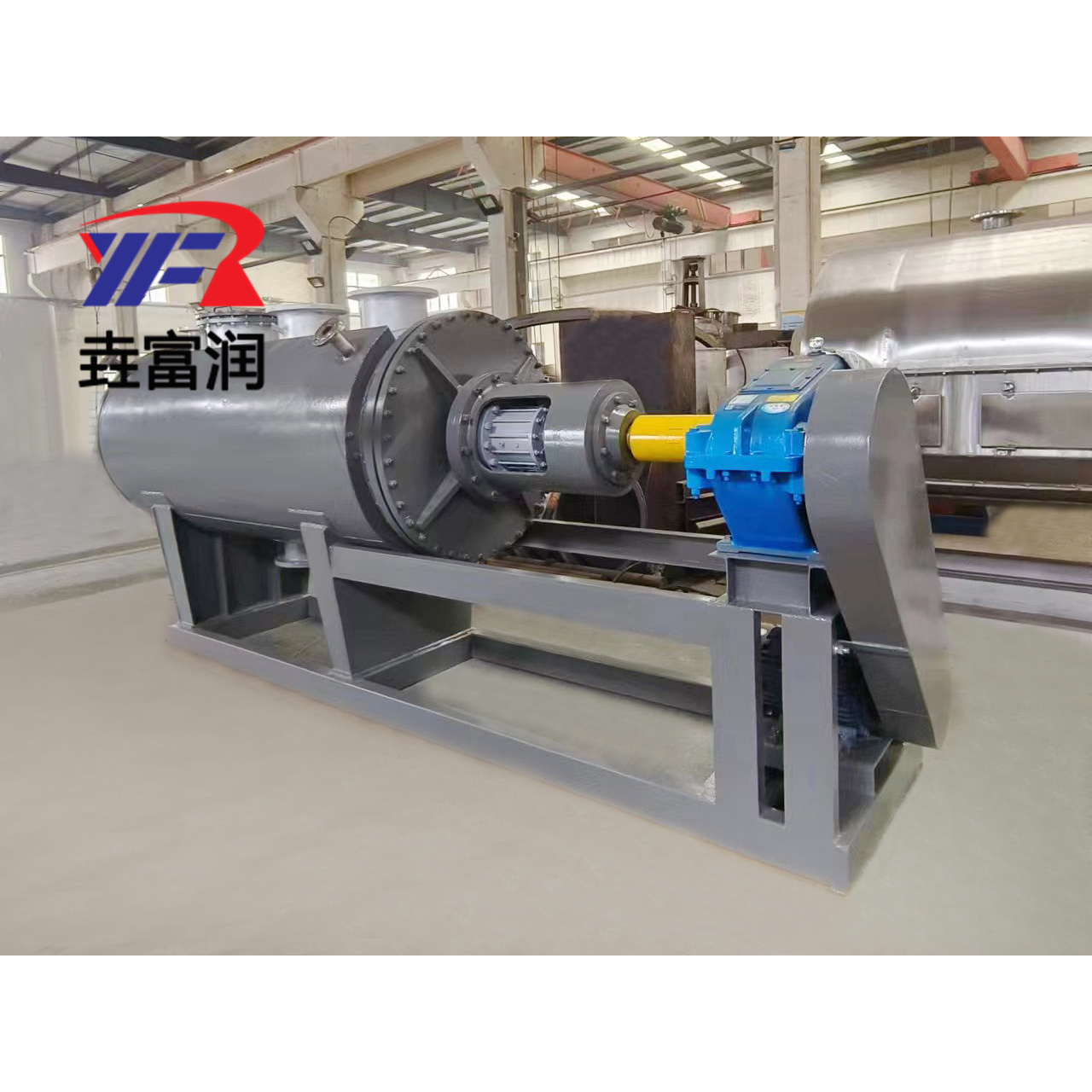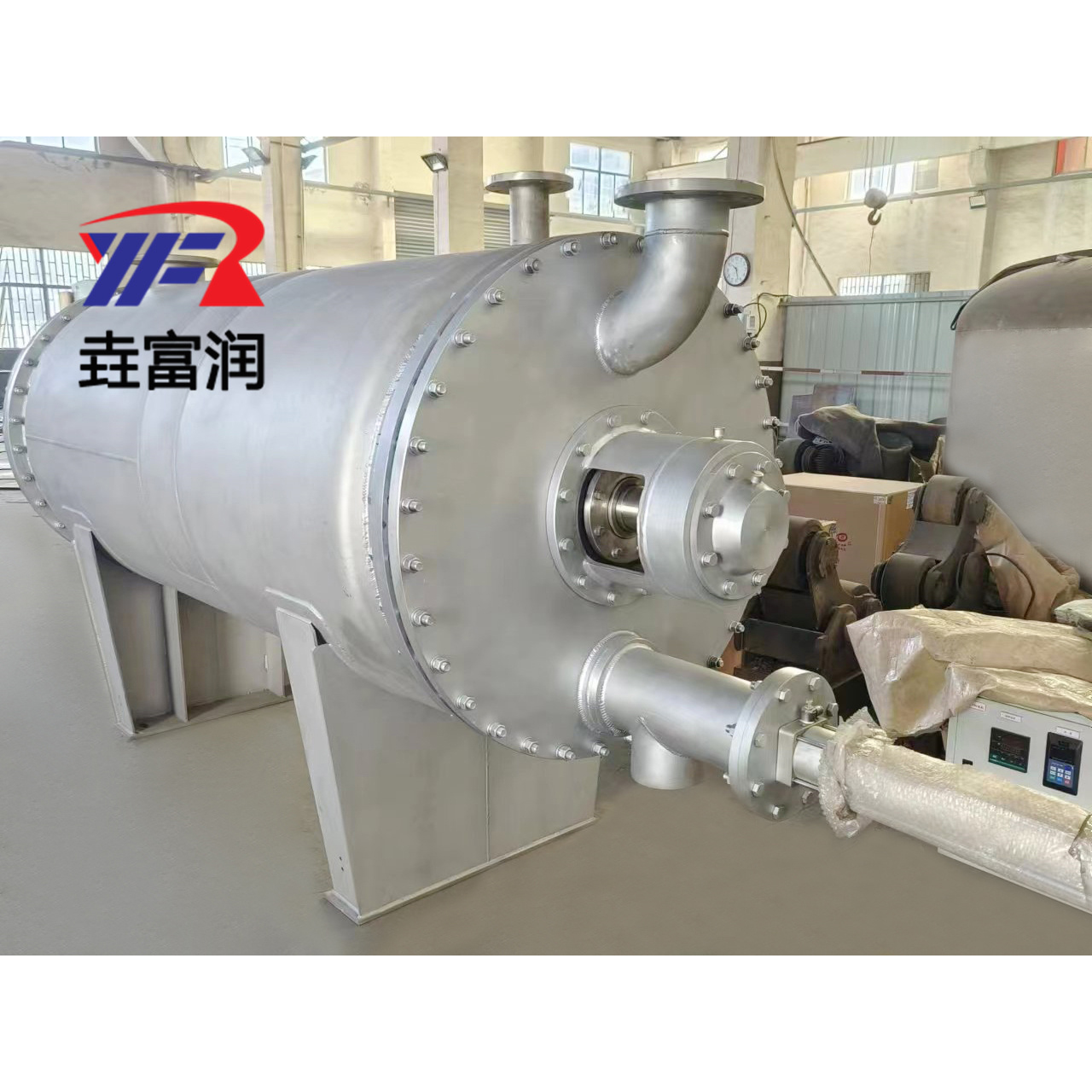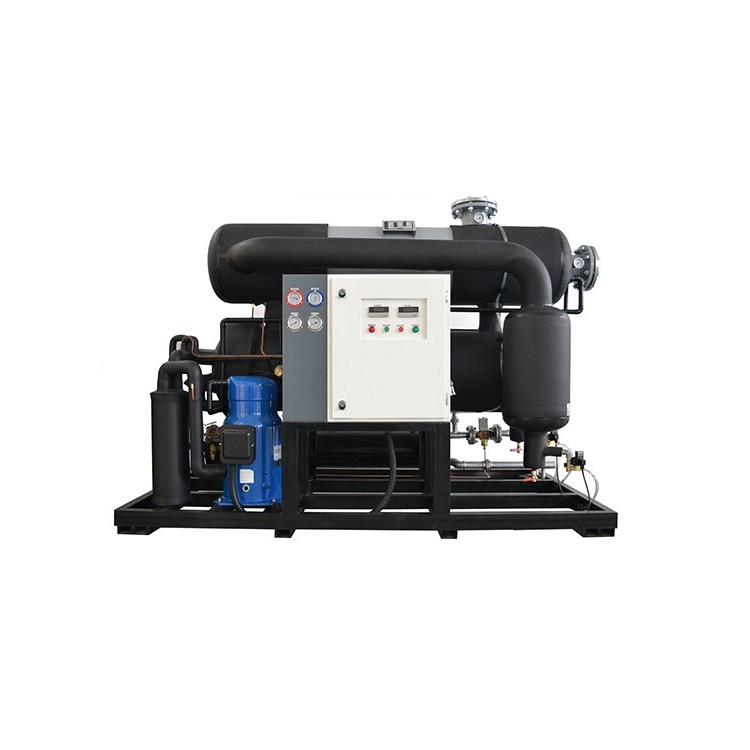

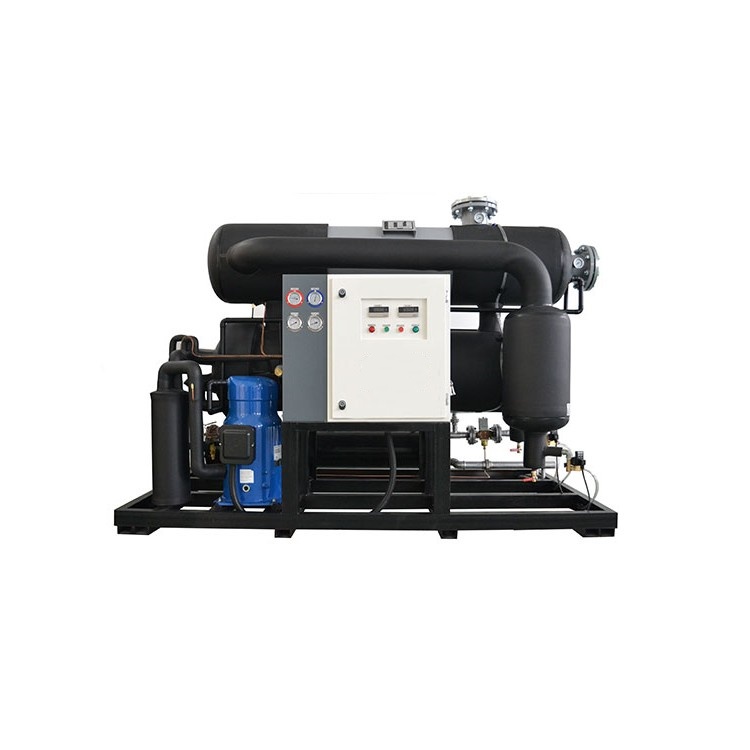
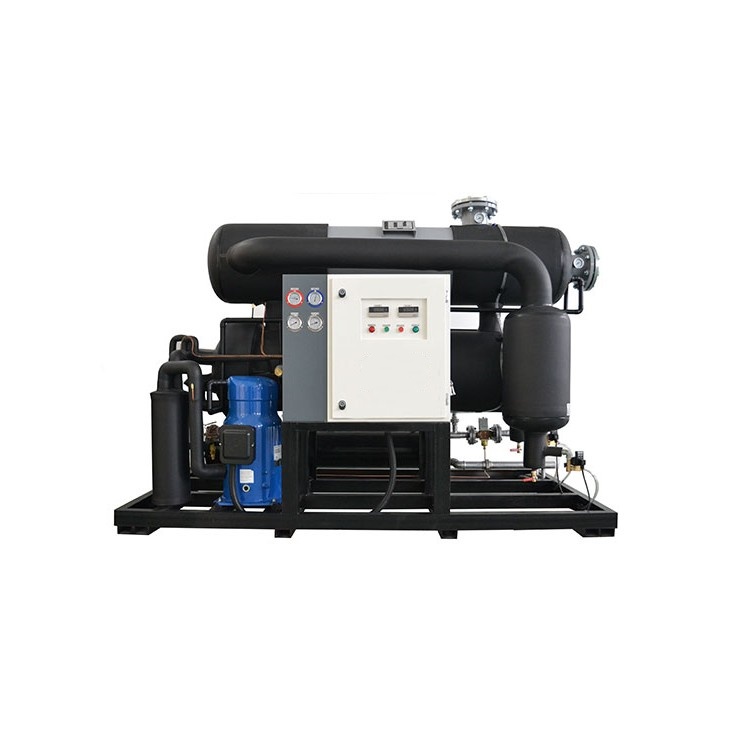
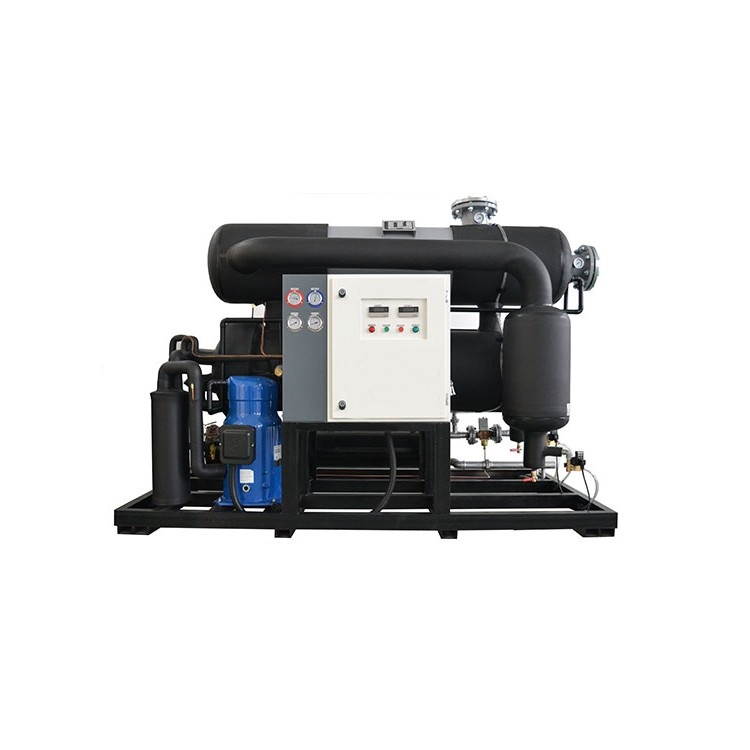


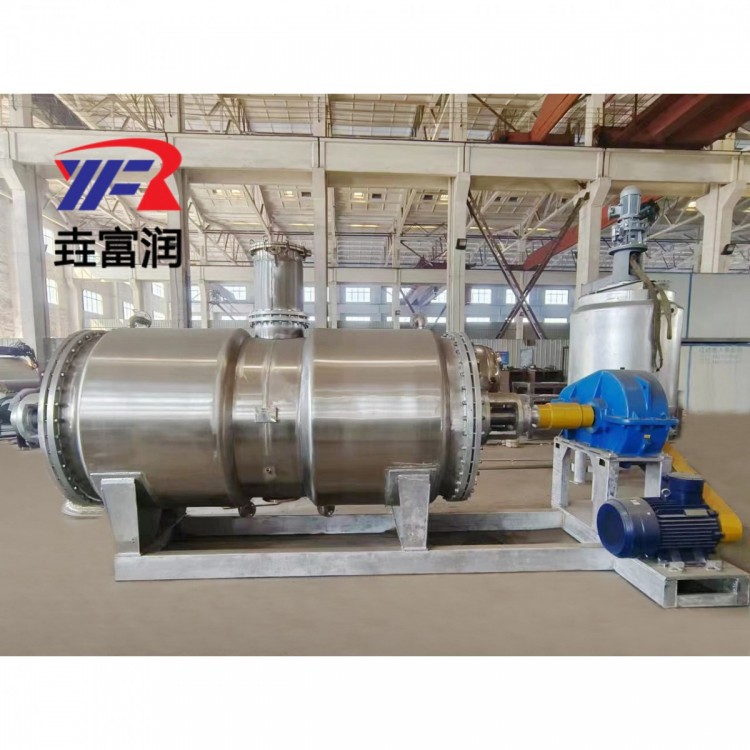
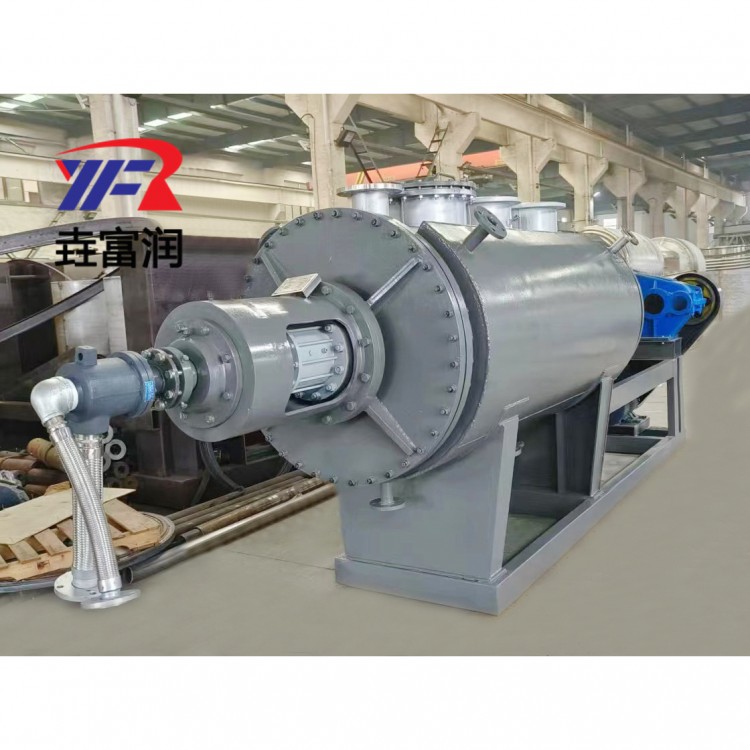
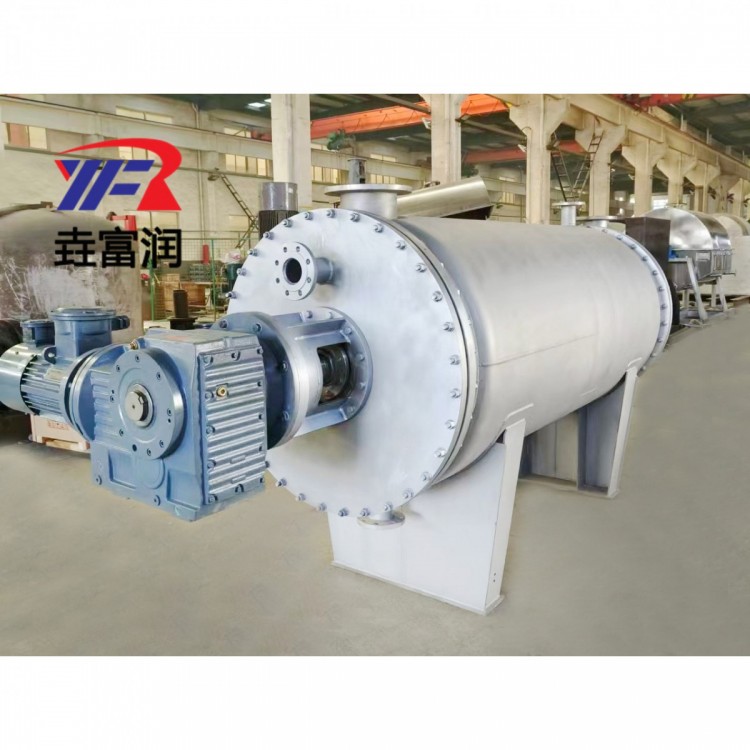
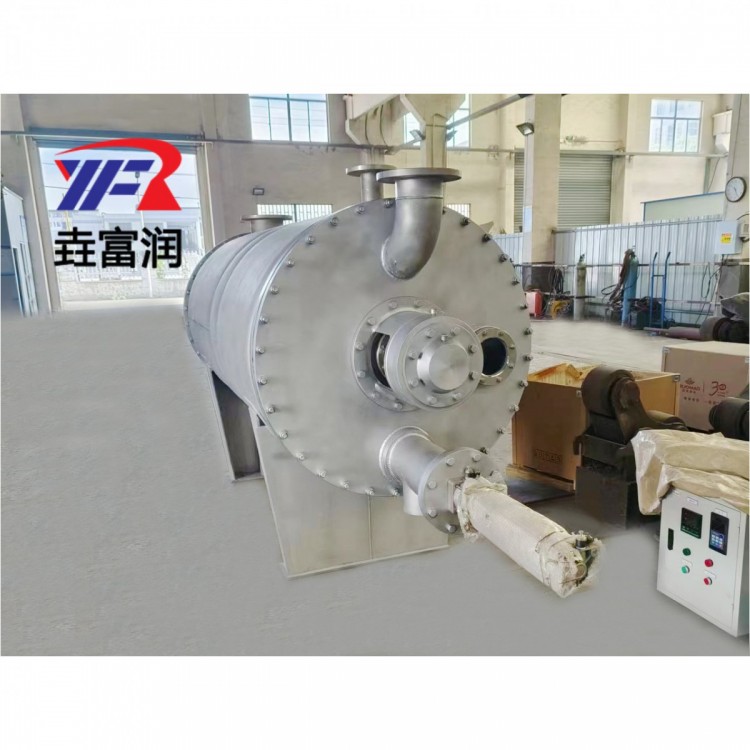
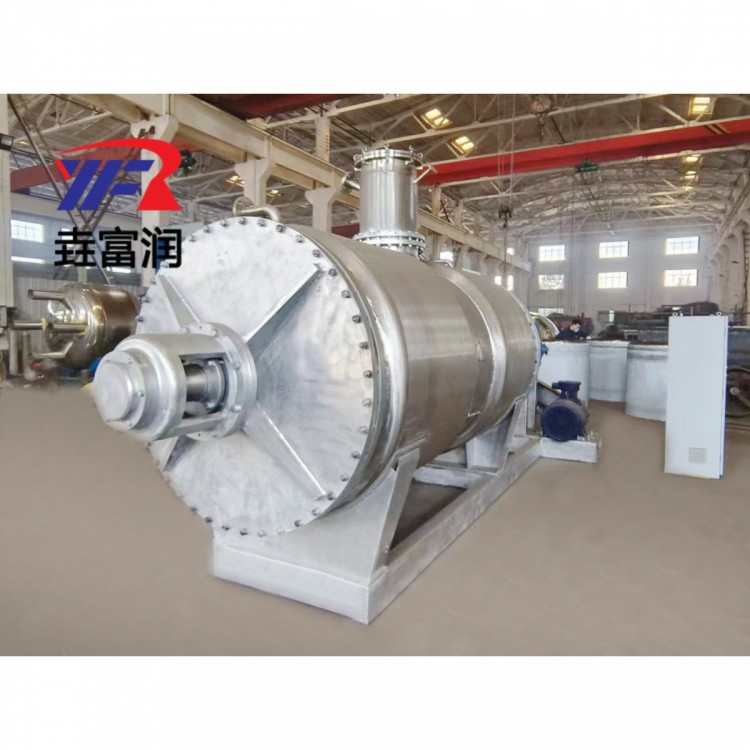





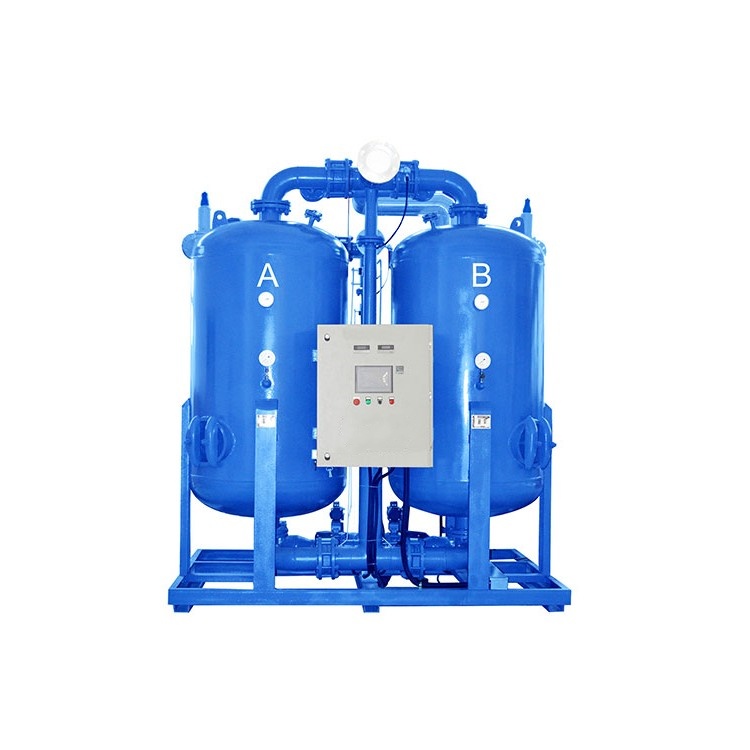
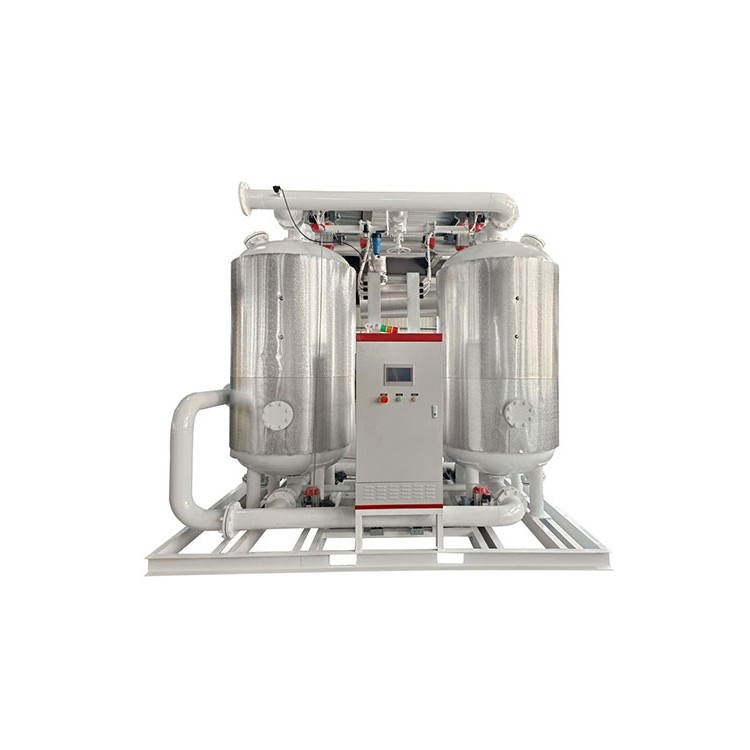
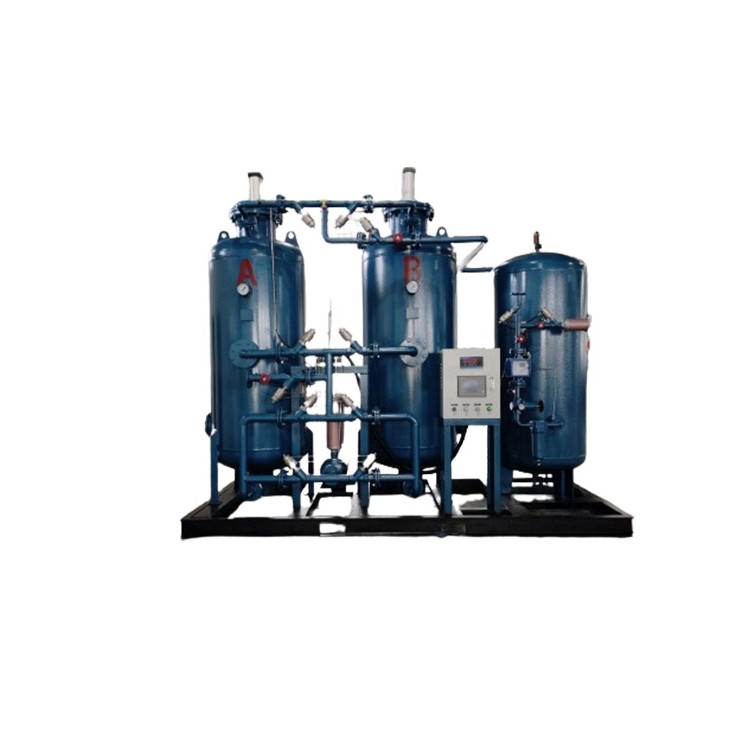
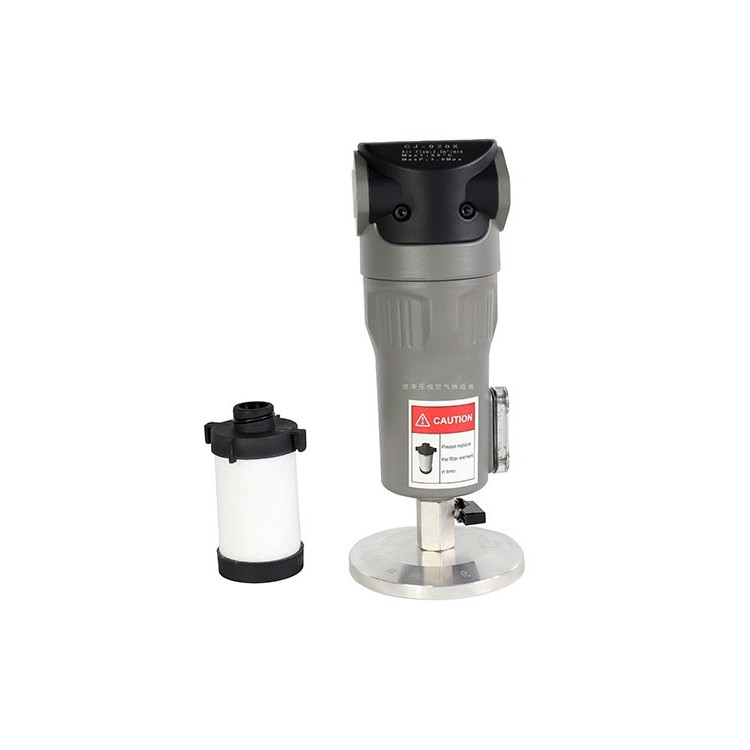
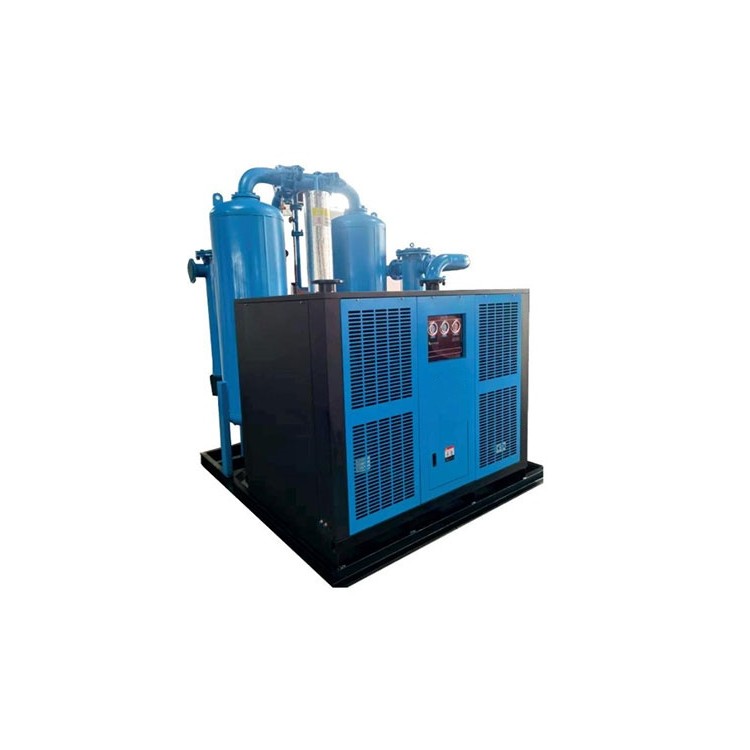
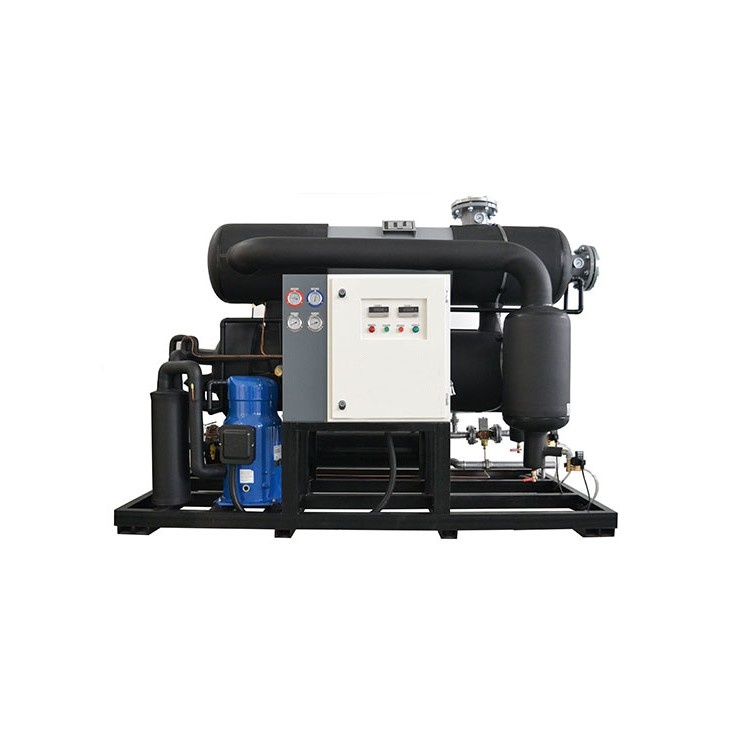
A high-temperature water-cooled freeze-drying machine is a device used for treating compressed air. Its operating principle involves using a refrigerant to exchange heat with the compressed air, thereby lowering its temperature and causing the water vapor to condense into liquid water for discharge, achieving the purpose of drying the compressed air.
Compared to air-cooled freeze-dryers, water-cooled high-temperature freeze-dryers use water as the cooling medium. Their operating conditions and technical specifications typically include: inlet temperature generally ≤80℃; cooling method is water-cooled; rated working pressure is commonly 0.7-1.0Mpa; pressure loss ≤0.02Mpa; nominal pressure dew point is 2-10℃; cooling water inlet temperature ≤32℃; cooling water pressure is 0.15-0.5mpa; industrial recirculating water is used.
The advantages of this dryer include:
High-Efficiency Energy-Saving: Capable of utilizing water resources for cooling, offering advantages in regions with abundant and low-cost water supplies.
Suitable for high-temperature intake: capable of handling compressed air with higher intake temperatures.
Stable and Reliable: Offers a relatively stable dew point temperature to ensure effective drying.
In practical applications, water-cooled high-temperature freeze-dryers are commonly used in situations where high compression air dryness is required, such as in pneumatic equipment, instruments, and electronic devices in industrial production.