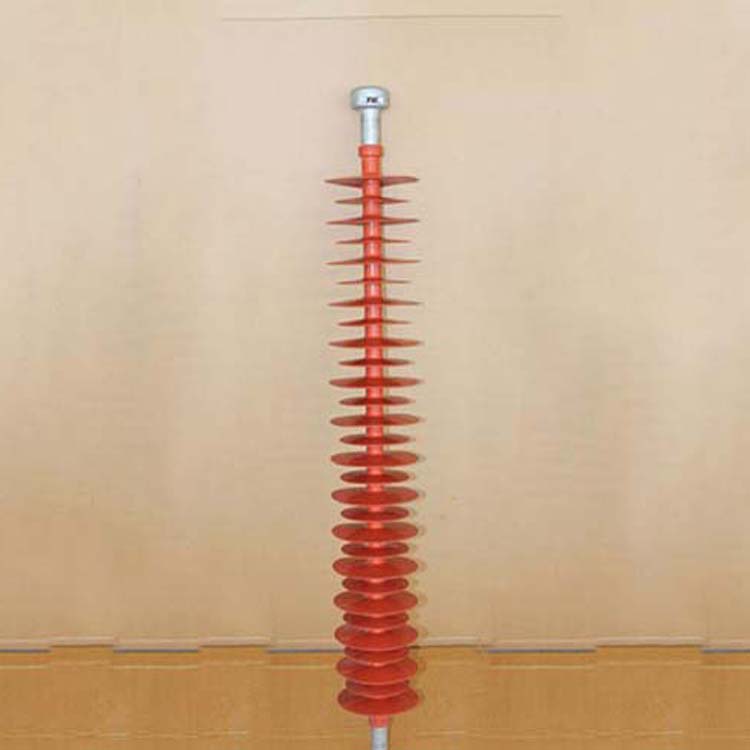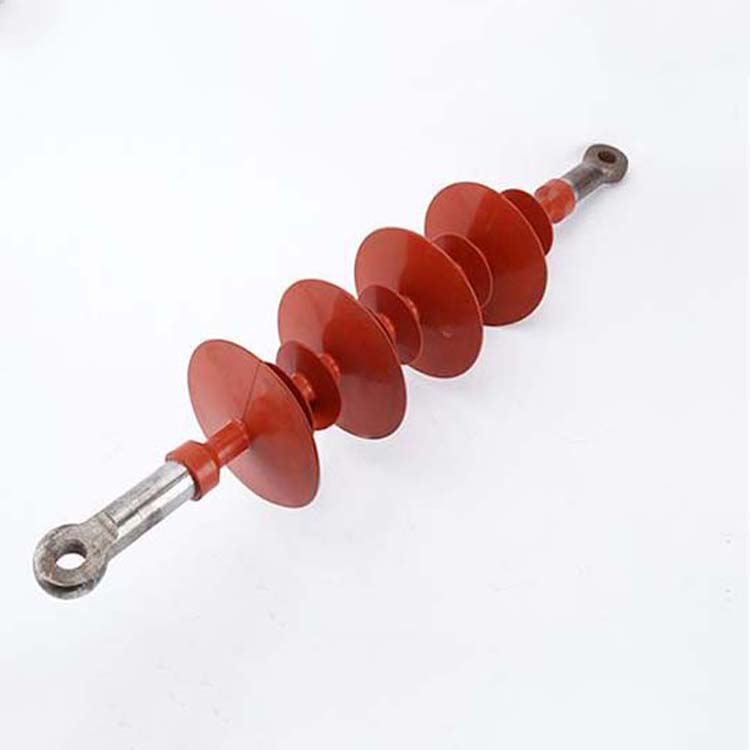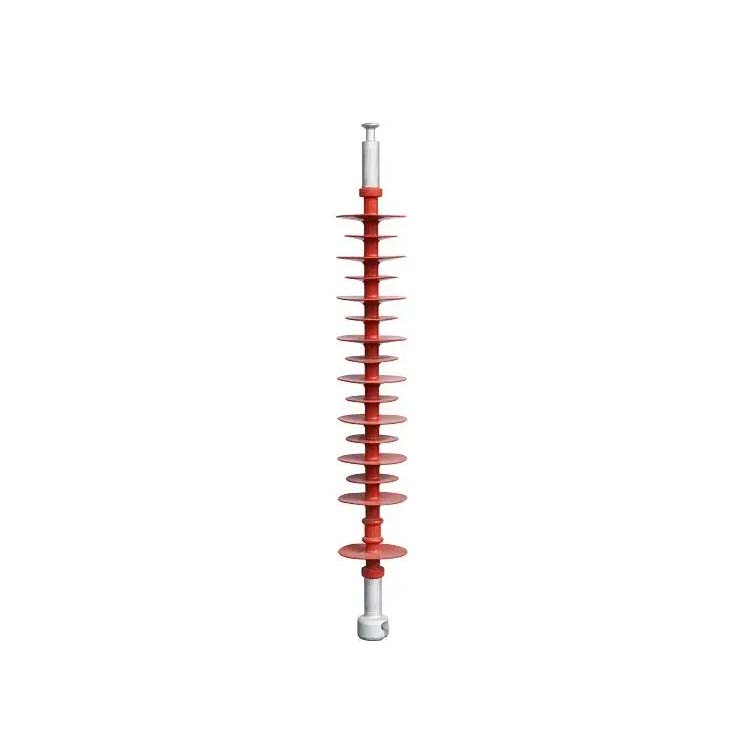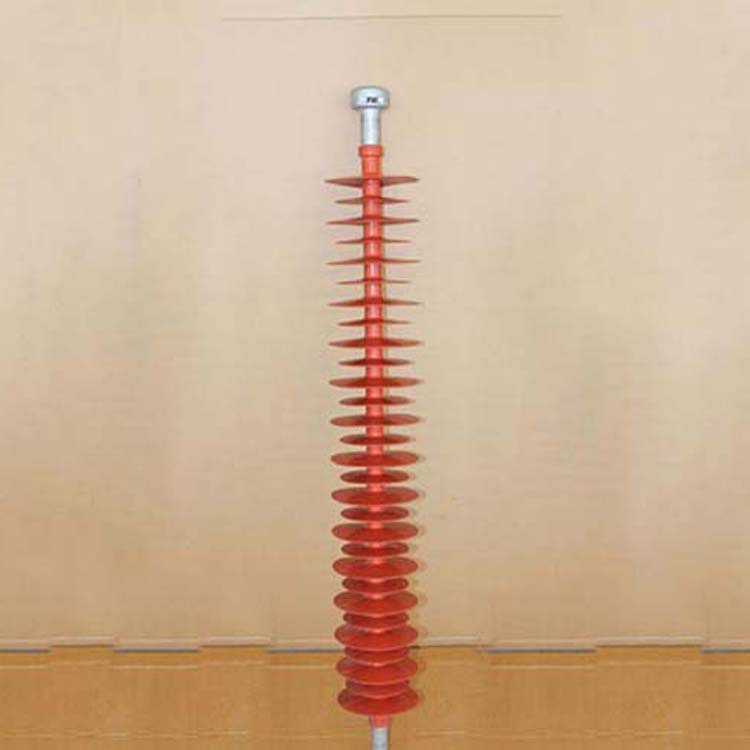

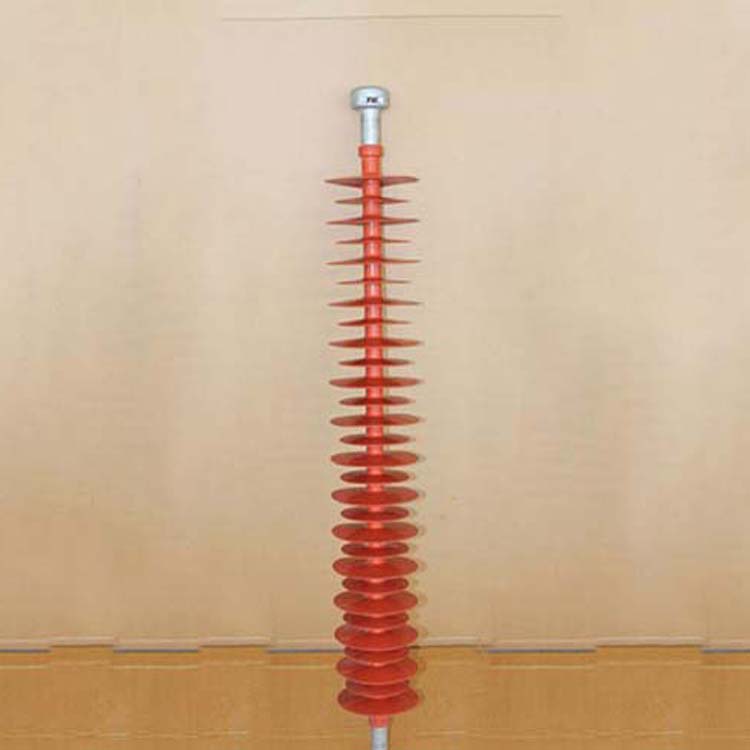
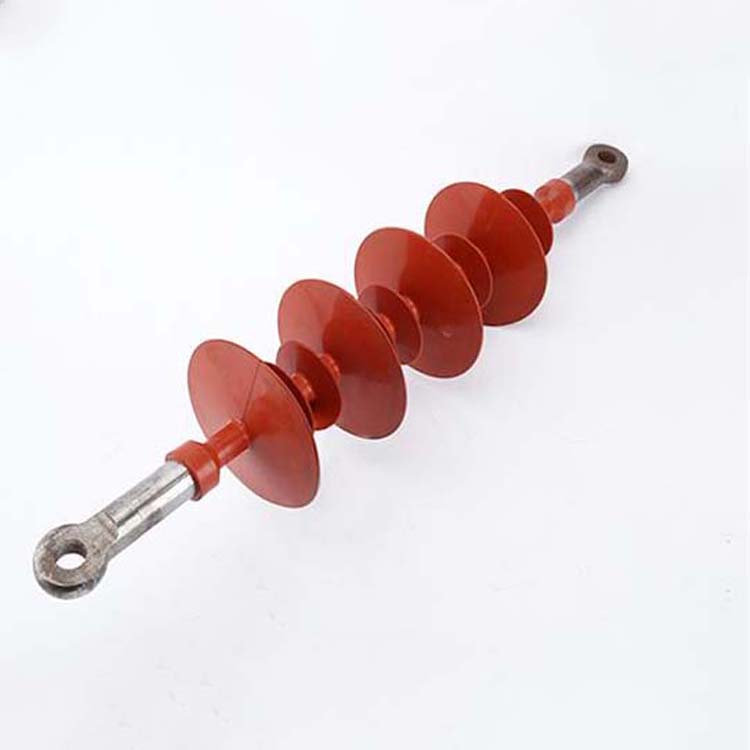
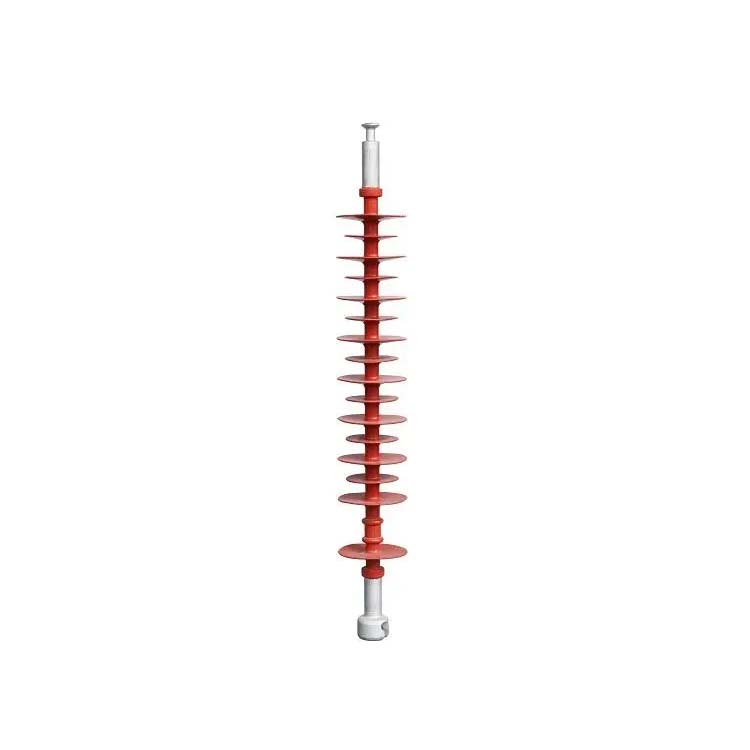








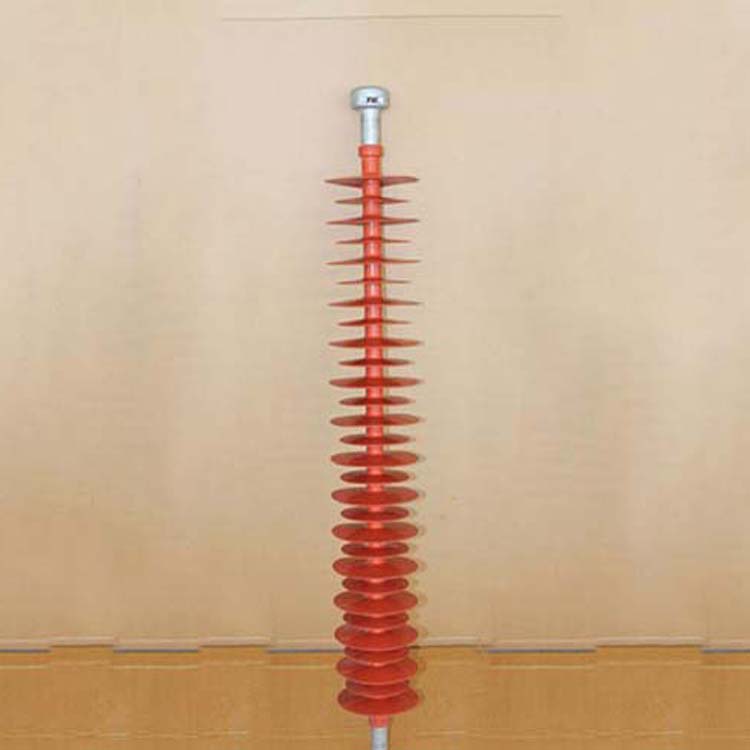
Composite insulators consist of three parts: an insulating core rod, a silicon rod, a胶套, and the connecting hardware at both ends.
Insulating core rod is a short name for the epoxy resin glass fiber drawn rod. It serves as the skeleton of composite insulators, supporting the hood, internal insulation, connecting the two ends of the hardware, and bearing mechanical loads, among other functions. It boasts a high tensile strength, typically exceeding 600 MPa, which is twice that of ordinary steel and 5 to 8 times that of porcelain materials. It also has excellent dielectric properties and resistance to chemical erosion, as well as good resistance to bending fatigue, creep, and impact. The silicone rubber hood primarily protects the core rod, shields against rain and snow, increases the creepage distance, and enhances the external insulation of the product. It is made from a high polymer silicone rubber matrix, reinforced with flame retardants, anti-aging agents, coupling agents, and other fillers, vulcanized under high temperature and pressure. It exhibits good hydrophobicity and migration properties, as well as excellent resistance to corrosion, aging, and electrical insulation. Additionally, it has a high flashover voltage and resistance to fracturing, with uniform voltage distribution. Compared to porcelain, its flashover voltage under the same conditions is more than twice that of porcelain.
Composite Insulator Product Types
FXBW-----Rod-type Suspended Composite Insulator
FPQ-----Composite needle-type insulator
FZSW-----Composite Pillar Insulator
FS - Composite Cross Arm Insulator
FCGW-----Composite Dry Wall Penetration Sleeve
FQE(X) - Composite Insulator for Electrified Railways
FQJ - Electric road vehicle composite insulator for the roof
Terms of Use
Operating Temperature: -40℃ to +40℃; Altitude: Not exceeding 1500 meters
Supply AC frequency not exceeding 100HZ, wind speed not exceeding 35m/s
Earthquake intensity does not exceed 8.0 magnitude
Product performance features
Compact and lightweight, approximately 1/5 to 1/9 the size and weight of similar voltage porcelain insulators, making them easy to transport and install.
Composite insulators have high mechanical strength, reliable structure, stable performance, and large safety margin for operation, providing assurance for the line and safe operation.
The composite insulator boasts excellent electrical properties, with the silicone rubber hood offering good hydrophobicity and migration resistance. It has superior anti-fouling performance and strong resistance to flashover, ensuring safe operation in heavily polluted areas without the need for manual cleaning or zero-value maintenance.
Composite insulators feature resistance to acidity and alkalinity, heat aging, and electrical degradation, excellent sealing performance, and ensure the internal insulation remains dry.
The composite insulator boasts excellent anti-fracture properties, strong vibration resistance, and will not experience brittle fracture accidents.
The composite insulator is interchangeable and can be used in place of porcelain and other insulators.