








Manhole Cover Standards
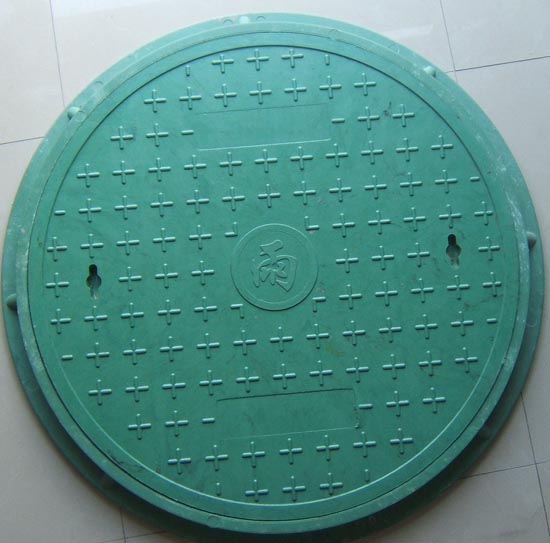
Manhole covers are closures for the access points to underground facilities. They are required wherever public utilities such as water supply, telecommunications, electricity, gas, heating, fire protection, and sanitation are installed. With the rapid economic development of our country, the infrastructure construction is entering a new cycle, and the demand for manhole covers in urban planning and road construction is increasing. However, it often occurs that manhole covers are crushed and damaged, leading to a decline in road and facility quality. This article discusses various manhole cover standards and analyzes the rationality of their settings.
1. Comparison of Manhole Cover Standards - The existing 8 standards are as follows:
EN 124 Drainage Grates and Inspection Covers for Carriageways and Pedestrian Paths
CJ/T 3012-93 Cast Iron Manhole Cover
CJ/T 121-2000 "Inspection Manhole Cover for Recycled Resin Composite Materials"
JC 889-2001 Steel Fiber Reinforced Concrete Manhole Cover
CJ/T 211-2005 "Polymer Matrix Composite Manhole Cover"
CJ/T 130-2001 "Water Grating for Recycled Resin Composite Materials"
Steel Fiber Reinforced Concrete Grating Cover, JC 948-2005
CJ/T 212-2005 "Polymer Matrix Composite Grating"
The European standard EN124 is universally applicable, approved by CEN (Drainage Equipment Technology) on June 6, 1994, and is suitable for covers made of various materials. It stipulates that this standard is without dispute in any case. Countries outside of Europe also implement this standard, demonstrating its universality and validity.
2. Standard specifications for test loads and usage positions of manhole covers (Table 1)
Regulations on Test Load and Usage Location
Standard EN 124 CJ/T 3012-93 CJ/T121-2000 CJ/T 211-2005 JC 889-2001
Grade A15, B125, C250, D400, E600, F900
Lightweight, Heavyweight, Lightweight, Standard, Heavyweight, Lightweight, Standard, Heavyweight, A Grade, B Grade, C Grade, D Grade, D400
Test Load / kN 15, 125, 250, 400, 600, 900, 210, 360, 20, 100, 240, 90, 180, 270
Crack Load / kN
180 105 50 10 400
Applications include pedestrian and bicycle pathways, greenways, non-motorized lanes, small vehicle parking areas, roadside drain covers installed along roads, extending from curb to within 0.5 meters of the driving lane, parking lots, various vehicle码头, and runways at airports where motor vehicle access and parking are prohibited. Areas restricted to motor vehicle entry, including roads and green spaces, bike lanes, and sidewalks. Roads or parking areas accessible to vehicles with a speed rating of 10 and below, areas with slow-moving small vehicles, residential complexes, green spaces, etc. High traffic roads and parking areas with heavy vehicle traffic such as freight stations, docks, and heavy vehicle较多的 roads and areas. Special roads and sites like highways for aircraft takeoff and landing. Urban roads, highways, and parking lots with slow lanes, residential complex access ways, sidewalks, greenways, and narrow alleys where motor vehicles cannot drive or park.
3 The comparison of standards shows that from the respective test loads (or crack loads) specified by the standards and their corresponding usage ranges, it can be clearly seen:
1) The load class specified by EN124 is clearly defined, and the differences from our standard are easily noticeable when compared. In fact, all the manhole covers produced according to our standard do not meet the requirements of the European standard EN124. Therefore, all enterprises in our country exporting manhole covers produce them in accordance with EN124.
2) CJ/T3012-93, while it only simply categorizes into heavy and light grades, specifies that the heavy-duty manhole cover test load is 360 kN, which is comparable to the D400 specified in EN124, suitable for various motor vehicles. More than a decade of practice has proven that manhole covers capable of withstanding this load are basic for use on roads.
3) The CJ/T 121-2000 standard specifies that a general type manhole cover with a test load of only 100kN can be suitable for "passage or parking areas for vehicles up to Class 10." A heavy-duty manhole cover with a test load of 240kN is comparable to the test loads of the EN124 C250 and CJ/T 3012-93 light-duty manhole covers, yet it is suitable for "roads and parking areas for motor vehicle traffic." The test load criteria for manhole covers on motor vehicle roads have been reduced, naturally lowering the load-bearing capacity of the covers, thus creating potential hazards.
4) The JC 889-2001 standard specifies a too low test load for manhole covers on roadways. For example, an A-grade manhole cover with a crack load of 180 kN, equivalent to the B125 type manhole cover in EN124 standard and the light-duty manhole cover in CJ/T3012, is only intended for use on "pedestrian and non-motorized roadways." However, the JC889 standard allows for use "in airports or areas accessible for aircraft operations."
Special roadways and sites, such as reduced-speed highways, can utilize B-grade manhole covers with a crack load of only 105 kN, whereas these covers are prone to damage on urban roads, highways, and parking lots. In summary, the specified load-bearing capacity (36 t) for heavy-duty manhole covers in the Cast Iron Manhole Cover standard is generally reasonable, close to the D400 manhole cover (40 t) in EN124. For light-duty covers (21 t), the possibility of overcapacity exists when motor vehicle traffic is prohibited, and it would be more reasonable and cost-effective to have several grades like EN124. The Recycled Resin Composite Material Manhole Cover standard, with a heavy-duty load-bearing capacity of only 24 t, is definitely insufficient; the A-type steel fiber concrete manhole cover has a crack load of just 18 t, which is severely below the standard. Although there are three domestic standards, they all have certain limitations and do not cover all existing materials for manhole covers. The load-bearing capacity of a manhole cover is a key indicator of its usability on roads; if it's not high enough and gets damaged under pressure, it's no different from cast iron manhole covers being stolen. Therefore, regardless of the material used for manhole covers on roads, they should at least meet the 36 t test load specified in the Cast Iron Manhole Cover standard. With the development of cities, roads are becoming wider, traffic volumes are increasing, and vehicle loads are higher, thus demanding greater load-bearing capacity from manhole covers. Therefore, new material manhole covers not only need to meet the current Cast Iron Manhole Cover standard but should exceed it. If a new standard for manhole covers is to be established, it is recommended that the division and specification of load-bearing capacity should refer to the European standard EN124, with a minimum load-bearing capacity of 40 t for manhole covers used on motor vehicle roads.