









Short-path molecular distillation
Product Overview
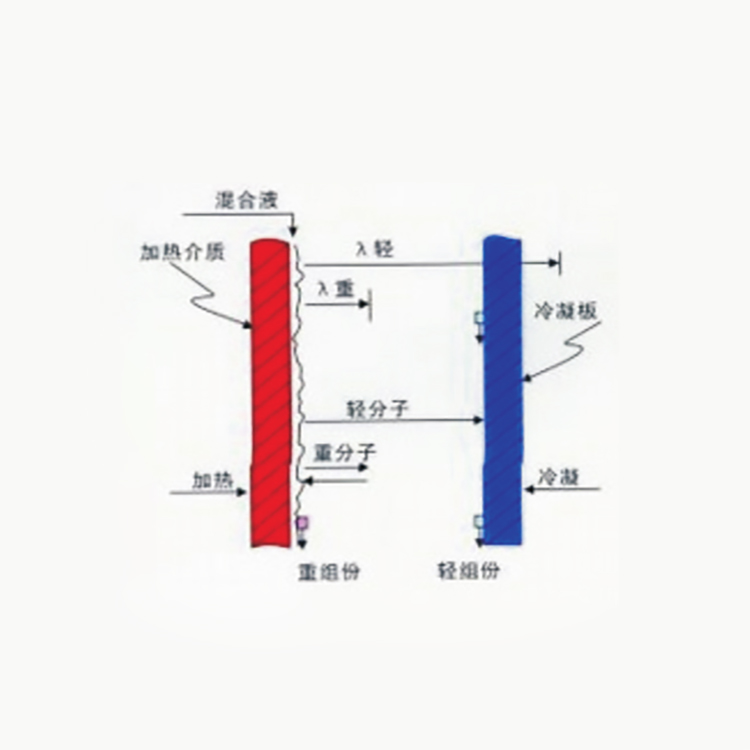
Molecular distillation is a distillation process carried out under high vacuum, where the average free path of steam molecules is greater than the distance between the vapor and condensation surfaces, allowing for the exploitation of the differences in evaporation rates of various components in the feedstock. Generally applicable to industries such as petrochemicals, organosilicon, resins, and wastewater treatment.
Working Principle
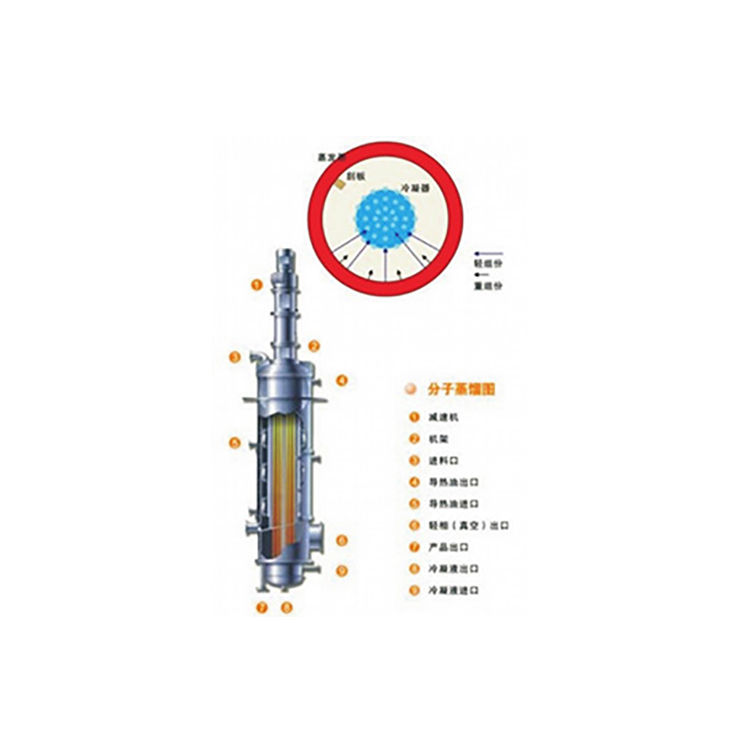
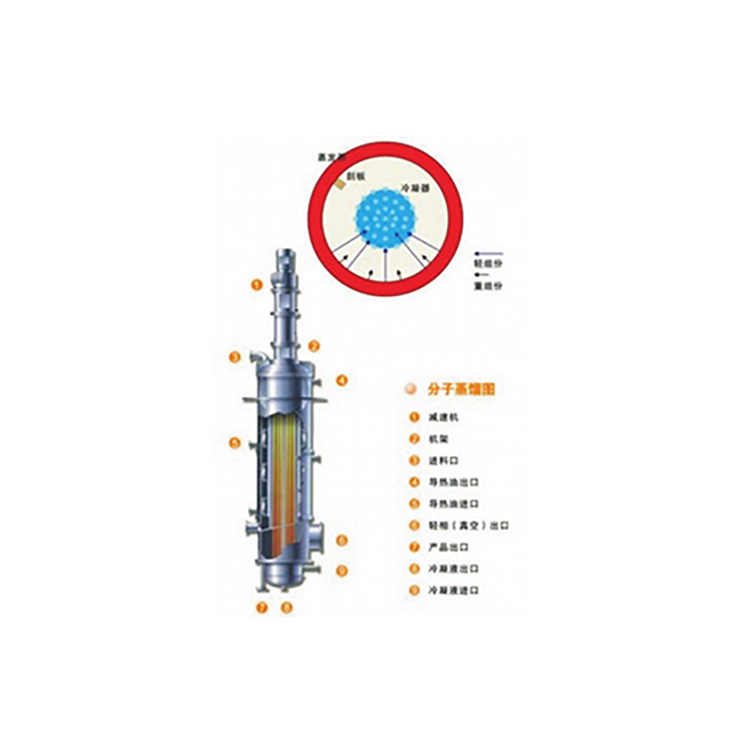
Molecular distillation is a unique liquid-liquid separation technique that differs from traditional distillation, which relies on the principle of boiling point differences. Instead, it separates substances by the difference in the average free path of their molecules. The distillation process involves adding the material to the top of the evaporator, where it is evenly distributed over the heating surface by a liquid distributor on the rotor. A scraper then forms the material into a thin, turbulent liquid film, which is spirally pushed downward. During this process, light molecules that escape from the heating surface condense into liquid on the internal condenser after a short path and almost no collisions. They then flow down the condenser tubes and are discharged through a discharge pipe located at the bottom of the evaporator. The heavier molecules, or the residue, are collected in a circular channel below the heating area and are subsequently discharged through a side outlet pipe.
Structural Performance and Features
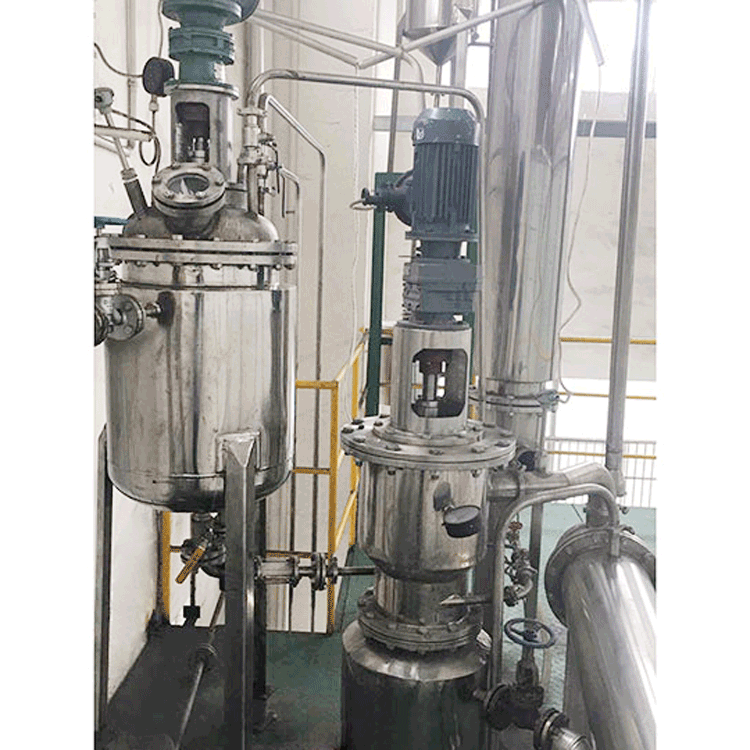
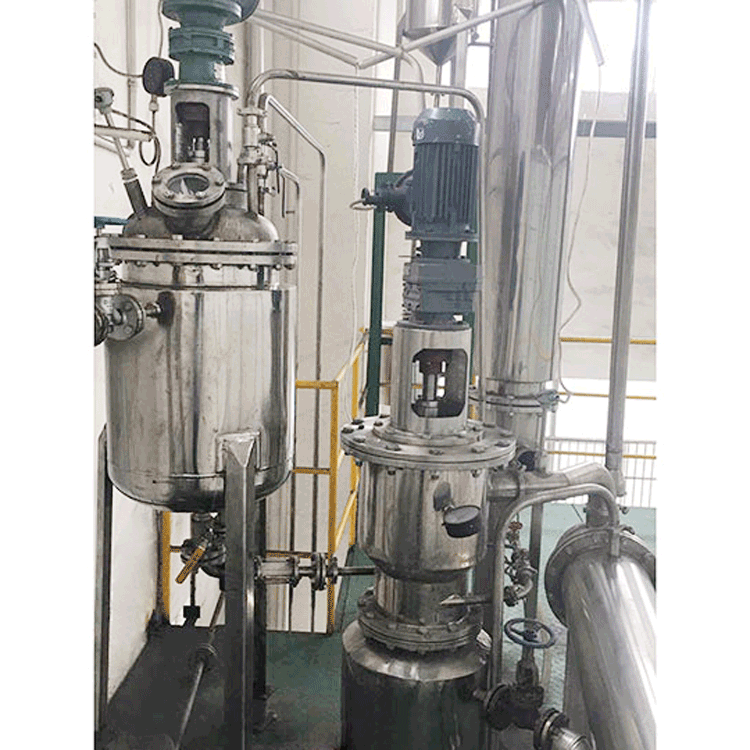
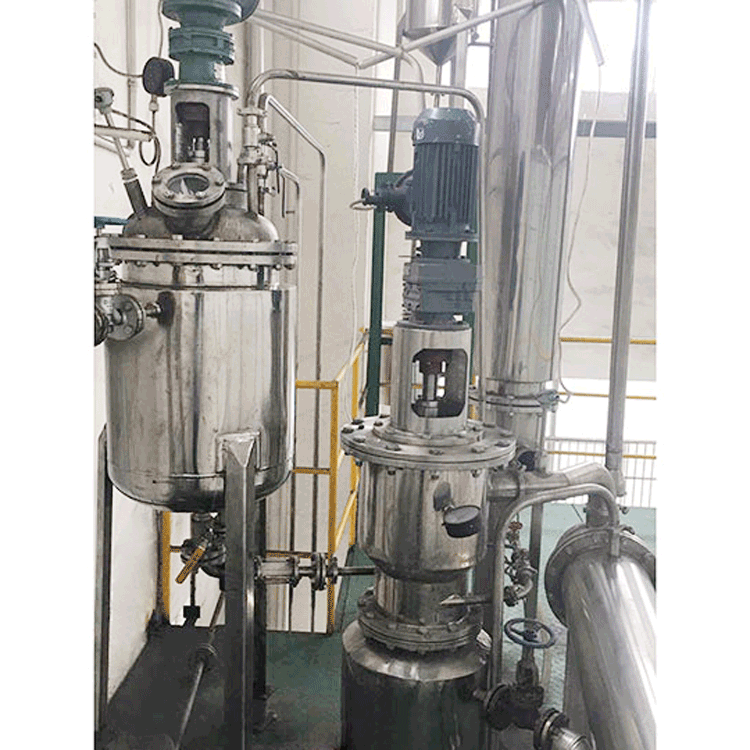
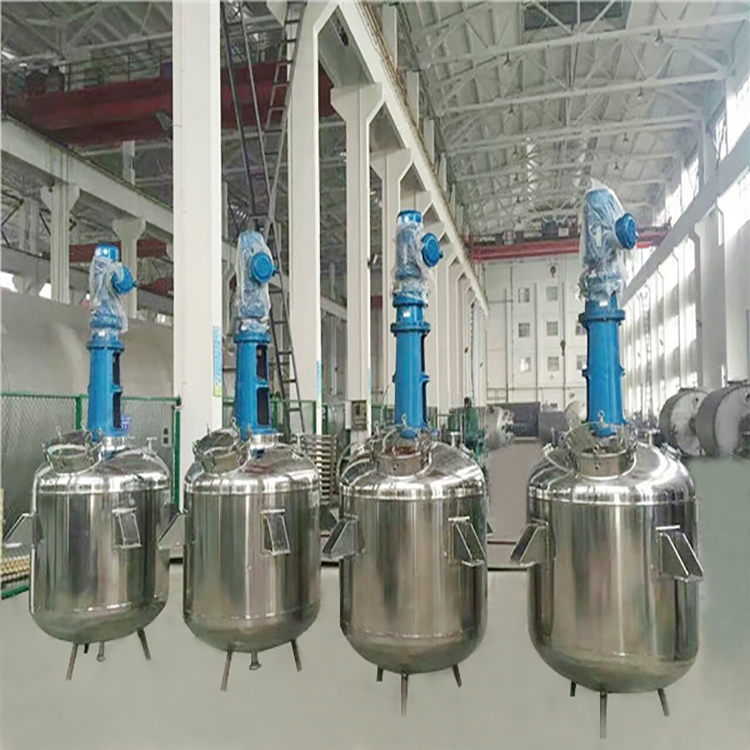
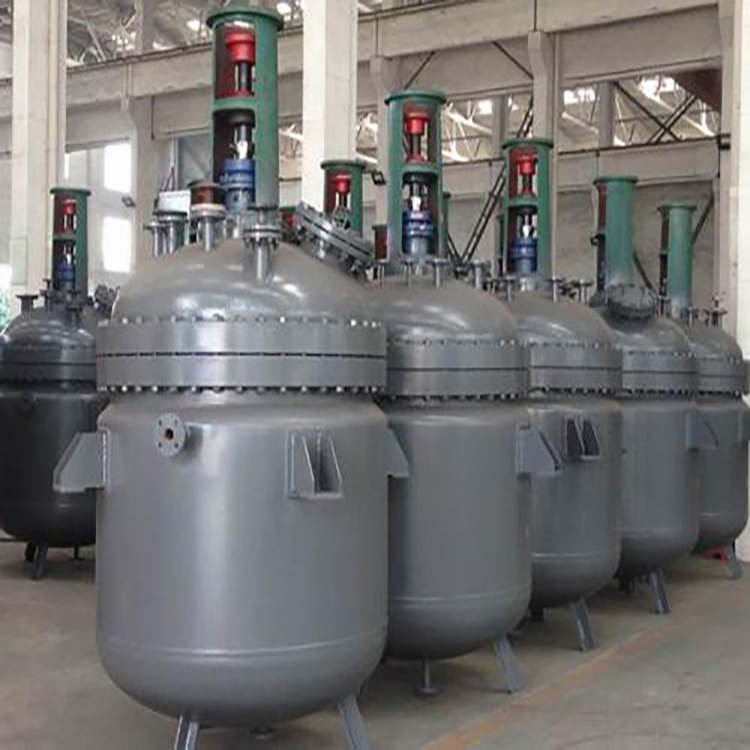
The molecular distillation equipment is primarily composed of a heated jacket, a vertical cylindrical vessel, a central condenser located within it, and a scraper rotating between the distillation and condenser.
Its advantages include low distillation temperature, high vacuum, thin liquid film, high heat transfer efficiency, and high degree of separation; there is no boiling bubble phenomenon; it is harmless and has no residue, yielding pure and safe products, with simple operation and minimal equipment. It can effectively remove substances like organic solvents and odors from liquids with high boiling points, heat-sensitive materials, and easily oxidizable materials. Molecular distillation selectively evaporates the desired product, removing other impurities; multi-stage separation can simultaneously separate two or more substances; the distillation process of molecular distillation is a physical process, thus it can well protect the separated substances from contamination and damage. Molecular distillation equipment is widely used in the food, chemical, and other fields.
Technical Specifications
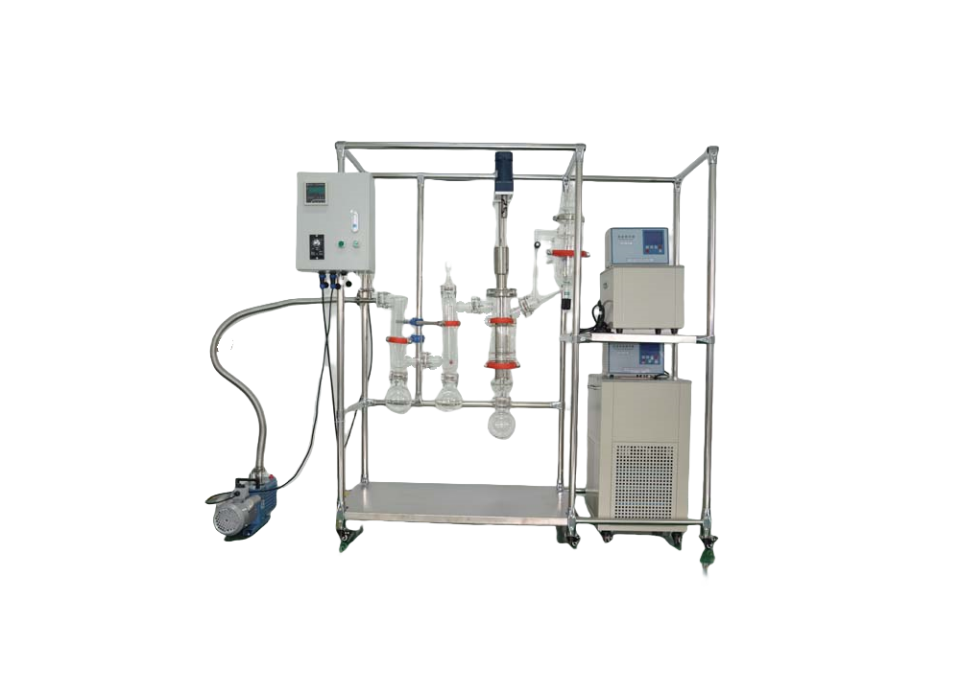
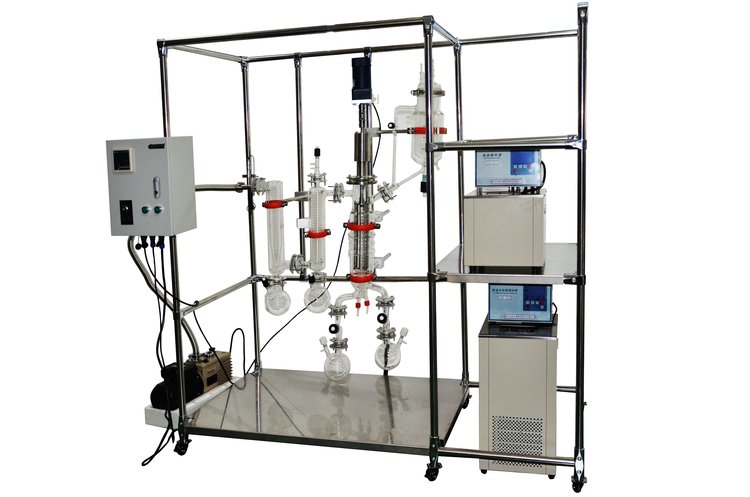
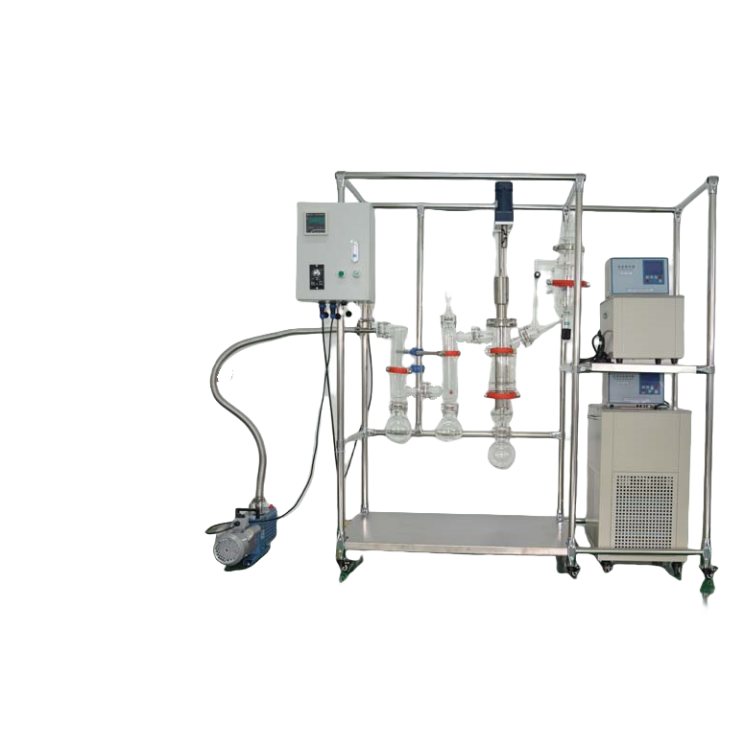
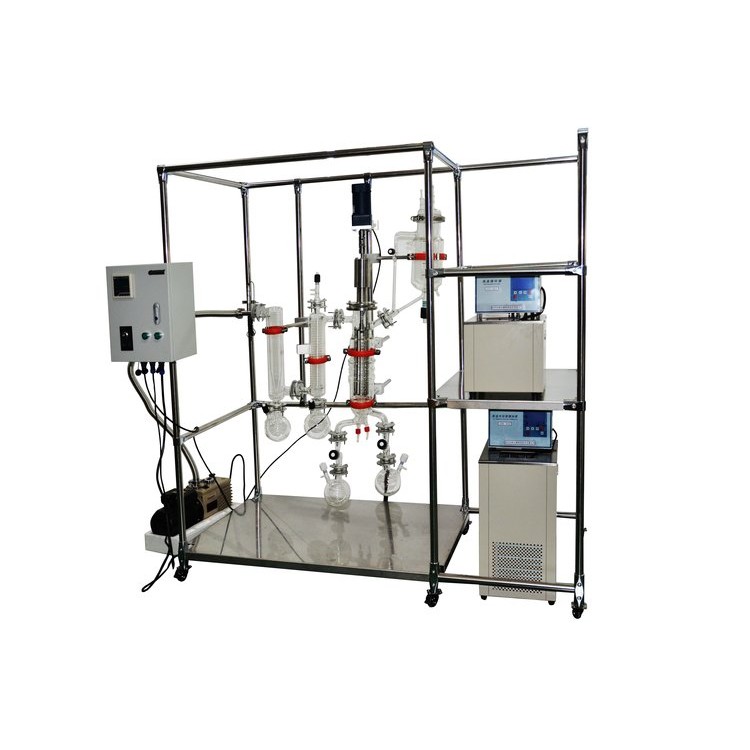
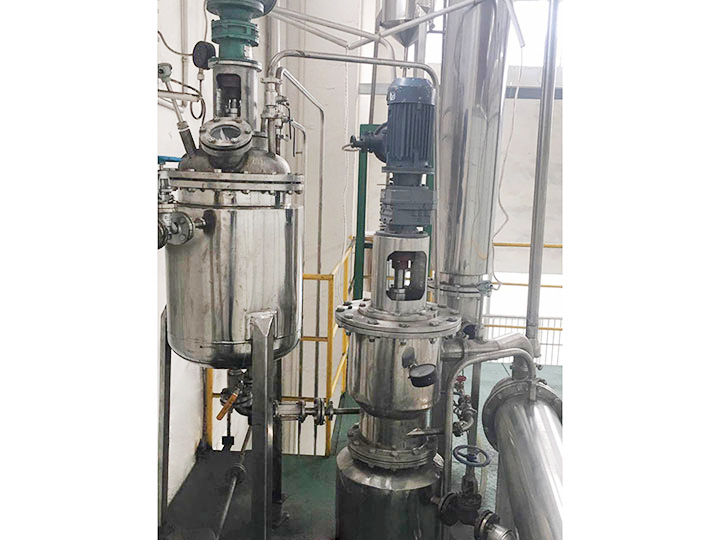
Molecular Distillation Experimental Unit
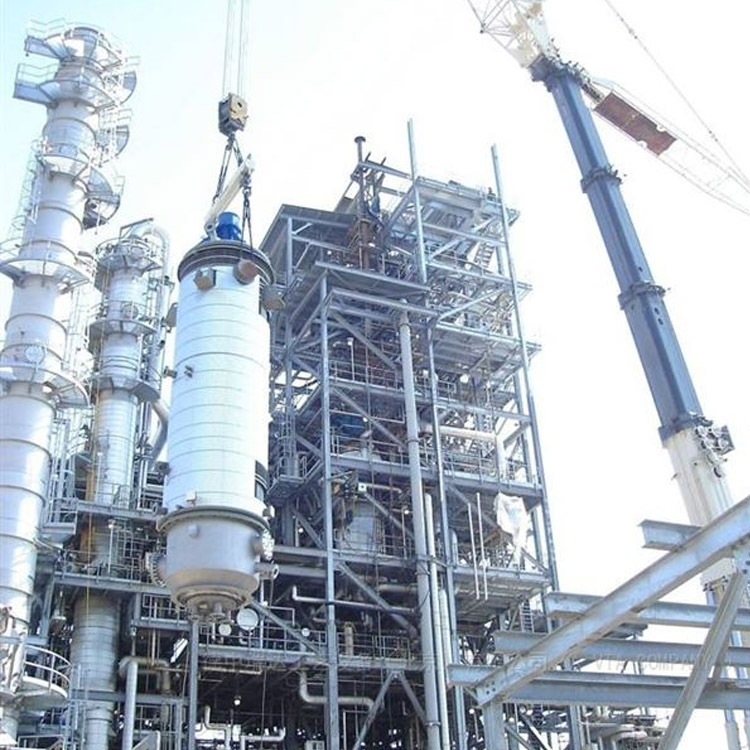
Equipment Features: This equipment bridges the gap between small-scale testing equipment and large-scale production equipment. It can serve as a formal production unit for small-scale production and as a pilot-scale unit for large-volume products. After successful testing with this equipment, production can be scaled up 10 to 20 times directly. It offers a more thorough separation compared to scraper film evaporators and can be combined in series with scraper film evaporators for enhanced performance. It can be easily connected through simple piping.
Structure: This equipment mainly consists of components such as a film evaporator, an internal condenser, a secondary condenser, raw material tanks, finished product tanks, low-boiling point tanks, and high-boiling point tanks, all made of stainless steel.
Heating Methods: Thermal oil, steam, hot water
Cooling Method: Two-stage condensation to prevent incomplete condensation in one stage, followed by full cooling through a secondary cooler. If two substances with different boiling points vaporize simultaneously, segmented collection can be achieved by controlling the cooling water temperature of the two condensers.
Preheat Method: Pipe Type
Raw Material Output: Gear metering pump, adjustable metering, low noise, smooth transportation.
Control Method: PLC touch screen, set feed quantity, automatic feeding, stop automatically when out of material.
Measurement Method: Individual weight displayed for each can, automatic calculation of evaporation ratio.
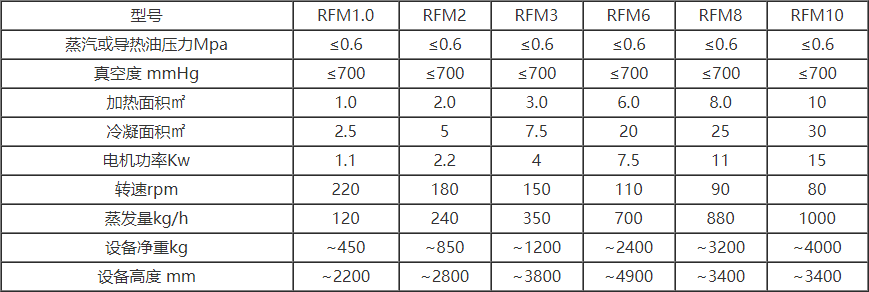
Primary Technical Parameters