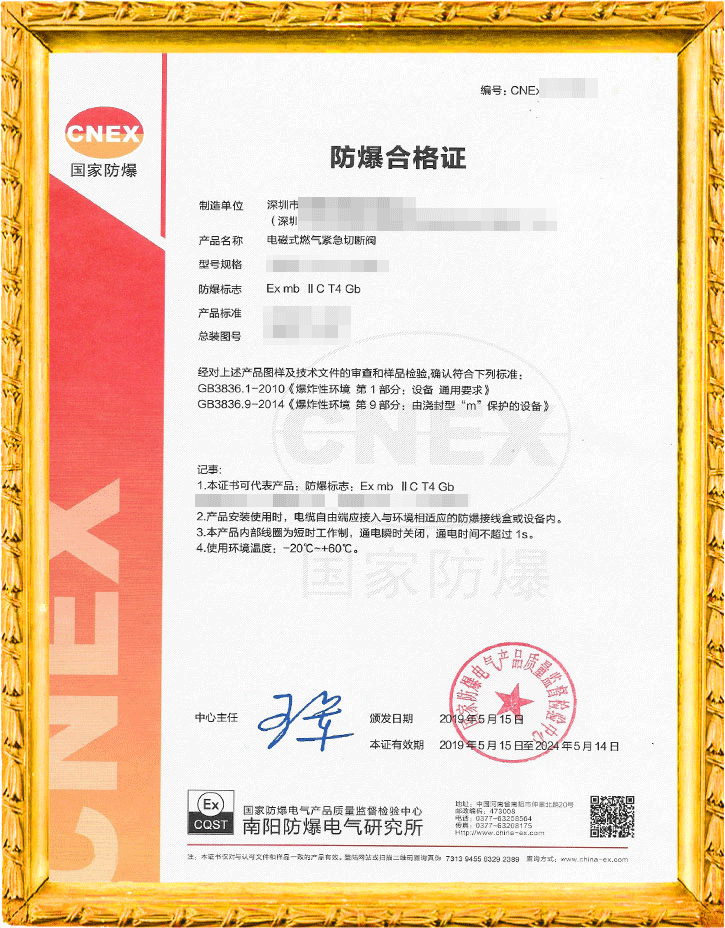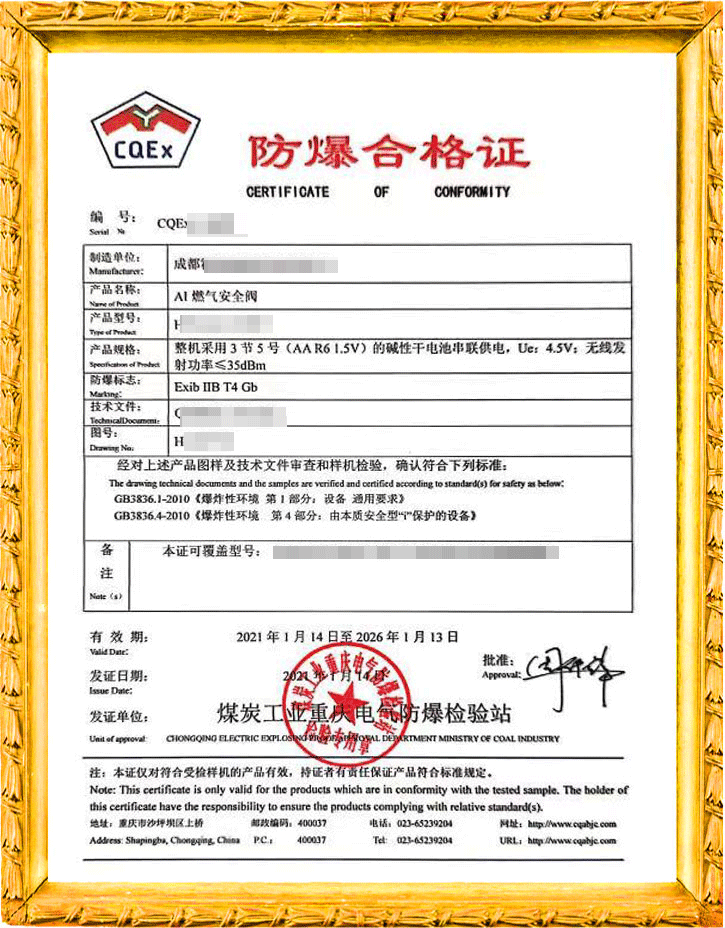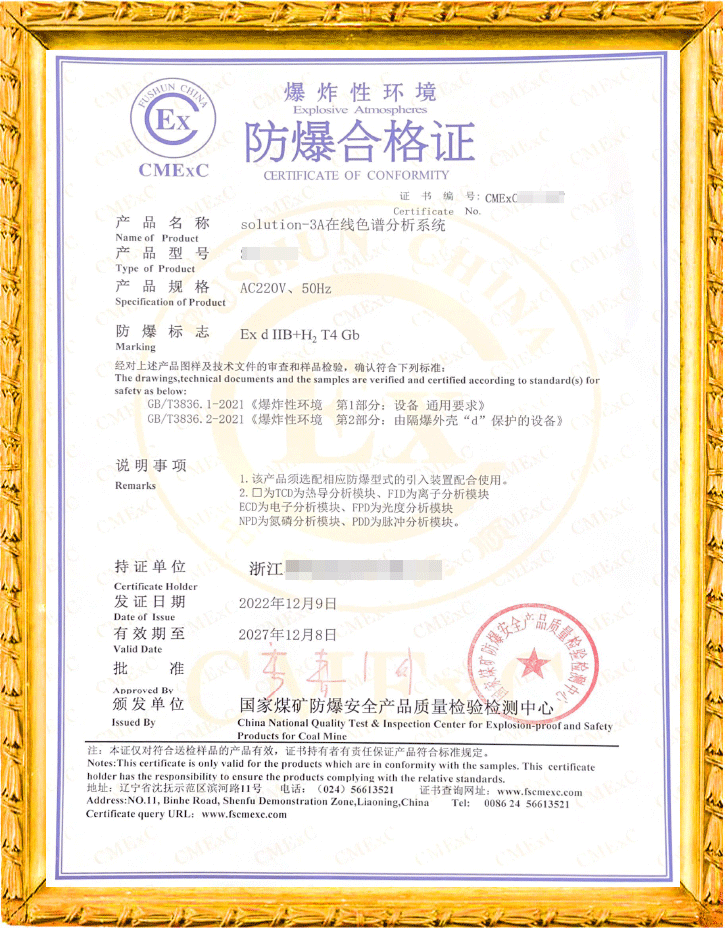

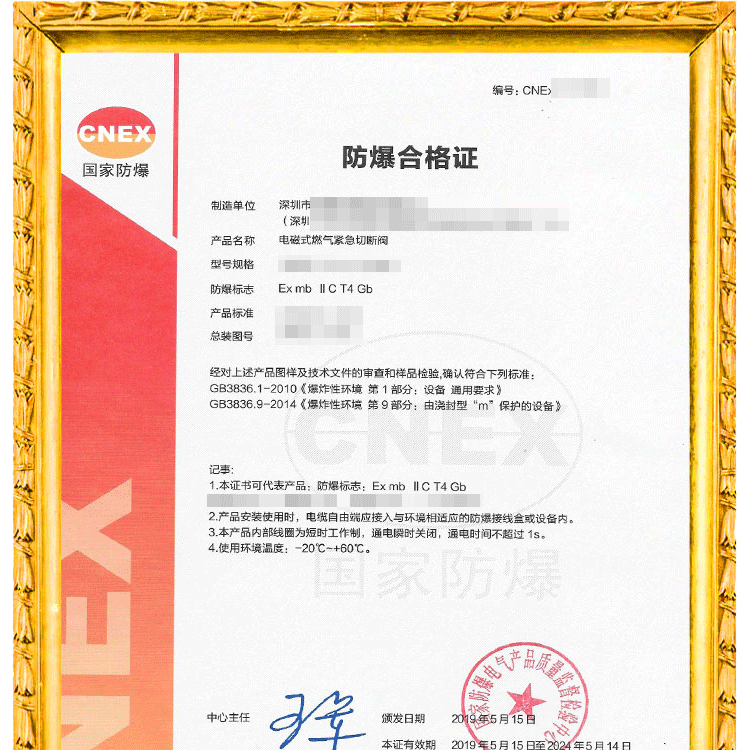
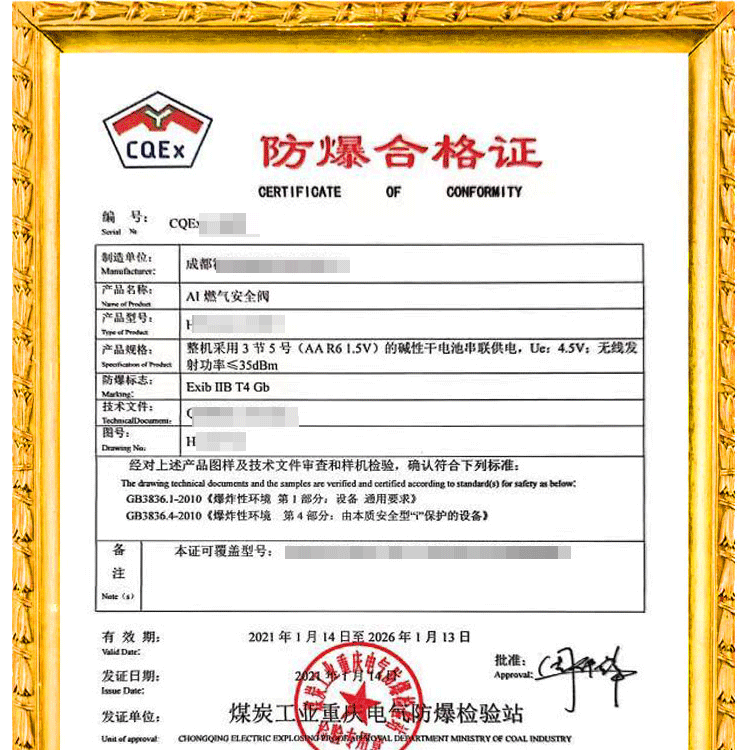
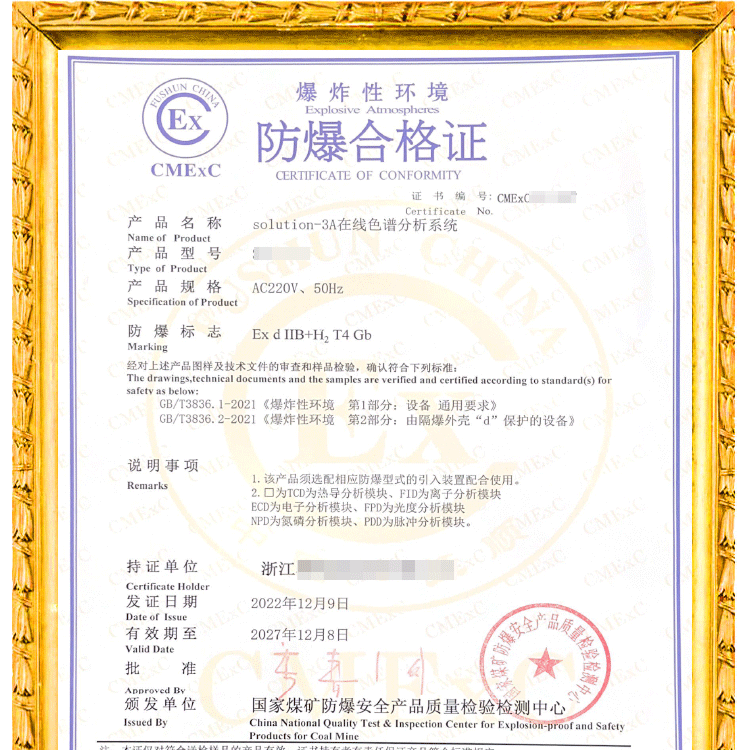








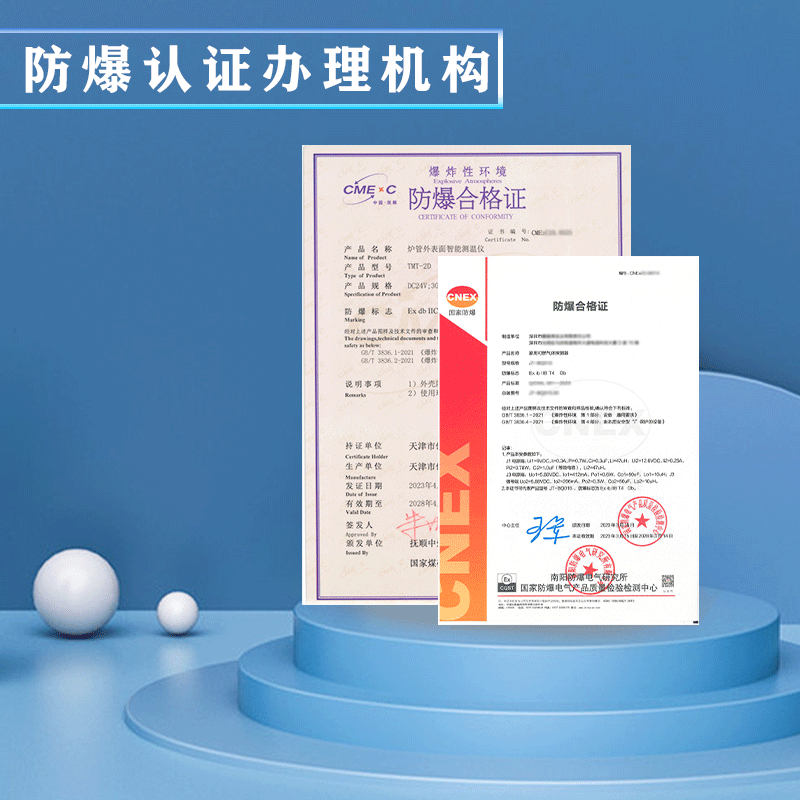
Wanji Shengding Testing has a strong explosion-proof team, built a large explosion-proof laboratory, and successfully obtained CNAS and CMA qualifications. Experienced explosion-proof engineers will solve the problem of explosion-proof certification for you. Preparation of materials → Submission of materials and applications → Sample testing → One stop service for frequent national explosion-proof certification certificates, with the option to choose the issuing agency. The explosion-proof certification certificate is authentic and traceable, with reasonable pricing and controllable cycle. Welcome to consult Wanji Shengding Testing for detailed information on fees and cycles!
The process of obtaining an explosion-proof certificate
Step 1: Submit a request and application to Wanji Shengding Testing;
Step 2: Sign the contract;
Step 3: Submit materials and send samples;
Step 4: Type test;
Step 5: After the test is completed, issue a test report;
Step 6: The test is qualified, and the National Explosion proof Institute has issued a certificate of explosion-proof compliance.
Required documents for obtaining an explosion-proof certificate
1. Enterprise standards
Enterprise standards are one of the required documents for applying for explosion-proof certification. Only by conducting testing and certification according to the standards can explosion-proof certificates be obtained frequently.
2. Product manual
The product manual is a user manual for products that require an explosion-proof certificate, which includes instructions on the product's functions, principles, dimensions, parameters, etc.
3. General assembly drawing
Include the assembly drawing of the product, parameters of the explosion-proof joint surface, technical requirements, specifications of each component, etc. If any components have explosion-proof certification qualifications, they need to be shown in the final assembly drawing.
4. Nameplate diagram
It should include the product name, model, explosion-proof mark, explosion-proof certificate number, electrical parameters, and warning signs.
5. Material certification
That is to say, the shell material we often refer to also includes the sealing ring material.
6. Pouring and sealing process
If there are sealing areas on explosion-proof products, such as glass sealing, a description of the sealing process needs to be provided.
according to the standard
1. GB/T 3836.1-2021 Explosive Atmosphere Part 1: General Requirements for Equipment;
2. GB/T 3836.2-2021 Explosive Atmosphere Part 2: Equipment Protected by Flameproof Enclosures "d";
3. GB/T 3836.3-2021 Explosive Atmosphere Part 3: Equipment protected by increased safety type "e";
4. GB/T 3836.4-2021 Explosive Atmosphere Part 4: Equipment protected by intrinsic safety type "i";
5. GB/T 3836.5-2021 Explosive Atmosphere Part 5: Equipment protected by positive pressure housing "p";
6. GB/T 3836.6-2017 Explosive Atmosphere Part 6: Equipment protected by immersion type "o";
7. GB/T 3836.7-2017 Explosive Atmosphere Part 7: Equipment protected by sand filled mold "q";
8. GB/T 3836.8-2021 Explosive Atmosphere Part 8: Equipment protected by "n" type;
9. GB/T 3836.9-2021 Explosive Atmosphere Part 9: Equipment protected by sealed "m" type;
10. GB/T 3836.24-2017 Explosive Atmosphere Part 24: Equipment protected by special type "s";
11. GB/T 3836.31-2021 Explosive atmospheres Part 31: Equipment protected by dust-proof ignition enclosures "t".
12. GB/T 3836.34-2021 Explosive Atmosphere Part 34: Complete Equipment