










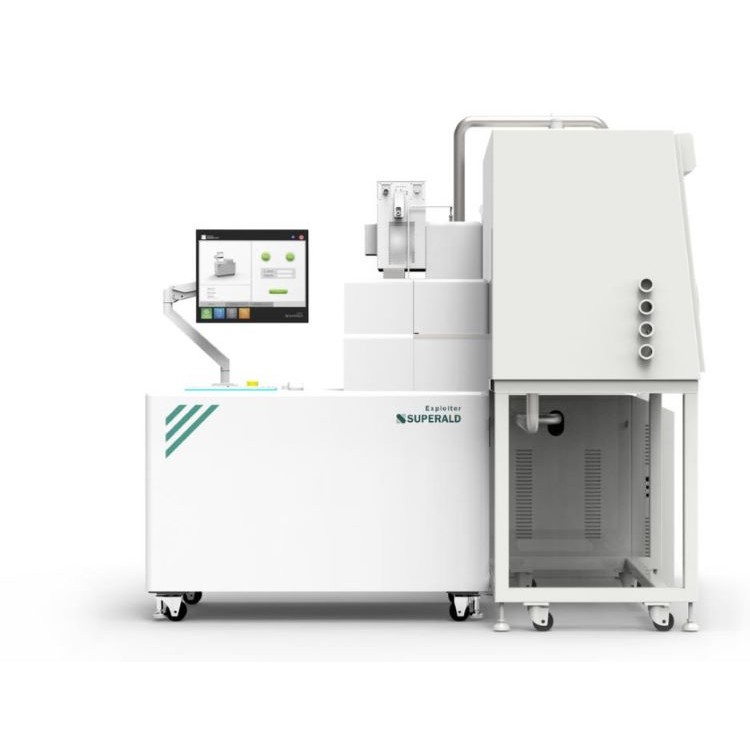
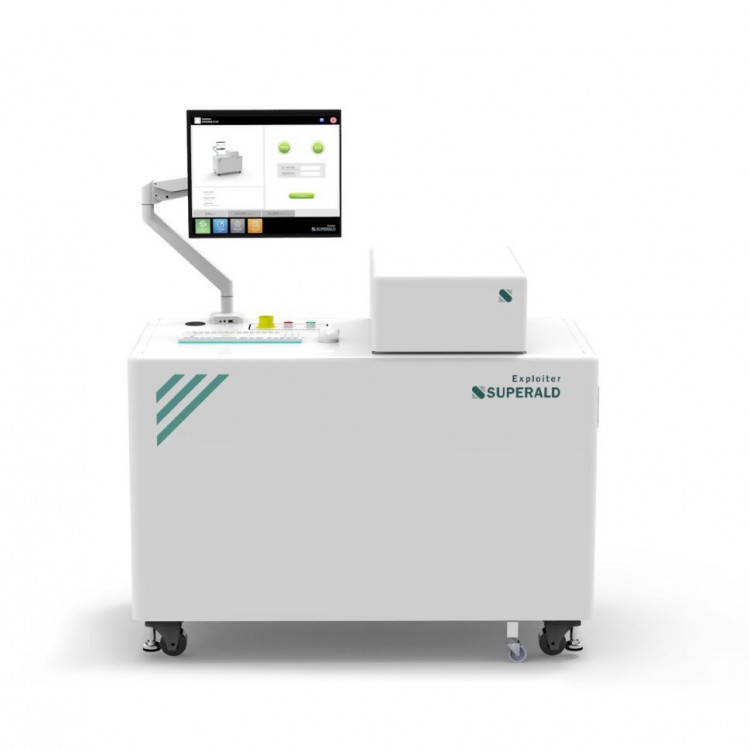

Product Information
Insplorion offers nanoplasmic sensors capable of ultra-sensitive measurements of refractive index changes near the sensor surface (<30nm). The sensors can be coated with a variety of materials, enabling research on how surface chemistry affects molecular adsorption and film phase transitions. Insplorion also provides various types and sizes of plasma nanostuctures, allowing for systematic study of how surface morphology/structure influences surface processes.
a. NPS is highly suitable for studying the effects of surface morphology and/or chemistry on surface processes.
b. Surface chemistry, structure, and curvature affect the adsorption of molecules and the structure and composition of the adsorption layer.
c. A variety of sensor coatings are available for selection, allowing for adjustment of surface chemical properties.
d. Insplorion offers sensors with varying surface structures and curvatures by altering the dimensions and shapes of plasma nanosstructures.
Application Fields
Hydrogen Sensor/Storage
Insplorion's NPS technology offers researchers in hydrogen storage and solid-state reaction fields a new, powerful research tool to overcome numerous experimental challenges. The NPS measurements are focused on a clear model system, using a small amount of sample under "operating" conditions and in a controlled microenvironment. This results in various gradients of minimization and distortion of a wide particle size distribution. High time resolution enables the monitoring of rapid processes in solid-state reactions under high temperatures.
NPS technology has successfully been applied to address the following issues in the field of nano-storage solid hydrogen storage:
a. The size-dependent kinetics of hydrogenation and dehydrogenation in palladium nanoparticles within the D<5nm size range.
b. Size-dependent thermodynamics of palladium nanoparticle hydrides formation and decomposition within the D<5nm size range.
c. Study on the size-dependent hysteresis phenomenon in the formation and decomposition of hydrides in metal nanoparticles.
d. Thermodynamic Quantitative Single Particle Study on Magnesium and Palladium Nanoparticle Hydrides.
2. Ultra-thin polymer film and glass transition temperature of glassy nanoscale structures/nanoparticles
In ultra-thin polymer films, the glass transition temperature Tg becomes size/thickness-dependent due to the presence of the near-surface layer (a few nanometers thick), where the polymer segments exhibit different fluidities. Insplorion's NPS technology provides researchers in the polymer film field with a powerful tool for studying phase transitions.
Success Stories
NPS technology has been successfully applied to address the following phenomena:
a. Thickness dependency of the glass transition temperature (Tg) of random polymethyl methacrylate (PMMA) films.
b. Size dependence of the glass transition temperature (Tg) in polystyrene (PS) nanoparticles.
Technical Specifications
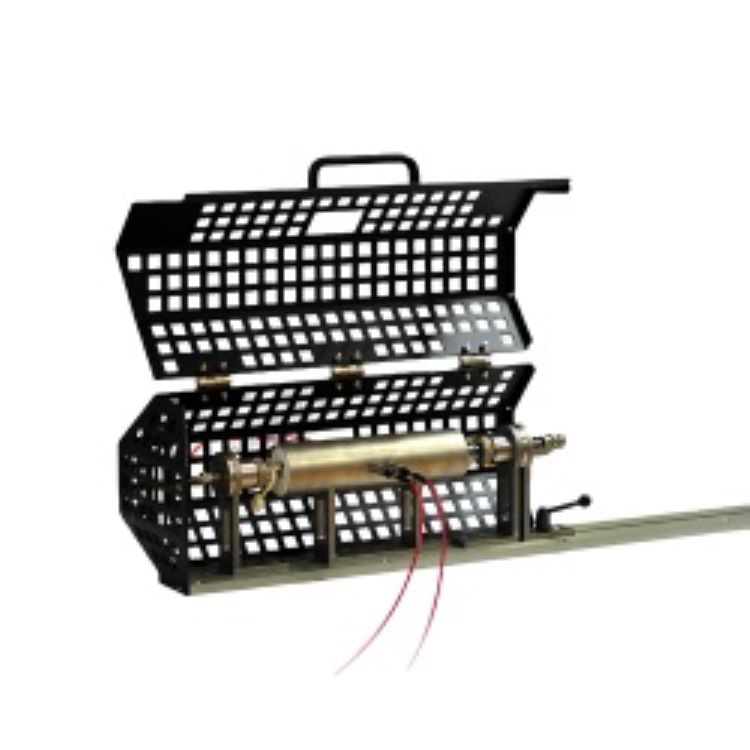
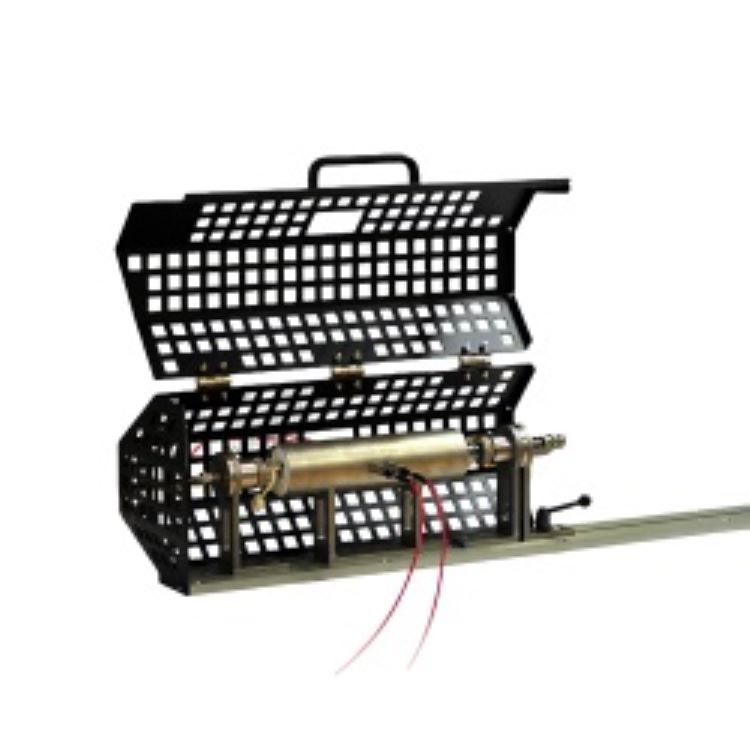
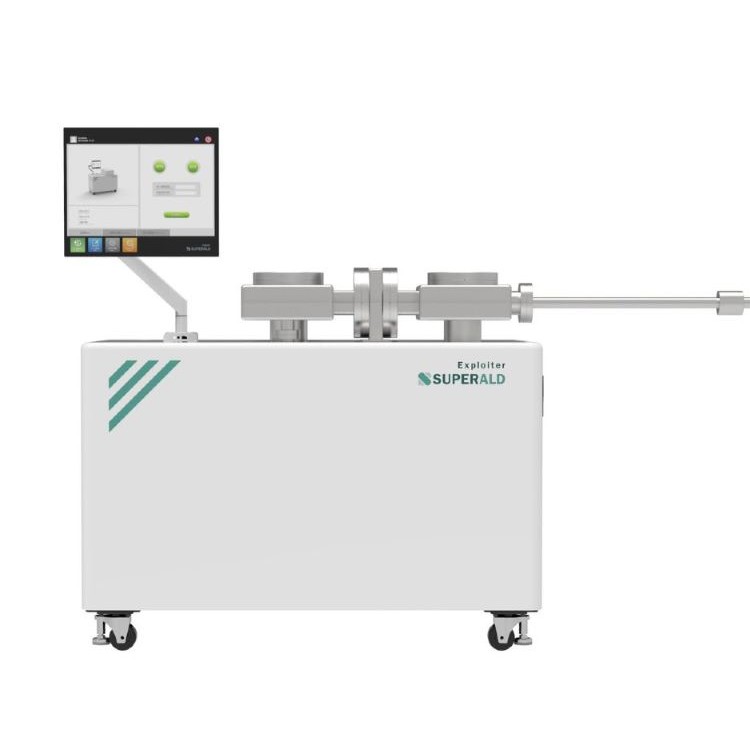
High-Temperature Reactor
| Sensor Chip Location | Dual Channel |
| Connection point | Import: 1/8 inch, Export: 1/4 inch |
| Quality Flow Regulator | Connect up to 16 quality flow controllers |
| Material | Quartz, stainless steel |
| Temperature Range | Room temperature - 600°C |
Sensor Chip
| Base Material | Fused Quartz |
| Dimensions | 9.5 mm x 9.5 mm x 1 mm |
| Surface | Nanostructured Gold |
| Standard Coating | Au, SiO2, Si3N4, TiO2, Al2O3 |
Optical Reading Characteristics
| Light Source | Tungsten halogen lamps, lifespan 2000 hours |
| Measurement Point Dimensions | Circular area ~ Diameter 3mm |
| Wavelength Range | 450 - 1000 nm |
| Temporal Resolution | 10 sampling points per second |
| Typical Noise | < 0.01 nm |
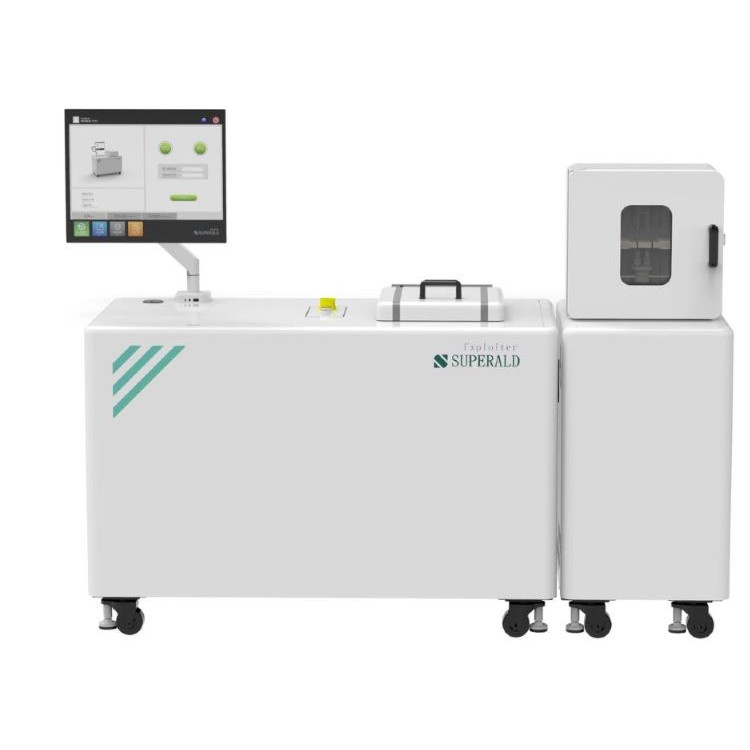
Dimensions (Width x Depth x Height)
| High-Temperature Reactor (including safety hood) | 28 cm x 28 cm x 100 cm |
| Optical Unit | 25 cm x 27 cm x 9 cm |
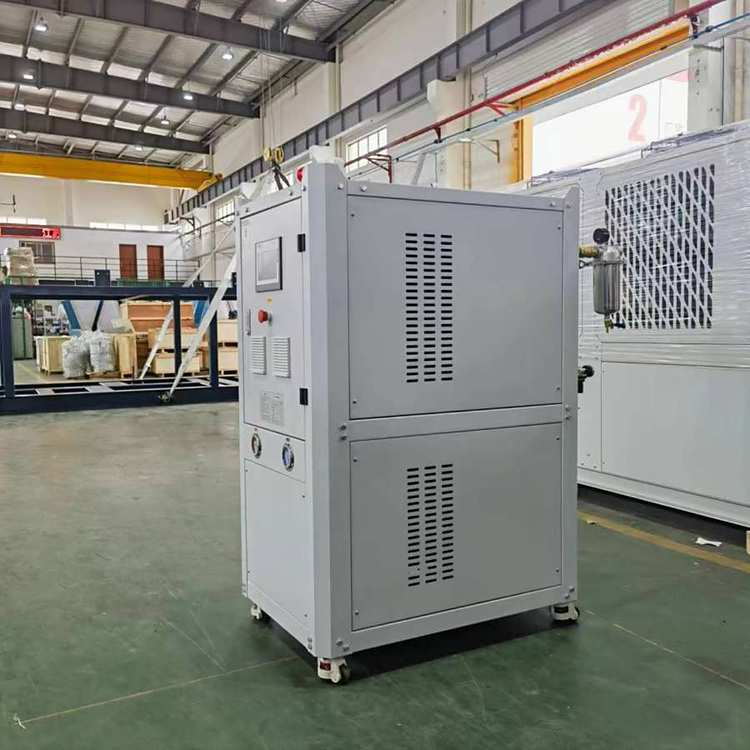
| Temperature Control Unit (2 stackable sections) | 25 cm x 27 cm x 9 cm,22 cm x 40 cm x 9 cm |