








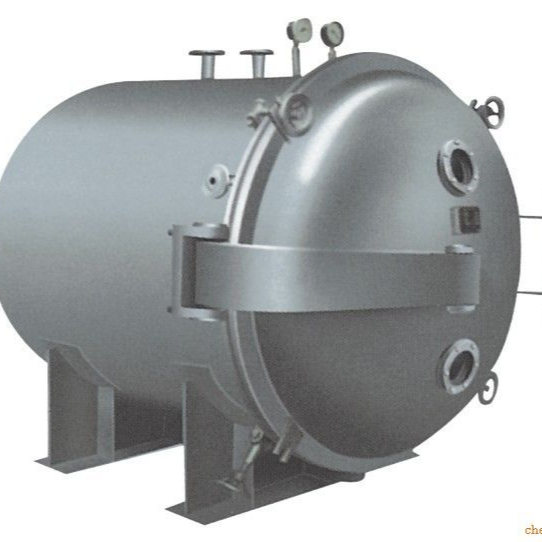
YJG - Disc Blade Dryer
I. Working Principle:
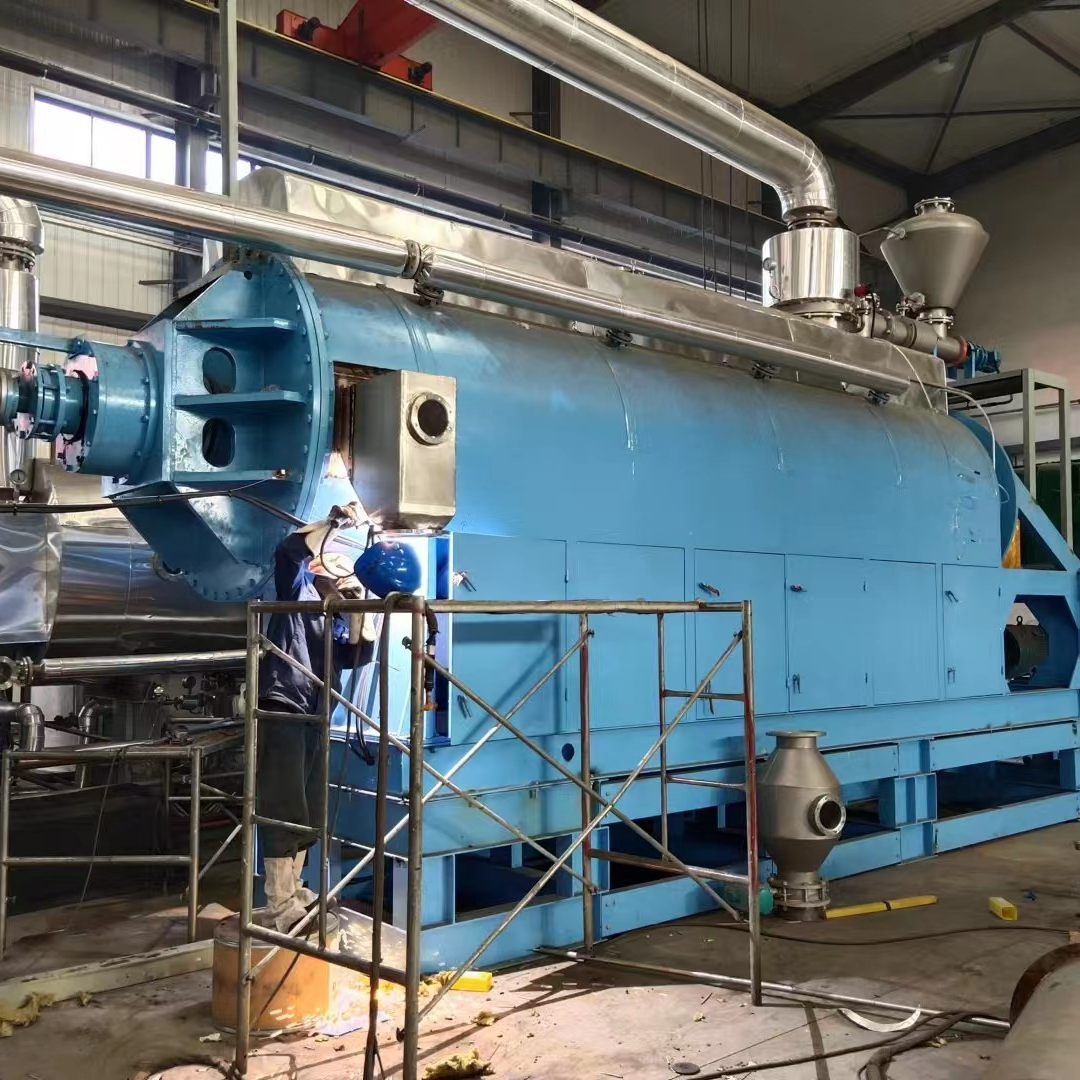
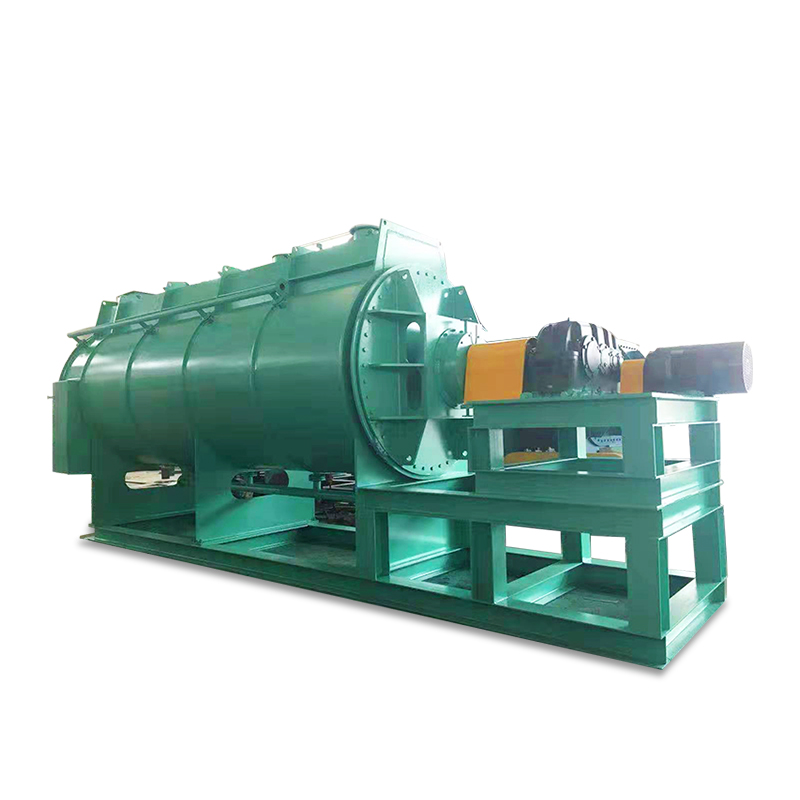
Material is fed into the dryer through the inlet, where the working medium flows between the outer shell and the hollow shaft, transferring heat through the C-type jacket, hollow shaft, and hollow disks welded to the shaft. The material is indirectly heated and dried, with the steam generated condensing in the dome of the dryer and being carried out by the conveying gas. The hollow disks are mostly perpendicular to the shaft, and with the action of the impeller/mixer on the disks, the material is agitated and propelled, continuously refreshing the drying surface to achieve the drying goal. Indirectly heated with steam, the water content evaporates more quickly by stirring the material, facilitating the drying process.
Two,Features:
Steam as the heat transfer medium can be used in both semi-chemical processes and full drying processes, with a simple system and minimal auxiliary equipment.
2. Set the air supply port for smoother exhaust emissions and reduced load on the exhaust treatment system.
3. High reliability, excellent continuous operation, capable of 24/7 operation, suitable for long-duration, large-volume material drying.
4. Steam and material do not come into contact, and the amount of insoluble gas in the exhaust is low, allowing for incineration in the furnace with minimal secondary pollution.
5. Low oxygen content, temperature, and dust concentration during operation, ensuring good system safety.
6. The dryer transfers heat through the shell wall, hollow shaft, and both sides of each vertical disc, featuring a large heat transfer area, compact structure, and small外形 dimensions.
7. Inside the drier, the material is wet, and to prevent it from sticking to the turntable, there are fixed, longer scrapers on the inner wall of the shell that extend into the gaps between the disks. These scrapers agitate the material and clean the surface of the disk. After being crushed and stirred, the material becomes uniformly granular, which is beneficial for further processing.
8. Utilizing low-temperature heat sources (≤180℃) for heating, the materials on the disk will not overheat during shutdown and will not be affected upon restart.
9. High material handling load, ensures smooth operation even with uneven feeding, low internal resistance, and low energy consumption for the equipment.
Stator
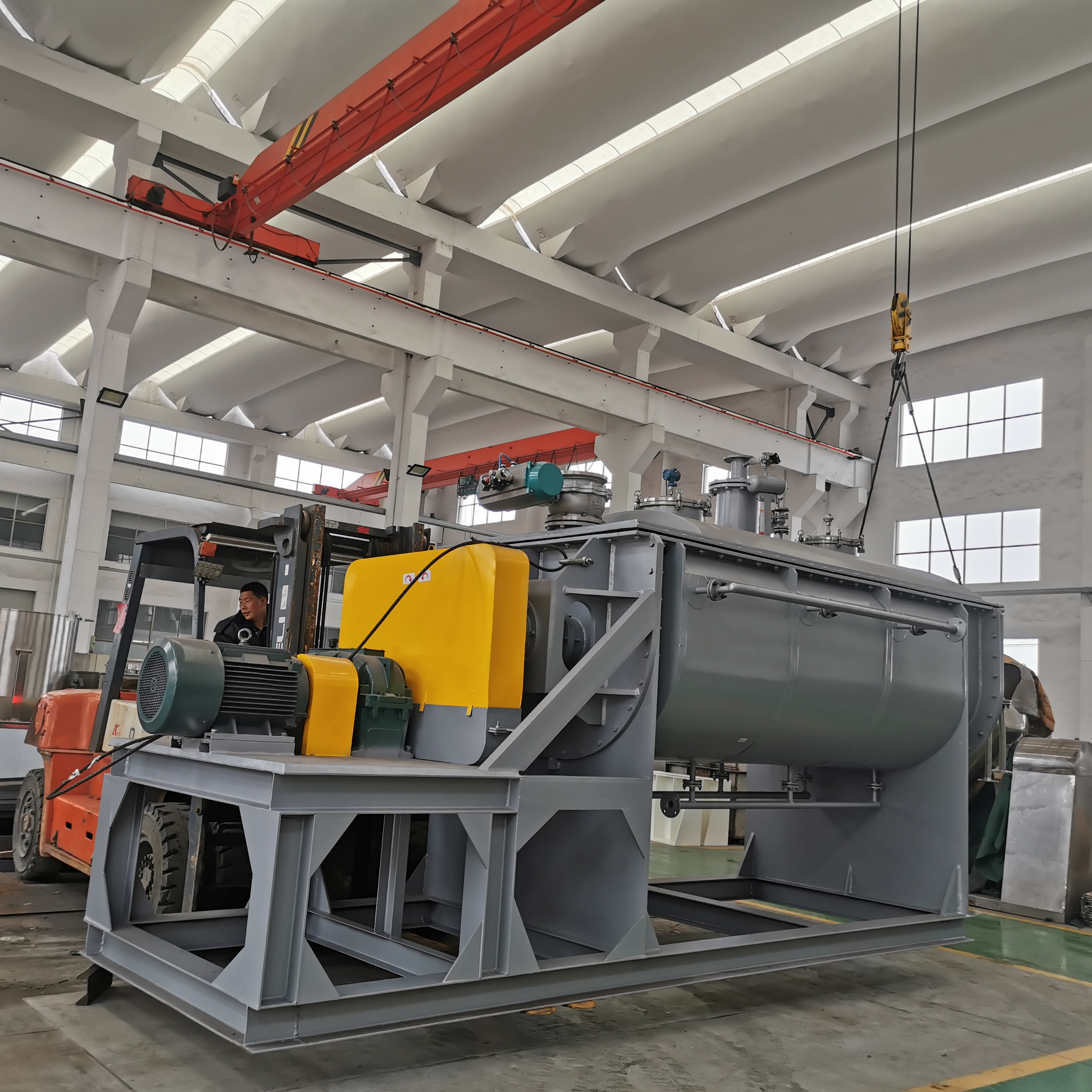
The stator of the dryer is cylindrical in shape, with a dome-shaped top that provides volume for carrying gas and steam. It also features an exhaust outlet and a maintenance inspection window for easy equipment maintenance. The stator end plate is installed using flanges for easy maintenance, and also serves to secure the bearing of the rotor.
Rotor
The entire dryer's load-bearing section consists of a hollow shaft and a set of hollow discs. To enhance the rigidity of the discs, several support rods are arranged in a circular pattern within the hollow interior. On the outer edge of the discs, a propulsion/stirrer is installed, which simultaneously serves the functions of propulsion and stirring the material.
Drive unit
Composed of an embedded reduction box, couplings, and motor, used to drive slow rotation for righting.
Application Range
Sludge (from municipal, chemical, papermaking, oil, etc.), food residue, drug residue, wine lees, fertilizers, resins, etc.