







I. Overview
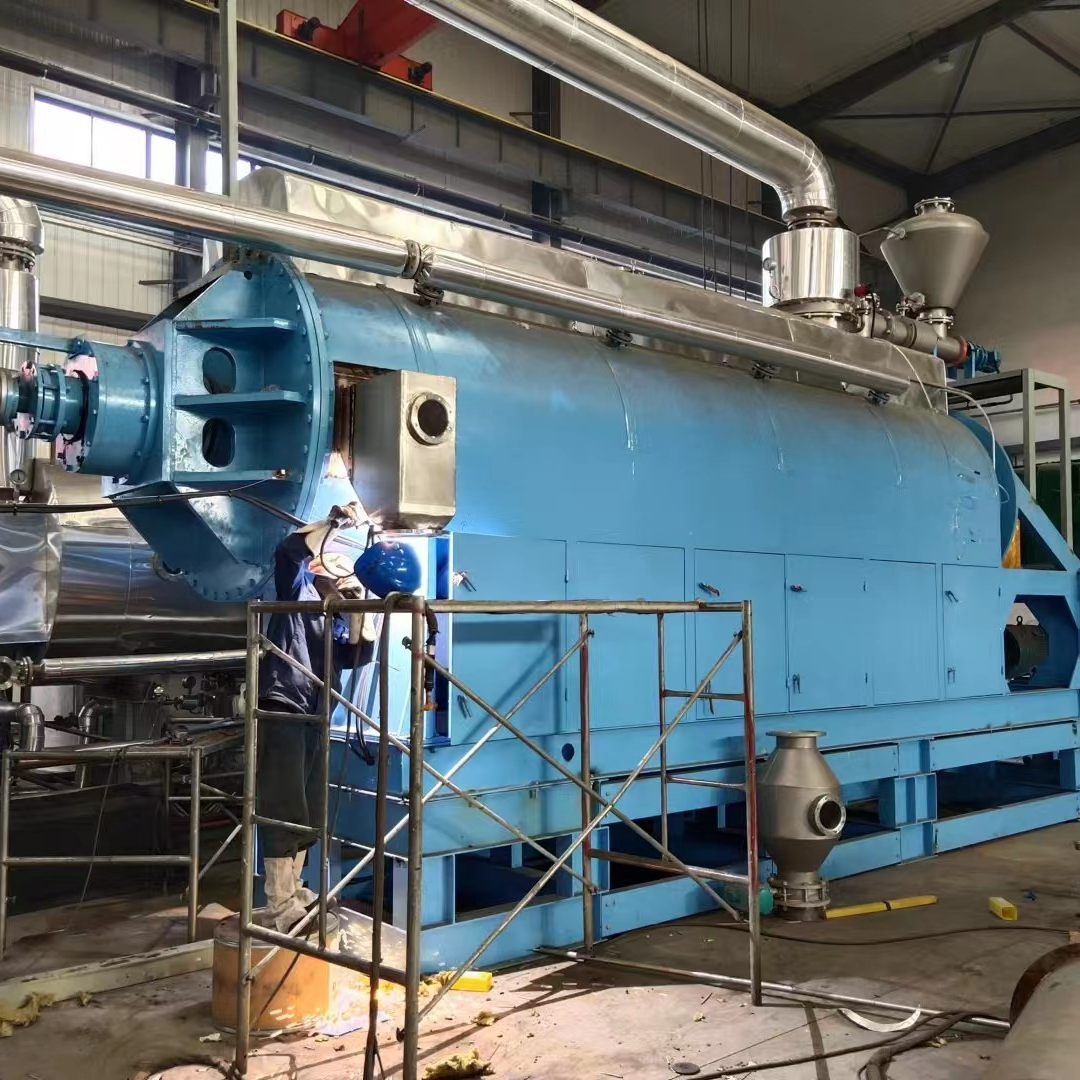
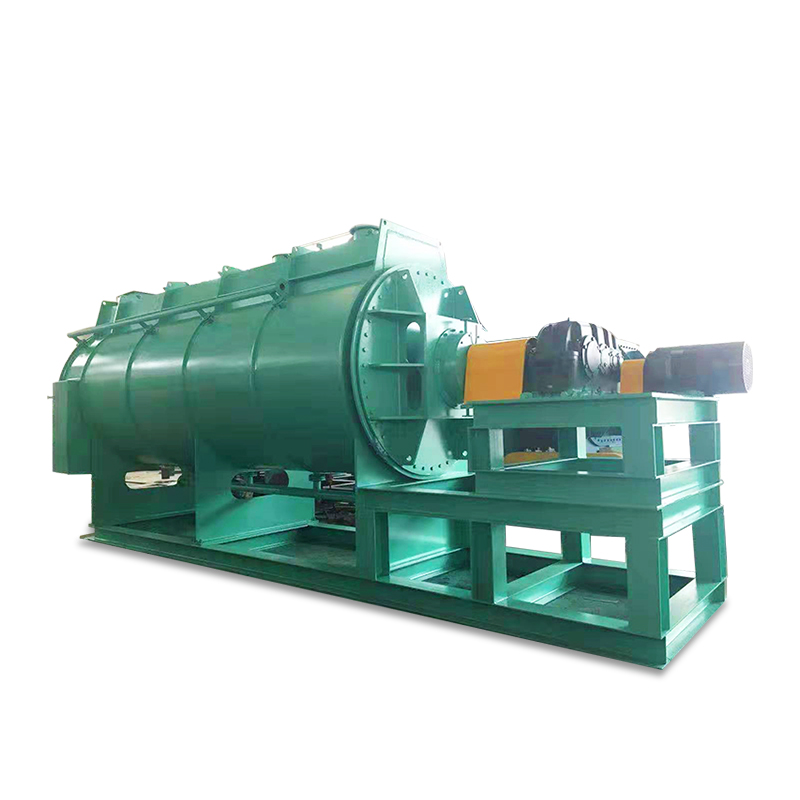
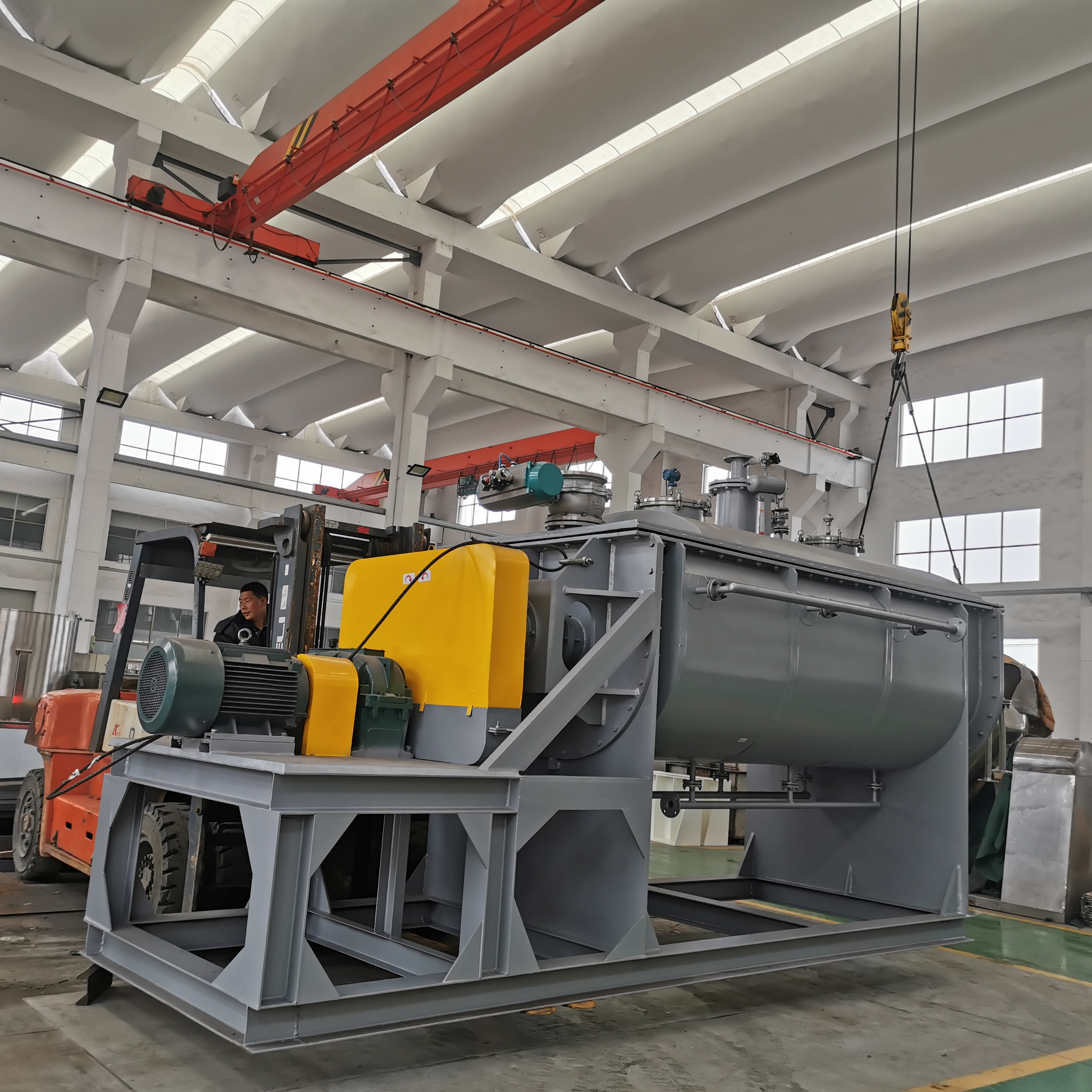
A blade drier is a heat-conduction energy-saving sludge treatment equipment. The device indirectly heats sludge produced from wastewater, which is between paste-like and slurry-like in consistency, to achieve dewatering and drying, reducing its volume, and then it is comprehensively utilized, turning waste into treasure, avoiding secondary pollution. It is currently an ideal drying equipment for sludge treatment. Heat-conduction refers to the heat carrier not coming into direct contact with the material being dried, but instead, the heat surface contacts the material through conduction for drying.
Section II: Principle
The hollow shaft is densely packed with hollow propellers in the model, with the heat medium flowing through the propellers via the hollow shaft. The heat transfer area per unit effective volume is large, with the temperature of the heat medium ranging from -40℃ to 320℃, which can be steam or liquid types such as hot water, heat-conducting oil, etc. Indirect conduction heating ensures that no air carries away the heat, with all the heat used to heat the material. Heat loss is only the heat dissipated through the insulating layer of the equipment to the environment. The heat transfer surface of the model propellers has an auto-cleaning function. The relative movement between the material particles and the model surface generates a cleaning action, which can remove the adhered material on the surface, maintaining a clean heat transfer surface during operation. The shell of the propeller dryer is W-shaped, generally containing two to four hollow stirring shafts inside. The shell is equipped with a sealed end cover and an upper cover to prevent the leakage of material dust and to collect solvent vapor from the material. A gate valve is set at the discharge outlet to ensure the material level, covering the heat transfer surface and fully utilizing its function. The heat medium flows through the rotating joint, passing through the shell jacket and the hollow stirring shafts. The hollow stirring shafts have different internal structures depending on the type of heat medium to ensure effective heat transfer.
III. Features
Low energy consumption of paddle blade dryer: Due to indirect heating, there is no large amount of air carrying away heat, and the outer wall of the dryer is insulated. For slurry materials, evaporation of 1kg of water requires only 1.22kg of steam.
2. Low-cost Propeller Blade Dryer System: Features a large heat transfer surface per unit volume, which reduces processing time. Smaller equipment dimensions greatly decrease the building area and space.
3. Wide Range of Material Processing: Utilizes various thermal mediums for handling both heat-sensitive materials and those requiring high-temperature treatment. Common mediums include steam, thermal oil, hot water, and cooling water. Both continuous and intermittent operations are possible, making it applicable in numerous fields.
4. Low Environmental Pollution: No air-carrying materials, dust content is minimal. Low solvent evaporation from materials, easy to dispose of. For situations involving polluted materials or the need to recycle solvents, closed-loop recycling can be used.
Low operational costs: Normal operation requires only 1-2 people/day. Low-speed stirring and a reasonable structure. Minimal wear and low maintenance costs.
6. Stable Operation: The special compression-expansion mixing action of the trapezoidal paddle blades ensures thorough contact between the material particles and the heat transfer surface. Within the axial range, the temperature, humidity, and mixing gradient of the material are very low, thereby guaranteeing the stability of the process.
Section 4: Techno-economic Parameters of Sludge Drying
The sludge moisture content is around 80% before drying.
2. The moisture content after drying is generally between 10-50%.
3. Volume Change: Volumes reduce by 4 to 5 times after drying.
4. Evaporating 1 kg of water requires only 1.1-1.3 kg of steam.