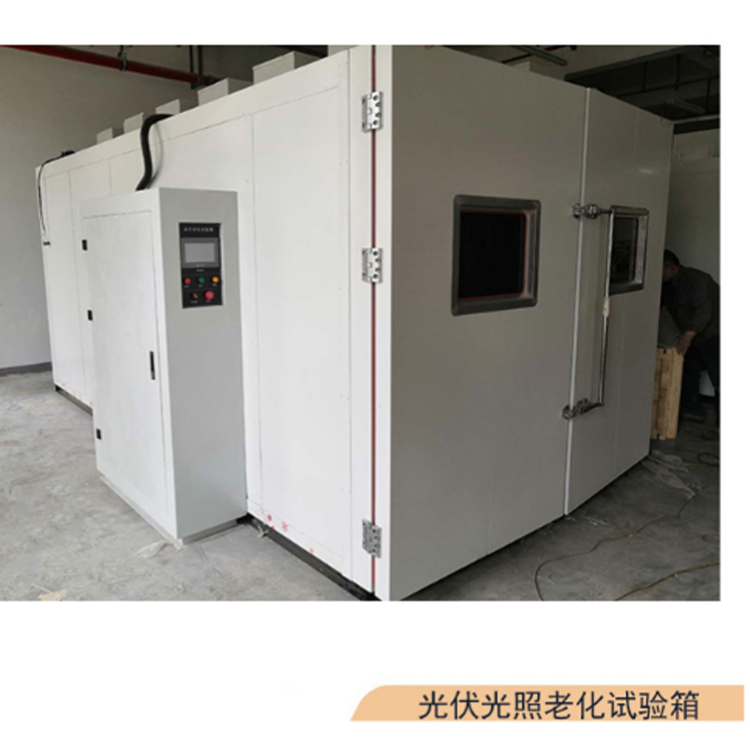

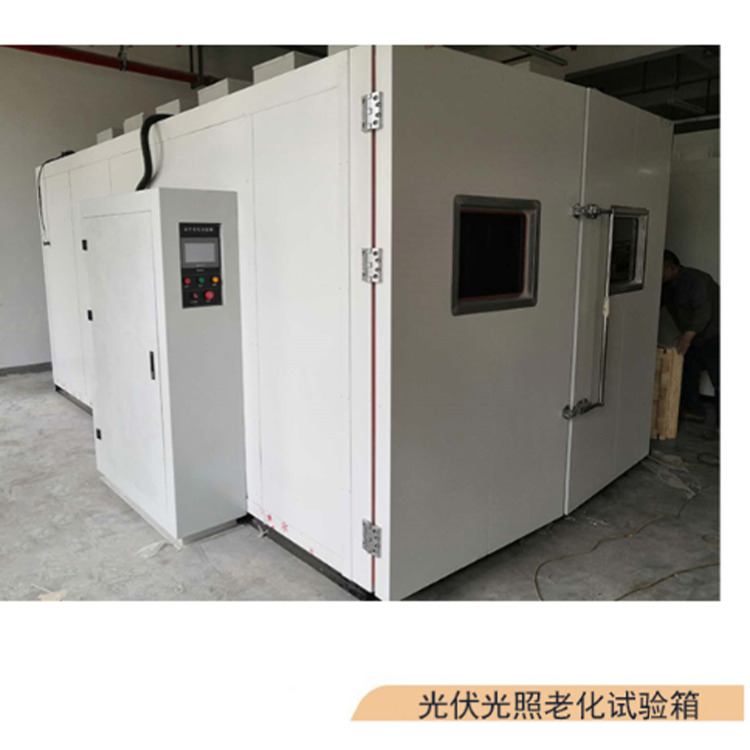










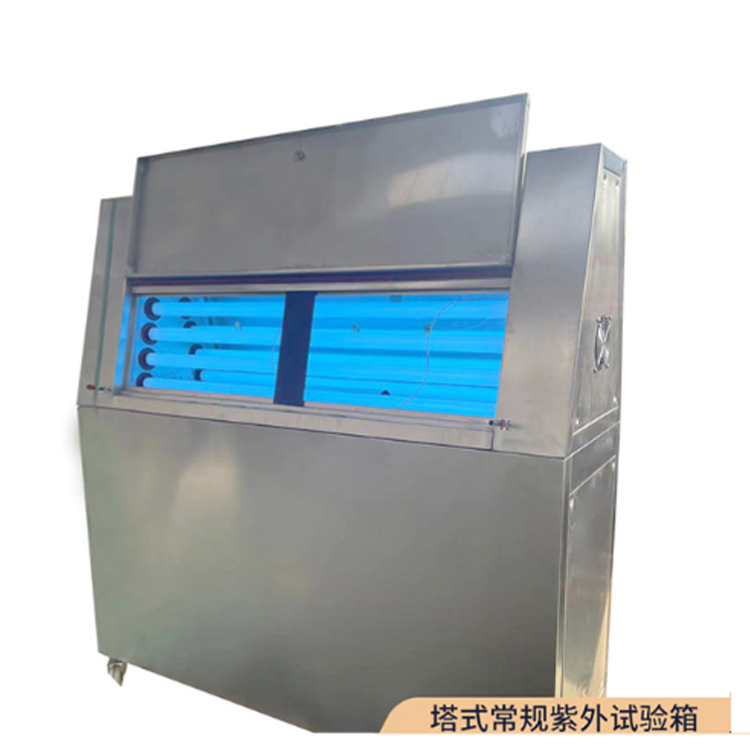
1. Equipped with a light source for UV aging tests, UV intensity monitoring sensors, temperature testing module, compressor, etc.
2. Effective Test Area: Not less than 4000×3000mm; Uniformity of illuminance within a test area of not less than 4000×3000mm is better than Class C (≤10%); Uniformity of illuminance within a test area of not less than 3000×1600mm is better than Class B (≤5%).
3. Within the effective test area inside the box, the match to AM1.5 spectrum in the spectral range of 300-1200nm is better than grade B (0.6-1.4), and the adjustable range of the irradiance on the effective test surface is not less than: 700-1400 W/m².
4. The lifespan of the light tubes is not less than 2000 hours.
5. Equipped with a total irradiance meter, capable of accumulating irradiance.
6. The temperature testing module is equipped with five temperature sensors for monitoring both the ambient temperature and the temperature of the tested samples. The temperature sensor accuracy is better than ±2°C, and the repeatability is better than ±0.5°C.
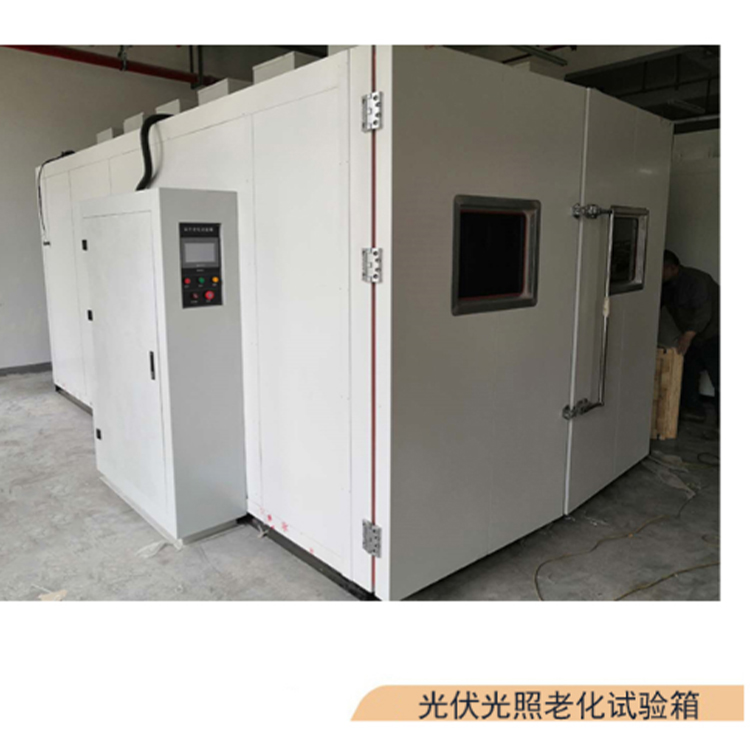
Test Chamber Cabinet Structure
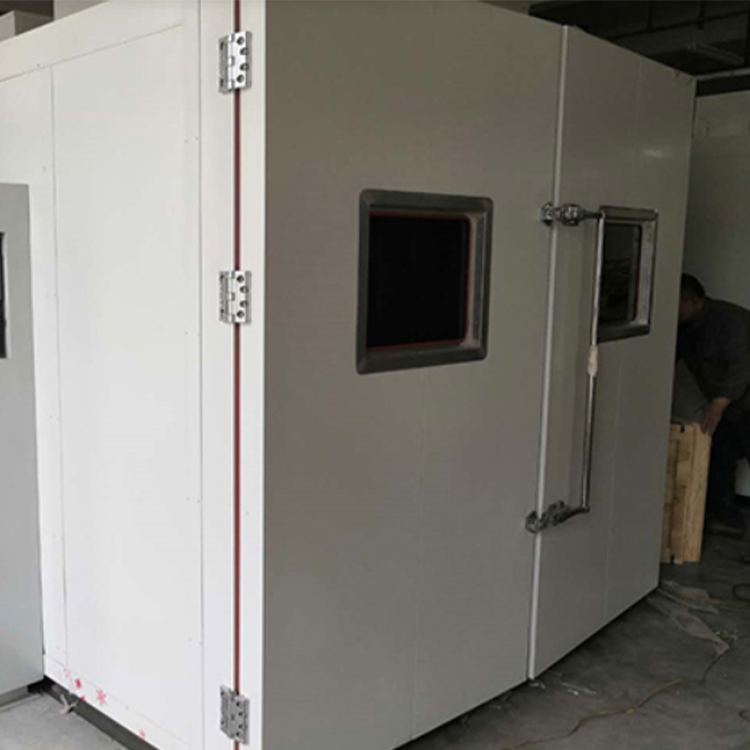
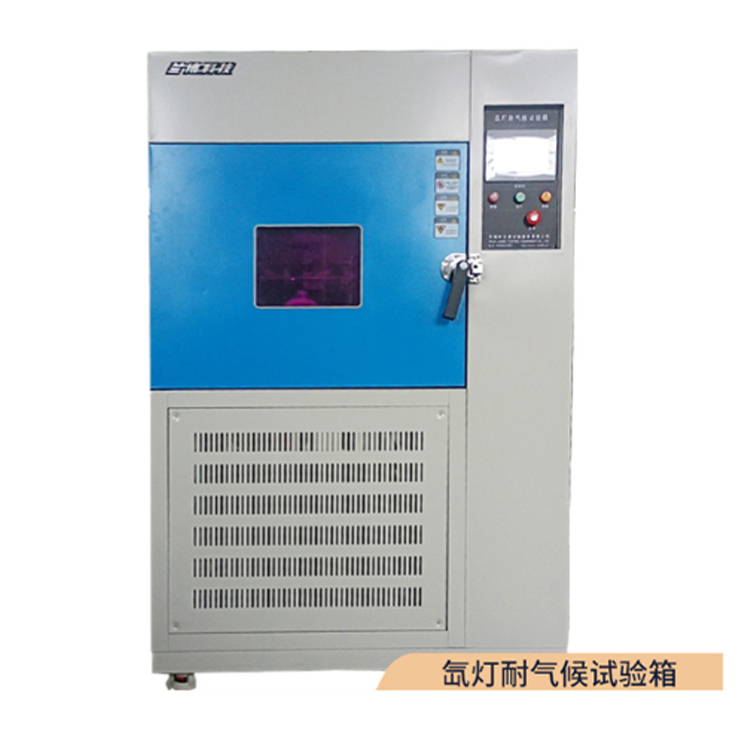
This laboratory is constructed with a modular assembly panel structure, directly forming an enclosed testing space. All materials are selected from reliable raw materials and manufactured according to stringent quality assurance standards. Pre-manufactured according to the laboratory size specified by the customer. All critical components are strictly controlled, eliminating complex maintenance in the future. To extend the lifespan of the equipment, the outer wall is made of 1.0mm electrostatically coated rock flower steel plate, the inner wall is imported high-grade 0.8mm orange grain reflective aluminum plate, and a specially designed and processed anti-deformation rigid frame is embedded.
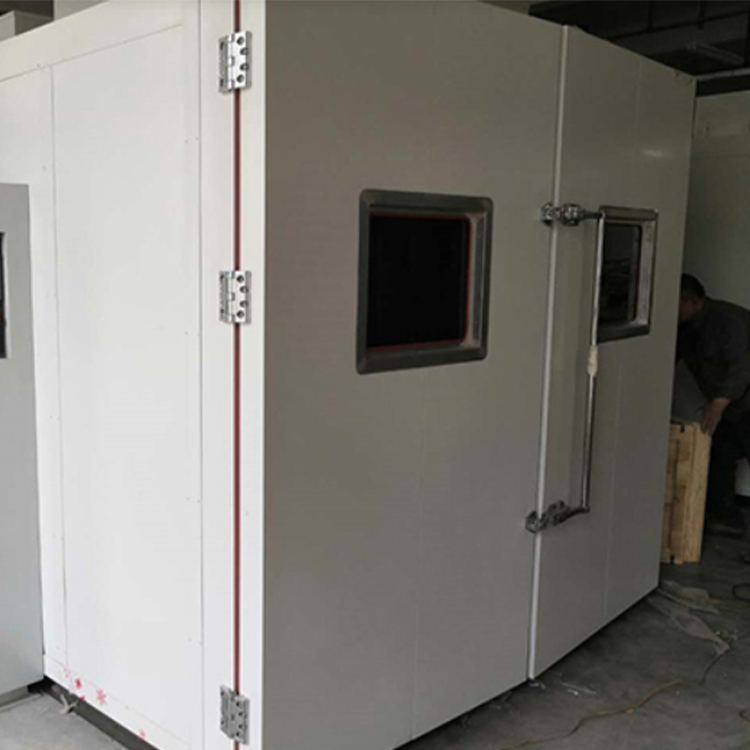
2. The observation window is a multi-layered insulating glass, measuring 400×500mm. To prevent intense light radiation, a special safety filter film is installed. One observation window is equipped on the laboratory door for observing the test conditions of the components inside the box.
3. Test holes are provided on the side of the box, which can be drilled on-site according to customer requirements. The plug material is silicone low foaming rubber, capable of withstanding high and low temperatures, and also provides insulation.
4. An air conditioning system is set up at the rear of the cabinet workshop, using the traditional temperature and humidity control mode of environmental simulation testing equipment. This involves designing an integrated air mixing and adjusting chamber, fitted with an evaporator and a centrifugal blower. The air conditioning chamber is positioned at one end of the laboratory, where air is drawn in from below through the channels, cooled by the evaporator, heated by the heater, and then circulated by the centrifugal blower driven by a long shaft motor. The regulated air is then sent into the testing area, where it circulates back and forth, gradually achieving the required conditions inside.