












DELTA portable X-ray fluorescence analyzer for research and development
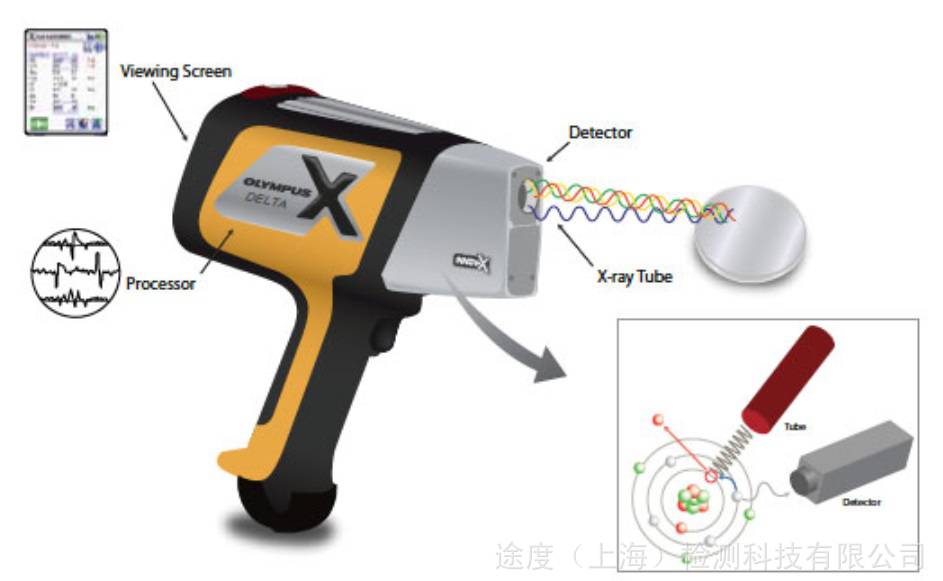
The DELTA portable XRF analyzer for research and discovery can analyze various elements from magnesium to uranium, with detectable elemental concentrations ranging from PPM to 100%. In situations where time is of the essence and materials cannot be transported, damaged, or deteriorated, it can analyze over 25 elements on-site and provide immediate analysis results. Includes calibration models for high-level research and discovery projects, multispectral display, and optional PC and accessories.

The pursuit of knowledge, understanding, and bold exploration across the globe is at the heart of human discovery and exploration. Whether these research projects belong to archaeology, cultural heritage, forensic anthropology, earth sciences, public health, or the simple quest for an idea, dream, or answer, Olympus encourages and supports them. Olympus' handheld XRF is not only a remarkable research tool but also a stunning educational instrument. Imagine this scenario: your students holding XRF analyzers, finding that the periodic table comes to life in their hands. They can quickly find answers to their questions, understand the advantages and disadvantages of various sampling techniques; discern the subtle differences in various analytical variables. They raise their eyebrows at you, impressed: "This teacher is truly learned and versatile." All possibilities are within reach of the imagination.

The DELTA portable XRF analyzer is widely used in the commercial sector, providing quick and precise answers that allow users to achieve a rapid return on investment. It helps maintain high-quality incoming and outgoing materials, and meets the requirements of various regulations for human health and well-being. The portable XRF analyzer also broadens the scope of human knowledge and satisfies curiosity. Sometimes, the knowledge discovered through the analyzer can even be transformed into practical commercial applications. The true limitation of the portable XRF in research and discovery lies in the lack of imagination. The unique mission of the portable XRF is to explore the world and unknown territories. If rapid, simple on-site elemental analysis can enhance your research or teaching, contact us to learn how to obtain your own portable XRF analyzer.

Archaeological Dating
The investigation of archaeological and historical artifacts through physical and chemical methods can greatly benefit from the use of handheld XRF analyzers. Many governments do not permit researchers to remove artifact materials from their original discovery sites, and sometimes, moving or touching artifacts can damage their value. Non-destructive analysis using handheld analyzers on-site can provide invaluable information for archaeological site assessment: locations for further excavation, relationships between sites, homogeneity of materials, authenticity of cave paintings, and much more. Handheld XRF analyzers used for field research, utilizing GPS technology, can obtain instant metal mapping, thus elevating archaeological research to a new level.

Cultural Heritage
Preservation and restoration of cultural heritage pose challenges to many scientific fields. Handheld XRF is an ideal tool for analysts to identify artifacts without damaging them, such as distinguishing authenticity or determining the correct composite materials. It aids in restoring the original glaze of historical buildings when painted with modern, non-toxic materials. The analyzer is also used to discern and restore ink stains on ancient manuscripts. Handheld XRF is employed to identify and/or repair jewelry, swords, sculptures, and even alloys on historical submarines. Moreover, it can detect arsenic or lead residues left by outdated, toxic preservatives on historical artifacts generally made from natural materials like feathers or fur. Many museums and cultural heritage research departments frequently use handheld XRF analyzers.

Earth Sciences
The field of earth sciences encompasses the discovery, safe use, and sustainable development of valuable land resources. As demands for intensive farming around urban areas continue to rise, the safety of food sources becomes increasingly crucial. The DELTA portable XRF analyzer can not only rapidly identify toxic metals, such as arsenic and lead, that have leached into soil and water due to the application of herbicides or pesticides, but also accurately determine areas rich in nutrients and fertilizers like calcium, magnesium, phosphorus, and potassium. Geologists can also use the portable XRF analyzer to assess the history of soil layers and identify significant events that occurred during geological periods. The DELTA XPLORER is an ideal tool for geological research, as it allows for high-density soil analysis on-site and provides immediate results for spatial modeling.

Forensic Anthropology
Tomb excavations evoke a range of associations, often bringing to mind scenes from horror movies. However, forensic anthropologists study ancient tombs and their inhabitants to understand their backgrounds, causes of death, and sometimes whether the bodies were moved. Moreover, forensic dentists can use portable XRF to identify victims by analyzing the composite materials in their dental restorations, similar to how fingerprints are used. Even for bodies that have been severely cremated, the victim can be identified through the analysis of dental restoration materials.

Public Health
Global advocacy organizations strive to identify environments and substances that pose dangers to public health and well-being, and determine effective remedial measures. For instance, in residential areas and sports facilities in developing countries, high concentrations of lead (Pb), arsenic (As), mercury (Hg), chromium (Cr), cadmium (Cd), and other toxic metals may be found. In these regions and countries, the dangers of these metals may not be known to locals, or there may be no regulations in place to limit their use. Handheld XRF analyzers can quickly determine the presence of these pollutants and identify their concentrations, enabling World Health advocacy organizations to implement corrective measures based on test results. This helps developing countries utilize local resources, enhance living standards through safe work practices, and ensure sustained development in these regions and countries.
DELTA handheld analyzer for indoor and outdoor applications

XRF for material composition analysis
XRF analysis of material composition
The energy represented by the peak (keV) can identify the elements present in the material. The intensity of the peak (counts/second) is related to the content of the element in the material.


Qualitative analysis for element identification Semi-quantitative analysis of material composition
DELTA offers qualitative and semi-quantitative element information to guide research experiments and distinguish unknown or complex materials. DELTA can also provide relevant results quickly, keeping students interested in their classroom learning. The technically mature DELTA analyzer can also directly provide analysis results for research projects conducted in the field.


Automatically Determine Carat Grades Camera and Collimator View Samples
Concentrated analysis
The DELTA analyzer is equipped with a camera/collimator, which can be focused on a specific area of the sample for measurement. It also saves the spectral, compositional, and digital images of the analyzed area. This is an ideal tool for archaeology, cultural heritage preservation, and forensic science.

DELTA portable XRF analyzer is screening precious metals
Non-destructive handheld XRF analyzers can be used to analyze a wide variety of materials, including gold, silver, platinum, copper, bronze, solder, ceramics, mortar, glass, wood, paint, fabrics, canvas, bone, rock, ore, soil, sludge, and fluids.
Data Collection and Analysis
DELTA's standard configuration includes factory-calibrated settings for multiple applications. The Soil mode determines the element content levels in light matrices such as soil, liquids, mortar, bone, wood, fabrics, or canvas using Compton normalization, with content ranging from PPM to 3%. The "Mineral+" mode employs the Fundamental Parameters (FP) method to obtain element content levels above 3% in light or complex matrices like fertile soil, sludge, rocks, and minerals. The GeoChem mode combines the performance of the Soil mode in measuring low-content elements with the precise handling of percentage content in the Mineral+ mode. The "Alloy+" mode, used for analyzing precious metals, employs the Fundamental Parameters (FP) method to obtain a wide range of element contents in metal or alloy matrices.


DELTA portable XRF analyzer is screening precious metals
The empirical calibration mode is used to calibrate the model through a series of standard samples determined and certified by the user. Linear or quadratic fitting can be employed, and units such as %, ppm, µg/cm2, or others can be selected for the displayed results. After these calibration models are created, named, and saved, they can be transferred to the DELTA analyzer for field actual testing.

DELTA's PC software offers the additional capability of offline data analysis, including identification of optional peaks on the periodic table, content results, collected images, and spectral coverage of the sample sets. The software is also used for remote control of the DELTA analyzer installed in an enclosed beam portable workstation.
Extensive metal distribution map
The DELTA analyzer can be installed with the Xplorer software package to seamlessly integrate XRF-GPS-GIS data, allowing for the creation of metal element distribution maps. Its performance in mapping, displaying, evaluating, questioning, and immediately taking action based on real-time detection results truly enhances field research capabilities. The Xplorer software package is the ideal tool for investigating archaeological excavation sites, parks, farms, and even cemeteries. Accessories such as the DELTA machine case, the stake for insertion into the ground, and the extension rod greatly facilitate the operation of drawing contour maps of metal element concentrations over large areas.













