












Olympus/Olympus XRD Analyzer, Spectrometer, Mineral Element Analyzer, Alloy Analyzer
The working principle of the Olympus XRD analyzer
The Olympus XRD diffractometer employs a unique method for quickly and conveniently collecting and processing XRD data.

Olympus XRD Technology
Micro-focusing X-ray Tube
X-ray beam
Collimator
Samples
CCD Detector


The Olympus instrument utilizes transmission geometry technology (as shown in the above figure), as opposed to the traditional XRD instruments based on angle-measuring devices that use reflection geometry. The instrument has no moving parts; instead, it achieves randomization of sample detection through the use of a unique vibrating sample tray. The instrument randomizes powdered samples at a constant frequency, a process referred to as powder liquefaction.
Powders are placed between two polyethylene film or polyimide film windows, as shown in the illustration below.


Thanks to our convection technology, every grain in the sample chamber is exposed to an X-ray beam in all possible directions within 30 seconds. This method allows Olympus XRD instruments to achieve 100% randomization of sample detection, which is a critical factor for precise and accurate X-ray diffraction analysis. The Olympus XRD analyzer requires only 15 milligrams of sample to simultaneously collect all practical 2-theta measurement data. The absence of moving parts also contributes to the reliable performance and almost maintenance-free advantage of our XRD analyzer.
We offer two XRD analyzers:
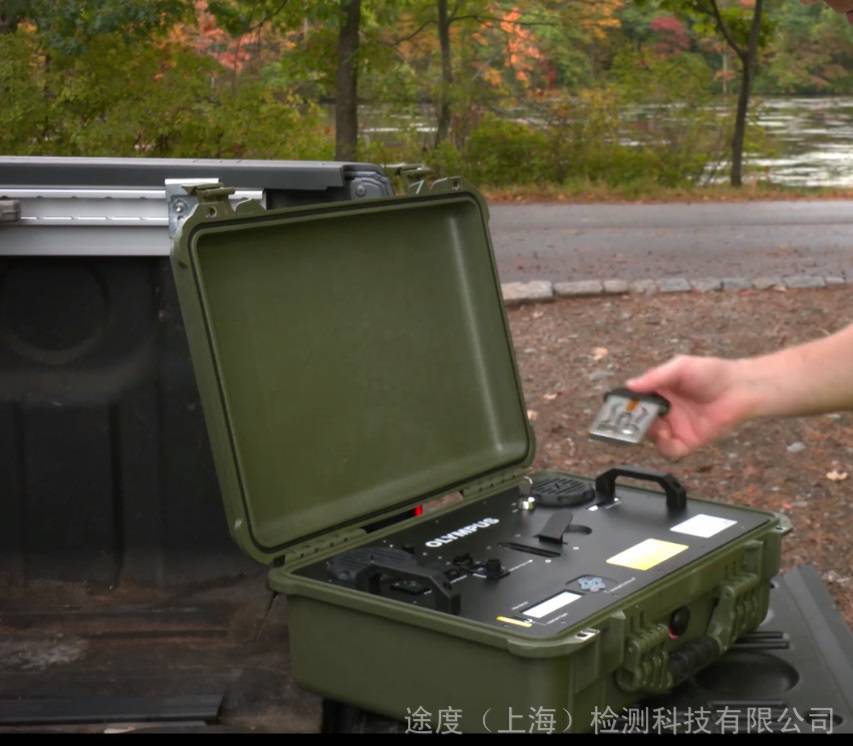
Portable XRD Analyzer: TERRA II XRD AnalyzerA portable instrument that provides quantitative mineralogical information. It boasts a battery life of up to 6 hours and is equipped with a sturdy, durable, wind and waterproof shell, enabling rapid analysis of primary and secondary components on-site.
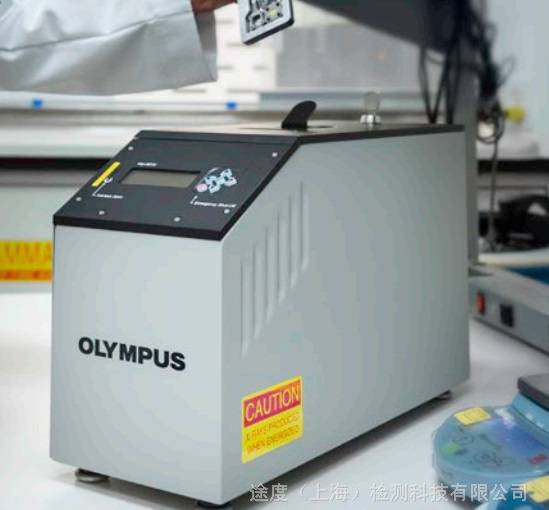
Desktop XRD Analyzer: BTX III XRD AnalyzerThis is a compact desktop analyzer that provides reliable quantitative mineralogical information for both major and minor components. The analyzer combines powerful software with an enhanced X-ray detector, boosting detection speed and sensitivity.
Primary Advantages
Convenient Sample Preparation:Conventional XRD instruments typically require a substantial amount of sample collection and preparation by the operator, as it's necessary to grind a large quantity of samples into powder and meticulously compact them into small spheres. Over-grinding or excessive compaction can lead to sample preparation effects, such as preferred orientation issues. In contrast, Olympus' XRD analyzers differ, requiring only 15 milligrams of sample to achieve high-quality results, and operators can easily prepare samples using the sample tool kit provided with the instrument.
Simultaneous measurement:Traditional XRD instruments require several seconds to obtain each 2-theta measurement value, so acquiring all 2-theta values may take several hours. The Olympus XRD analyzer is equipped with a charge-coupled device (CCD) detector, enabling the simultaneous acquisition of all 2-theta measurements, thus allowing the complete diffraction pattern to be displayed on the screen almost instantaneously.
2D X-ray diffractometerMany XRD tools utilize X-ray detectors, capable only of capturing photons scattered in a single plane, thus completing one-dimensional experiments. Olympus' XRD analyzers equipped with a charge-coupled device (CCD) detector can collect slices of the diffraction rings, assisting users in determining whether the sample was properly prepared (particle statistics and/or grain preferred orientation). Based on this information, users can confirm the accuracy and representativeness of the quantitative data obtained.
Perspective GeometryUnlike large conventional XRD instruments that utilize reflection geometry technology, Olympus' XRD analyzer employs transmission geometry at the location where the X-ray beam passes through the sample. The amount of sample in the sample cell is fixed, so changes in sample density do not affect resolution. This feature is particularly important for low-density materials, such as pharmaceutical samples. Compared to instruments based on reflection geometry technology, our analyzer achieves higher resolution with a fixed penetration performance.
Energy-separated X-ray detectorLarger traditional XRD instruments typically cannot use detectors that are sensitive to energy, so the detectors are affected by photons not used in the XRD experiment. In contrast, Olympus' XRD analyzer can eliminate photons not directly involved in the X-ray diffraction experiment, such as X-ray fluorescence photons, thereby providing a better signal-to-noise ratio.
Coil tube and copper tube options:The Olympus XRD analyzer comes standard with a robust and durable cobalt (Co) target X-ray tube. This anode X-ray tube is highly favored by geologists and mineralogists, as it performs exceptionally well when analyzing samples with high iron (Fe) content. However, in certain applications (such as samples with high manganese content), a copper (Cu) target X-ray tube is required. Olympus can provide either of these anode X-ray tubes based on the specific needs of the user's application.













