



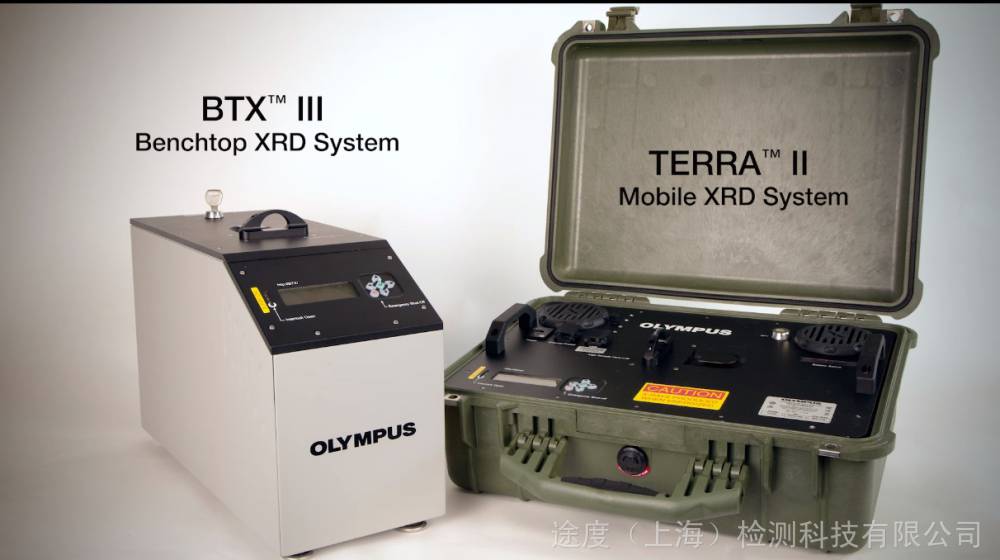
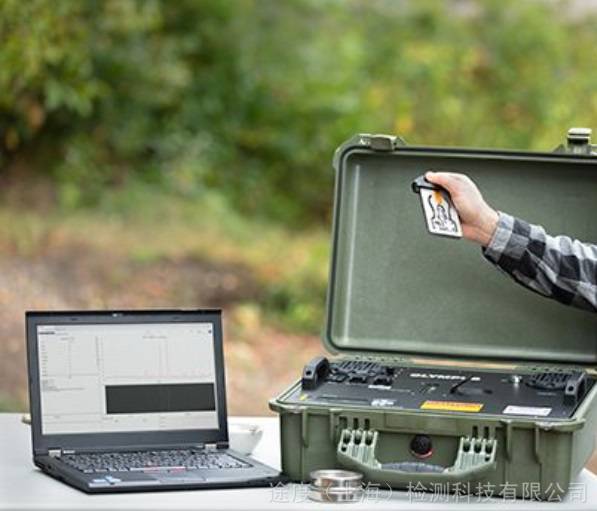









TERRA II Portable XRD Analyzer
The successor to the world's first battery-powered commercial portable XRD analyzer: the TERRA II analyzer, featuring a wind and rainproof, durable casing, powered by battery, capable of continuous operation up to 6 hours, thus enabling mineral detection and analysis in野外 environments, quickly providing information on the primary and secondary components of minerals.
The TERRA II analyzer offers some powerful features, making it a suitable replacement for traditional XRD instruments. It is lightweight, portable, and requires minimal maintenance.
Equipped with a unique small sample holder, analysis can be completed with just 15 mg of sample.
Operation does not require external power supply, compressed gas, water cooling equipment, secondary chilled water units, or an external transformer, thus maintaining a low ownership cost.
Connect the analyzer to your equipment via wireless connectivity.
The SwiftMin software used in our analyzers is straightforward and intuitive, featuring a single-screen control panel displaying multiple data, pre-set calibration programs, easy data export, and automatic data transfer, thus simplifying your workflow.

Enhanced speed and sensitivity aid in making decisions swiftly.
The BTX III analyzer combines a powerful, straightforward software with an enhanced X-ray detector, boosting sensitivity, accelerating the analysis process, and delivering more reliable results.
Updated X-ray detector hardware operates at a faster speed, analyzes density at a higher level, thus achieving a lower detection limit (LOD).
SwiftMin's automated mineral phase identification (ID) and quantitative software provides data directly on the XRD analyzer in real-time, enabling you to make quick and confident decisions.


Effortlessly complete sample preparation tasks
Traditional XRD instruments require grinding a large amount of samples into powder and then compressing it into balls to ensure sufficient random orientation of the crystal grains.
Compared to others, the TERRA II analyzer utilizes a compact vibration sample holder to induce convection of all particles within the sample chamber, ensuring data is almost unaffected by directional effects. Consequently, the instrument requires only 15 milligrams of sample to deliver high-quality results, and the sample tool kit provided with the instrument makes sample preparation a breeze.
SwiftMinAutomatic mineral phase identification (ID) and quantitative software can provide data directly on the XRD analyzer in real-time, enabling you to make quick and confident decisions. During repetitive testing operations, the intuitive and straightforward functions of SwiftMin software enhance efficiency and save time. The software performance is as described below:
Multiple data displays are presented on a single control panel screen:View all mineral composition, calibration, and analysis information on the same screen, thereby speeding up the workflow.
Pre-set Calibration ProgramAccess can be granted through a new lab admin screen protected by a password, where preset calibration modes can be input, allowing operators of any skill level to use the analyzer and quickly obtain reliable results.
Automatic Data Transmission:Upon clicking the "Stop" button or after a pre-set time, the analyzer will automatically send data to your network.
Easily export data:You can easily export quantitative mineralogical results for review or further data analysis. Additionally, you can access the original data files by navigating to the network folder to analyze diffraction patterns.

Key Advantages
Convenient Sample Preparation:Traditional XRD instruments typically require technicians to engage in extensive sample collection and preparation, as it's necessary to grind a large quantity of samples into powder and carefully compress them into spheres. Over-grinding or excessive compression can lead to sample preparation effects, such as preferred orientation issues. Olympus' XRD analyzer, however, differs; it only needs 15 milligrams of sample for high-quality results, and technicians can easily prepare samples using the sample tool kit provided with the instrument.
Simultaneous measurement:Traditional XRD instruments require several seconds to obtain each 2-theta measurement value, so it may take several hours to acquire all the 2-theta values. The Olympus XRD analyzer is equipped with a charge-coupled device (CCD) detector, which can simultaneously obtain all 2-theta measurement values, thus allowing the complete diffraction pattern to be displayed on the screen almost instantly.
2D X-ray diffractometerMany XRD tools utilize X-ray detectors, capturing only photons emitted in one plane of the sample, thus completing a one-dimensional experiment. Olympus' XRD analyzers equipped with a charge-coupled device (CCD) detector can collect slices of the diffraction rings to help users determine if the sample was properly prepared (particle statistics and/or grain preferred orientation). Based on this information, users can confirm the accuracy and representativeness of the quantitative data obtained.
Perspective GeometryUnlike large traditional XRD instruments that use reflection geometry technology, Olympus' XRD analyzer employs transmission geometry where the X-ray beam passes through the sample. The sample quantity in the sample cell remains constant, so changes in sample density do not affect resolution. This feature is particularly important for low-density materials, such as pharmaceutical samples. Compared to instruments based on reflection geometry technology, our equipment can achieve higher resolution with the same penetration performance.
Energy Discrimination X-ray DetectorLarger traditional XRD instruments typically cannot use detectors that are sensitive to energy, so the detectors are affected by photons not used in the XRD experiment. In contrast, Olympus' XRD analyzers can eliminate photons not directly involved in the X-ray diffraction experiment, such as X-ray fluorescence photons, thereby providing a better signal-to-noise ratio.
Coil tube and copper tube options:The standard configuration of the Olympus XRD analyzer features a robust and durable cobalt (Co) target X-ray tube. This anode X-ray tube is highly favored by geologists and mineralogists, as it performs exceptionally well when analyzing samples with high iron (Fe) content. However, in certain applications (such as samples with high manganese content), a copper (Cu) target X-ray tube is required. Olympus can supply either of these anode X-ray tubes based on the specific needs of the user's application.
Primary Technical Specifications
XRDScope | 5–55° 2θ |
Detector Type | 1024 × 256Pixel, 2D Peltier Cooling CCD |
Sample particle size | < 150 μmCrushed ore (100 mesh, 150 μm) |
Sample quantity | Approximately 15 mg |
XTarget material for ray tubes | Copper or Cobalt (standard configuration: copper) |
XCathode-ray tube voltage | 30 kV |
XRay Tube Power | 10 W |
Data Storage | 240 GBRobust and durable internal hard drive |
Wireless connectivity | 802.11 b/gRemote via web browser |
Operating Temperature | –10°C ~ 35°C |
Weight | 14.5Kilograms, with 4 batteries |
Dimensions | 48.5 cm × 39.2 cm × 19.2 cm |
Shell | Meets IP67 standards and complies with MIL C-4150J requirements; rugged and durable |
Operation Time in the Field | 4Up to 6 hours (hot-swap battery) |













