








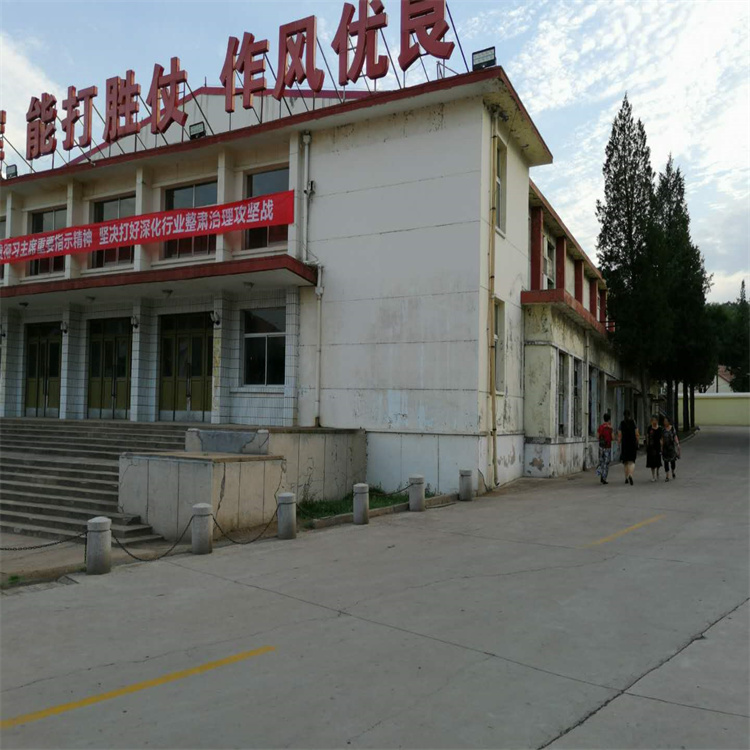
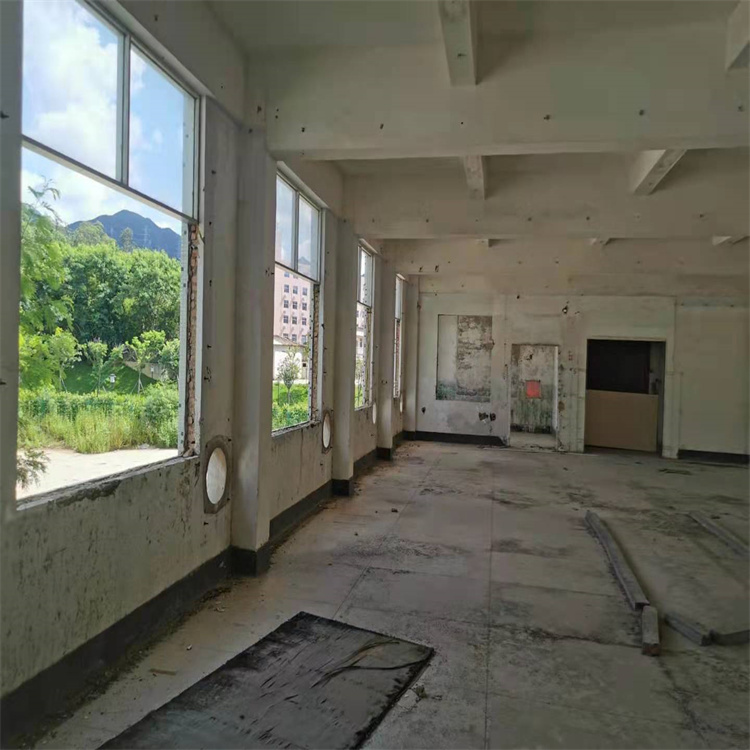
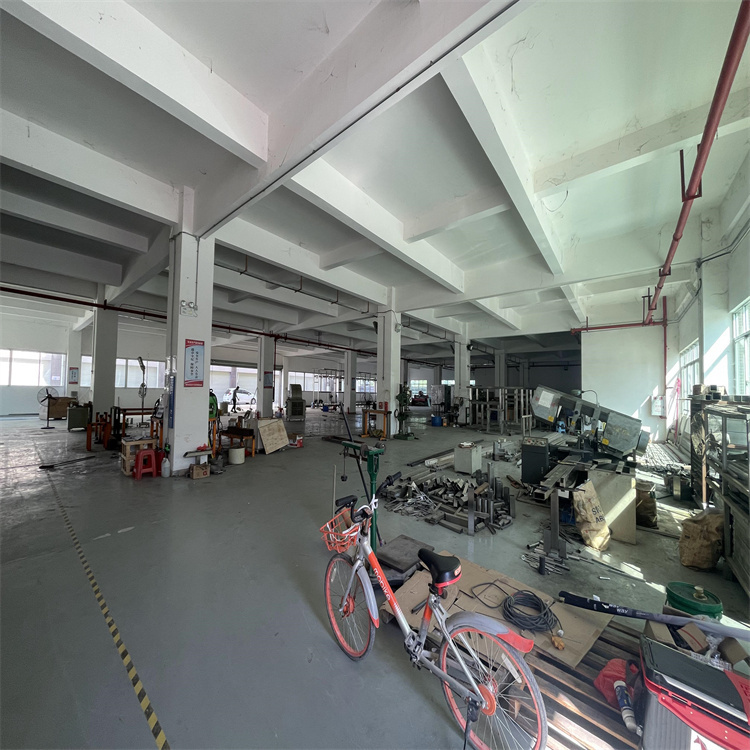
Zhuhai Photovoltaic Roof Load-bearing Capacity Testing and Appraisal Unit, Residential Load-bearing Capacity Testing and Appraisal
Shenzhen, an early-established testing unit; a branch office in Guiyang; leveraging its strong technical capabilities and economic foundation, the company combines traditional experience with new technology. It employs advanced testing equipment, continuously explores and summarizes testing techniques, and has developed a static strain displacement testing method for building load-bearing capacity. The company ensures quality through dedication, meticulousness, and responsibility. Since its establishment, the company has conducted extensive testing work around construction sites such as subway lines, highway expansions, sewage interception projects, southern expressways, Guangzhou-Shenzhen-Hong Kong-Macau passenger dedicated line, Wuhan-Guangzhou high-speed railway line, cityscape improvement, and deep foundation pit construction. It also provides safety inspections for the opening of special industries like hotels, inns, and venues, as well as for annual business inspections. The company has been involved in housing surveys by housing management departments, particularly in the testing of property damage and quality disputes, conducting reasonable and legal inspections that satisfy both parties and lead to satisfactory resolutions. It has earned good customer reviews. The company has also conducted numerous structural property inspections, accumulating rich experience in building structural and seismic performance testing. Additionally, the company has been commissioned by provincial and municipal courts to test properties involved in disputes.
The company is legally registered in Shenzhen and holds a certification from the Guangdong Provincial Administration for Quality and Technical Supervision (CMA certification), allowing it to issue effective data and results to the public. We have our own laboratory with a testing office area over 1,000 square meters, equipped with a full range of testing instruments and equipment, all strictly calibrated. Our operators have undergone rigorous training and are proficient in operating and maintaining all equipment. Main Business: Building inspections, factory floor load-bearing inspections, factory safety inspections, factory acceptance inspections, factory audit inspections, steel structure safety inspections, billboard safety inspections, factory load-bearing capacity inspections, kindergarten building seismic inspections, training institution building seismic inspections, school building seismic inspections, building renovation inspections, building structural safety inspections, chimney inspections, dangerous building inspections, fence inspections, photovoltaic load inspections, and building inspection services.

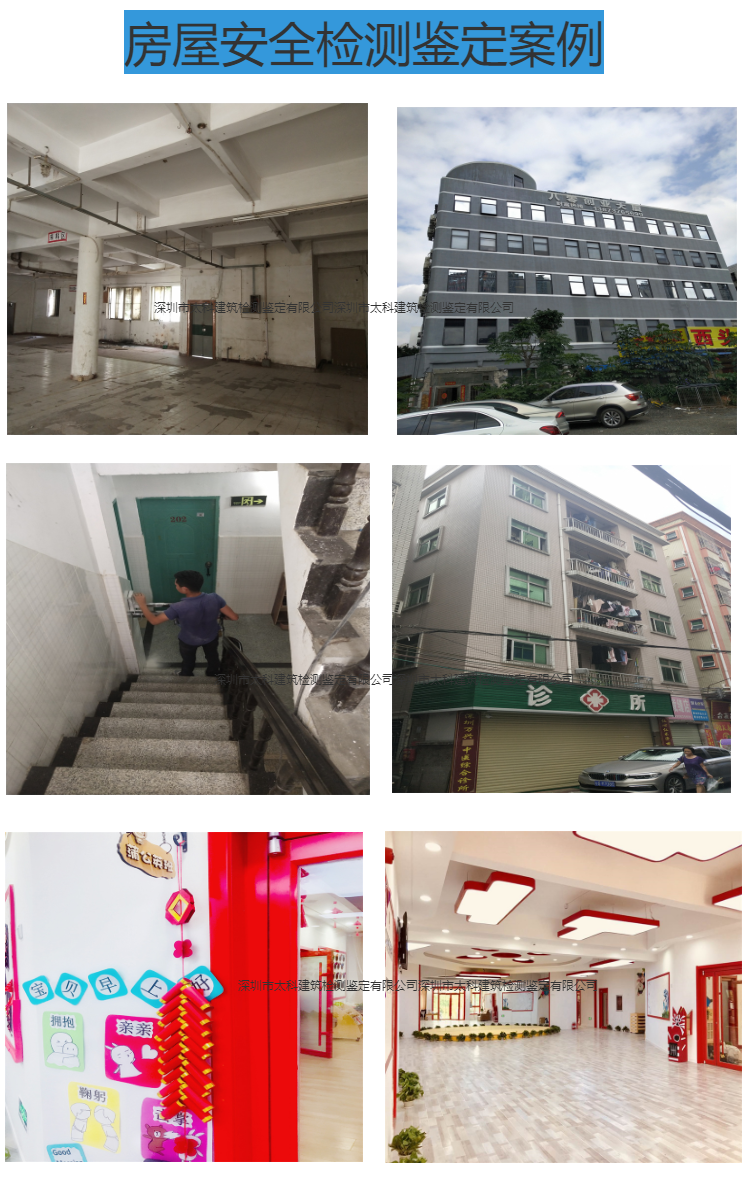
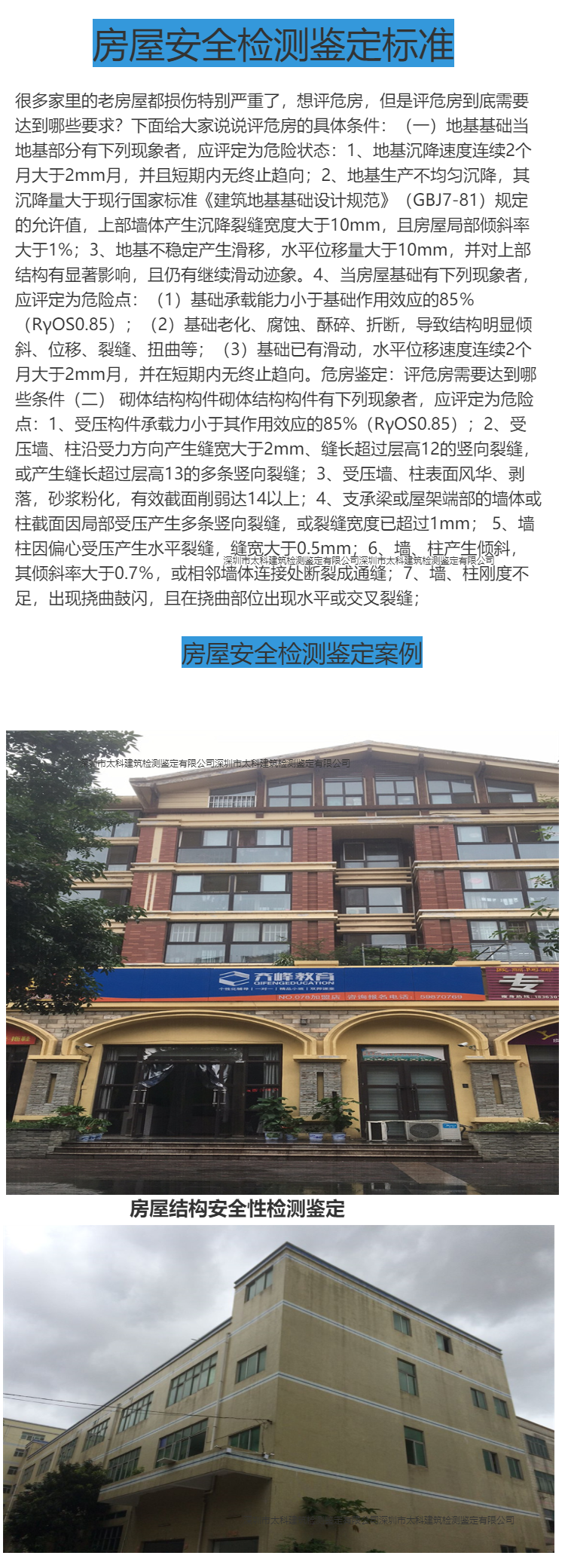
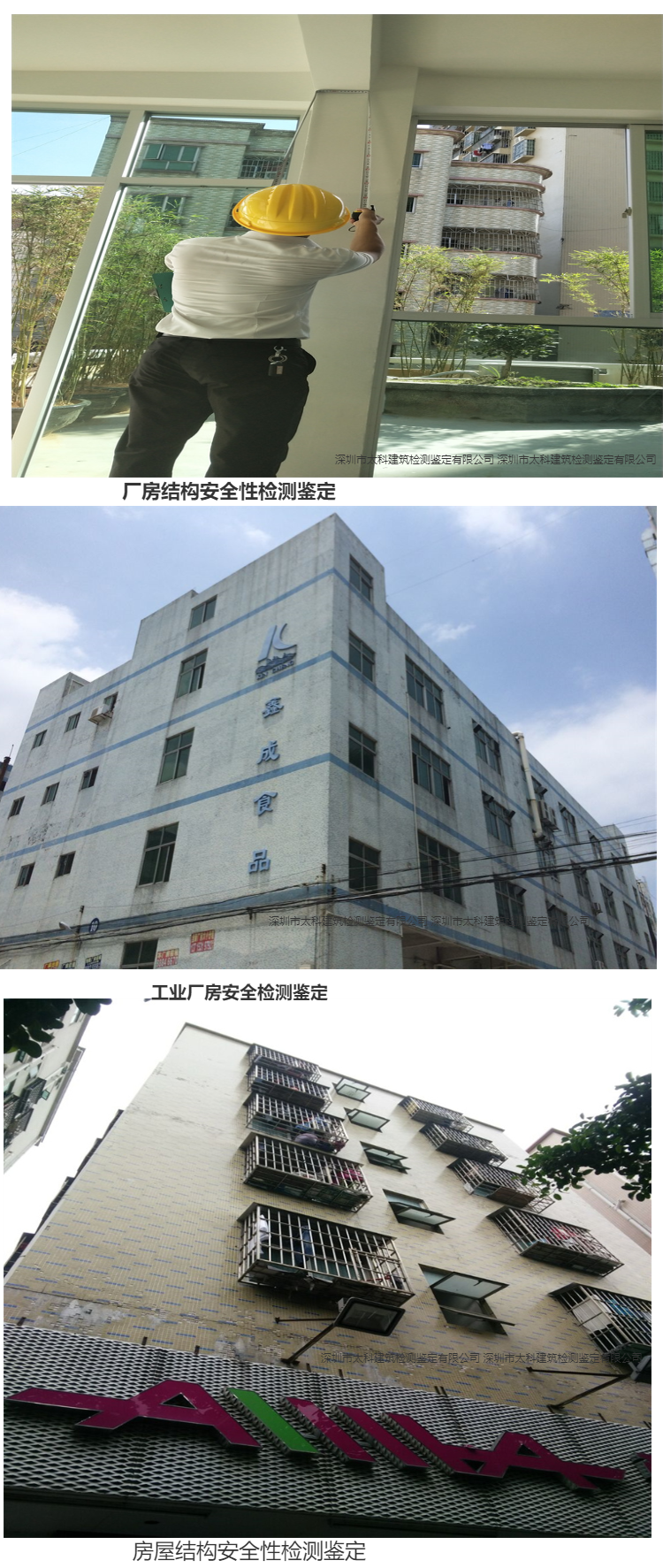
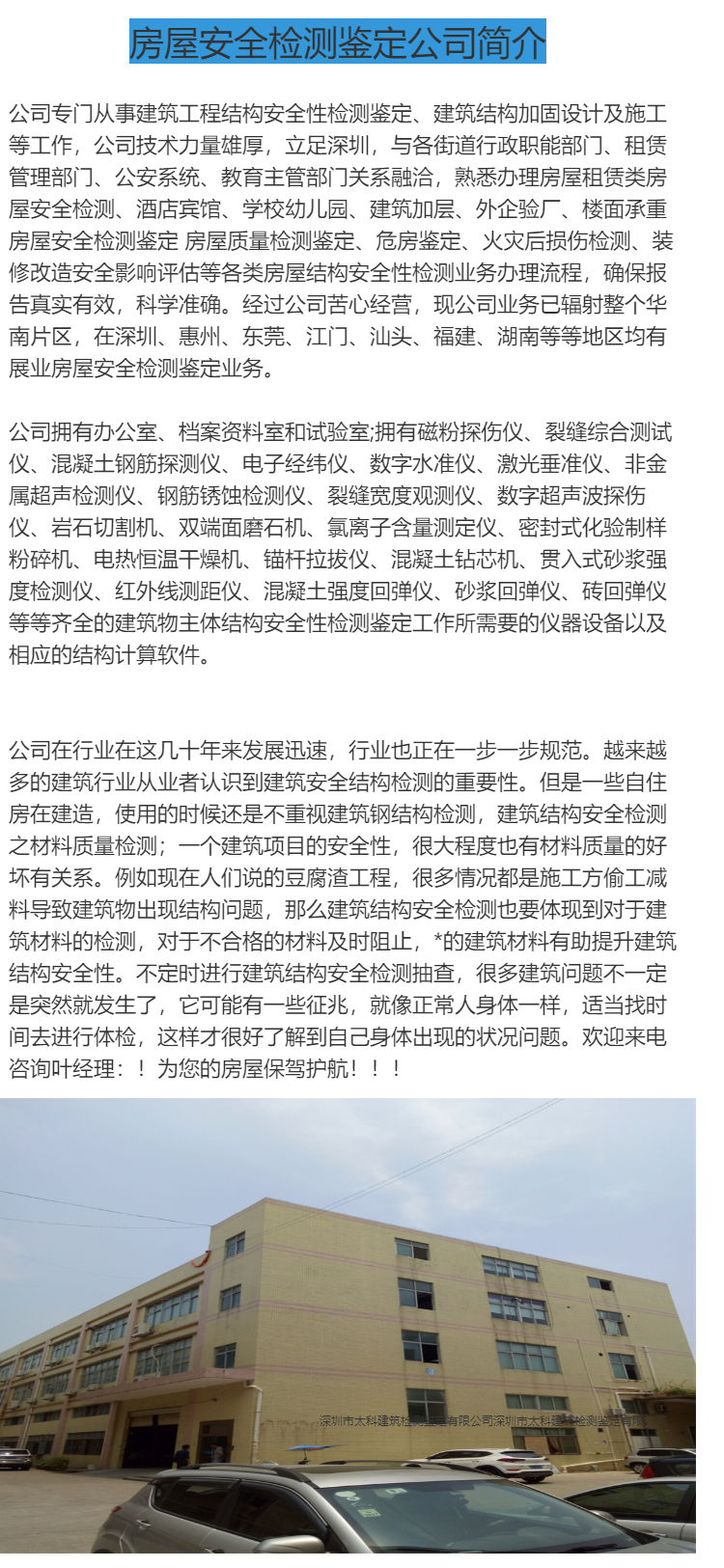
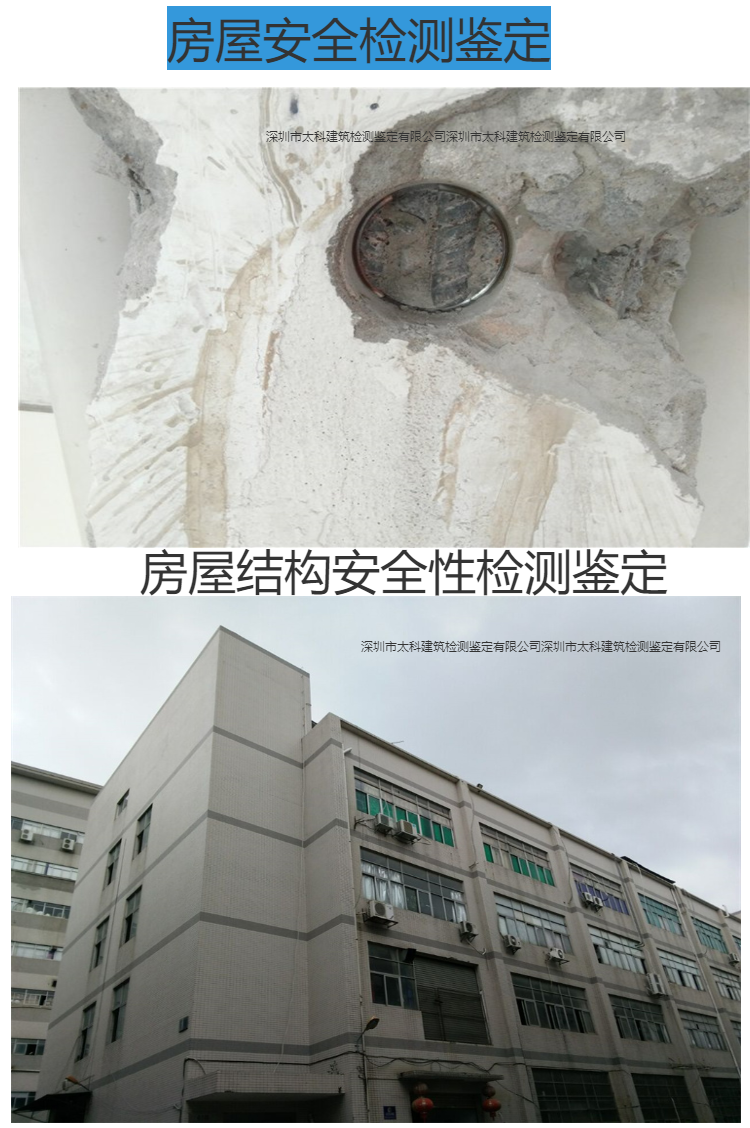
Main contents and analysis of house structure and quality inspection
1 When the horizontal and vertical arrangements of the building, its quality, stiffness distribution, and lateral resistance components such as walls are obviously asymmetric in the plane, the adverse effects of seismic torsional effects should be analyzed; when the vertical components of the structure are discontinuous vertically or the stiffness distribution has abrupt changes along the height, the weak areas should be identified and addressed according to the relevant requirements.
2 Inspect the structural system to identify components or members whose destruction would result in the entire system losing seismic resistance or gravity-bearing capacity; when there are misaligned floors or different types of structural systems connected, the seismic requirements for the corresponding sections should be enhanced.
3 Verify the actual strength grade of structural materials; when it falls below the specified requirements, propose corresponding earthquake-resistant and disaster-reduction measures.
The height and number of stories for multi-story buildings should comply with the value limits specified in the respective chapters of this standard.
5 When the dimensions or cross-sectional shapes of structural components are不利于 seismic resistance, it is advisable to enhance the seismic requirements for the reinforcement and other structural elements of the component.
The connection structure of structural components should meet the requirements of overall structural integrity; prefabricated factories should have a relatively complete support system.
The connection structure between non-structural components and the main structure should meet the requirement of not collapsing and harming people; reliable connections should be in place at entrances, exits, and pedestrian pathways, etc.
8 When the construction site is located in an unfavorable area, it should still meet the relevant requirements for the foundation and substructure.
Inspection requirements for building steel structure engineering materials and welding quality include:
1. The testing unit must obtain a special steel structure testing qualification certificate issued by the provincial or higher construction administration authority, and obtain the corresponding metrological certification. The testing personnel must hold a Level II or higher qualification certificate for the corresponding non-destructive testing method and be registered at the construction quality supervision station.
2. The entity constructing the engineering project shall entrust a testing institution with the corresponding qualifications for inspection. The principal and the entrusted party shall sign a written contract.
3. Raw materials and finished products upon entry should undergo entry acceptance. Any raw materials and finished products related to safety and functionality must be re-inspected according to specifications, and samples should be witnessed by the supervising engineer (the technical responsible person of the construction unit) and sent for testing.
1. Steel 1) The types, specifications, and properties of steel and cast steel products should comply with the current national product standards and design requirements. The quality of imported steel products should meet the requirements of the design and contract standards. 2) For steel products that fall under the following circumstances, sampling re-inspection should be conducted in the presence of Party A and the supervisory witness, and the re-inspection results should meet the current national product standards and design requirements: (1) Imported steel from overseas; (2) Mixed lots of steel.
⑶ Thick plates with a thickness of 40mm or more, and thick plates with Z-directional performance requirements; ⑷ Steel used in major load-bearing components of large-span steel structures with a safety grade of first-class; ⑸ Steel with requirements for re-inspection; ⑹ Steel with quality concerns.
2. Fasteners for Connections: 1) Structural connections include high-strength hexagon bolts, tension-torque high-strength bolts, ordinary bolts, rivets, self-tapping screws, pull rivets, shot rivets, anchor bolts (expansion type and chemical type), foundation bolts, and other standard fasteners, as well as nuts and washers. These should be accompanied by quality certificates or factory inspection certificates. Their types, models, specifications, and quality should comply with design requirements and current national product standards.