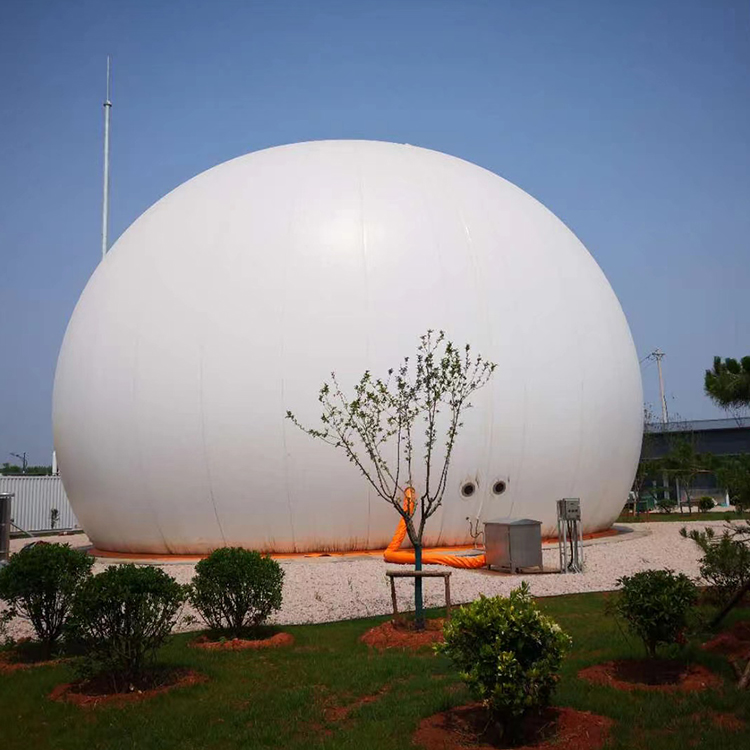

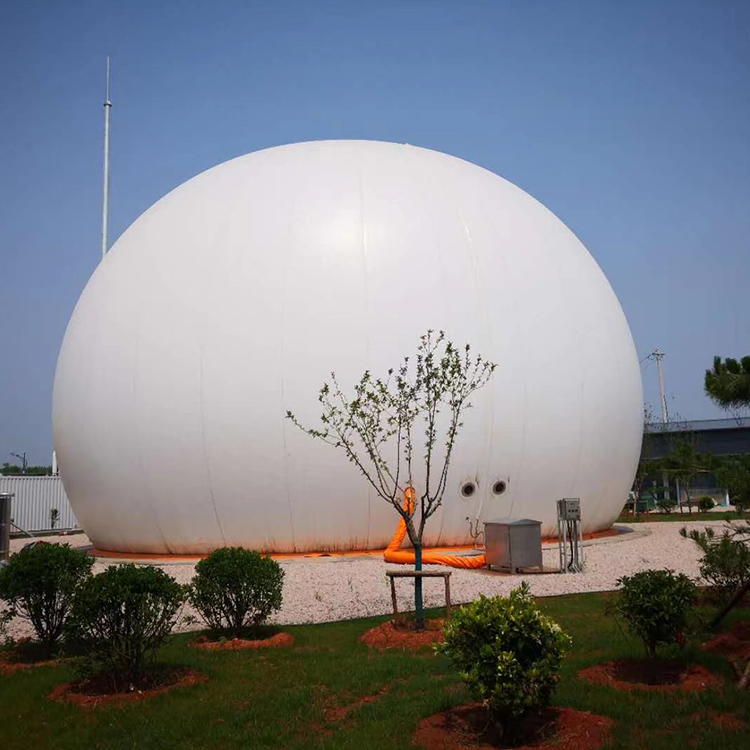
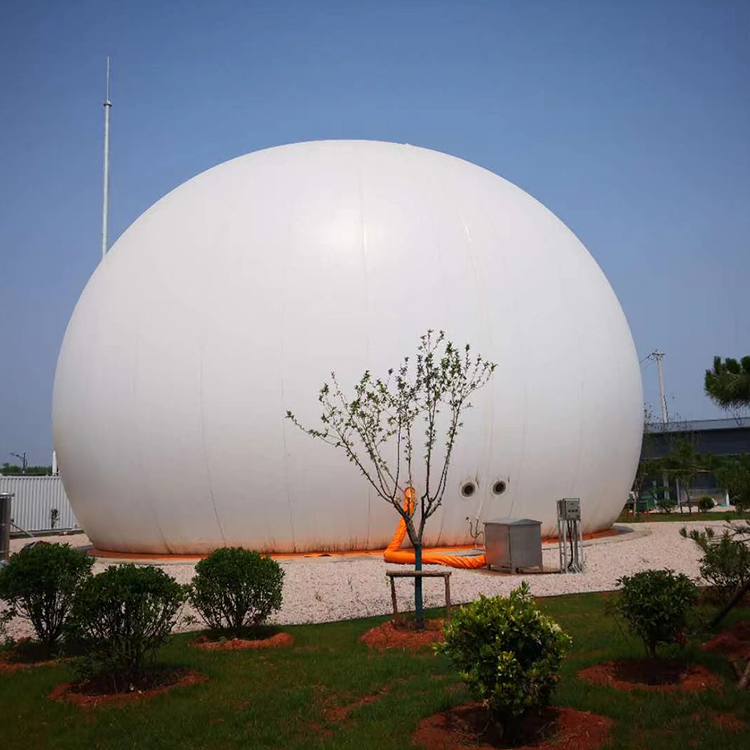
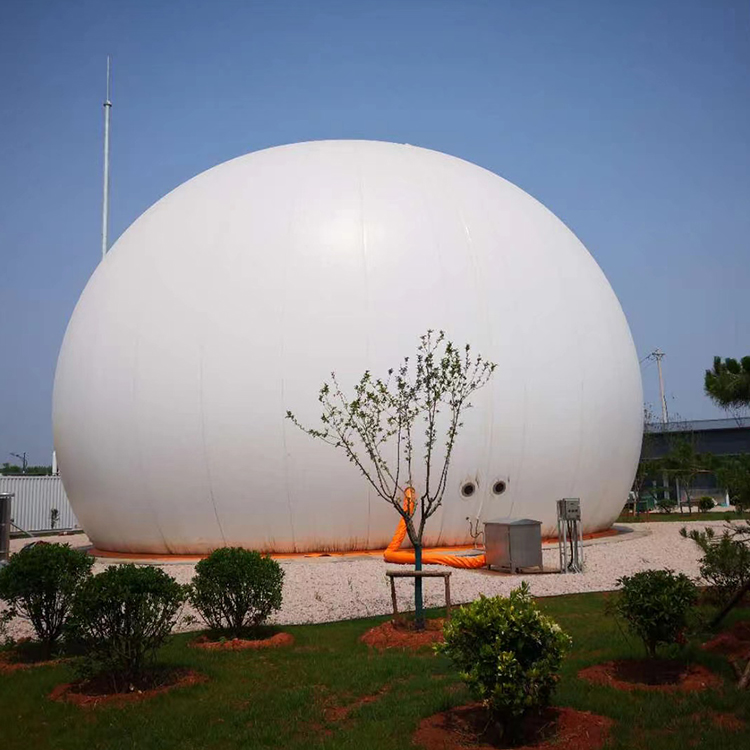











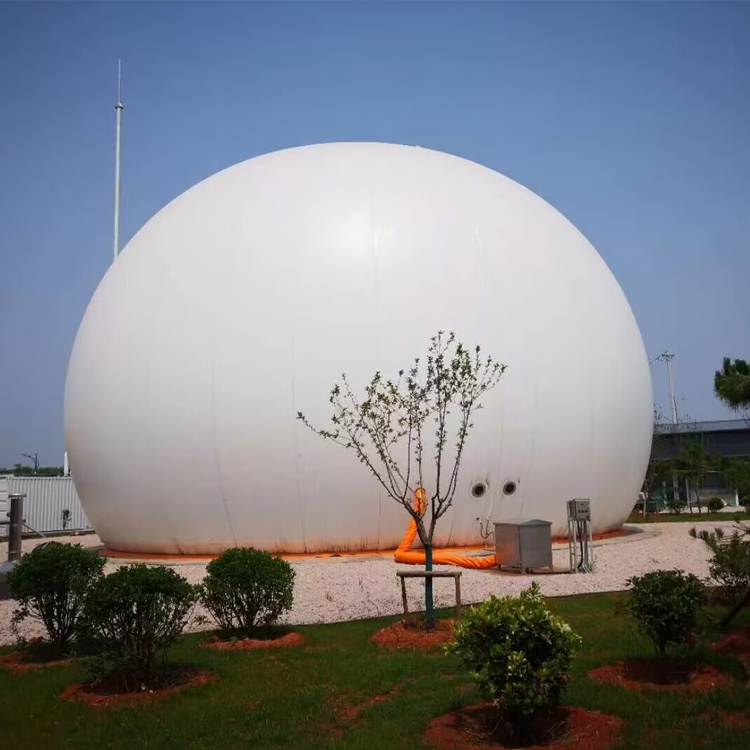

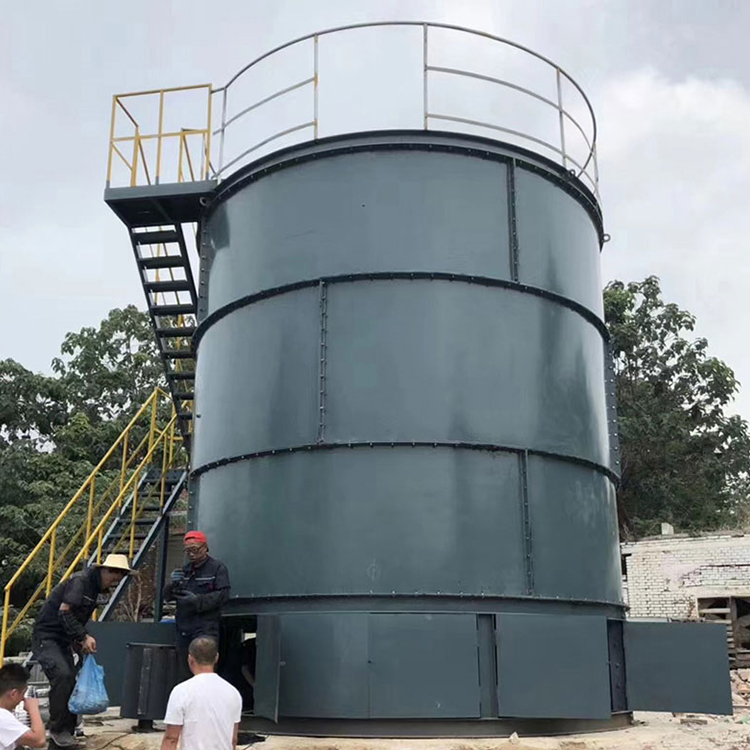
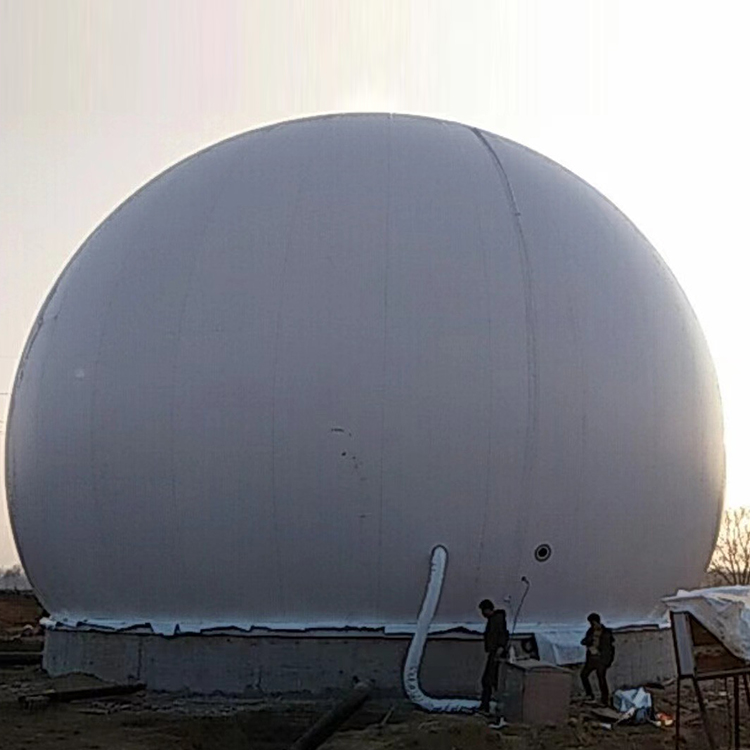

Integrated dual-membrane gas holder combines fermentation and gas storage. The bottom is made of stainless steel tank, and the top features a 3/4 spherical gas storage structure made of special polyester material, exuding an elegant and atmospheric appearance.
Material selection for double-layered gas cabinets is crucial, as the quality of the material determines the overall quality and lifespan of the cabinet. Generally, materials with high tensile strength, corrosion resistance, UV resistance, and resistance to certain acids and alkalis, such as fluorides, are chosen. Materials with good flexibility, high tensile strength, tight composite structure, good airtightness, and corrosion resistance are typically used.
Key Protection Points:
1. Anti-freezing: This primarily concerns the northern climate. Since there's no water inside the integrated double-membrane gas cabinets, considerations for anti-freezing are relatively less.
2. External Factors: The double-membrane gas cylinder is subjected to more external forces, such as wind, sun exposure, snow load, rain, etc. These primarily test the membrane material. The inner, outer, and bottom membranes of the double-membrane gas cylinder are all corrosion-resistant materials, which must possess corrosion and acid resistance to ensure the normal operation of the gas cylinder.
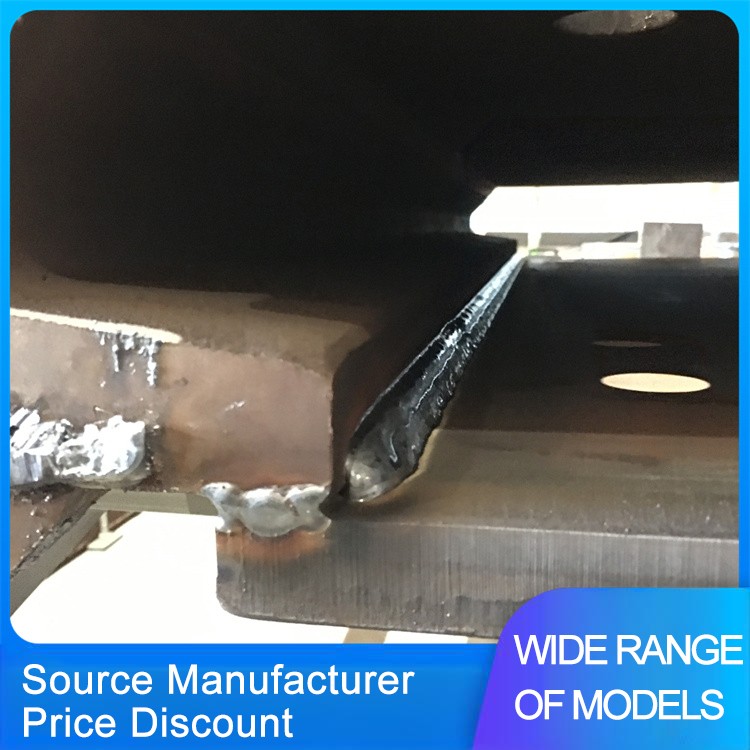
3. Leak-proof: Since the double-membrane gas container is made by welding the film materials together, the tightness of the welding joints and the pressure plates is crucial. There should be no gaps between the film materials that could cause leakage issues.
The inner membrane space of the integrated double-membrane gas holder serves as the storage space for various gases, while the space between the outer and inner membranes acts as the pressure regulation space. As the stored gas increases, the inner membrane bulges. The bottom membrane, inner membrane, and outer membrane are designed using membrane software according to various shapes and specifications, and then processed into an integrated unit using a large-scale heat-sealing machine in a dust-free workshop. The large-scale equipment ensures the heat-sealed membranes are fused together, meeting high requirements for thermal and seam airtightness. This also ensures the lifespan of the heat and seam is equivalent to the material, guaranteeing durability.