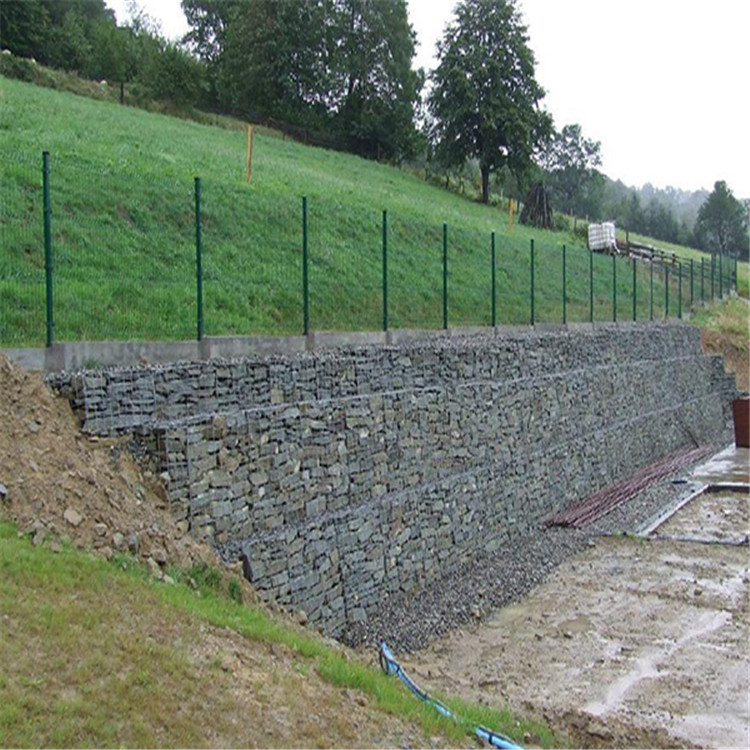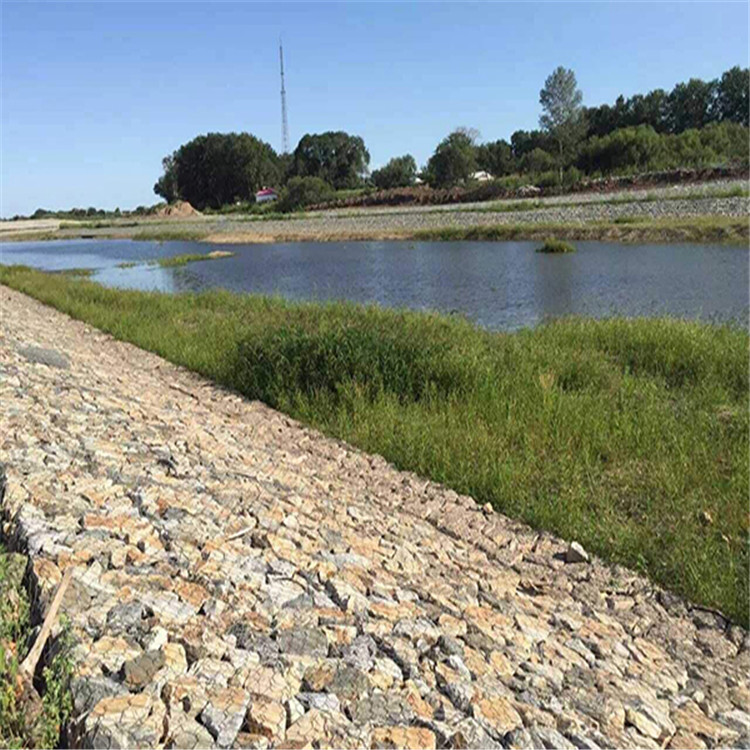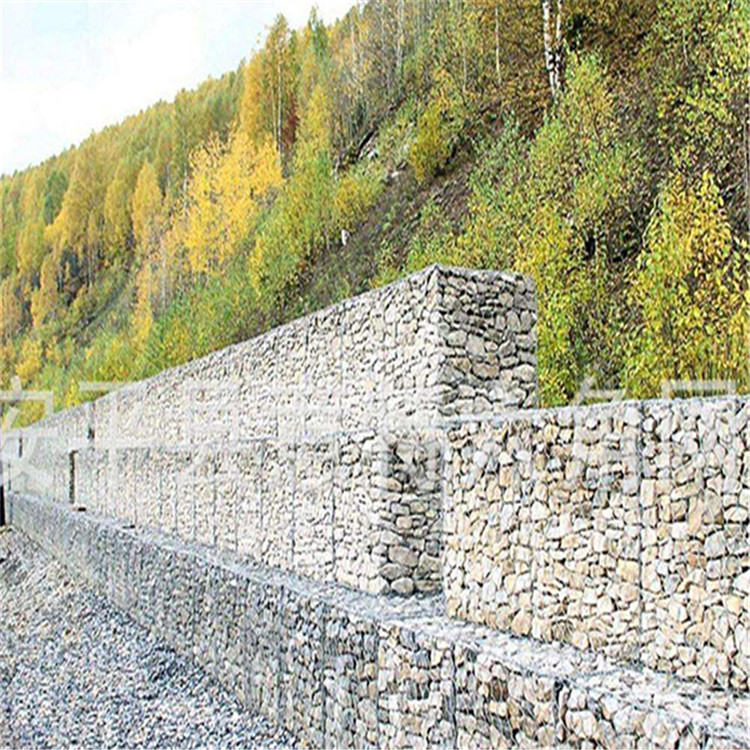













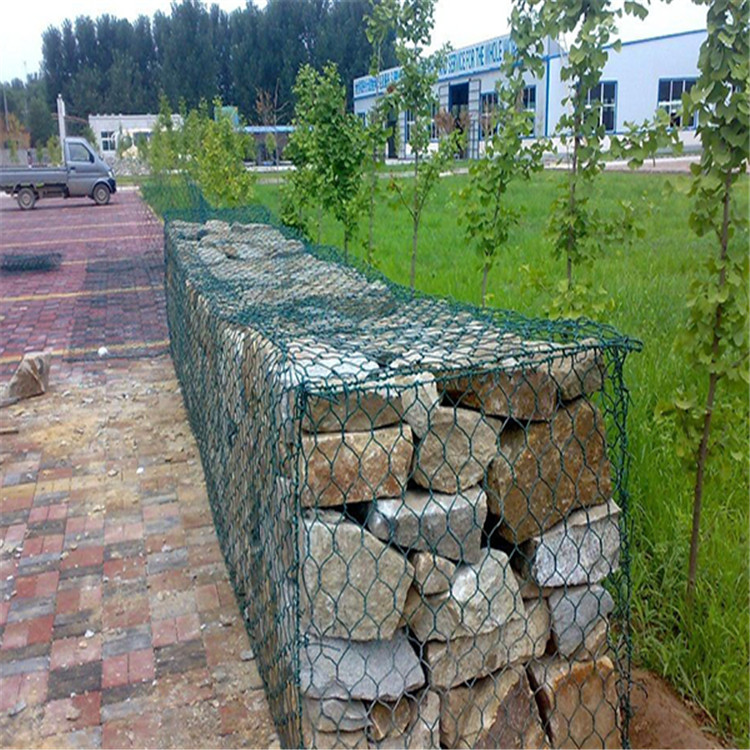

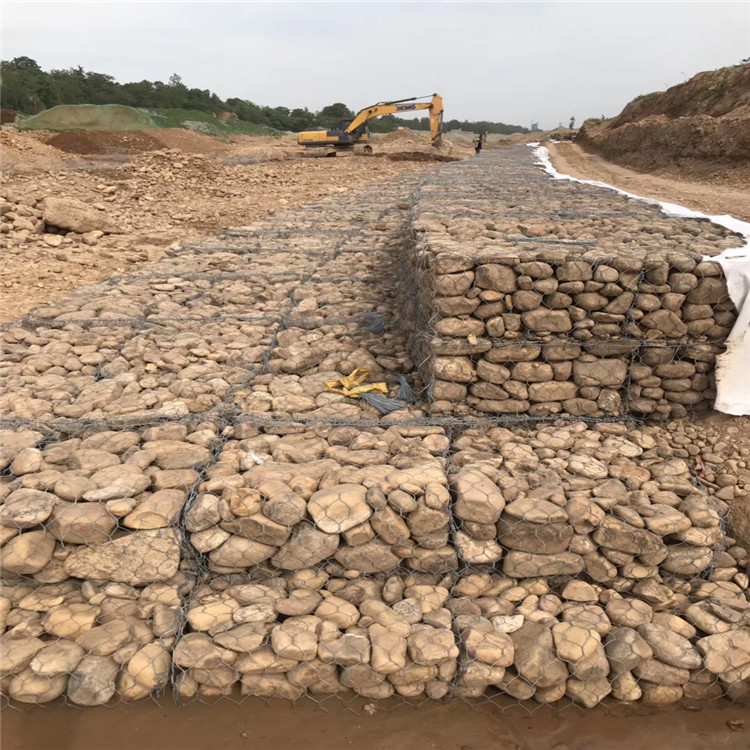
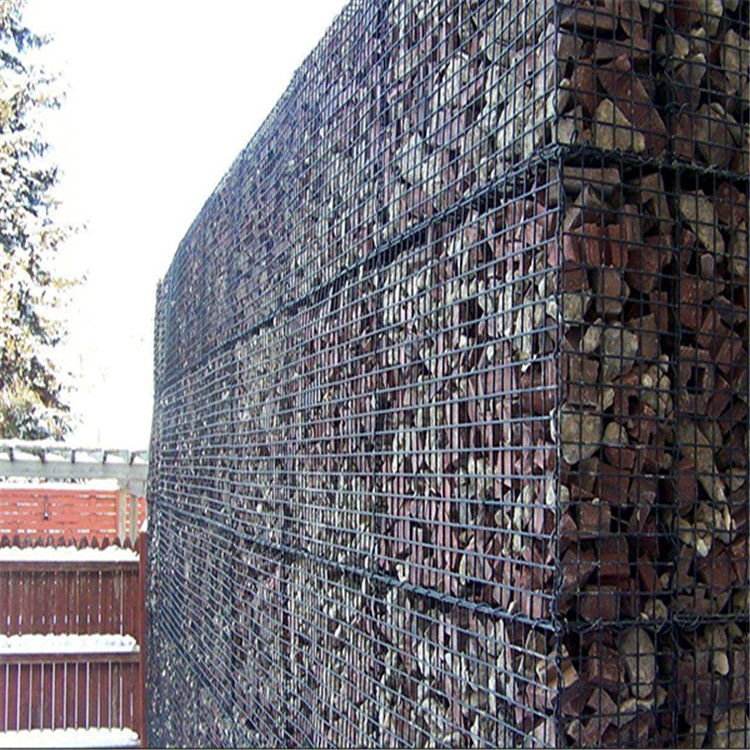

The gabion mesh is mechanically woven from high-corrosion-resistant, high-tensile, and ductile low-carbon steel wire or wire coated with PVC. The box-like structures made from this mesh are called gabion boxes. The diameter of the low-carbon steel wire used complies with engineering design requirements and typically ranges between 2.0-4.0mm, as per ASTM and EN standards. The tensile strength of the gabion mesh wire is not less than 38kg/m², the weight of the metal coating is generally above 245g/m², and the diameter of the edge line of the gabion mesh sheet is generally larger than that of the wire. The length of the double-strand twisted section must be no less than 50mm to ensure that the metal and PVC coatings on the twisted wire are not damaged.
Application
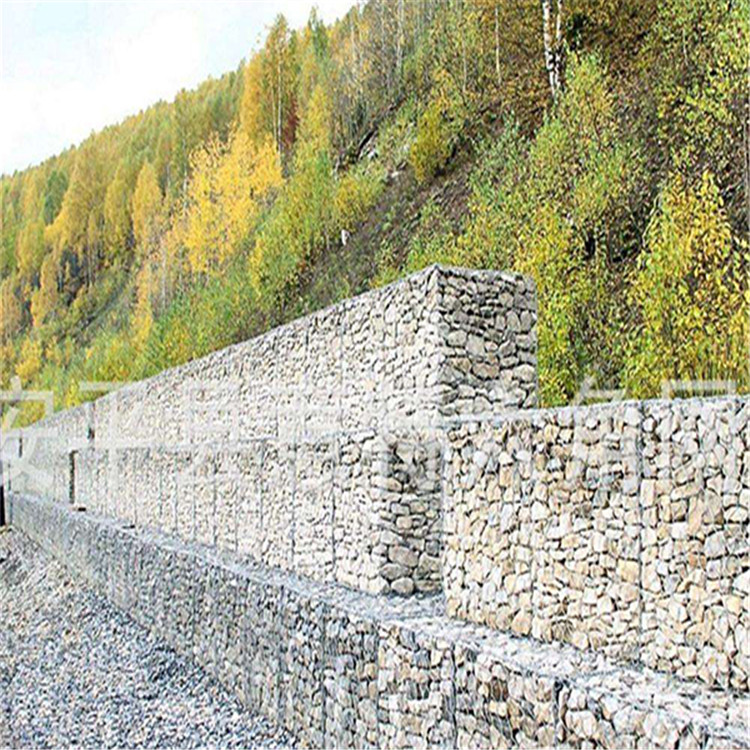
Stone笼wire mesh is used for slope support, foundation pit support, and rock face mesh shotcrete.
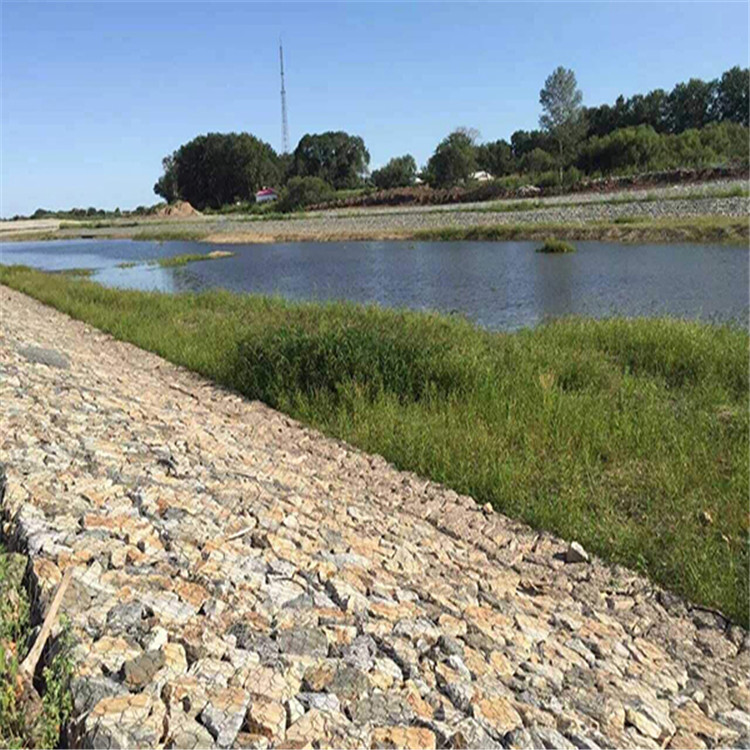
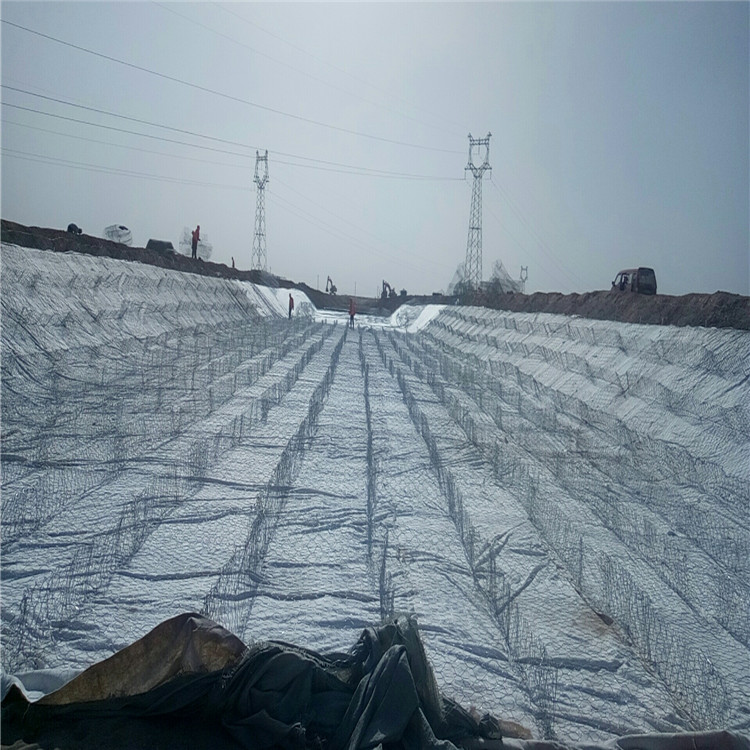
Erosion control vegetation (greening), railway and highway isolation guardrails; it can also be made into boxes, nets, and pads for erosion protection of rivers, dams, and sea dikes, as well as fishery nets for reservoirs and river interceptors. Severe river disasters include the erosion of riverbanks by flowing water, causing floods and massive losses of life, property, and soil erosion. Therefore, in addressing these issues, the application of the ecological geogrid structure becomes one of the solutions, as it can protect riverbeds and riverbanks.
1. The flexible structure can adapt to the changes in the slope without being damaged, offering better safety and stability than rigid structures.
2. Strong erosion resistance, capable of withstanding high water flow speeds up to 6m/s.
3. The structure is inherently permeable, with strong tolerance to the natural action and filtration of groundwater. Suspended particles and silt in the water settle in the gaps between the filled stones, thus promoting the growth of natural vegetation and gradually restoring the original ecological environment.
Riprap mesh is a wire or polymer wire mesh product that secures filled stone in place. A wire basket is a structure woven from wire or welded together. Both structures can be electroplated, and the woven wire baskets can be coated with PVC separately. Using hard, weather-resistant stone as the filling material, it will not break down quickly due to abrasion in the stone box or riprap arrangement. Stone baskets filled with different types of block stones have varying characteristics. Angular block stones can interlock well with each other, and the baskets filled with them are less prone to deformation.
In landscaping engineering, problems like road embankment stabilization, dam revetment protection, and slope greening have always been challenging for engineers. For years, they have been seeking a technique that can meet both the stability requirements of mountains and shorelines and the goal of greening the environment, while also being cost-effective and convenient. Gradually, this technique has emerged: the ecological stone笼 mesh application process. The ecological stone笼 mesh involves weaving high-strength galvanized steel wires into different-sized rectangular baskets, which are then filled with stones. Once applied to slope protection, under the combined influence of human and natural factors, the gaps between the stones are continuously filled with soil. Plant seeds gradually take root and germinate in the soil between the stones, grow robustly, and their roots firmly secure the stones and soil. This not only achieves the purpose of slope protection and greening but also significantly improves the ecological environment and soil and water conservation. The ecological stone笼 mesh technology boasts four advantages: 1) ease of construction, requiring only the placement of stones into the baskets and sealing them without special skills or utilities; 2) low cost, with a cost of only 15 yuan per square meter; 3) effective landscape and protection, combining engineering and planting measures to prevent soil erosion effectively, with rapid and natural-looking景观 outcomes; and 4) long service life, with a lifespan of several decades and generally requiring no maintenance. This is why techniques like this have been adopted in projects such as the Yellow Stone embankment protection project along the Yangtze River, the Taihu flood prevention embankment protection project, and the Three Gorges Sandaoping revetment protection project. Calculation method:
Yarn count.×Yarn count.×Multiple×Length×Width÷2=kg
Base: 1/2"=2.15, 1"=1.27, 3/4"=1.6, 5/8"=1.87, 5/4"=1.09
1" x 1/2": yarn count. × yarn count. × 2 x length x width ÷ 8 x 3 = kg
Calculation Formula for Gabion Mesh Weight
Related Introduction
Hexagonal wire mesh baskets are woven from angle-shaped (hexagonal) wire mesh, with the metal wire diameter varying according to the size of the hexagon. For metal-coated metal wire hexagons, wire diameters of 2.0mm to 4.0mm are used, while for PVC-coated metal wire woven hexagonal mesh, the outer diameter of the PVC (metal) wire ranges from 3.0mm to 4.0mm. The wire around the frame edge is one size thicker than the hexagonal mesh wire.
Box-type stone baskets are assembled from large-scale hexagonal wire mesh, and during construction, simply fill the baskets with stones and seal them.
Basket Sizes: 2m x 1m x 1m, 3m x 1m x 1m, 4m x 1m x 1m, 2m x 1m x 0.5m, 4m x 1m x 0.5m; custom sizes available upon request. Surface protection options include hot-dipped galvanized, zinc-aluminum alloy coated, PVC coated, etc.