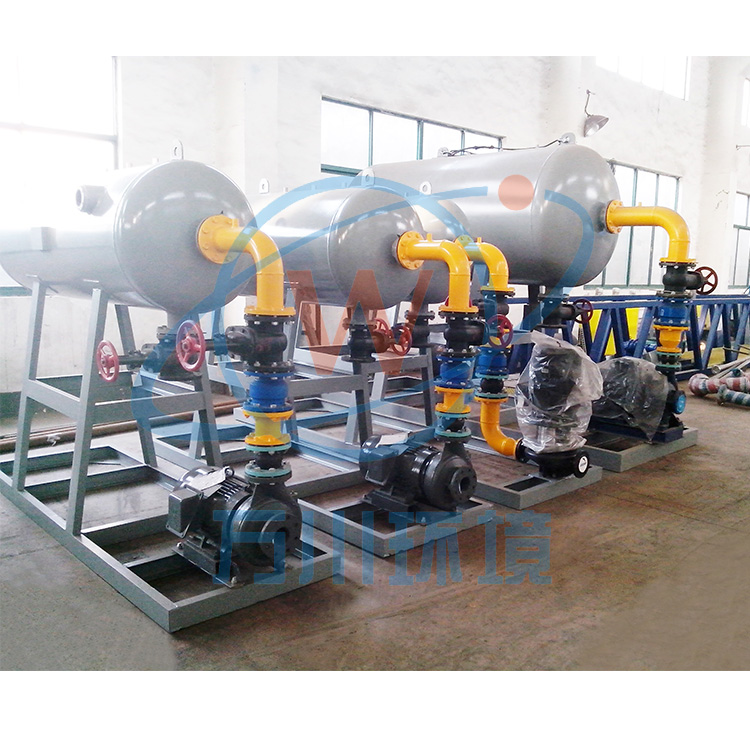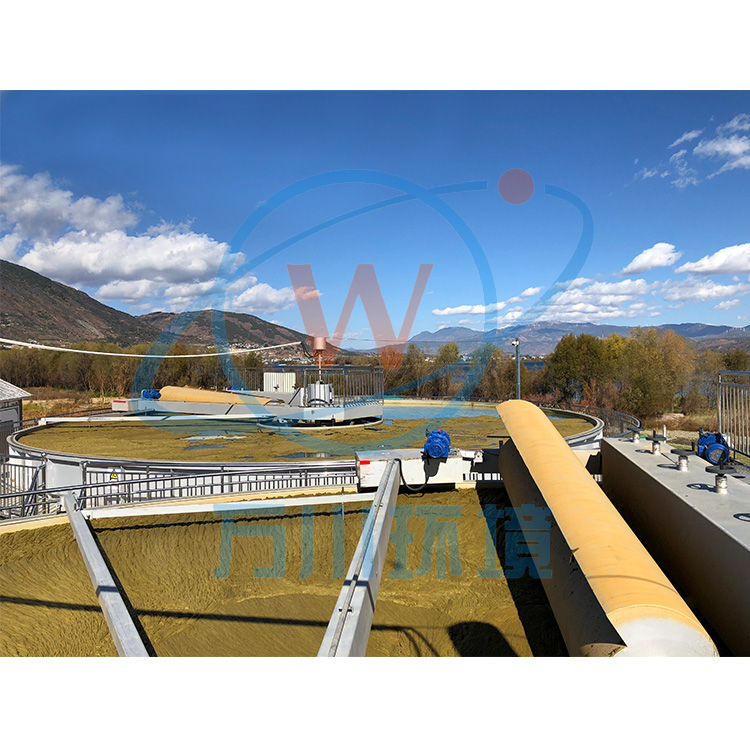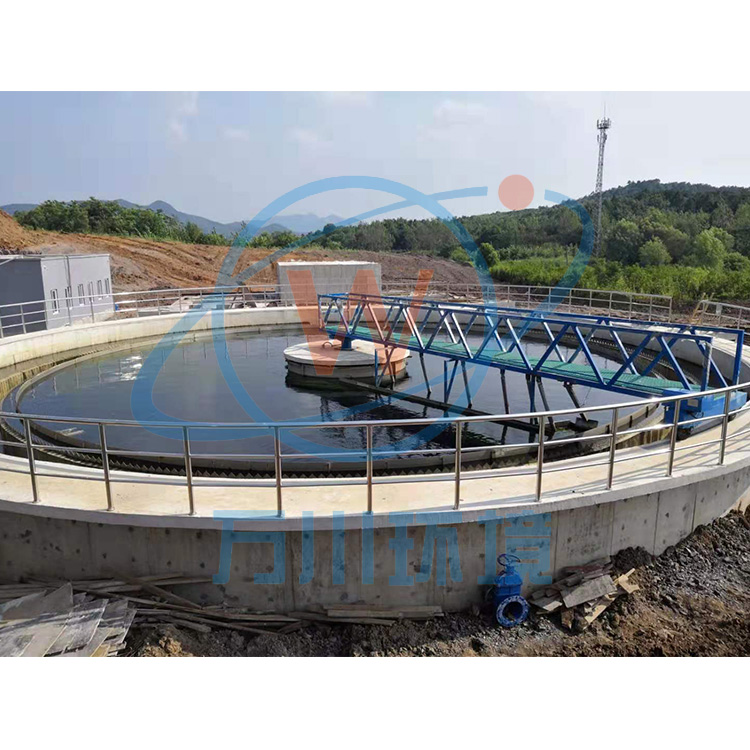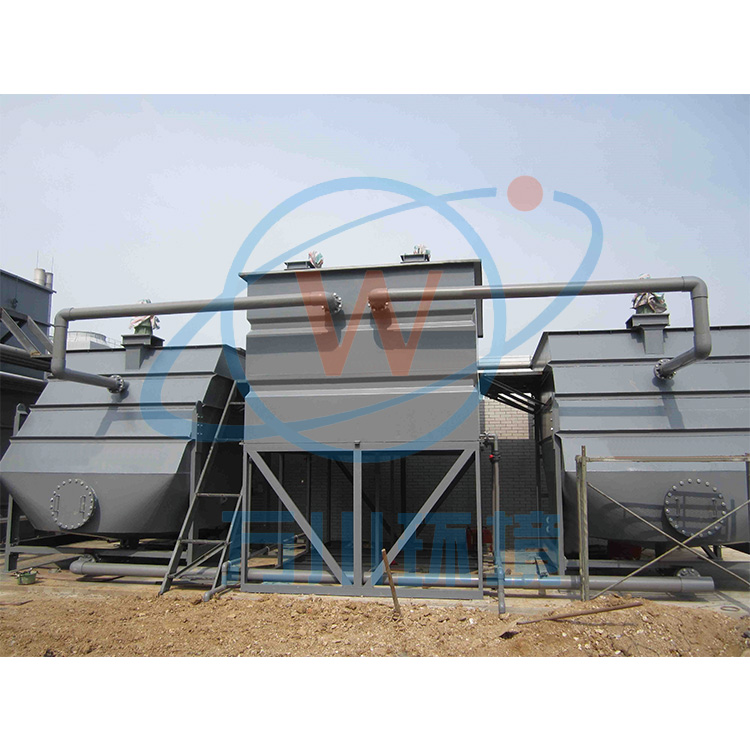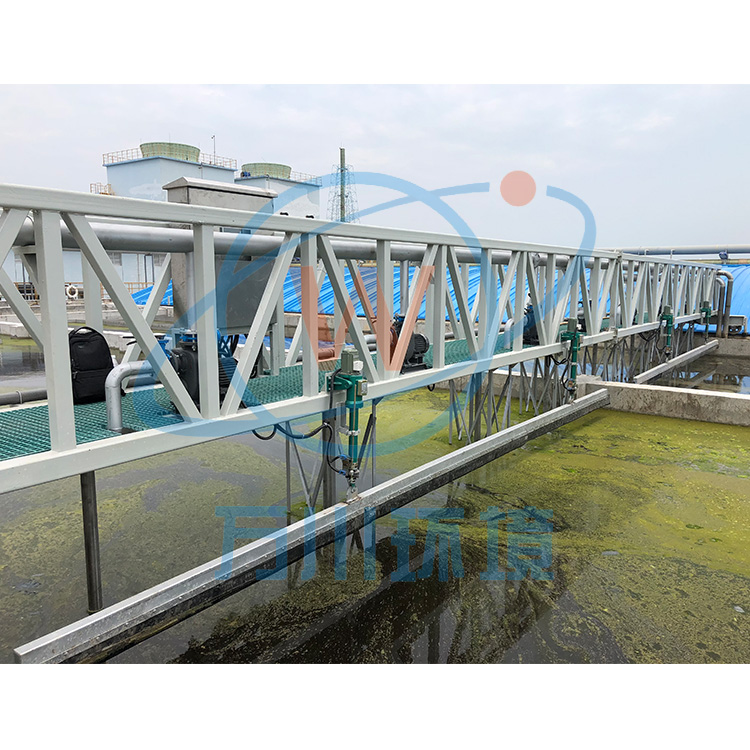
Sedimentation Pond, Air Floatation, Sludge Scraper

The flotation equipment injects air into wastewater to create tiny bubbles, which act as carriers. These bubbles then attach to pollutants like emulsified oil and fine suspended particles in the wastewater, forming a floating mass that rises to the surface. The buoyant effect of the bubbles, utilizing the foam or scum on the water's surface, achieves the purpose of separating impurities and purifying the wastewater. This method is primarily used for treating emulsified oil or small suspended particles with a relative density close to 1, which are difficult to remove through natural sedimentation or floating methods. Let's take a look at how the flotation equipment achieves the flotation separation.
The flotation process involves the generation of bubbles, the attachment of bubbles to particles (solid or droplets), and the floating separation. The realization of flotation separation requires two essential conditions:
Provide an adequate supply of small bubbles, ideally sized between 15~30 micrometers.
(2) Keep the target material in a suspended or hydrophobic state so that it can combine with bubbles and float.

Bubbles rising in water approach hydrophobic solid particles (at a critical thickness) and pass through a water layer containing solid particles. They adhere to the particles and float to the surface together, forming foam. Bubbles entering the water have no suspended matter attached to them. To determine the wettability of a substance, which is its ability to be wetted by water, the contact angle of the water with the substance can be observed. The adhesion rate depends on the wettability of the particles. The wettability of particles can be represented by the size of the penetration angle. As the penetration angle increases, the likelihood of adhesion increases, and the bubble adheres more firmly to the particle surface. The adsorption of surface-active substances and electrolytes on the particle surface can affect the wettability of the particles. Active substances adsorbed on the particle surface reduce its wettability, making the particles hydrophobic. Common surface-active substances include vegetable oils, fatty acids and their salts, thiols, alkyl sulfates, and amines. The adsorption of dissolved gas molecules on the particle surface can also increase the hydrophobicity of the particles. Generally, if the penetration angle is greater than 90, it is easily adsorbed by bubbles. The flotation method is particularly beneficial when the relative density of the material is less than 1. Such substances are also easily floated when the penetration angle is close to 180, indicating they are hydrophilic with weak adsorption capacity and easy to separate. If the penetration angle is close to 0, it cannot be adsorbed at this time.
The size and quantity of bubbles affect the separation efficiency of flotation equipment, with an ideal bubble size ranging from 15 to 30 inches. Increasing the air content in the water enhances the likelihood of contact and adhesion as the content of waste water impurities rises. Consequently, the volume consumption per unit also decreases. The bubble size remains stable during the floating process. To achieve this, various foam generators are added to reduce surface energy, such as rosin, cresol, phenol, alkyl sulfate, etc. Some of these can trap and produce foam, with the weight of impurity particles not exceeding their adhesion to the bubble. The particle size with good flotation performance depends on the material's density, approximately 0.2 to 1.5 millimeters.
Floating devices can be combined with coagulation, known as coagulation floating. The bubbles have a higher adhesion rate compared to the flocs formed before addition. Due to the air bubbles attached to the wastewater forming a floating body, they rise to the surface using buoyancy. By utilizing the foam or scum at the water surface, the purpose of separating impurities and purifying wastewater can be achieved.


b2b.china9.net © Zhongshang 114 Hebei Network Technology Co., Ltd.Address: Room 6009, Oriental New World Center, No.118 East Zhongshan Road, Qiaoxi District, Shijiazhuang City, Hebei ProvincePlatform Service Hotline: 4006299930