

Product Details






价 格Negotiable
最小起订0 Piece库存0 Piece
 Business Card
¥190000.00

¥190000.00

¥190000.00
Negotiable
 Mixing Valve
Negotiable
Fully Automatic Viscosity Meter
¥190000.00/Piece
Mixing Valve
Negotiable
Fully Automatic Viscosity Meter
¥190000.00/Piece
 Fully Automatic Viscosity Meter
¥190000.00/Piece
Fully Automatic Viscosity Meter
¥190000.00/Piece
 Fully Automatic Viscosity Meter
¥190000.00/Piece
Fully Automatic Viscosity Meter
¥190000.00/Piece
 Fully Automatic Viscosity Meter
¥190000.00/Piece
Fully Automatic Viscosity Meter
¥190000.00/Piece
Fully Automatic Viscosity Meter
¥190000.00/Piece
Fully Automatic Viscosity Meter
¥190000.00/Piece
 Fully Automatic Viscosity Meter
Negotiable
Fully Automatic Viscosity Meter
Negotiable
 Fully Automatic Viscosity Meter
¥190000.00/Piece
Fully Automatic Viscosity Meter
¥190000.00/Piece
 Differential Pressure Moisture Me
Negotiable
Differential Pressure Moisture Me
Negotiable
 Automatic Viscosity Meter
Negotiable
Automatic Viscosity Meter
Negotiable
User Manual
In 1897, Swiss physicist C.E. Guillaume discovered a remarkable alloy.
Today, we are utilizing this product.
Therefore, the inherent thermal deformation of our products is approaching "zero."
We are equipped with standard specimens with low thermal expansion coefficients, capable of detecting the instrument's own thermal deformation.
Our patent (Patent No.: ZL201220315849.4) enables the SWB-300C to exert the *minimum applied force.
Met the ASTM requirement of 47cN
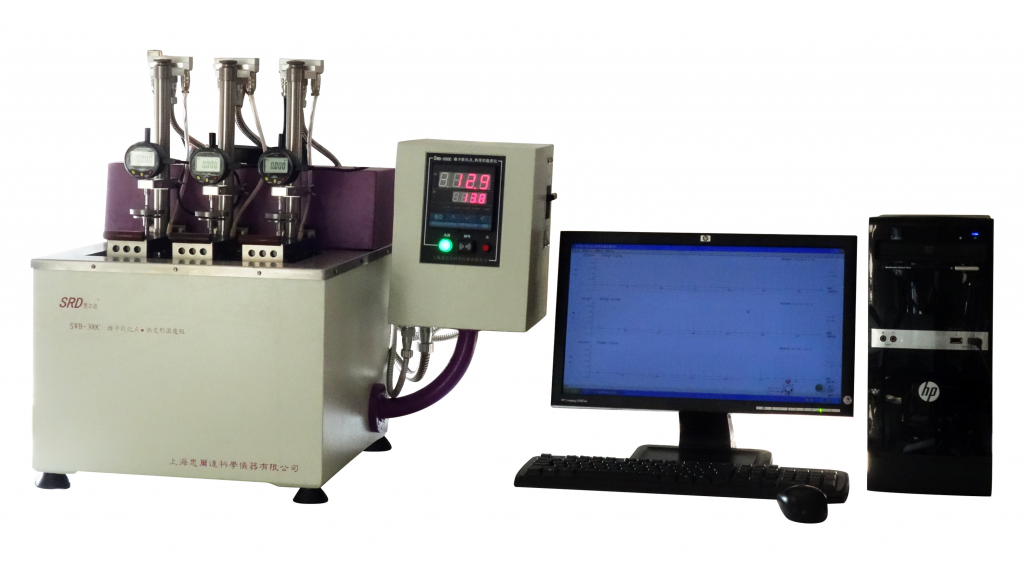
SWB-300C/D Vicat Softening Temperature & Load Heat Deflection Temperature Tester
User Manual
(2017 Edition)
SWB-300C/D Model (Model C without electric lift function) Vicat Softening Point & Heat Deflection Temperature Tester is a specialized device for determining the heat deflection temperature and Vicat softening point of plastic specimens. It conforms to the following standards: "GB/T 1633 Determination of Vicat Softening Temperature (VST) of Thermoplastic Plastics," "GB/T 8802 Determination of Vicat Softening Temperature of Thermoplastic Plastic Pipes and Fittings," and "GB/T 1634 Test Method for Heat Deflection Temperature of Plastics (commonly referred to as Heat Deflection Temperature)."
By replacing with different measurement heads, they can be used to measure either the Vicat softening temperature or the heat deflection temperature. Both are indicators of plastic heat resistance.
SWB-300C/D Type Viscosity Index and Heat Deflection Temperature Tester, which records the relationship between temperature and displacement during the entire test process via computer. Not only is it suitable for analysis and research, but also, once the test is initiated, no operator supervision is required.
The Vicat softening point temperature and the testing method for Vicat softening point originated in 1894, were officially standardized by Germany by 1910, and China officially released this standard testing method in 1970, which was converted into a national standard in 1979.
Generally, thermoplastic plastics are in a glassy state at room temperature, but as the temperature rises, they gradually transition to a higher elastic state, losing their original rigidity and becoming soft. Therefore, under the action of minor external forces, they can undergo significant deformation. The measurement of the softening point temperature of thermoplastic plastics is based on this principle.
The standard specifies that under certain conditions (such as the rate of specimen temperature increase, cross-sectional area of the pressure needle, static load applied to the pressure needle, and specimen size), the temperature at which the pressure needle penetrates the specimen by 1mm is defined as the Vicat softening point temperature, expressed in degrees Celsius.
The Vicat softening point is an important indicator for controlling product quality and evaluating the thermal properties of materials, but does not represent the material's service temperature.
Hot Deformation Temperature - Hot deformation temperature is another key indicator for evaluating the heat resistance of plastics. In most plastic product standards across the world, the load hot deformation temperature is included as a means of quality control for products.
A rectangular specimen with specific dimensional requirements is placed on two supports with its ends resting on them. A specified load is applied at the midpoint between the supports, creating a three-point simply supported beam under static bending. After the specimen is loaded, it is heated. As the temperature rises, the specimen will gradually increase its deformation. The standard specifies that the temperature at which the deformation at the midpoint of the specimen reaches a certain规定的value is considered the thermal deformation temperature, expressed in degrees Celsius (°C).
Structure Overview
The unit is composed of four main parts: a constant-temperature bath, a testing unit, a computer, and an interface box.
1. Bathtub
Bath tub size: 40×30×21cm3The total volume is 25L. In the bathtub, add a heat transfer medium. According to user requirements, a medium with lower viscosity at room temperature and no effect on the sample during testing, such as softening, expansion, or cracking, can be selected, such as silicone oil, transformer oil, liquid paraffin, or ethylene glycol (user-provided). Due to the high test temperature, the medium expands after heating, so it is recommended to add the medium at a level slightly below and close to the top plane of the box (about 5cm), not too low, otherwise the heater may overheat and damage the equipment. If the oil level is too high after thermal expansion, it will automatically overflow from the overflow pipe at the back of the machine (please place the oil pan properly).
The temperature controller can set the heating rate and upper temperature limit, which is typically slightly higher than the expected test temperature. Heating stops once the linear increase reaches this value.
*High heating power of 4kW, single-phase power supply, with higher current, users should provide a sufficiently large power source (over 220V 20A).
To facilitate the prompt initiation of the second trial after the first test, the medium temperature in the bath should be rapidly cooled. On the left side of the equipment, there are inlets and outlets for a pair of cooling pipes. When the bath medium temperature is below 150°C, clean tap water is introduced for cooling. When the bath medium temperature exceeds 150°C, compressed air of less than 490 Kpa is typically used for cooling. Be cautious to prevent hot gas (or steam) flow from the outlet from causing injury.
The bathtub employs a directional mixing device, ensuring a calm water surface, stable water flow, and unparalleled temperature stability and distribution compared to ordinary structures.
2. Test Unit
The test unit structure is as shown in Figure 1. The entire unit is supported by the bracket and rests on the oil tank panel, with the testing section immersed in the heating medium of the bath tank.
The test board is secured in place with four支柱, as shown in Figure 1, which depicts the thermal deformation measuring device. The deformed specimen is resting on two cylindrical supports on the test board, with the deformation press head precisely positioned in the center of the specimen. Weights are applied through the load rod, exerting pressure on the 1

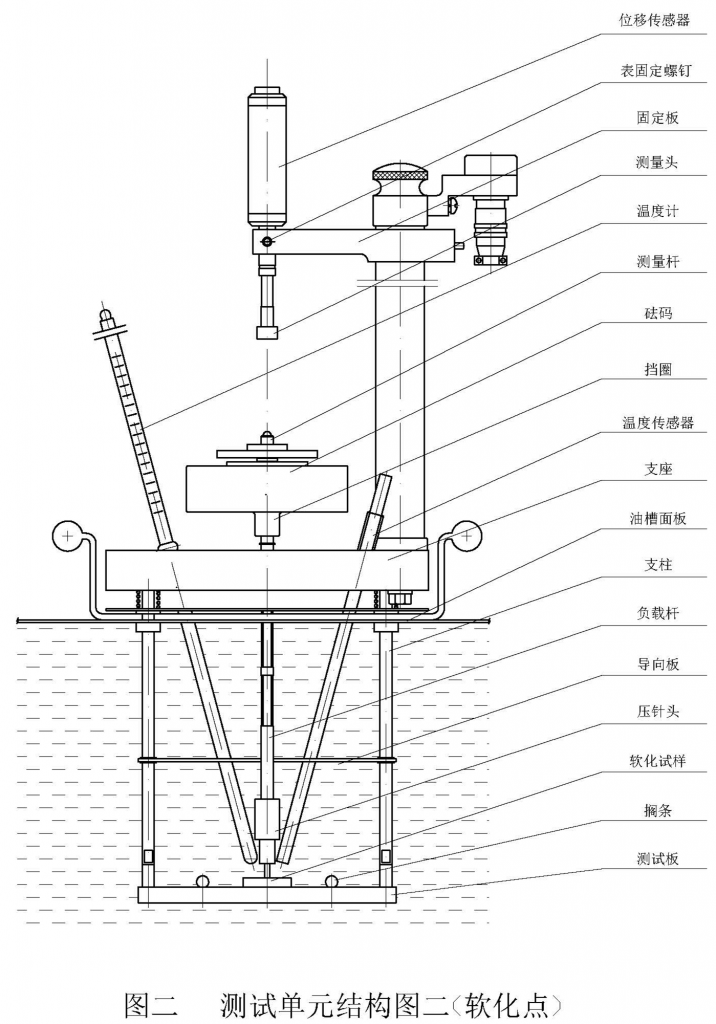
At the top, the measuring head of the displacement sensor for detecting displacement is precisely resting on the top of the load rod. As the bath medium temperature rises, the specimen begins to heat, compress, and deform, causing the load rod to descend. The displacement sensor then sends the data of its impending downward movement to the interface box.
Replace the deforming pressure head with a softening needle, place the sample at the center of the test plate to form a Vicat softening point test apparatus (see Figure 2). Similarly, as the temperature rises, the sample begins to soften, and under the force of the load, the needle pierces the sample, with the displacement sensor sending a displacement signal.
Grip the handle to remove the test unit from the oil tray.
3. Computers & Interfaces
The computer interface is in Chinese, running Windows 10. The system operates with software handling functions such as parameter input, processing, calculation, and storage, featuring self-judgment capabilities. The plotted "temperature-displacement" curve allows users to analyze and research the thermal properties of materials, which is unmatched by other similar instruments.
Interface controller facilitates data conversion between the computer and the test unit, including processing of raster data, A/D conversion and processing of temperature sensors, etc.
Blank Test
The critical components of the test unit in this machine are made of special materials, with the blank test of the test unit itself being within 0.02mm. Users can also conduct blank tests if required.
Blanks test is used to detect the deformation of the test frame (unit) itself of the instrument equipment under temperature changes. In the accessories of the instrument
Inside the box, there are three long glass rods (standard deformation specimens) used for detecting deformation during the blank hot deformation test, and three round glass disks (standard softening specimens) for measuring deformation during the Vicat softening point test. The standard specimens are made of GG17 glass, which has an extremely small deformation amount. Currently, imported instruments of this type are typically supplied with the set, whereas domestically produced instruments are rarely seen.
After the blank test is completed, the system will store the temperature-deformation relationship of the test frame into the computer. In subsequent testing processes, the program will
Automatically corrects; no need to adjust if within 0.02mm. If the test unit is not made of this material, its thermal deformation will be significant, and the deformation amount will be unstable. Relying on the aforementioned computer correction is unreliable.
Sample Placement
Remove the test unit and place it on the oil bath tank panel.
• Lift the load rod, place the softened point standard sample (glass disc) securely in the center of the test plate, or safely position the heat deflection standard sample above the support rod (see Figures 1 and 2). Lower the load rod, ensuring the needle tip is centered on the sample, or that the deformation head's axis is perpendicular to the sample's length and positioned at the center of its length.
• Submerge the test unit in the oil bath, simulate the real experiment, place the weights on, and ensure the sample does not shift.
• See Figure 1 or Figure 2, insert temperature sensor and mercury thermometer (used only for calibration; not required for regular testing).
• Immerse the test frame into the oil bath.
2. Adjustment of the displacement sensor
The range of the displacement sensor is typically 3 to 5mm. Adjust the upper and lower positions of the displacement sensor to ensure the travel area is roughly in the middle of the range.
3. Parameter Settings
From the test instrument menu options on the computer interface, click on Parameter Settings, then select Test Units 1, 2, and 3 in sequence from the dropdown menu, and set the subsequent test items to Blank Test (units not to be tested should not be set, but generally, blank tests are always performed together).
In the dropdown menu, set the heating rate.
In the dropdown menu, set the maximum temperature. The maximum temperature is used to ensure the safety of the testing process and also serves as the maximum temperature for blank tests. Therefore, the maximum temperature for blank tests should not be less than the maximum temperature for the subsequent sample tests.
Note that in the thermostat, there is also a set upper temperature limit, which should be greater than the upper temperature limit of this parameter setting to provide dual protection of the upper temperature without affecting the test (see • Operation of the Temperature Controller).
When conducting blank tests, other units cannot carry out any tests other than blank tests.
4. Test
The test stand is securely placed, set the parameters, click "OK" in the parameter settings dropdown menu, then click "Start Test." Once the "Are you sure you want to start the test now?" question mark appears, click "OK" to enter the test program.
According to the section "Operation of the Temperature Controller," set up and start the temperature controller. After the stirrer has been running for five minutes, the temperature controller will begin to heat up at the set rate of temperature increase. Additionally, due to the small displacement in the blank test, the screen will update, and the scale of the vertical axis (displacement) will be enlarged. "Temperature-Displacement" coordinate points are continuously added to the coordinate as the temperature rises, forming a continuous curve.
The entire process ends upon reaching the upper temperature limit.
The deformation relationship of the test unit with temperature will be memorized in the computer upon your confirmation, until the next blank test is performed.
Covered by new data.
After the test, the heater stops heating, and the buzzer in the interface controller sounds.
5. End
After the test, the oil temperature can be rapidly reduced using the cooling unit (through water or compressed air in the cooling tubes) to conduct another test.
Determination of Vicat Softening Temperature (VST) for Thermoplastic Plastics (GB/T 1633)
Sample Preparation*1
Sample requirements: thickness between 3-6mm, length and width (or diameter) over 10mm.
Thick materials should be processed on one side to a thickness of 3-4 mm, and the processed side should face down during installation.
Materials that are too thin can be tested by stacking 2 to 3 specimens.
Each set includes at least two samples.
2. Test Standards
2.1 Temperature Rise Rate Selection:
Select according to test standards or specifications:
Speed: 5±0.5℃/6min
Speed: 12 ± 1.0℃ / 6 min
Selection of static load:
The statically applied load is the sum of the spring force from the weights, load rod (including the pressure head), and the displacement sensor, as per the test requirements.
The static load weights are as follows (the pressure sensor of this machine weighs approximately 18g, corresponding to a gravitational load of 0.17N):
1000 +039g (corresponding to gravitational load 10N ± 0.2N)
5000+0199g (corresponding to gravitational load 50N ± 1N).
Standard for recording the 3D card softening point temperature
At the zhiding rate of temperature increase, the temperature at which the load rod moves down (i.e., the needle penetrates the sample body) by 1mm is confirmed to be
Vicat softening point temperature. The test result is expressed as the arithmetic mean of the softening point temperatures of two samples in the same group. If the difference between the two test results is greater than 2℃, the test should be repeated.
Placement of samples
3.1 Remove the test unit and place it on the bathtub panel.
3.2 Lift the load rod, place the sample at the center of the test plate (see Figure 1), lower the load rod, and the needle tip should be positioned at the center of the sample.
3.3 Submerge the test unit in the bath, add the selected weights.
3.4 Insert the temperature sensor and the mercury thermometer into the oblique holes (the mercury thermometer is for calibration purposes only and may not be necessary).
3.5 Adjust the up and down position of the displacement sensor to ensure the sensor's detection travel is positioned at the midpoint of the total travel.
Adjustment of the displacement sensor
The adjustment of the displacement sensor is quite simple. Generally, the range of the displacement sensor used is 3 to 5mm. Just adjust the displacement sensor
The upper and lower positions of the device should be adjusted so that the travel is approximately in the middle of the range.
However, don't forget to first place the test stand with the sample in the rectangular hole on the panel, immerse it in oil, and securely position it with the necessary weights as needed.
Parameter Settings
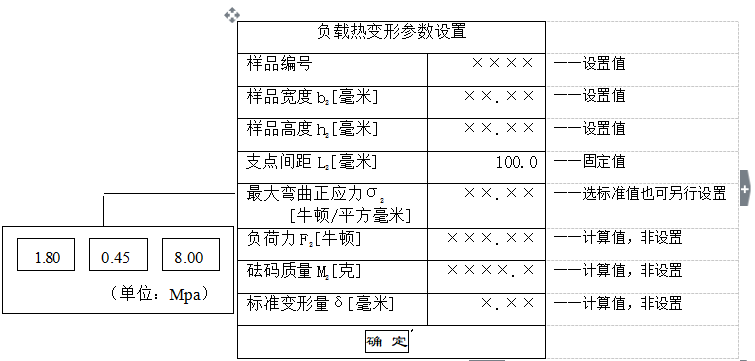
From the test instrument menu options on the computer interface, click on Parameter Settings, and the following interface appears:
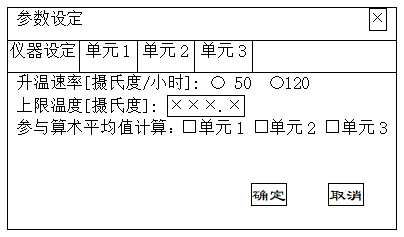
Select the test unit. If you choose Test Unit 1, click on Unit 1 behind the Instrument Settings on the upper interface, check the box with an "√" before testing the selected unit, and at the same time, the "Test Type" menu appears, click on Viscosity Softening Point, and the Viscosity Softening Point parameters appear.
Number Setting Menu:

Sample number is entered according to the operator's requirement, but limited to 4 characters (numbers or letters). The weight of the weights and the penetration depth are generally selected within the standard values (1000g/5000g, 1.00mm), but can also be set arbitrarily according to the needs of scientific research. However, a dialog box will pop up to confirm when "OK" is clicked, to prevent errors.
In the tester's menu, click on Parameter Setting, then select heating rate, with the standard values being 120℃/h or 50℃/h.
Based on the sample condition, estimate an upper temperature limit and set it in the "Upper Temperature" field. This is purely for safety and is unrelated to the testing process. When the temperature reaches the upper temperature limit, the system will stop heating. Note: There is also an upper temperature setting in the temperature controller, which should be higher than the parameter setting in this field to provide upper temperature protection without affecting the test (see section "• Operation of the Temperature Controller").
If testing two or three identical samples simultaneously, the test conditions are consistent. In that case, after setting the parameters for a single unit, simply click on the unit to be tested and then click Confirm. Upon completion of the test, the results will be averaged for the test values listed above.
Parameter settings complete, click Confirm.
If the displacement sensor is properly adjusted and the test stand is in place, after setting the parameters, click "OK." Then, under the tester menu, click "Start Test." In the pop-up dialog "Are you sure you want to start the test now?" click "OK," and the system will enter the testing phase.
Test
The test stand is in place, sensors are adjusted, parameters are set, and testing can begin at any time.
Click "Start Test" in the tester menu, a prompt "Are you sure you want to start the test?" will appear. Click "OK," and the system will enter the test program.
The blender operates, and after 5 minutes, the displacement sensor automatically resets the displacement output, the coordinates on the screen are updated, and the current temperature and displacement are set as the new origin of coordinates.
With the temperature controller pre-set and activated, the temperature rises at a predetermined rate. After a considerable period of rest, the displacement begins to change. Once the displacement reaches the preset penetration amount, the corresponding light dot on the test sample's coordinates will be prominently displayed, and numerical values for temperature and displacement (i.e., the coordinates of that point) will appear on the side of the light dot.
During the testing process, the system will automatically refer to the original blank test data, deducting the deformation effect of the test frame itself.
Upon completion of the sample testing for the preset unit under test, an auditory prompt will notify the operator within the interface control box, and simultaneously, the heater will cease operation.
Result Processing
Test complete; the system will proceed with calculating and saving the average, as well as printing.
7.1 Calculation
The system evaluates the test results; if the difference between the *maximum and *minimum values is ≥ 2°C, a dialog box will pop up on the screen:
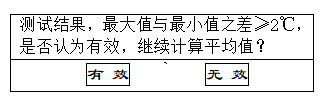
Click "Valid," and the system will perform the average calculation.
Click "Invalid," and the system will then seek the operator's opinion on whether to save and print.
7.2 Save
6
The system boasts a vast database, capable of saving test processes and results. By default, the saved file is named:
7.3 Printing
Curved Printing
Please print the "temperature-displacement" curve throughout the entire testing process for analysis and study.
Oil sump with water-cooling, air-cooling, or natural cooling.
Determination of Vicat Softening Temperature (VST) for Thermoplastic Pipe Materials and Fittings (GB/T8802) (Refer to Standard)
Sample Preparation*1
1.1 Sample Request
The pipe sample should be an arched section cut along the axial direction from the pipe, with dimensions of approximately 50mm in length and 10-20mm in width.
The test specimens for fittings should be arc-shaped segments cut from the flange, socket, or cylindrical surface, with a length of:
Fitting diameter ≤ 90mm, sample length equals the socket length.
Fitting diameter > 90mm, specimen length 50mm.
Width should be cut from the area without any gate lines or injection points.
1.2 Preparation
Pipe or fitting wall thickness = 2.4mm to 6mm, ready for testing.
If the pipe or fitting is over 6mm, process the outer surface of the pipe or fitting using an appropriate method to reduce the wall thickness to 4mm. If the fitting has a threaded socket, it should be turned off to achieve a smooth surface.
If the wall thickness of the pipe or pipe fitting is less than 2.4mm, two curved pipe sections can be overlapped to achieve a total thickness of at least 2.4mm.
The lower tube section specimen for the sub-layer should be flattened first. To do this, heat the specimen to 140℃ and maintain for 15 minutes, then place it between two smooth plates to flatten, keeping the upper arc unchanged.
1.3 Pre-treatment
Preheat the sample at a temperature below the expected Vicat Softening Temperature (VST) by at least 50℃ for a minimum of 5 minutes.
For ABS (Acrylonitrile-Butadiene-Styrene) and ASA (Acrylonitrile-Styrene-Acrylic) specimens, dry in an oven at (90±2)℃ for 2 hours. After removal, cool at (23±2)℃ and (50±5)% relative humidity for (15±1) minutes, then proceed with the above pre-treatment.
Temperature Rise Rate Selection
Select according to standard: (5±0.5)℃/6min.
Selection of static load
The static load applied is the sum of the force from the weights, load rod (including the pressure pin), and the displacement sensor, which should be (50±1) N. This corresponds to a total static load mass of: (5099±102) g (the displacement sensor of this machine weighs approximately 18g, corresponding to a gravitational load of 0.17N).
Operation
Adjust the bathtub temperature to about 50℃ below the sample's softening temperature, start the stirrer, and maintain a constant temperature.
Place the sample with the concave side up, horizontally on the pressure pin beneath the unloaded load bar. The contact surface between the sample and the instrument base should be flat. For stacked samples in two layers, the tip of the pressure pin should be placed on the concave surface of the unflattened sample, with the flattened sample underneath. The distance from the tip of the pressure pin to the edge of the sample should be no less than 3mm.
Place the test unit in the bathtub and insert the temperature sensor and thermometer (for verification, optional).
After 5 minutes, adjust the displacement sensor to zero with the required quality load.
Uniformly increasing temperature.
7
Please refer to the contents of the previous chapter "Determination of Vicat Softening Temperature (VST) of Thermoplastic Plastics (GB/T1633)."
Test Method for Load Hot Deformation Temperature
Sample Preparation*1
In the new national standard (GB/T1634.2-2004/ISO75-2:2003), the side-standing test content has been removed, serving only as a temporary retention to provide a sufficient long transition period. The new standard only recommends the flat placement method as the preferred method for use. The side-standing test will be removed in future revisions of the standard.
This equipment is compatible with both the old and new versions of the standard.
1.1 Flat-laying Method Sample
Sample Size: (80±2.0)mm x (10±0.2)mm x (4±0.2)mm, with a height (vertical direction) of 4mm (±0.2mm).
1.2 Side-Leg Test Sample
Sample Size: (120±10) mm x (9.8-15) mm x (3.0-4.2) mm, with height (vertical direction) being (9.8-15) mm.
Samples can be prepared by machining or molding methods. When using the molding method, the molding pressure direction should be perpendicular to the side of the sample's height. Molding conditions have a significant impact on the measurement results, and should be determined according to the requirements of relevant material standards or by mutual agreement with the relevant parties.
The sample surface should be free of distortion, and adjacent surfaces should be perpendicular to each other. All surfaces and edges should be free of scratches, burrs, indentations, burrs, protrusions, bubbles, and other defects.
At least two specimens should be tested at a time; to minimize the effect of warping deformation, the different faces of the specimens should be oriented towards the loading head during testing.
In case of necessity, the sample should undergo pretreatment. Pretreatment of the sample can be done according to the product standard, or a direct measurement can be made if no specifications are provided.
2. Test Standards
2.1 Heating rate: 120 ± 10℃/h.
2.2 Calculation of Load Capacity
In this model of equipment, the load force is automatically provided as soon as the sample size is inputted.
Due to the variability of the sample size within a certain range, in order to ensure the formation of a specific surface bending stress in the sample, precise measurements should be taken.jingqueThe specimen size obtained within 0.05mm is used to calculate the magnitude of the load force using the following formula:
Load Capacity: F = 2σbh2/3l
Equation: F - Load force, N
σ-Sample * Large bending normal stress (select method A: 0.45 N/mm²)2Or Method B 1.8 N/mm2Or C method 8.0N/mm2);
Width of sample placement (horizontal direction), mm;
Height of sample placement (vertical direction), mm.
Center distance between two shelf bars, i.e., span, 64mm and 100mm.
Then, calculate the mass M of the weight corresponding to the gravitational load F:
M=1000 F/g
In the formula: M - mass of the weight, g (grams)
g - gravitational acceleration, 9.81 m/s2
The mass of the obtained weights consists of the force exerted by the weight, load rod assembly, and displacement sensor on the load rod (approximately 18g in weight, corresponding to a gravitational load of 0.17N). The actual load force used should differ from the calculated value by ±2.5%; when the calculated value is less than the minimum load force that can be applied, consider using a larger bending normal stress for calculation.
2.3 Standard for Recording Load Temperature for Hot Deformation
When the displacement reaches the relative deformation amount listed in the table (the relative deformation amount is related to the specimen height), the temperature at which the specimen is at this point is the load thermal deformation temperature.
Table 1. Relationship between the sample height (in the vertical direction) and the standard deflection △S in the flat test:
| Sample Height mm | Sample deflection △S mm |
| 3.8 | 0.36 |
| 3.9 | 0.35 |
| 4.0 | 0.34 |
| 4.1 | 0.33 |
| 4.2 | 0.32 |
8
Table 2. Relationship between the sample height (in the vertical direction) and the standard deflection △S in the side-standing test:
| Sample Height (Vertical Direction) mm | Standard Deflection △S mm | Sample Height (Vertical) mm | Standard Deflection △S mm |
| 9.8~9.9 | 0.33 | 12.4~12.7 | 0.26 |
| 10.0~10.3 | 0.32 | 12.8~13.2 | 0.25 |
| 10.4~10.6 | 0.31 | 13.3~13.7 | 0.24 |
| 10.7~10.9 | 0.30 | 13.8~14.1 | 0.23 |
| 11.0~11.4 | 0.29 | 14.2~14.6 | 0.22 |
| 11.5~11.9 | 0.28 | 14.7~15.0 | 0.21 |
| 12.0~12.3 | 0.27 |
In this model of equipment, the settings will be automatically configured by the software.
3. Sample Placement
3.1 Remove the test unit and place it on the bathtub panel.
3.2 Lift the load rod, place the specimen evenly on the support bar (see Figure 2), lower the load rod to position the deformation head centrally over the specimen.
3.3 Submerge the test unit in the oil bath and apply the selected load (weights)
3.4 Insert the temperature sensor and the mercury thermometer into the slanted holes (the mercury thermometer is for calibration only and may not be necessary).
3.5 Adjust the up and down position of the displacement sensor to position the sensor's detection travel at the midpoint of the total travel.
4. Adjustment of the displacement sensor
Adjusting the displacement sensor is quite simple. Typically, the range of the displacement sensor used is 3 to 5mm. Just adjust the up and down position of the displacement sensor to ensure the travel is approximately in the middle of the range.
5. Parameter Settings
From the menu options on the computer interface, click the tester, a dropdown menu appears, then click Parameter Settings, the following interface appears:
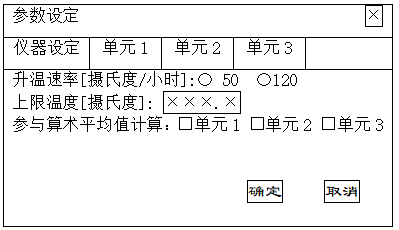
Establish the heating rate in terms of升温速率.
Enter the upper temperature limit (to ensure the system operates safely) in the upper temperature field. When the temperature reaches the upper limit, the system will stop heating. Note: There is also an upper temperature setting in the temperature controller, which should be higher than the parameter setting in this field to provide dual protection for the upper temperature without affecting the test (see section "• Operation of the Temperature Controller").
Select the test unit. If you choose Test Unit 2, click on Unit 2 behind the instrument settings on the upper interface, check the box before testing the selected unit by marking an "√", and simultaneously, the "Test Type" menu will appear. Click on Load Heat Deflection to enter the Load Heat Deflection parameter settings:
If testing two or three identical samples simultaneously, the test conditions are consistent. In that case, after setting the parameters for one unit, simply click on the unit to be tested and then click "Confirm." Upon completion of the test, the results will be averaged for the test values mentioned above.
Unit tested and parameters set, ready to proceed to the testing phase.
6. Testing
The test rig is in place, sensors are adjusted, parameters are set, and testing can begin at any time.
The testing process is consistent with the "Testing" section in the "Vicat Softening Point Test Method":
Click "Start Test" in the tester menu, then click "OK" on the "Do you want to start the test now?" prompt, and the system will enter the test program.
Agitator operating, after 5 minutes, the displacement sensor automatically resets the displacement output, and the coordinates on the screen are updated. At this moment, the temperature...
Degree and displacement as the new origin of coordinates.
*In the new national standard, it is stipulated that the aforementioned work should be conducted at 27℃. "Unless previous tests have shown that, for the test material, starting the test at a higher temperature will not cause errors." Therefore, if it is necessary to perform the work below 27℃ and the user's environmental test conditions cannot be below 22℃, please negotiate with the manufacturer to order a special refrigeration unit.
With the temperature controller pre-set and activated, the temperature rises at a predetermined rate. After a considerable period of static, the displacement begins to change. Once the displacement reaches the preset deformation amount, the corresponding light spot on the test sample's coordinates will be prominently displayed, along with numerical values of temperature and displacement (i.e., the coordinates of that point) on the side of the light spot.
During the testing process, the system will automatically refer to the original blank test data, deducting the deformation impact of the test frame itself.
Upon completion of the sample testing for the pre-set unit to be tested, an audio prompt will notify the operator within the interface control box, and simultaneously, the heater will cease operation.
7. Result Handling
See the "Results Processing" section at point di7 in the "Vicat Softening Point Testing Method."
Oil sump with water cooling, air cooling, or natural cooling.
Operating the temperature controller
1. Heat-up Start
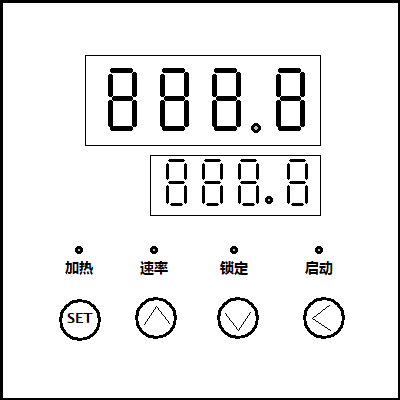
After the power switch of the equipment is turned on, the controller is powered up, the upper display shows the actual temperature of the bathtub, and the lower display shows the rate increasing.
The instantaneous temperature value to be reached during the warming process.
Press the "<" key, the indicator light turns on, and the heating indicator blinks (if the software test is not started at this time, the light will not turn on, meaning it cannot heat up).
Enter preheat mode. Upon completion of preheating, the "Rate" indicator light illuminates, entering rate heating mode.
When the temperature reaches the previously set limit temperature value (≤300℃), heating stops and enters a constant temperature state.
During the online linear heating process, you need to maintain a constant temperature at a certain point. Simply press the "∨" key when the temperature on the lower display reaches the desired level. The lock indicator will light up, indicating the device has entered the constant temperature state. Press the "∨" key again to release the constant temperature, and the heating process will continue. To stop heating, press the "<" key. Both the "Rate" and "Start" indicators will turn off, and the heating power will be disconnected.
2. Parameter Settings
2.1 Setting the Maximum Temperature Limit:
Temperature Display Controller: After power on, press the "SET" button, the upper display shows " "", the lower display shows the last set 10"
Set the limited temperature value. To modify, press the "<" key. The first digit on the lower display will blink. Press the "∨" or "∧" key to adjust. Press the "<" key again, the second digit will blink, and so on. Continue adjusting until finished.
Set complete, press the "SET" button to enter the heating rate setting.
2.2 Setting the Heating Rate:
After setting the limit temperature, continue pressing the "SET" button, and the upper display will show " " The lower display shows the last set heating rate value. To reset, modify the parameters in the same manner as above.
Here, the 5℃/6min setting is: 005.0
12℃/6min set to: 012.0
2.3 Setting of heating rate correction values:
The correction value can adjust for errors in the rate of temperature increase. This value has already been adjusted at the factory.jingqueAdjustments, do not alter at will.
Adjustment Value Setting: After setting the heating rate, press the "SET" key again, and the upper display will show: The lower display shows the corrected value of the last set warming rate. To modify, follow the procedure outlined in section 2.1. Increasing the value speeds up the rate.
Set complete. Press the "SET" button to exit settings, then wait for startup.
3. The operation panel of the temperature display controller is as follows:
Emergency use in case of automatic equipment failure
In the event of a computer test system failure, this instrument can still operate independently.
Displacement test
The displacement can be directly observed through the micrometer.
Temperature control
The unit is specially designed with a dual-purpose temperature controller for both automatic and manual settings, as referenced in the previous section. Should the automatic unit encounter a fault:
At that point, you can switch to manual settings to continue working.
3. Note: During the automatic testing process, the rate of temperature increase is determined by the parameter settings in the computer, not by the thermostat's own settings. Additionally, the thermostat's upper temperature setting should be higher than the value in the parameter settings to provide dual upper temperature protection without affecting the normal test.
Technical Specifications
Temperature Range: Room temperature to 300℃
Rise Rate: 5±0.5℃/6min, 12±1.0℃/6min
Temperature Controller Accuracy: Not worse than ±0.3℃
Temperature sensing accuracy: Not worse than ±0.3℃.
Temperature distribution: Not worse than ±0.5℃.
Bath Tub Capacity: 25L
Number of Test Units: 3
Deformation Measurement Device: Micrometer 0.001mm
Hot deformation press head size: R=3±0.2mm
Hot deformation specimen span: 64 ± 0.5mm, 100 ± 0.5mm (expandable to 101.6mm)
Softening Point Needle Size: 1.000 ± 0.015mm2(d=1.128±0.0085mm);
Blank Test: <0.02mm thermal deformation (deformation amount of the sample holder);
*Minor Force: 47 g.f
Load Rod Component Quality: Refer to Appendix One, the quality of the softening point needle and the deformation punch are the same.
11
Sample frame thermal deformation: ≤0.02mm; any slight excess can be corrected through a blank test.
This unit comes with three standard specimens, which can be used to test the heat deformation of the specimen holder.
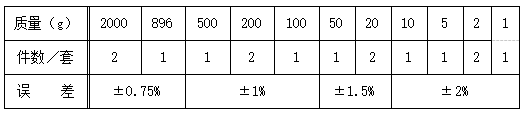
Weighing Scale Configurations (Total of Three Sets)
Rated Power: 4 kW
Power Source: 220VAC, 20A
Cooling Methods: Water-cooled or air-cooled (water source or compressed air to be provided by the user).
Safety Precautions
Before using the equipment, ensure proper grounding.
The equipment operates at high temperatures; be cautious of burns. Pay special attention to the outlet of the cooling tubes, as hot gas streams are emitted during cooling.
After-Sales Service
Our products come with a one-year free warranty from the date of sale and lifetime repair service.
In case of relocation due to municipal construction or changes in phone numbers, we trust you will be able toInternetFind our company's trace on top, ensuring smooth business communication and after-sales service.
Sample preparation can affect test results, so the tester should have clear specifications for it.
*2. During linear temperature rise, due to the inconsistent time constants (temperature transfer rates) between them, the sensor with faster temperature sensing speed will indicate a different temperature than the other.

Phone Consultation