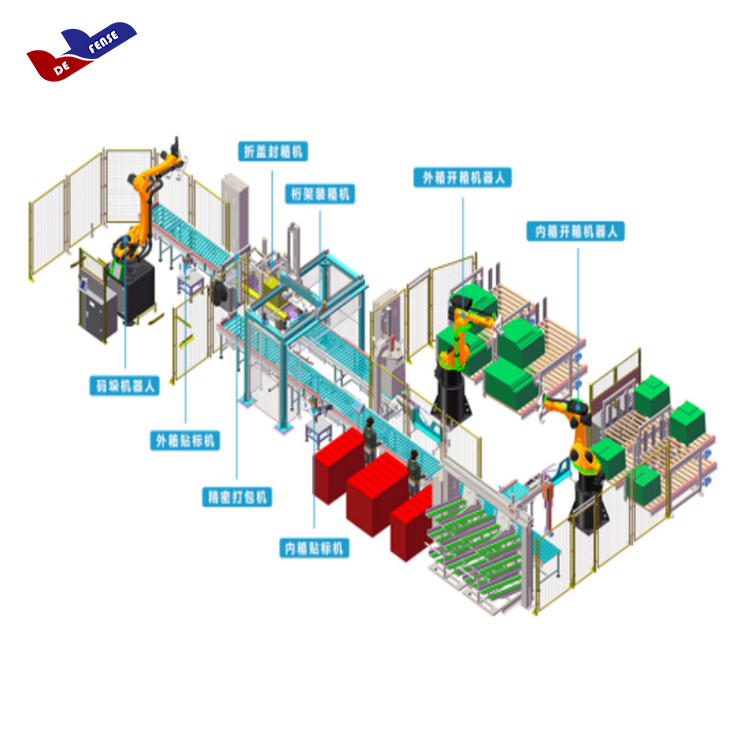
Focused on explosion-proof electrical equipment, industri...

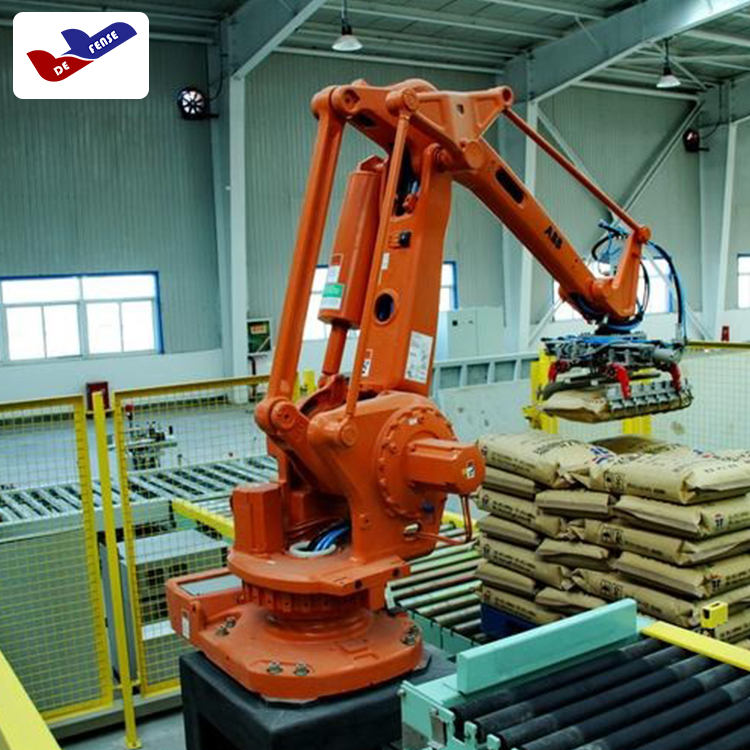
As one of the "jewels in the crown" of manufacturing, industrial robots are advancing towards embodied intelligence in the AI era.
From the downstream application perspective, MIR Industrial Statistics shows that the shipment growth rate of industrial robots in fields such as photovoltaics, automotive electronics, and semiconductor is the fastest.
Domestic industrial robot market share is on the rise.
The global industrial robot market is primarily dominated by Japan's FANUC, Yaskawa Electric (Japan), Germany's KUKA (acquired by Midea), and Switzerland's ABB, collectively known as the "Four Great Families," who lead in robotics technology.
The company's deep accumulation in core technology has also once dominated a significant share of the Chinese industrial robot market.
However, with the rise of domestic manufacturers like Estun (002747.SZ) and Huizhou Tech (300124.SZ), the market share of the "Four Major Families" has declined in China's market, dropping from 70% to 40% in recent years.
According to MIR and CRIA data, China's domestic industrial robot localization rate reached 45% in 2023, up by 9 percentage points year-on-year.
According to statistics from Rui Industrial, in 2023, Estun Industrial Robot held about an 8.5% market share domestically, followed by Huizhuan Technology with a 6.5%, ranking second and fourth, respectively.
It must be acknowledged that while China is the largest global market for industrial robots, domestic manufacturers primarily dominate the mid-to-low-end market, with the high-end market still being dominated by international brands." Zhongke, an embodied intelligent robot company,
Photonic founder and Chairman Wu Yiming stated during an interview with the First Financial.
Wu Yiming believes that for the domestic robot industry to develop, the first priority is to enhance the localization of core components.
The core components of industrial robots include controllers, servo systems, and reducers, which determine the important performance indicators such as precision, stability, and load capacity. Among them, the controller is the industrial
The "brain" of a robot typically accounts for about 15% of the total cost; the servo system is the "power source" of industrial robots, usually making up about 20% of the total cost; the reducer is the "joint" of industrial robots.
Generally, this accounts for approximately 35% of the total cost.
Due to high technical barriers in producing core components, most key technologies are monopolized by a few companies, resulting in insufficient bargaining power for domestic robot manufacturers during procurement, leading to higher purchase prices.
"I understand that the domesticization rates of controllers, servo systems, and reducers are all between 10% and 20%," Wu Yiming told Caixin First Economic Daily. "The iteration of core components is in a linear development stage, with domestic brands... "
The trend of continuously replacing foreign brands' market share is becoming increasingly evident.
As domestic manufacturers gradually accumulate and improve their technology, the gap between their control systems and foreign products is narrowing. Some domestic manufacturers have independently developed their own control systems, including Estun, Hubei CNC,
Newtimes, Guangzhou CNC, Huaxin Technology, among others, have also given rise to a batch of professional control system service providers such as Gaoke High-Tech, Yingweiteng, and Kanopu.
In the servo system field, Huichuan Technology reported in its annual report that its domestic market share reached 28.2% in 2023.
Eston informs First Financial that the company possesses three core technologies: fully autonomous robot controllers, operating systems, and servo systems. The autonomy rate of the robot's core components has reached over 90%.
Our company boasts 87 industrial robots, capable of handling loads from 3 to 700 kg, ranking second in the world in terms of model variety and first domestically in shipment volume.
Stepping into the Era of Embodied Intelligence
"Innovation capability is the core competitive edge of the industrial robot industry," stated Wu Yiming. "Domestically, robot manufacturers are primarily competing on cost and marketing, lacking in technological innovation; internationally, industrial robots..."
Human technological advancements have at least stagnated for twenty years, and with no significant expansion in applications, the demand side has begun to saturate. These two factors have made it challenging for domestic robot manufacturers to achieve profitability.
Currently, domestic industrial robot leaders Estun and Huizhou Technology have achieved profitability. Robot (300024.SZ) still reported a negative non-GAAP net profit in 2023, and Effector (688165.SH) in 2023...
Not yet profitable.
"The most crucial aspect is to enhance the intelligence of industrial robots; breakthroughs in embodied intelligence theory and technology will lead to a leap in the development of robotic intelligence." Wu Yiming stated, "The core of intelligence lies in vision."
The fusion of perception with industrial robotic arm movements, where the brain commands the manipulation of the arm based on structural and spatial perception and measurement information, challenges the traditional notion of the robotic arm's central role. Embodied intelligence
Intelligently driven by advanced algorithms, smart robots with brain-like intelligence are controlled by a brain, rather than embedding the brain and eyes within the hands. As intelligence evolves, future industrial robots will be capable of...
Ready to tackle more challenging scenarios.
According to Zhongke Optoelectronics' definition of embodied intelligence, "embodied intelligence" refers to the process by which the subject (machine) constructs symbols through interaction with elements such as itself, objects, and the environment (information perception, transformation, and response).
A cognitive model that recognizes the physical existence and evolutionary trends of various elements and their relationships, achieving problem-solving or value realization through artificial intelligence methods.
Wu Yiming explained that under embodied intelligence, the brain, based on the eyes' perception ability, commands the robotic arm to handle different workpieces, rather than recognizing the workpieces (marked information) and then acting according to pre-set procedures for different workpieces.
The system doesn't execute tasks through a program; instead, it has eyes that perceive the workpiece. Based on its autonomous understanding of the task requirements, it intelligently analyzes the structure of the workpiece, the spatial relationships of its elements, and then autonomously generates processes, actions, and various movements.
Parameters can even be interacted with and iterated upon, achieving autonomous operation. "Such robots are akin to skilled workers who, with the blueprint of the workpiece and knowledge of the task objectives, can proceed."
However, Wu Yiming believes that all existing industrial robots worldwide have not reached the so-called intelligent breakthrough. "Our breakthrough in embodied intelligence is unique. We are based on modern mathematical methods (
By constructing a brand-new intelligent theoretical bottom algorithm architecture through differential geometry, topology, group theory, etc., and achieving fine recognition based on small sample data, it enables intelligent equipment and intelligent robots to realize autonomous recognition and autonomous movement.
Root Technology for Adaptive Workflows.
Wu Yiming introduces that in the civil field, the "Tongren" series by Zhongke Optoelectronics has produced intelligent welding robots that can autonomously identify a variety of small-batch workpieces, independently plan complex operation trajectories, and form machine
The robotic arm's driver program has achieved an overall shipment of approximately 50 sets; in the military industry sector, it is expected to generate between 70 million to 1 billion yuan in revenue this year, with the relevant technological breakthroughs having been verified in key national missions.


b2b.china9.net © Zhongshang 114 Hebei Network Technology Co., Ltd.Address: Room 6009, Oriental New World Center, No.118 East Zhongshan Road, Qiaoxi District, Shijiazhuang City, Hebei ProvincePlatform Service Hotline: 4006299930