




- AllProduct Category
-
Light curtain target
Technical Articles
Industry News
News & Information
Light-Gas Gun System
Impact Tester
Security Management Platform
Impact/Overshoot Dynamic Checker
Ultra-Dynamic Testing Equipment
Ultra-Dynamic Signal Conditioning/Data Acquisition
Impulse Fire Device
Self-Organizing Network
FlexiBots Industrial Software
Automated Production Line
FlexiBots Assembly Robots
FlexiBots Inspection Robots
Flexible Hazardous Area Electrical Equipment
FlexiBots Industrial Robots


详情描述
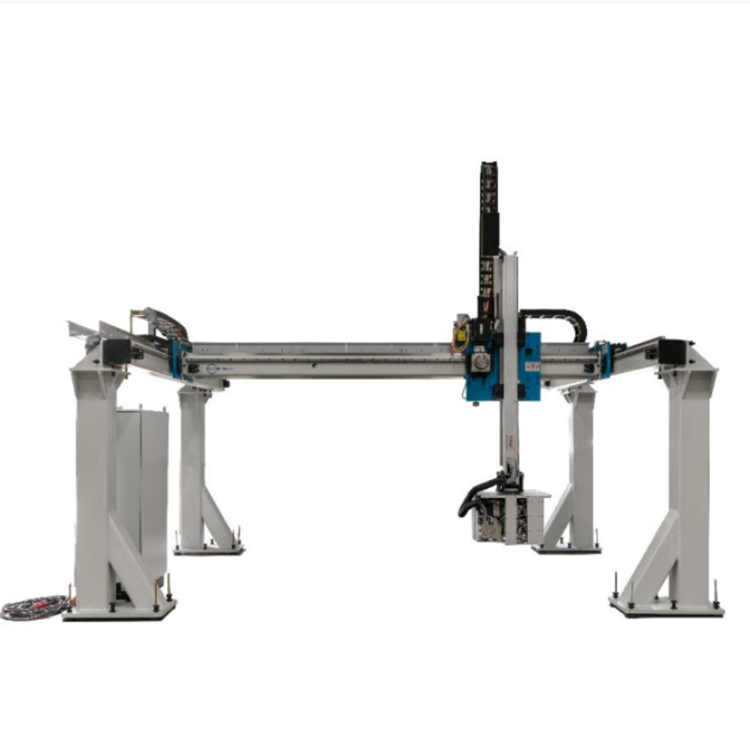
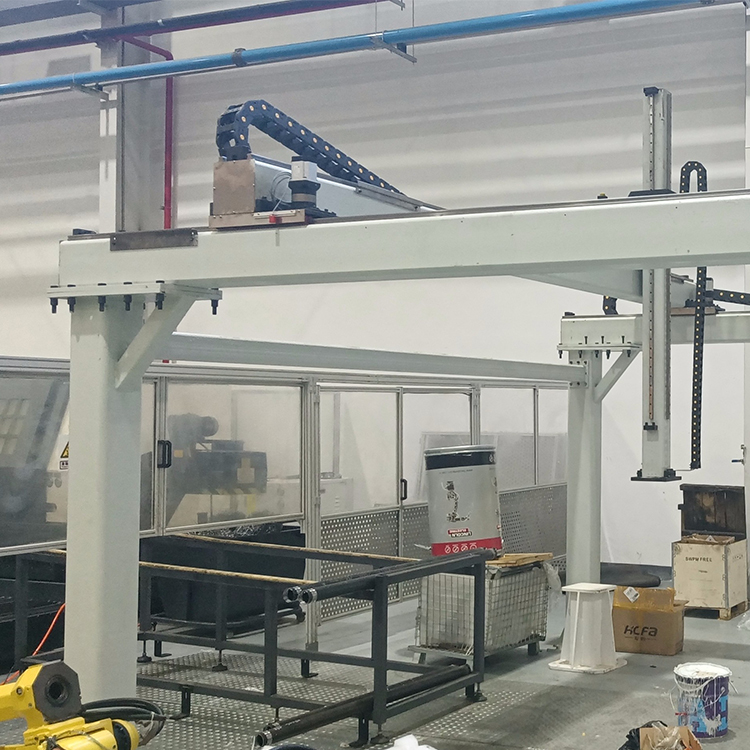
Gantry robots, also known as gantry-style robots or gantry automation systems, are industrial robots commonly used for material handling, transportation, and processing tasks in automated production lines.
I. Application Scenarios
Material handling and palletizing:
- Storage & Logistics: The gantry robot can handle heavy loads in large warehouses and stack items at designated locations, enhancing storage efficiency.
- Production Line Handling: It can handle various raw materials and semi-finished products on the production line, enhancing production efficiency.
2. Machine Tool Loading and Unloading
- CNC Machining: On the fully automated CNC machine production line, gantry robots can achieve automatic loading and unloading of workpieces, reducing the labor intensity of operators and improving processing efficiency and quality.
- Press Machines: In the press line, gantry robots can accurately place workpieces into the press and remove the finished products after the pressing operation.
3. Inspection and Quality Control
- Automated Inspection: During the manufacturing process, gantry robots can be integrated with vision systems and sensors for automatic inspections, quickly identifying and removing substandard products.
4. Assembly Operations:
- Automotive Manufacturing: In heavy industries such as automotive manufacturing, gantry robots are used for automatic assembly of large components like car bodies and engines, significantly enhancing assembly accuracy and efficiency.
Electronics Assembly: Offers high-precision component handling and fixation features, aiding in the acceleration and enhancement of the assembly speed and quality for small electronic products.
5. Painting and Coating:
Surface Treatment: During painting operations, the gantry robot can precisely control the spray position and pressure, ensuring even coating, saving paint, and improving the quality of surface treatment.
6. Laser Cutting and Welding:
- Laser Processing:龙门桁架机器人 can precisely control laser cutting or welding heads in metal and plastic processing fields, enabling the fabrication of complex shapes.
- Automatic Welding: Used for welding tasks requiring high stability and precision, such as automatic welding operations for bridges and building steel structures.
7. Transport heavy and oversized components:
Heavy-duty material handling and placement operations for aerospace, shipbuilding, wind power equipment, and other fields, enhancing operational efficiency and safety with its robust load-bearing capacity.
II. Main Features
Multi-axis motion
- X, Y, Z-axis motion: The gantry robot can move freely in a three-dimensional space, suitable for a variety of complex working environments.
- High-Precision Positioning: Achieves precise positioning and movement through servo motors and precise guide rail systems, suitable for high-demand processing and assembly tasks.
2. Automated loading and unloading
- Automatic loading and unloading: Used for automatically loading raw materials and unloading finished products, enhancing the automation level and operational efficiency of the production line.
- Integrated Warehouse: Capable of linking with warehouses and production equipment for continuous operation, reducing production interruptions and downtime.
3. Material Handling
- Heavy Load Handling: With its robust load-bearing capacity, it is capable of transporting heavy and large workpieces, suitable for various industrial applications.
- Precise Placement: Equipped with high-precision positioning capabilities, it can accurately place materials at designated locations.
4. Automatic Assembly:
- Precision Component Assembly: Compatible with other assembly tools, capable of handling complex component assembly tasks, suitable for electronic products, automotive parts, and other fields.
- Flexible Assembly: Equipped with versatile programming and configuration capabilities, capable of adapting to the assembly requirements of various products.
5. Inspection and Testing:
- Online Inspection: Capable of integrating visual inspection systems and sensors, providing real-time monitoring and detection of quality issues during the production process.
- Automatic Sorting: Automatically segregates non-conforming products based on test results, ensuring production quality.
6. Processing and Operation:
- Laser Cutting: Ideal for metal and plastic materials, featuring high precision and efficiency in cutting operations.
- Welding Operations: Equipped with welding devices, capable of performing automatic welding tasks to ensure stable welding quality.
- Painting, spraying, and surface treatment: Accurate nozzle movement control ensures even coating and reduces material waste.
7. Human-Machine Interface
- User-friendly operation interface: Equipped with an intuitive touch screen and programming interface, allowing operators to quickly set and adjust parameters.
- Remote Monitoring and Diagnostics: Achieve remote monitoring and fault diagnosis through network interfaces, enhancing maintenance efficiency.
8. Multitasking Coordination:
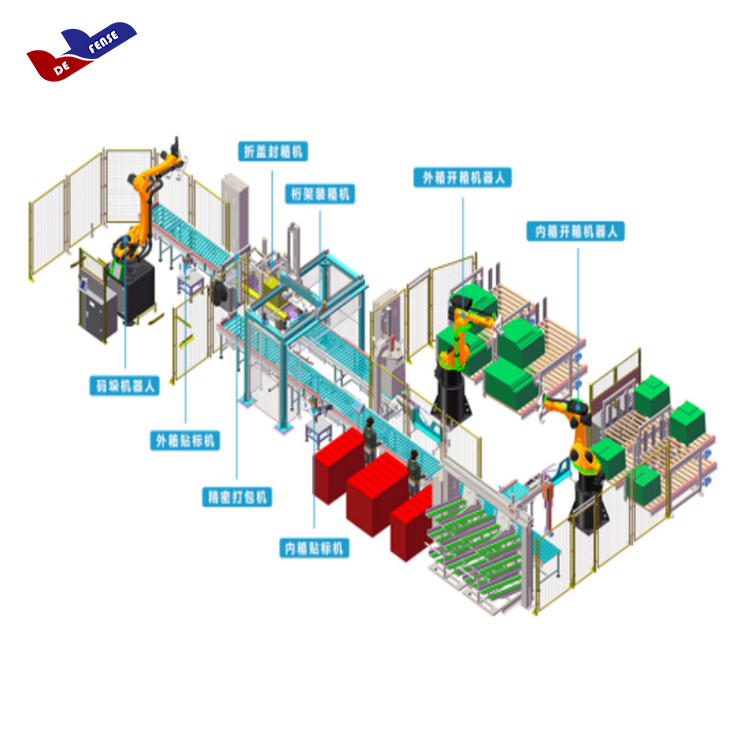
- Collaborative Operation: Capable of working in tandem with other robots and automated equipment, enhancing the efficiency of the entire production line through task programming.
- Task Scheduling: Flexibly schedule and arrange work tasks based on production needs, enhancing the flexibility and adaptability of the production line.
9. Security Assurance:
- Collision Avoidance Mechanism: Equipped with safety sensors and collision avoidance features, it automatically stops or adjusts its path upon detecting obstacles, ensuring safe operation.
- Safety Fencing and Protection Measures: Standard designs typically include safety fencing, emergency stop buttons, and other safety protection measures to ensure the safety of operators.
Overall, the gantry robot is a powerful and reliable automation device that enhances production efficiency and reduces labor costs, suitable for various industrial production scenarios.
III. Structural Composition
1. Truss structure:
- I-beam (X-axis): It is the main load-bearing part of the entire robot frame, responsible for the robot's movement along the X-axis.
- Poles (Y-axis): Connect and support the beams, ensuring the overall structure's stability and allowing movement along the Y-axis.
- I-Beam (Z-axis): The vertically moving part mounted on the crossbeam, responsible for movement and vertical positioning along the Z-axis.
2. Drive System:
- Servo motors: Typically driven by servo motors, offering high-precision and high-speed positioning control.
- Gearbox: Converts the high-speed rotation of the motor into a lower-speed, higher-torque output that is more suitable for practical applications.
- Guides and Slides: Ensure stable and precise movement, reducing friction and wear.
3. Control System:
- Controller: The "brain" of the robot, responsible for receiving, processing, and executing commands.
- Human-Machine Interface (HMI): Facilitates operator interaction with equipment, including parameter settings and operational status monitoring.
4. Sensor System:
- Position Detection Sensors: Including photoelectric sensors, encoders, etc., for real-time monitoring of the robot's position and providing closed-loop control.
- Load Sensor: Monitors load conditions, prevents overloading, and ensures safe operation.
5. End Actuator
- Clamps: Used for gripping and placing workpieces, the design of the clamps varies according to different applications.
- Tool nozzles: Include welding nozzles, spray nozzles, cutting nozzles, etc., configured according to operational requirements.
6. Safety Protection Measures
- Safety guardrails: Installed around the work area to prevent entry into hazardous zones.
- Emergency Stop Button: In case of an unexpected situation, operators can quickly stop the equipment to ensure safety.
7. Power and Communication Systems:
- Cable Carrier: Responsible for transmitting power and signals, ensuring coordinated operation of all components.
Below, we will describe some performance specifications of the gantry robot.


