

- AllProduct Category
-
Light curtain target
Technical Articles
Industry News
News & Information
Light-Gas Gun System
Impact Tester
Security Management Platform
Impact/Overshoot Dynamic Checker
Ultra-Dynamic Testing Equipment
Ultra-Dynamic Signal Conditioning/Data Acquisition
Impulse Fire Device
Self-Organizing Network
FlexiBots Industrial Software
Automated Production Line
FlexiBots Assembly Robots
FlexiBots Inspection Robots
Flexible Hazardous Area Electrical Equipment
FlexiBots Industrial Robots



详情描述
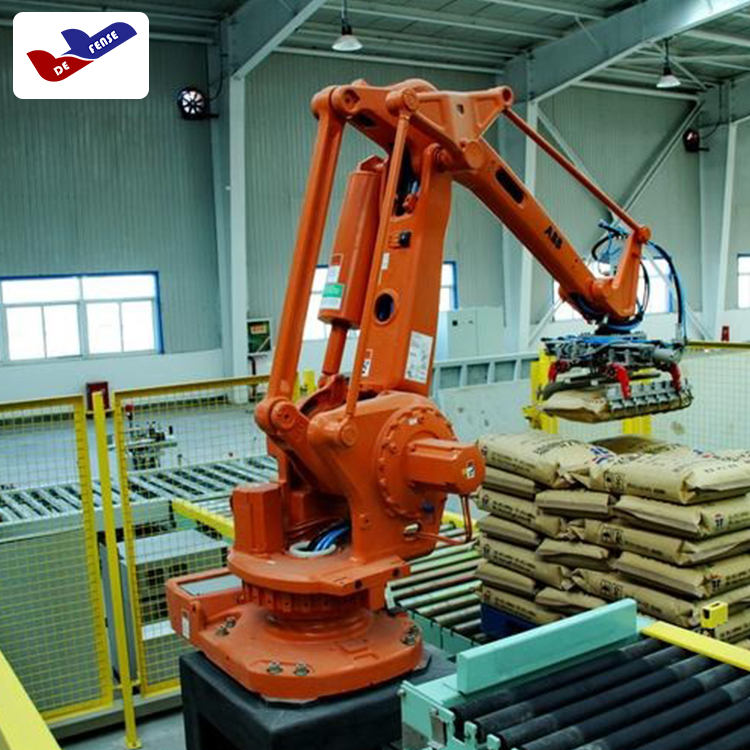
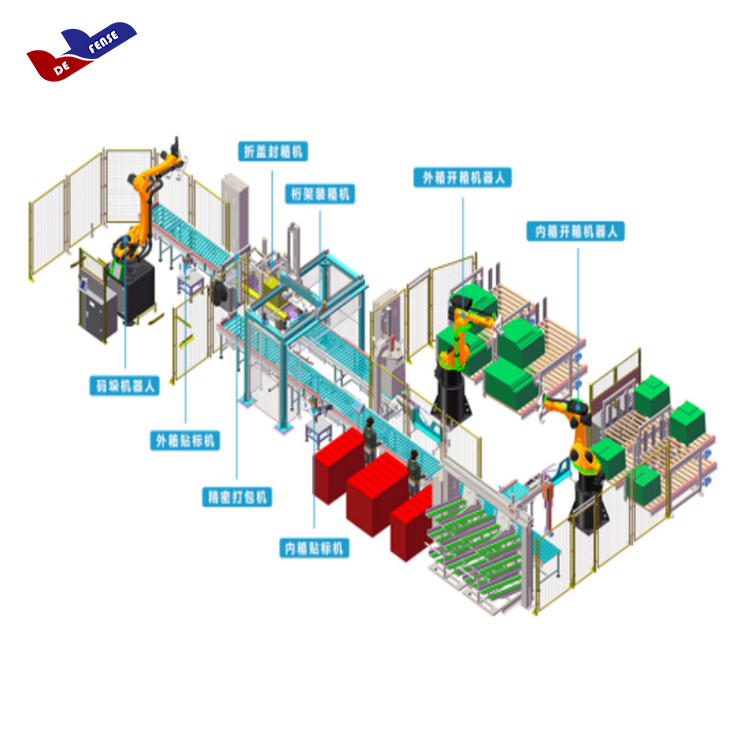
A multi-axis robotic arm is a system used for automated stacking and sorting of goods. They are commonly employed in industries such as warehousing, logistics, and manufacturing to replace manual labor in tasks like stacking, picking, and sorting, thereby enhancing efficiency, reducing labor costs, and minimizing operational risks.
I. Application Scenarios
Industrial Production
In the industrial production sector, particularly in industries such as automotive manufacturing, electronics production, food processing, and mechanical manufacturing, multi-axis robotic arms are widely employed in assembly, welding, painting, handling, packaging, and stacking processes. Through automated stacking and efficient packaging technology, the arms can accurately grasp and place parts, completing complex manufacturing tasks, significantly enhancing production efficiency and product quality. In hazardous or unsuitable environments for manual operation, robotic arms can replace human labor, reducing the risk of injury to personnel.
2. Healthcare & Medical Supplies
Multi-axis robotic arms are increasingly used in the medical field. Surgical robots, which are among the most representative applications, assist doctors in performing highly precise and minimally invasive surgeries, reducing surgical risks and trauma, and improving efficiency. Moreover, robotic arms play a significant role in rehabilitation training, aiding patients in regaining mobility. In drug sorting and management, robotic arms can automate the handling of drug storage and retrieval, minimizing human error and enhancing the efficiency and accuracy of drug sorting and distribution.
3. Logistics Distribution
Multi-axis robotic arms are extensively used in the field of warehousing and logistics, particularly in intelligent warehouses. These arms are not only capable of automating stacking and efficient item handling but can also complete tasks in complex environments. For instance, in high-rise shelves and narrow aisles, robotic arms can precisely pick, sort, and stack items through their flexible joint movements, enhancing the operational efficiency and accuracy of warehouses. Additionally, through automated operations, the cost of warehouse management is significantly reduced, and risks are effectively controlled.
Aerospace
In the aerospace field, the precision and flexibility of multi-axis robotic arms are fully utilized. These arms are widely used in satellite assembly, testing, and maintenance, ensuring the accuracy and reliability of various tasks. Additionally, robotic arms play a crucial role in space exploration missions, such as handling, operating, and maintaining objects during lunar and Mars exploration, guaranteeing the smooth progress of space missions.
5. Military Sector
Multi-axis robotic arms also play a crucial role in the military sector, particularly in executing high-risk, complex tasks such as explosive disposal, reconnaissance, and battlefield logistics. These arms can replace humans in performing these dangerous missions, ensuring personnel safety and enhancing the precision and efficiency of operations. With the advancement of intelligent technology, future military robotic arms will possess greater autonomous decision-making capabilities and higher combat efficiency.
6. Service Industry
- Beyond the industrial and manufacturing sectors, multi-axis robotic arms are also showing great potential in the service industry. In household services, robotic arms can assist with daily tasks such as cleaning and cooking; in commercial service sectors like catering and hotels, they can enhance service quality and efficiency to meet the growing market demand. Through highly automated operations, robotic arms can alleviate the labor intensity for service personnel and provide a more precise and rapid service experience.
In summary, multi-axis robotic arms have a broad range of applications and immense development potential. As technology advances and costs decrease, the application of multi-axis robotic arms will become increasingly widespread, bringing more convenience and opportunities to the development of various industries.
Section 2: Key Features
High-precision positioning and motion control:
- The vertical multi-axis robotic arm, equipped with precise sensors and advanced control systems, achieves micron-level, even nanometer-level positioning accuracy.
These multi-axis robotic arms can perform complex movement trajectories, including straight lines, arcs, spirals, and intricate spatial posture adjustments. They are widely used in the industrial robotics field, particularly in applications requiring high-precision positioning.
2. Multi-axis operation:
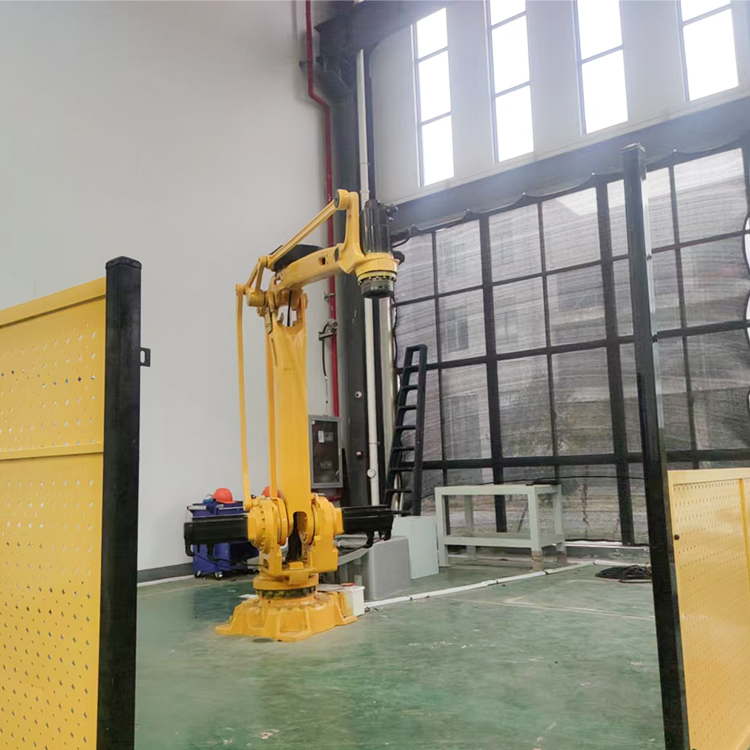
- The vertical multi-joint robotic arm features multiple rotating joints (such as shoulder, elbow, and wrist joints), capable of mimicking the flexible movements of a human arm.
- This multi-degree-of-freedom design allows the robotic arm to move freely in three-dimensional space, performing a variety of complex operations.
3. Handling and Transportation:
Equipped with various gripping tools (such as pneumatic clamps, electromagnetic plates, and vacuum cups), capable of gripping objects of different shapes, sizes, and materials.
- Accurately handles the transportation, placement, and stacking of objects, suitable for material handling tasks on automated production lines.
4. Processing and Manufacturing:
- Capable of integrating cutting, welding, painting, and polishing tools to perform a variety of manufacturing tasks.
In the automotive, aerospace, and electronics manufacturing industries, multi-axis robotic arms are widely used for precise component machining and assembly.
5. Inspection and Measurement:
- Equipped with sensors (such as laser rangefinders, vision sensors, etc.), capable of real-time monitoring and measuring parameters like the position, dimensions, and shape of objects.
- During quality control and testing, multi-axis robotic arms provide high-precision and reliable measurement results.
6. Interaction & Collaboration:
Modern multi-axis robotic arms typically feature human-machine interaction capabilities, enabling communication with operators through touchscreens, voice commands, and other methods.
In the field of collaborative robots, multi-axis robotic arms can work alongside humans, enhancing production efficiency while maintaining safety.
7. Self-Learning and Optimization:
- Leveraging machine learning and artificial intelligence technology, multi-axis robotic arms continuously learn and optimize their motion strategies and operational processes.
- By analyzing historical data and real-time feedback, the robotic arm can gradually enhance its work efficiency and accuracy, while reducing the failure rate and downtime.
8. Remote Control and Monitoring:
Multi-axis robotic arms typically feature remote control and monitoring capabilities, allowing operators to manipulate and monitor the arm from a safe distance using a computer or a mobile device.
- This allows the robotic arm to operate in hazardous or hard-to-reach environments while ensuring the operator's safety.
In summary, multi-axis robotic arms play a crucial role in various fields such as industrial automation, manufacturing, and services, thanks to their high precision, multiple degrees of freedom, flexibility, and intelligence. As technology advances and application areas expand, the functionality and performance of multi-axis robotic arms will continue to improve, bringing more convenience and opportunities to all industries.
Section 3: Structural Composition
Base Plate
- The base is the main part of the multi-joint robotic arm, typically made of sturdy materials such as steel or aluminum. It serves to support the entire arm, providing the necessary stability and rigidity. The design and structure of the base are adjusted according to the application scenario and load requirements of the arm.
2. Joints
- Joints are a core component of multi-axis robotic arms, connecting various parts of the arm and enabling flexible movement within a certain range. Common joint types include rotating joints and sliding joints, with rotating joints being the most common in multi-axis robotic arms. These joints are typically composed of components such as motors, reducers, and sensors, powered by electricity, hydraulics, or pneumatics.
3. Connecting rod
- Linkages are the rods connecting joints to the end actuators, transferring the joint's motion to the end actuator. The material and shape of the linkage are selected based on the application scenario and load requirements of the robotic arm to ensure stability and precision.
4. End Actuator
- The end effector is the "hand" of a multi-axis robotic arm, designed to perform specific tasks such as gripping, handling, and processing. The type and function of the end effector vary based on the application scenario, and can include a variety of grippers, screwdrivers, welding torches, and more, in different shapes and sizes. They are typically composed of components such as motors, cylinders, and sensors, enabling precise operations as instructed.
5. Drive Unit
- The drive unit is a critical component for controlling the movement of multi-axis robotic arms, providing power to the joints through electrical, hydraulic, or pneumatic means. The selection and configuration of the drive unit are adjusted based on the application scenario, load requirements, and movement speed of the robotic arm. 6
Control System
- The control system is the brain of the multi-axis robotic arm, responsible for receiving operational commands, processing data, and controlling the arm's movement and the operation of the end effector. Typically composed of components such as computers, controllers, and sensors, it enables precise positioning and motion control.
7. Sensor
- Sensors are a crucial component of multi-joint robotic arms, used to perceive parameters such as the arm's position, velocity, force, and temperature, and feed this information back to the control system. Sensors ensure the arm maintains high precision and stability during movement, while also enhancing the arm's level of intelligence.
In summary, the structural composition of a multi-axis robotic arm includes the base, joints, linkages, end-effector, drive units, control system, and sensors, among other components. These parts work in concert, enabling the multi-axis robotic arm to perform precise and efficient tasks in a variety of complex environments.
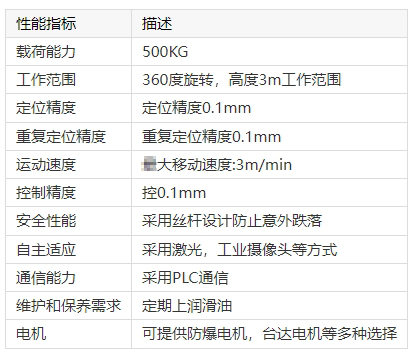
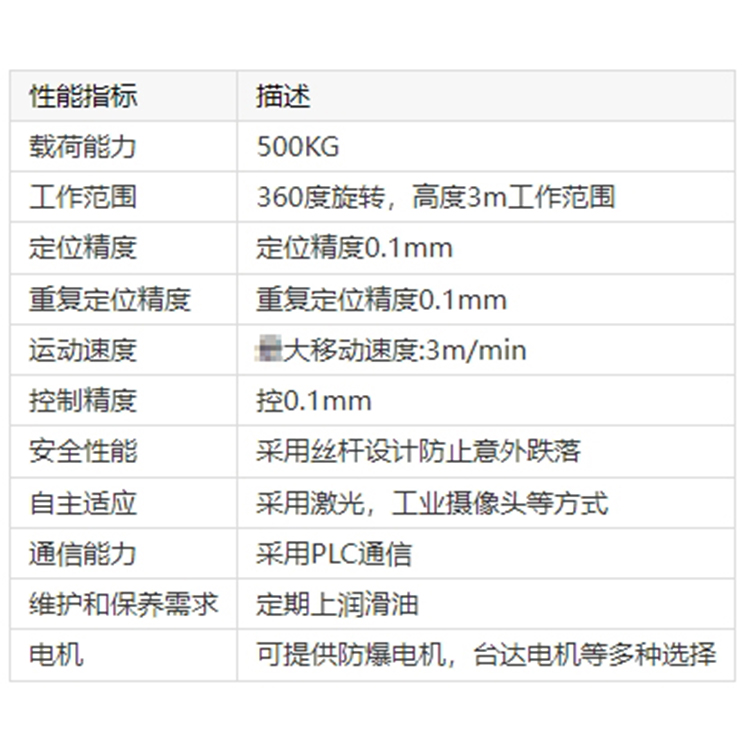
The following describes some performance specifications of a multi-axis robotic arm: