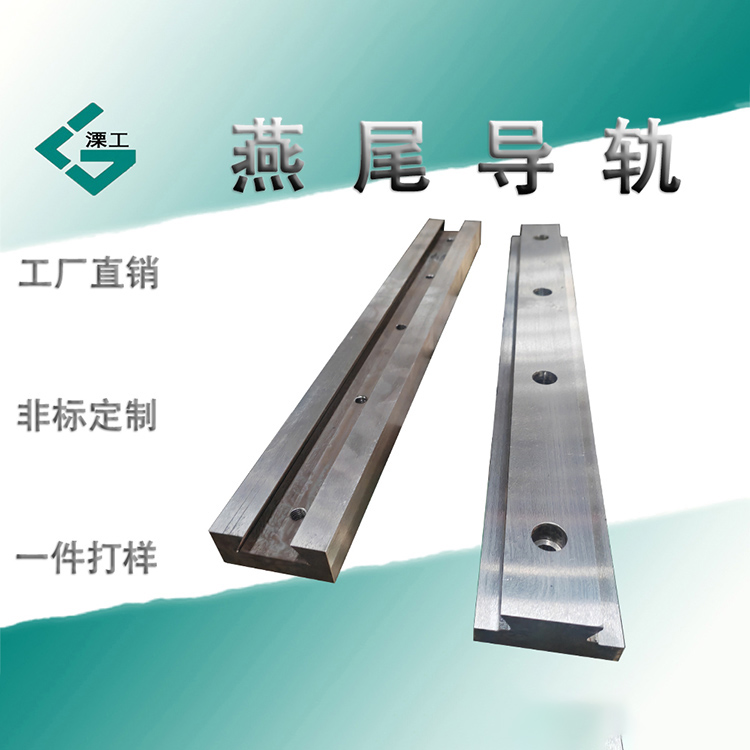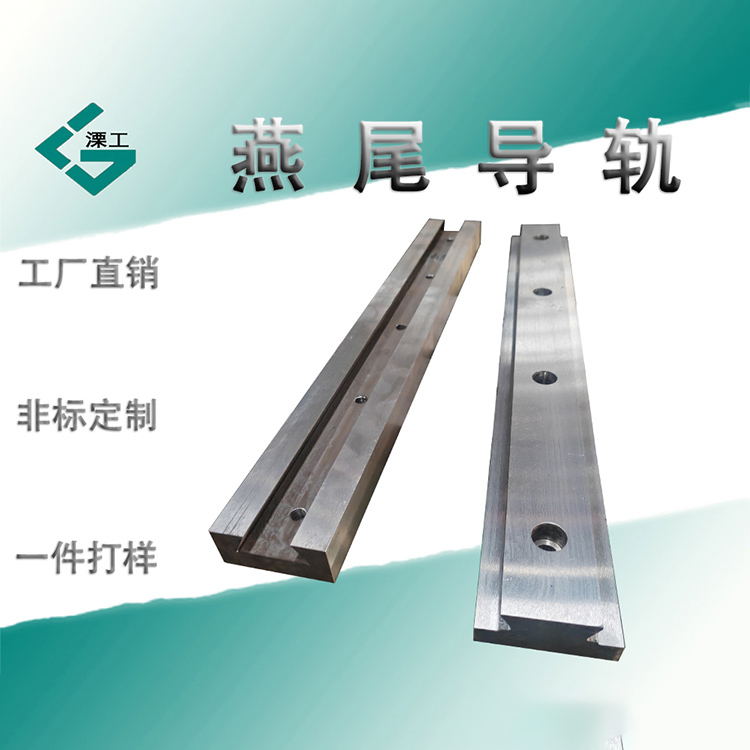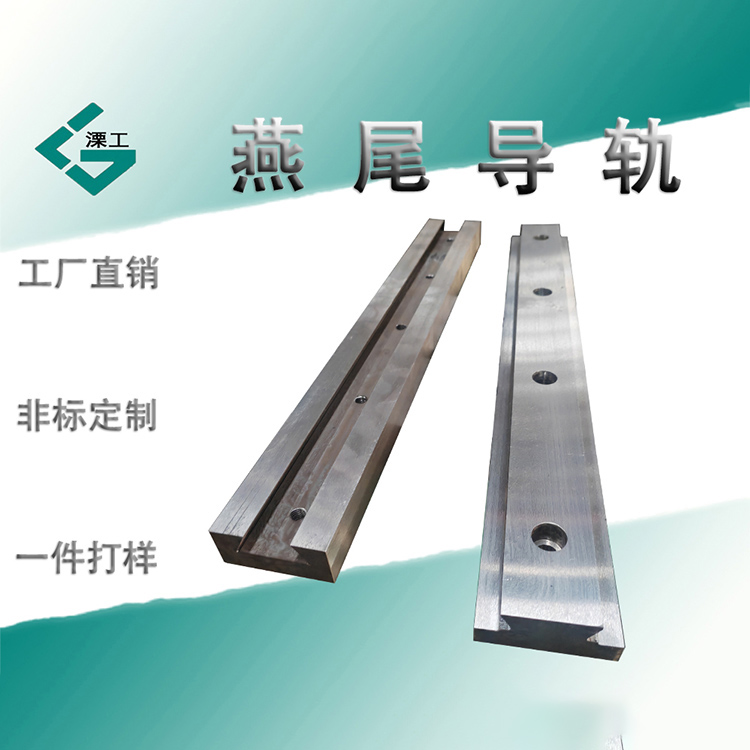


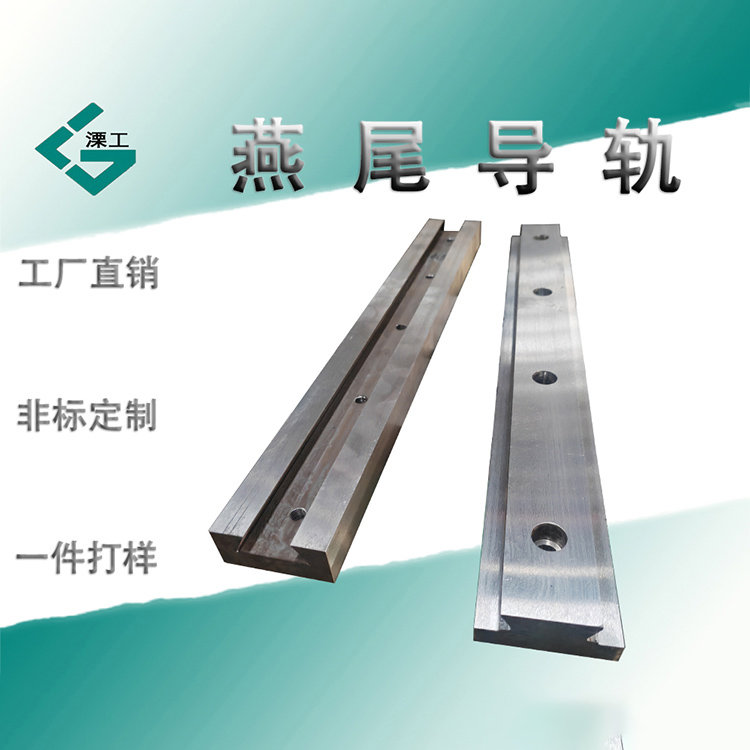











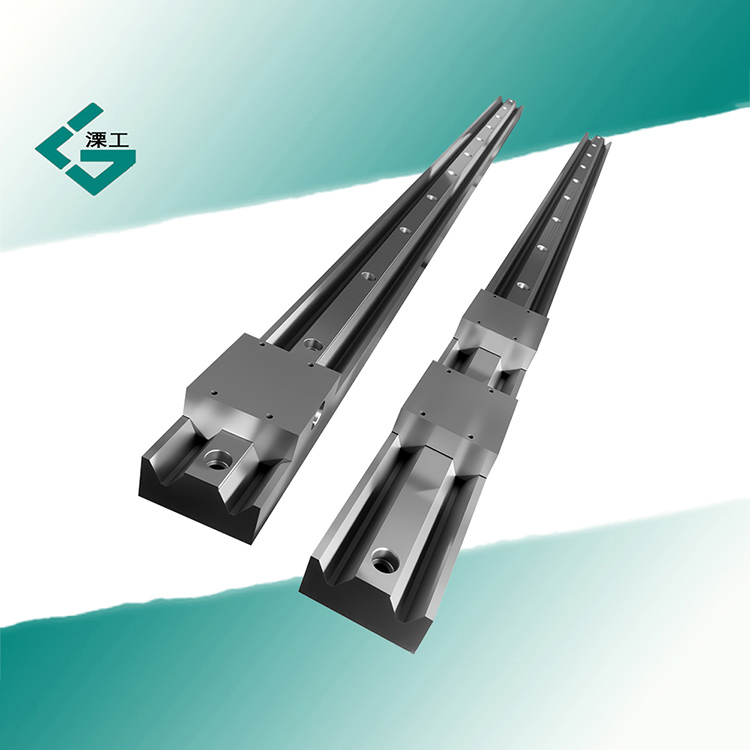
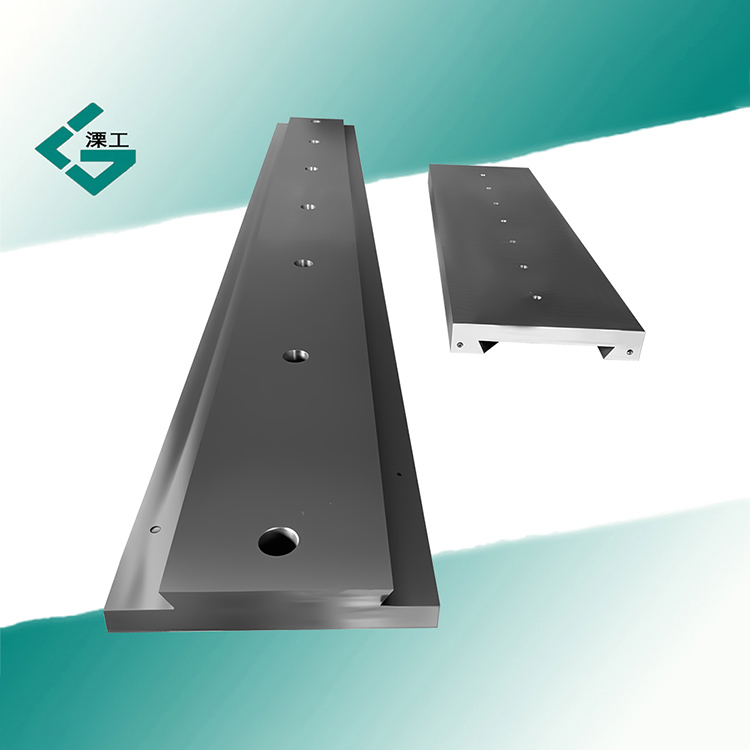
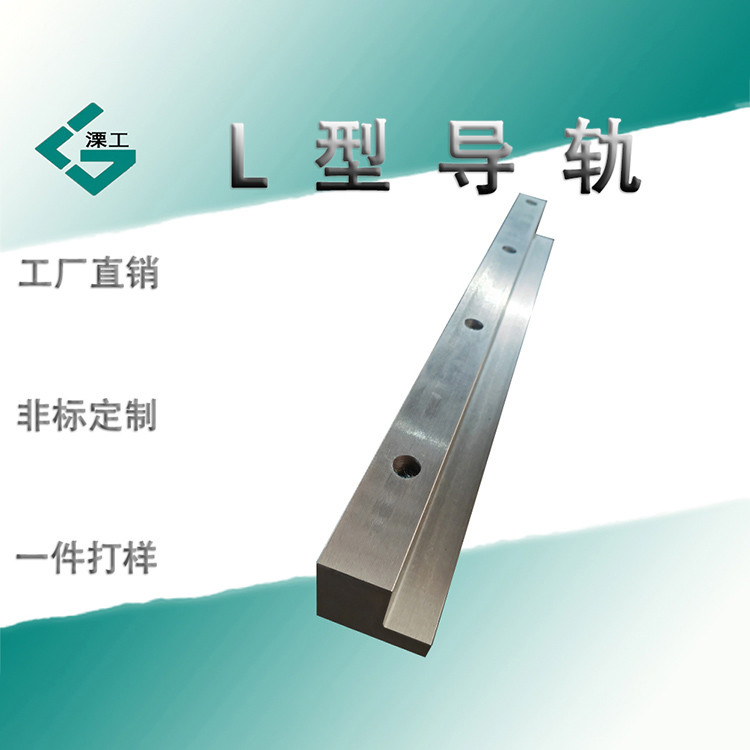


A tailstock guide rail is a common type of mechanical guide rail, named for its cross-sectional shape resembling a swallow's tail. Below is a detailed introduction to tailstock guide rails:
Structural Features
The dovetail guide rail consists of dovetail-shaped slots and matching slides. The two sides of the slots are inclined, typically at a 55-degree or 60-degree angle. This design allows the rail to bear vertical loads while effectively accommodating significant lateral forces and overturning moments, offering high stability and rigidity.
Performance Advantages
High precision: The dovetail guide rail offers a high degree of fit precision, ensuring precise movement of the moving parts. Suitable for equipment with high precision requirements, such as precision machine tools and 3D measuring machines.
High Load Capacity: The unique swallowtail shape increases the contact area between the guide rail and slider, allowing for even load distribution, thus offering a high load-bearing capacity suitable for heavy machinery and equipment.
Compact structure: The dovetail guide rail features a compact size, occupies minimal space, and is suitable for installation in equipment with limited space.
Adjustable: Generally, the gap between the guide rail and slider is adjusted by modifying the spacer to ensure the accuracy and stability of the guide rail's movement, with the adjustment process being relatively simple.
Application Areas
Machine Tool Industry: Frequently used for the motion guidance of components such as turrets, workbenches, and other parts on lathe, milling, and grinding machines, ensuring machining accuracy.
Automation Equipment: Widely applied in automation equipment such as semiconductor manufacturing machinery and wafer handling robots, meeting high-speed and high-precision motion requirements.
Optical Instruments: Such as optical grinding equipment, large 3-axis measuring machines, etc., dovetail guides can provide a stable motion platform for the processing and measurement of optical components.
Light Weapons: Early燕尾式rails were used for mounting sights on light weapons, although they had some issues, they laid the foundation for the development of tactical rails later on.
Other Fields: Applications include solar panel installation and industrial equipment mounting, where it ensures precise movement and positioning of components.
Maintain and service
Tapered guides require regular lubrication to minimize friction and wear, typically using lubricating oil or grease. Additionally, it is important to maintain the cleanliness of the guides to prevent dust, iron shavings, and other impurities from entering the guide assembly, which can affect the precision of the guide's movement and its service life.