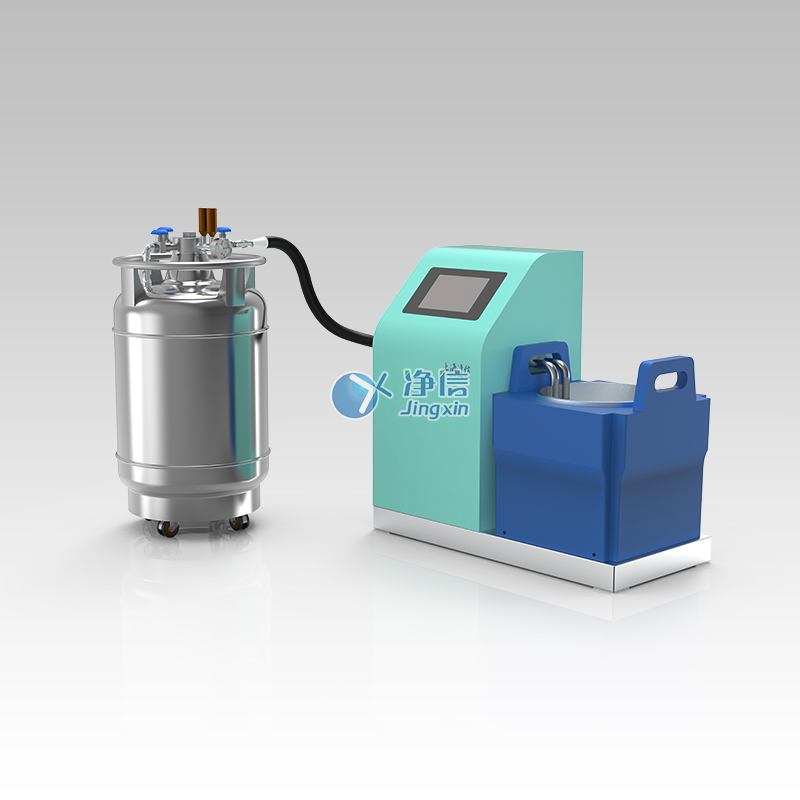

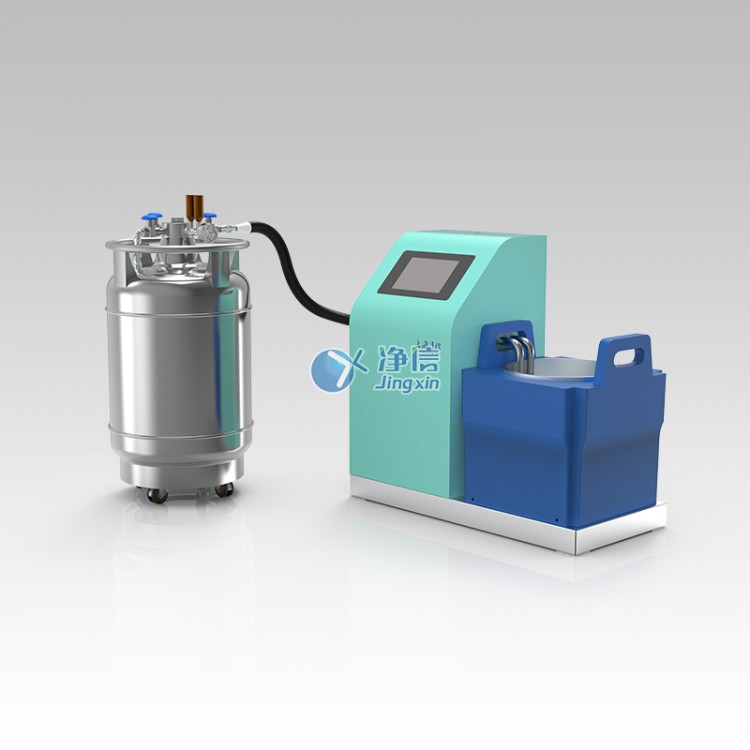








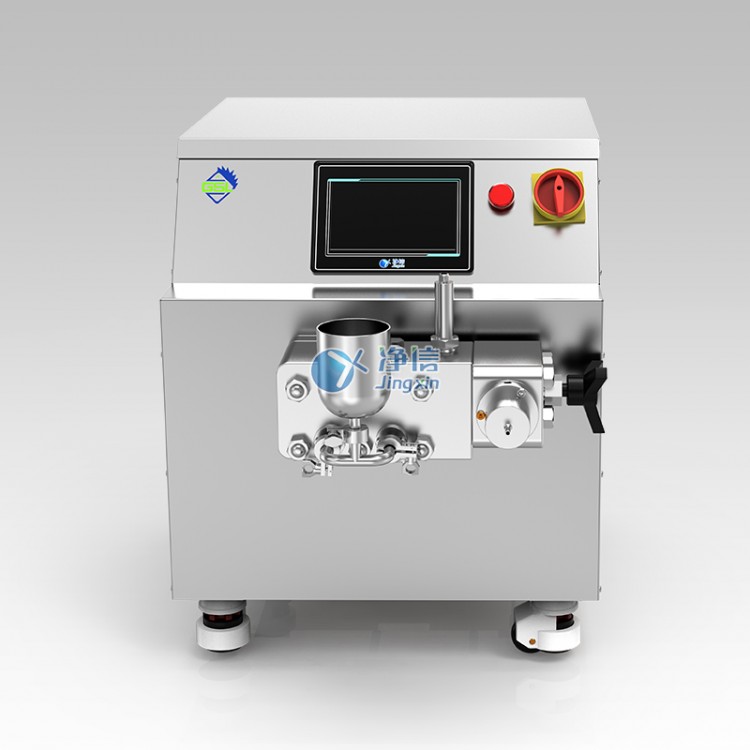
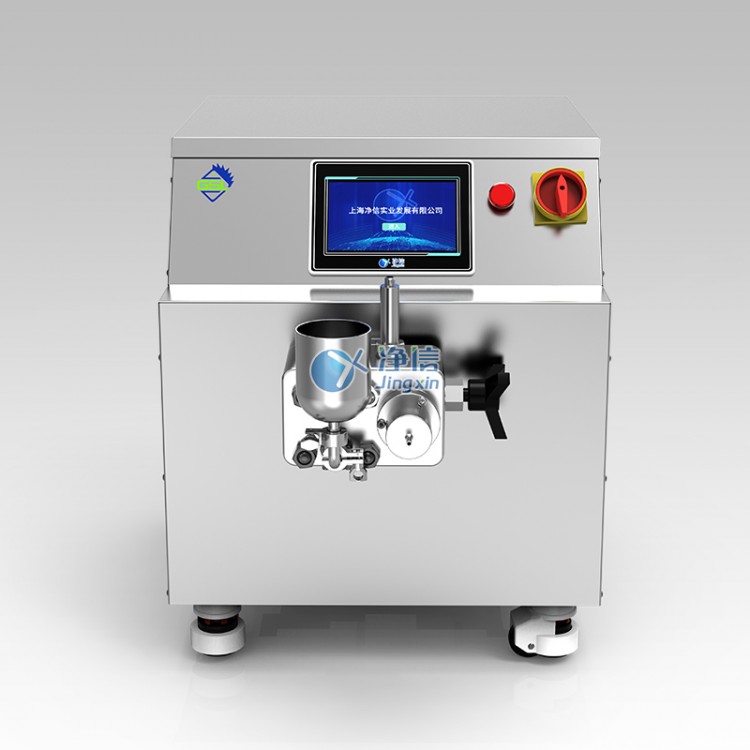
Automatic liquid level filling and replenishment; more convenient and efficient, whole process low-temperature grinding and crushing at -196℃.
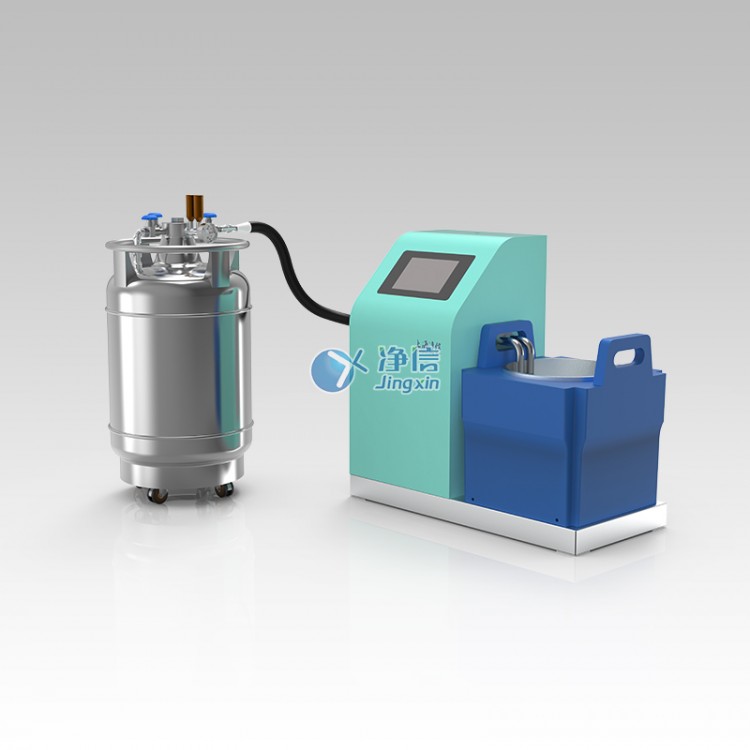
The Netshine fully automatic immersion liquid nitrogen freezing mill is powerful and the world's leading liquid nitrogen freezing mill in technology. It operates at ultra-low temperatures throughout, recognized as an efficient grinding equipment in the market. The control system and main unit are integrated, with automatic liquid level filling and replenishment for added convenience and efficiency. It can handle samples that are difficult to process by conventional methods, such as: plastic, rubber, resin, leather, hair, bone, wood, textile materials, etc.
The fully automatic immersion liquid nitrogen cryogenic mill is widely applicable in fields such as RNA/DNA detection in biochemical analysis, polymer structure analysis, trace element identification, food analysis, mineral research, assistance in medical surgical operations, drug performance testing, and textile composition identification.
Grinding Principle:Dual-magnet coil-driven electromagnetic impact oscillator grinding technology; samples are kept at liquid nitrogen temperature (-196℃) throughout the grinding process in a fully enclosed cryogenic grinding environment. The impact oscillator撞击samples, achieving high kinetic energy and large-area impact, rapidly and thoroughly粉碎ing the samples.
Advantages and Features:
1. Automatic liquid level filling and replenishment, with a 50L self-pressurized liquid nitrogen cylinder.
2. Cylinder-shaped mandrels, no pre-treatment required for samples; uniform and consistent sample treatment with good reproducibility.
3. Liquid Nitrogen Cavity: Insulated with high-density polyethylene material, featuring 1 grinding chamber and 1 pre-cooling chamber.
4. Grinding at low temperatures preserves the bio-substance activity, ensures the retention of volatile substances, prevents the thermal degradation of heat-sensitive compounds, and maintains the original sensitive characteristics of metabolites, isomers, and complex compounds that are sensitive to heat and mechanical pressure.
5. Touchscreen display allows for setting parameters such as pre-cooling time, grinding time, cycle duration, and the speed of the punch movement, catering to precise sample grinding conditions down to the second.
6. Equipped with a liquid nitrogen level sensor, which will automatically trigger an alarm when the liquid nitrogen level is low, and simultaneously stop the operation of the instrument.
7. CE (European Standard Quality) certified, ISO 9001 certified.
8. Throughout the grinding process, the samples remain in an independent, ultra-low temperature environment, preserving their integrity and preventing cross-contamination between samples. This ensures control over hazardous and critical samples.
9. Liquid nitrogen tank with 10L immersion capacity.
Typical Applications:
1. Nucleic Acid/Protein Extraction:
Grind various animal tissues (including骨骼, teeth, hair, muscle, and various organs) and plant tissues (roots, stems, leaves, fruits, seeds, etc.) under liquid nitrogen conditions to effectively inhibit nucleic acid degradation and preserve the enzyme's biological activity. This process is used for preliminary treatment prior to extracting nucleic acid and protein from animal and plant tissue cells.
2. Pre-treatment of special samples
For volatile substances like coal, oil shale, wax products, and many other organic materials with low molecular weight compounds, their matrices would volatilize quickly upon grinding at room temperature. Utilizing an ultra-low-temperature cryogenic mill, as the sample is processed entirely within a sealed vial and milled at liquid nitrogen temperatures, the retention of volatile compounds is ensured. Subsequent enrichment analysis can then be conducted via gas sweeping.
3. Pharmaceutical Analysis and Drug Testing
Ultra-low temperature cryogenic grinding preserves the original biological characteristics of sensitive substances like metabolites, isomers, and complex compounds that are sensitive to heat and mechanical pressure. The complex molecules in drugs and their metabolites are crucial for pharmaceutical research and forensic experiments.
4. Plastic/Polymer Composition Analysis
It's difficult to grind plastics, resins, textiles, and polymers at room temperature, but it becomes very easy under ultra-low temperatures. Additionally, it can prevent the temperature rise caused by friction during grinding from affecting the molecular structure and composition information of the sample.
5. Medical Research Knife
Ultra-low temperature cryogenic grinding is beginning to be widely applied in the medical research field.
6. Heavy Metal Detection
As requirements for heavy metal content in environmental and safety aspects increase globally, heavy metal detection has become crucial. For challenging samples such as food packaging materials, clothing, children's toys, leather, rubber, and circuit boards, using a cryogenic mill for rapid and pollution-free processing significantly enhances analytical testing efficiency. It has wide applications in commodity inspection and forensic identification fields.
Grinding Effect Comparison Image:

Technical Specifications: