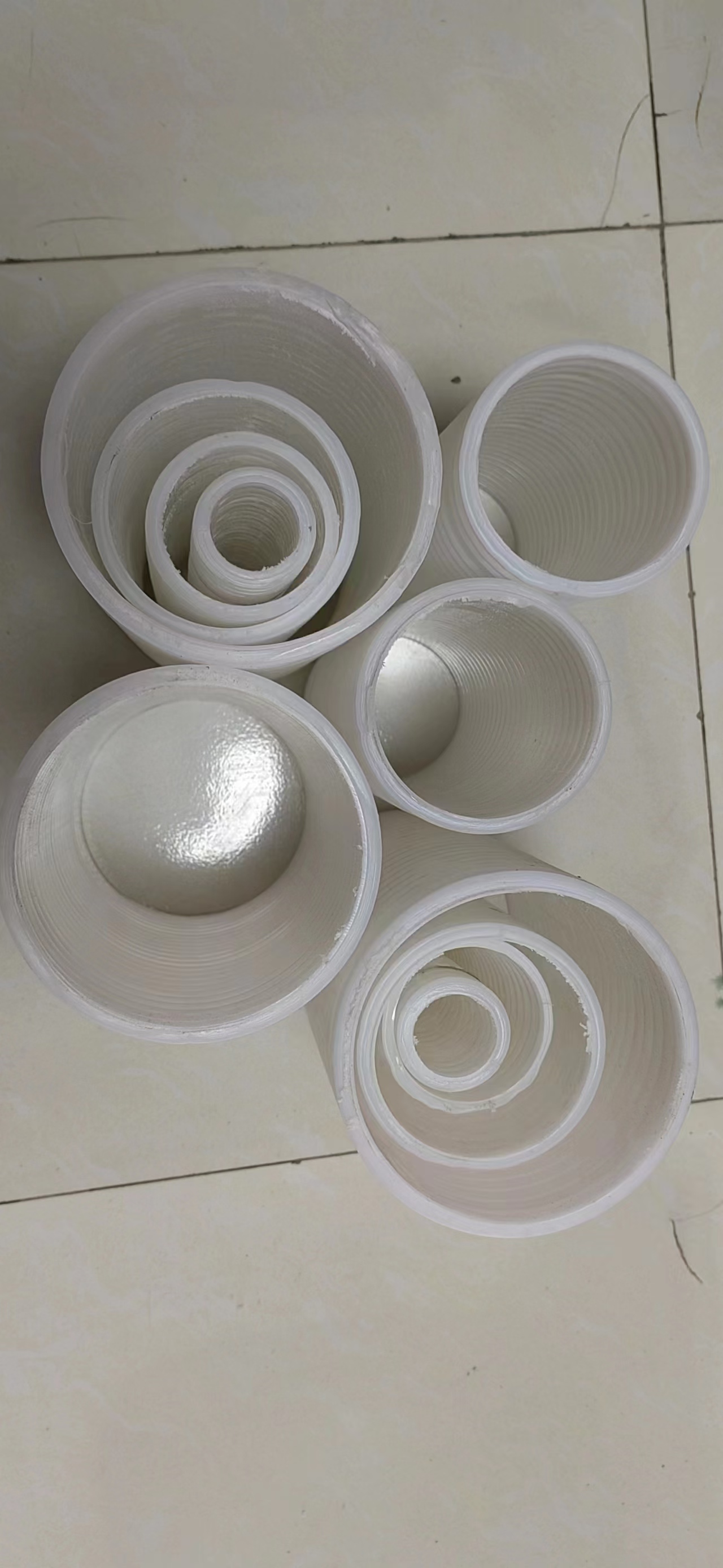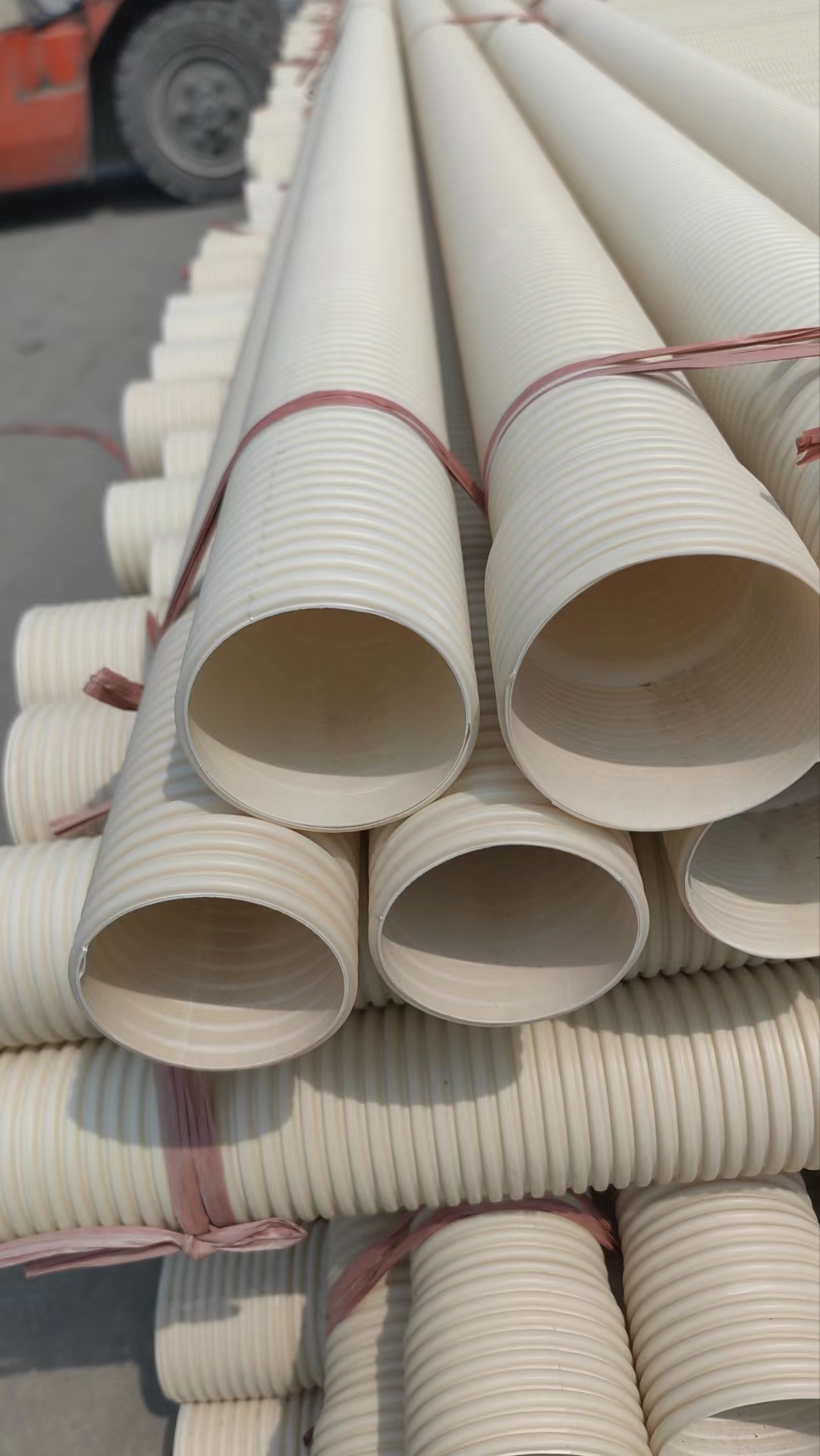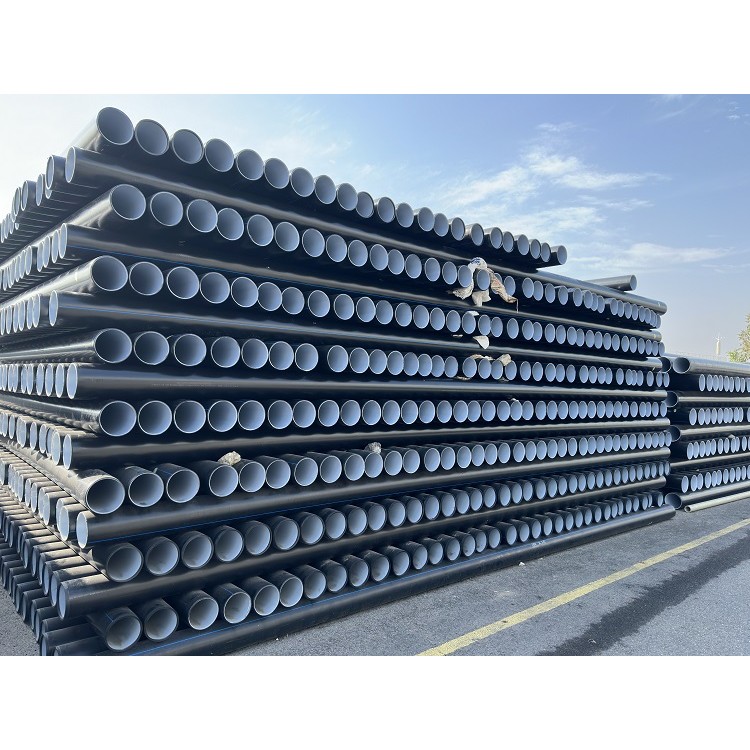

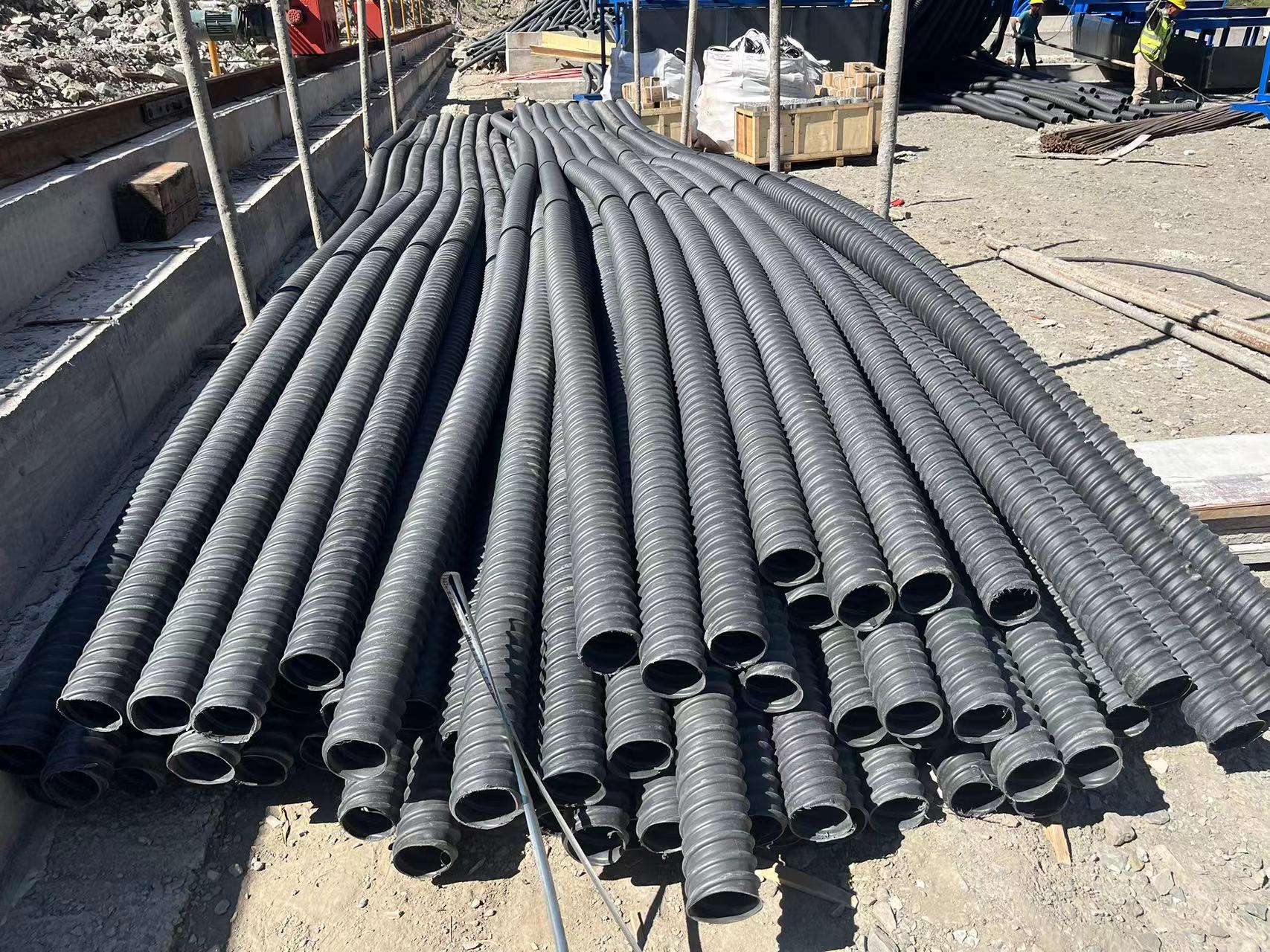

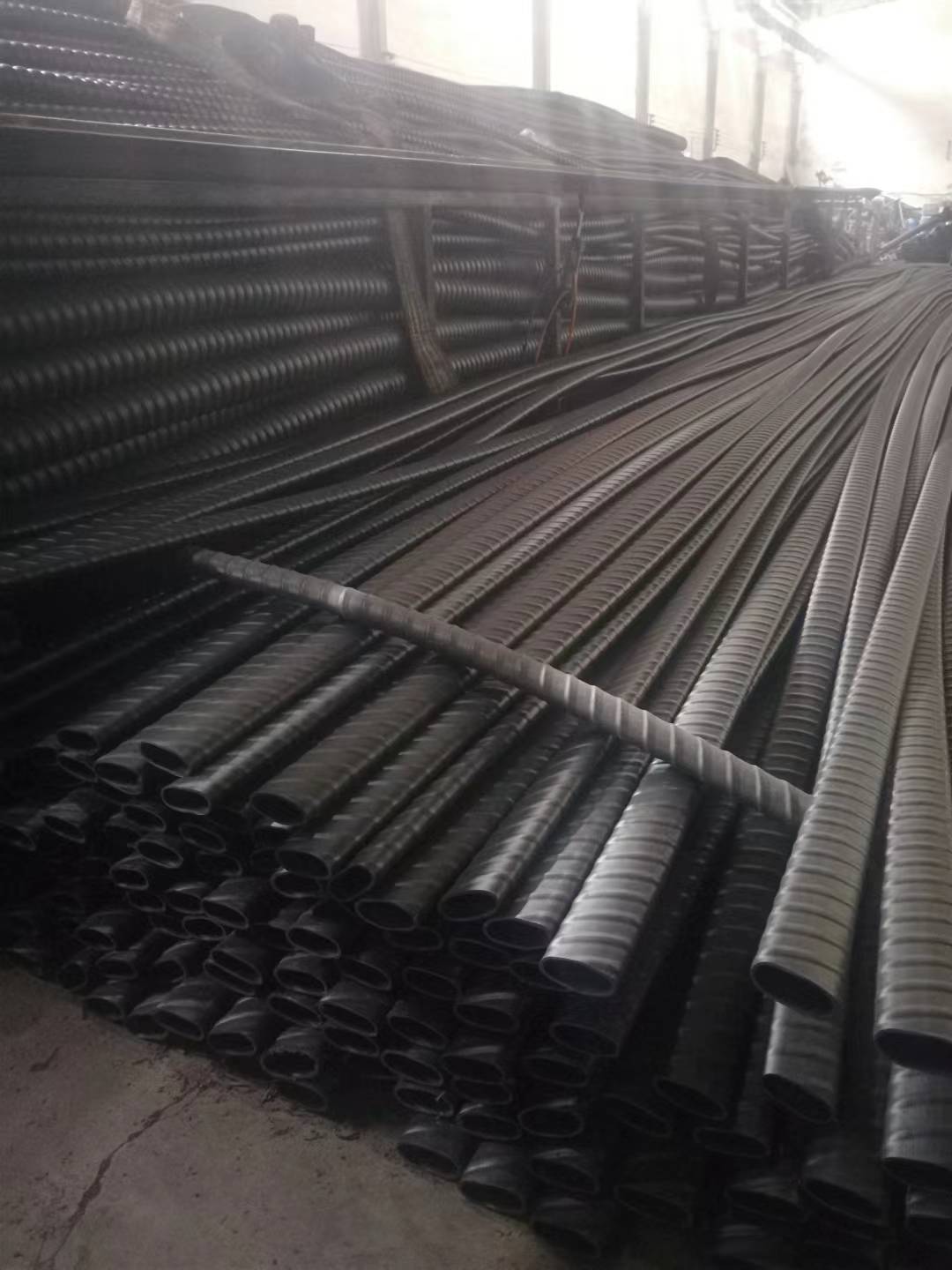
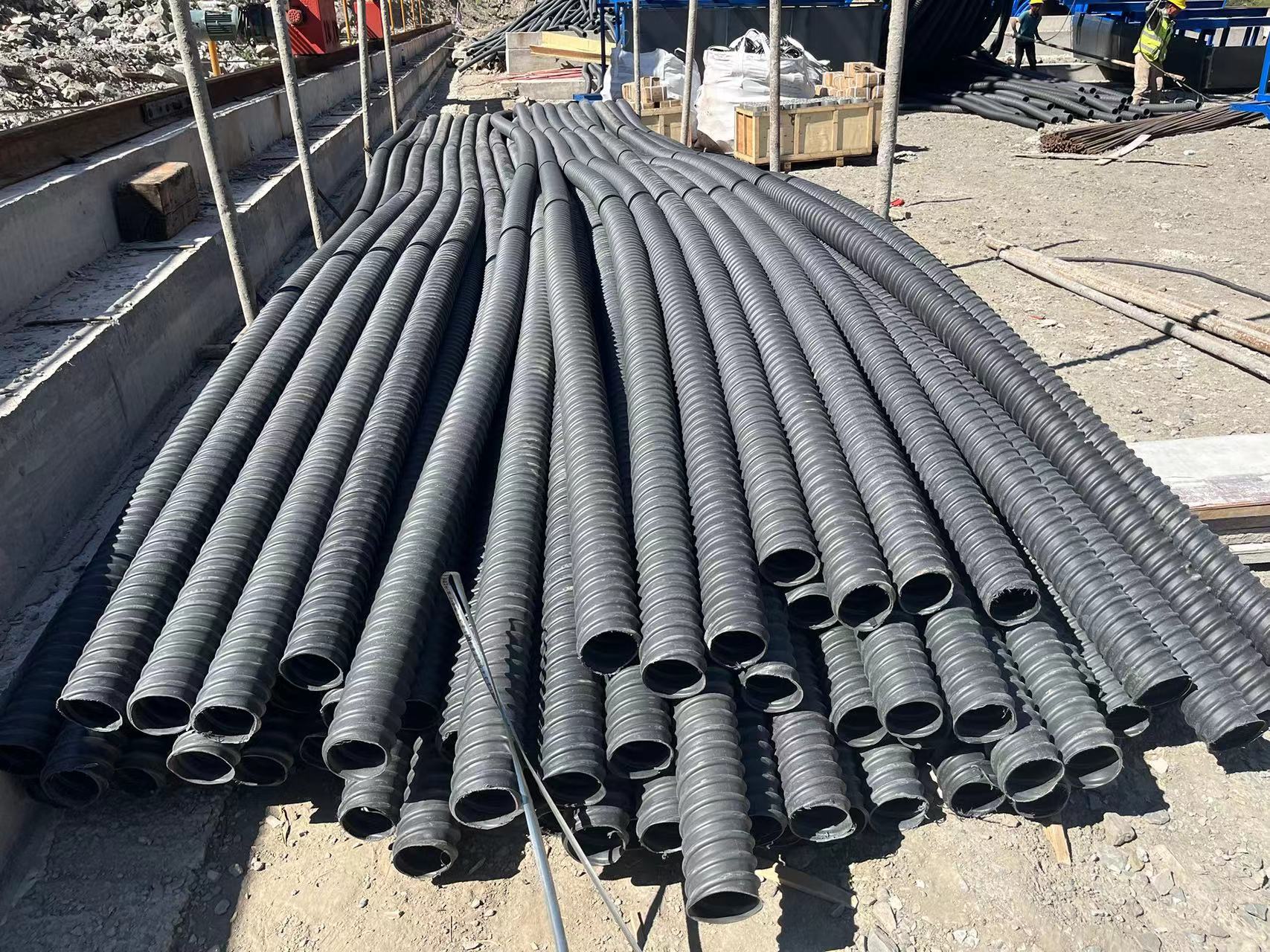







Hole-making functionHoles are formed in the concrete during casting to facilitate later wire passing and tensioning.
Corrosion ProtectionIsolate prestressed steel from external environments (such as water, air, and chloride ions), extending the service life of the structure.
Displacement AdaptationMetallic bellows can slightly deform to accommodate minor displacements caused by concrete shrinkage and temperature changes.
According to material and process, bridge corrugated pipes are mainly divided into two categories:
MaterialManufactured from galvanized steel strip or cold-rolled steel strip, forming waves or spiral interlocking patterns. Common types include round and flat shapes.
Features:
High strengthCan withstand the vibration pressure during concrete pouring and the subsequent prestress tensioning loads.
Good sealing propertiesSpiral bonding for tight joints, preventing cement slurry from seeping into the channels.
High-temperature resistantAdaptable to high-temperature environments during concrete curing processes.
Applicable ScenariosLarge-span bridges, bridges with heavy loads, prestressed ducts, especially box girders and T-beams constructed using post-tensioning methods.
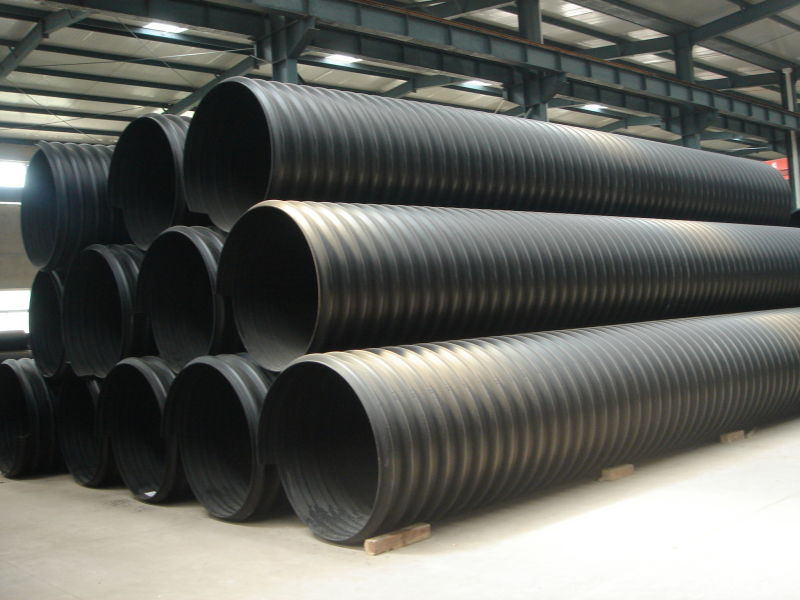
MaterialManufactured from high-density polyethylene (HDPE), these corrugated pipes are produced using extrusion molding techniques and are available in both single-walled and double-walled designs.
Features:
Corrosion-resistantInsulated, resistant to acidic, alkaline, and salt spray corrosion, suitable for coastal and chemical industries with strong corrosive environments.
Low friction coefficientThe inner wall is smooth, resulting in minimal friction resistance during prestressed reinforcement tensioning, which can reduce stress loss.
LightweightEase transportation and installation, reduce construction intensity.
Applicable ScenariosBridges with high corrosion resistance requirements (such as cross-sea and urban overpass bridges), or medium and small span bridges constructed using prestressed or post-tensioned methods.
| Categories | Nominal Diameter (mm) | Wave Height (mm) | Wall Thickness (mm) | Implementation Standard |
|---|---|---|---|---|
| Metallic bellows | Φ40 to Φ120 (round) | 2.5~5.0 | 0.3~0.8 | JTG/T 3650-06 "Technical Specification for Highway Bridge and Culvert Construction" |
| Plastic corrugated pipe | Φ50~Φ120 (round) | 2.0~4.0 | 2.0~3.5 | JT/T 529-2016 "Plastic Corrugated Pipe for Prestressed Concrete Bridge Construction" |
Construction Process and Key Points
Installation Process:
Positioning stringingMark the location of the corrugated pipe on the reinforced steel frame according to the design drawings and secure it with "井" shaped steel supports (spacing ≤ 60cm, densify to 30cm in curved sections).
Connect and Seal:
The joints between pipe sections are connected using a larger-sized identical corrugated pipe sleeve (lap length ≥ 20cm), and sealed with adhesive tape to prevent leakage.
When connecting the end to the anchor pad plate, ensure a tight seal with a gasket or sponge pad to prevent concrete from entering.
Strapping and concrete pouring:
Firstly or lastly wrapped (the latter method commonly uses the last wrapping), avoid the vibration rod directly contacting the corrugated pipe during pouring to prevent damage.
Tensioning and anchoringOnce the concrete strength reaches over 80% of the design value, tension the steel tendons. After tensioning, immediately grout the holes (grout strength ≥ 30MPa) and seal the anchor with concrete.
Cautionary Notes:
When welding rebars, protective measures for the corrugated pipe must be taken (such as covering with wet cloth) to prevent spatter from burning through the pipe wall.
The corrugated pipe at the curved section must have vent holes (spacing ≤ 30m) to facilitate air release during grouting.
Installation Points:
Fixed method: Secured with plastic clips or steel supports, spacing ≤ 80cm (straight sections), ≤ 50cm (curved sections).
Connection methodThe pipe sections are connected using butt welding or sleeve joints; the interfaces require heat-fused welding or rubber seal rings for sealing.
Impact resistanceAvoid sharp object collisions during handling and installation to prevent pipe wall cracking.
Advantages in Scenarios:
In environments with severe corrosion like offshore bridges, plastic corrugated pipes can significantly extend the lifespan of prestressed steel strands (up to 2-3 times longer than metal pipes).
In large-span bridges, the low friction characteristics can reduce the tensile tonnage and lower construction costs.
| Question | Reason | Measures to Resolve |
|---|---|---|
| Cavity leakage | Loose interface sealing, vibration damage to the tube wall | Enhanced interface sealing; vibrator rod and corrugated tube should maintain a distance of over 10cm. |
| Bellows deformation | Unsecure, concrete pouring impact | Encrypted bracket spacing, symmetrically fed from both sides during casting |
| Friction Coefficient Marker | Rough wall, uneven bore | Select smooth-walled plastic corrugated pipes for smooth transitions in curved sections. |
| Metal pipe corrosion | Coating damage, high environmental humidity | Apply anti-rust paint at weld joints; use plastic corrugated pipes in corrosive environments. |
| Comparison Dimensions | Metallic bellows | Plastic corrugated pipe | Steel pipe / Rubber tube |
|---|---|---|---|
| Corrosion resistance | Good (galvanized layer protection) | Excellent | Defective (prone to rusting, aging) |
| Coefficient of Friction | 0.25~0.35 | 0.15~0.20 | 0.40~0.50 |
| Ease of construction | Medium (slag-resistant) | Optimal (lightweight, easy to cut) | Poor (prone to deformation, poor sealing) |
| Cost | Medium to High | Medium | Low |
| Applicable Scenarios | Standard Environment Bridge | Corrosive environments, large-span bridges | Temporary or Small Scale Projects |
Selection Key Points:
Qualification VerificationInspect manufacturer's production and product quality (including ring stiffness, leakage resistance, flexibility, etc. indicators).
Visual inspectionMetal bellows surface is free of rust and holes, plastic bellows have even coloration and no cracks.
Dimensions MeasurementMeasure the diameter and wall thickness with calipers to ensure they meet design specifications, with consistent wave height.
Quality Acceptance:
After installation, check the通畅ness of the bore with a through-hole tool (diameter equal to the inner diameter of the pipe).
After concrete pouring, inspect the corrugated pipe alignment deviation (horizontal ≤ 10mm, vertical ≤ 5mm).
MaterialsNew plastic corrugated pipes, such as polypropylene fiber reinforced corrugated pipes, are gradually replacing traditional metal pipes, offering both high strength and corrosion resistance.
Intelligent ApplicationsSome engineering attempts to pre-install sensors within the corrugated pipe to monitor the stress and corrosion status of prestressed tendons in real-time, enhancing the level of bridge health monitoring.