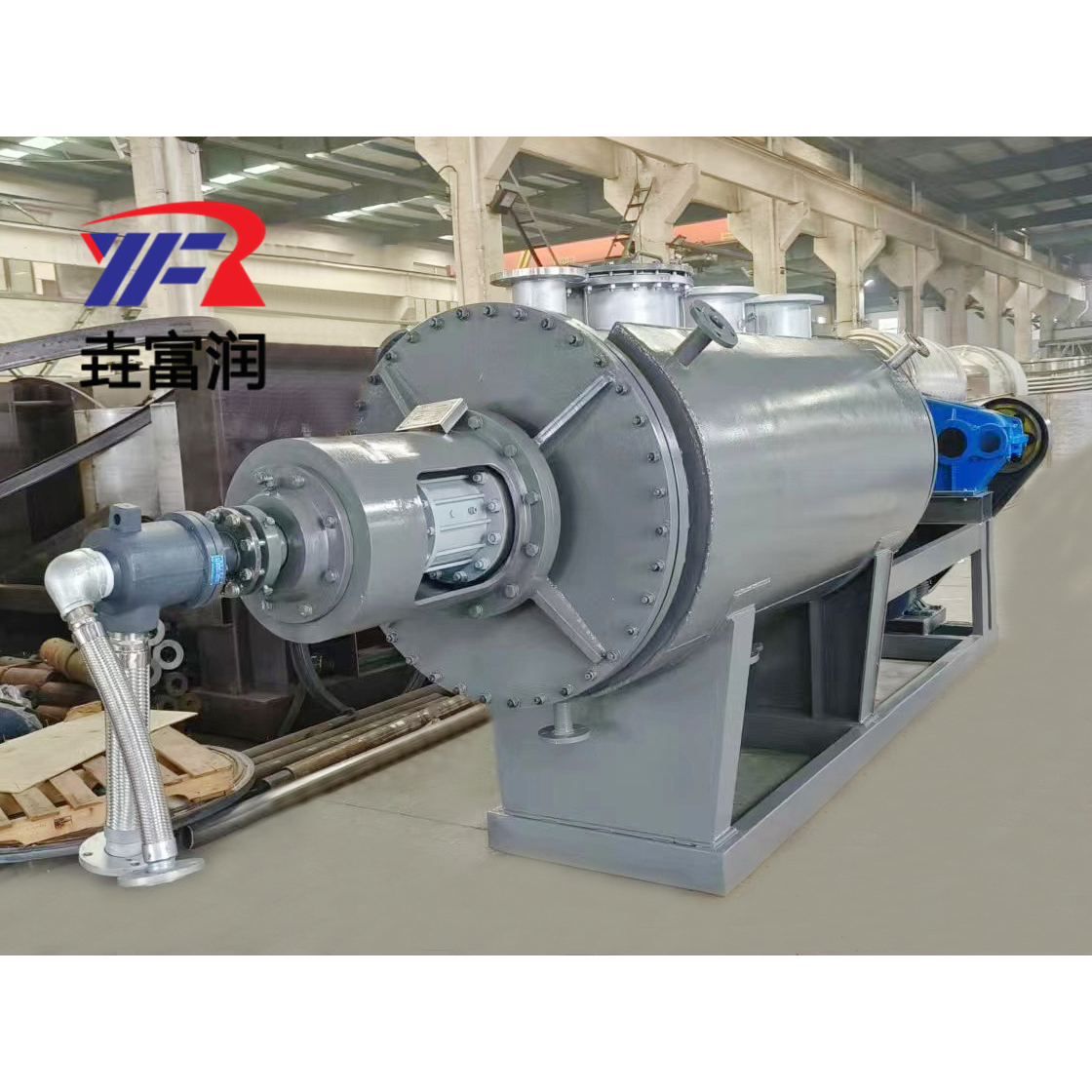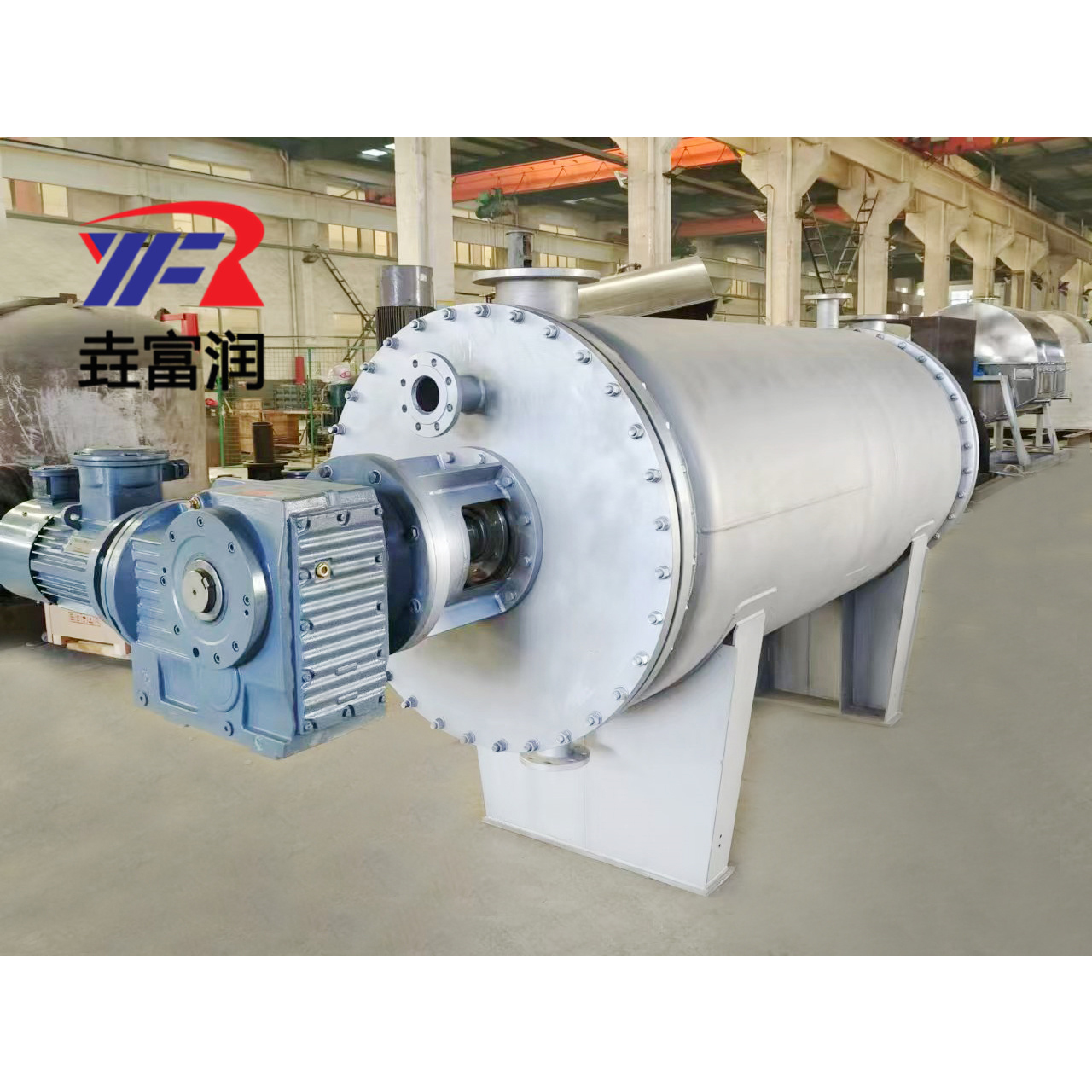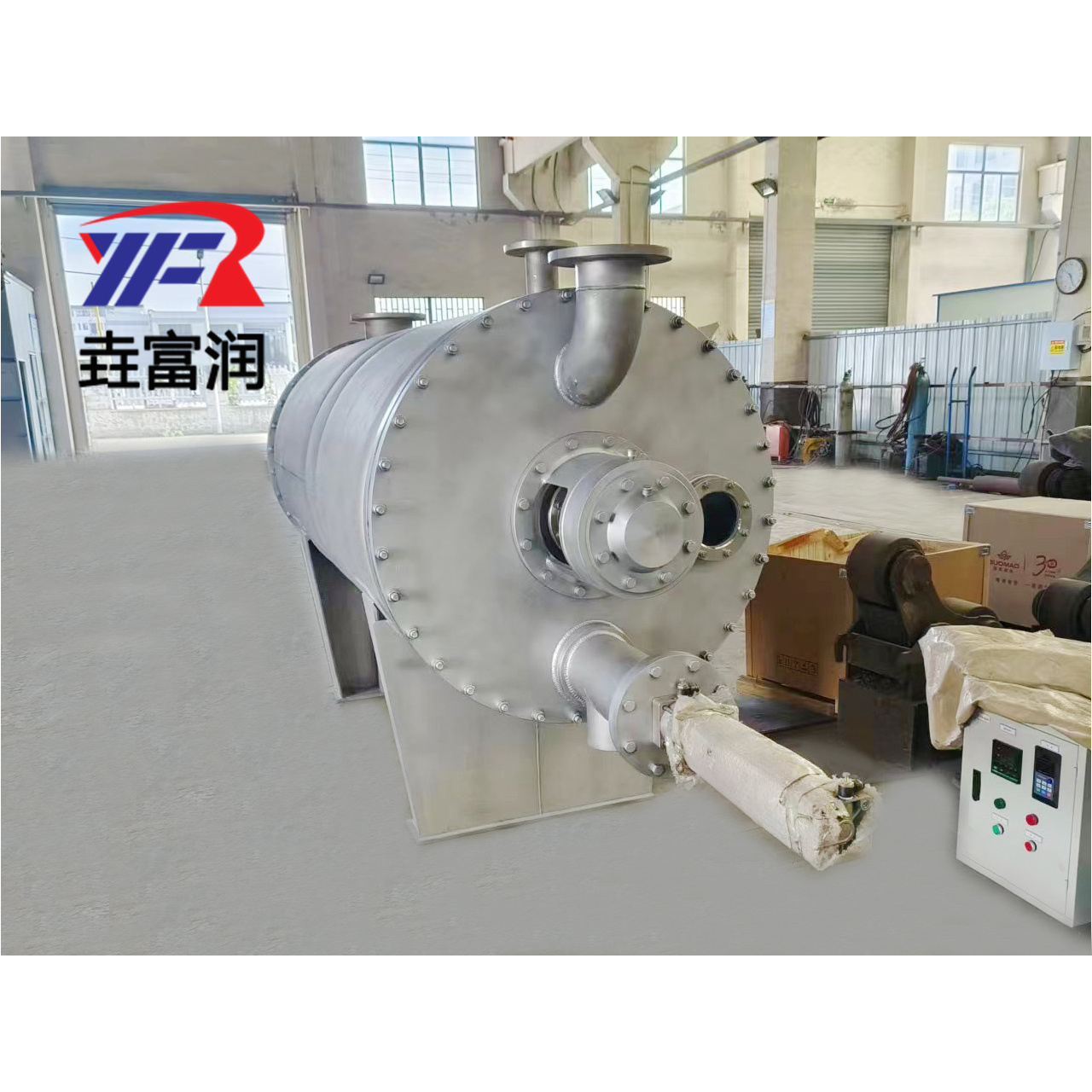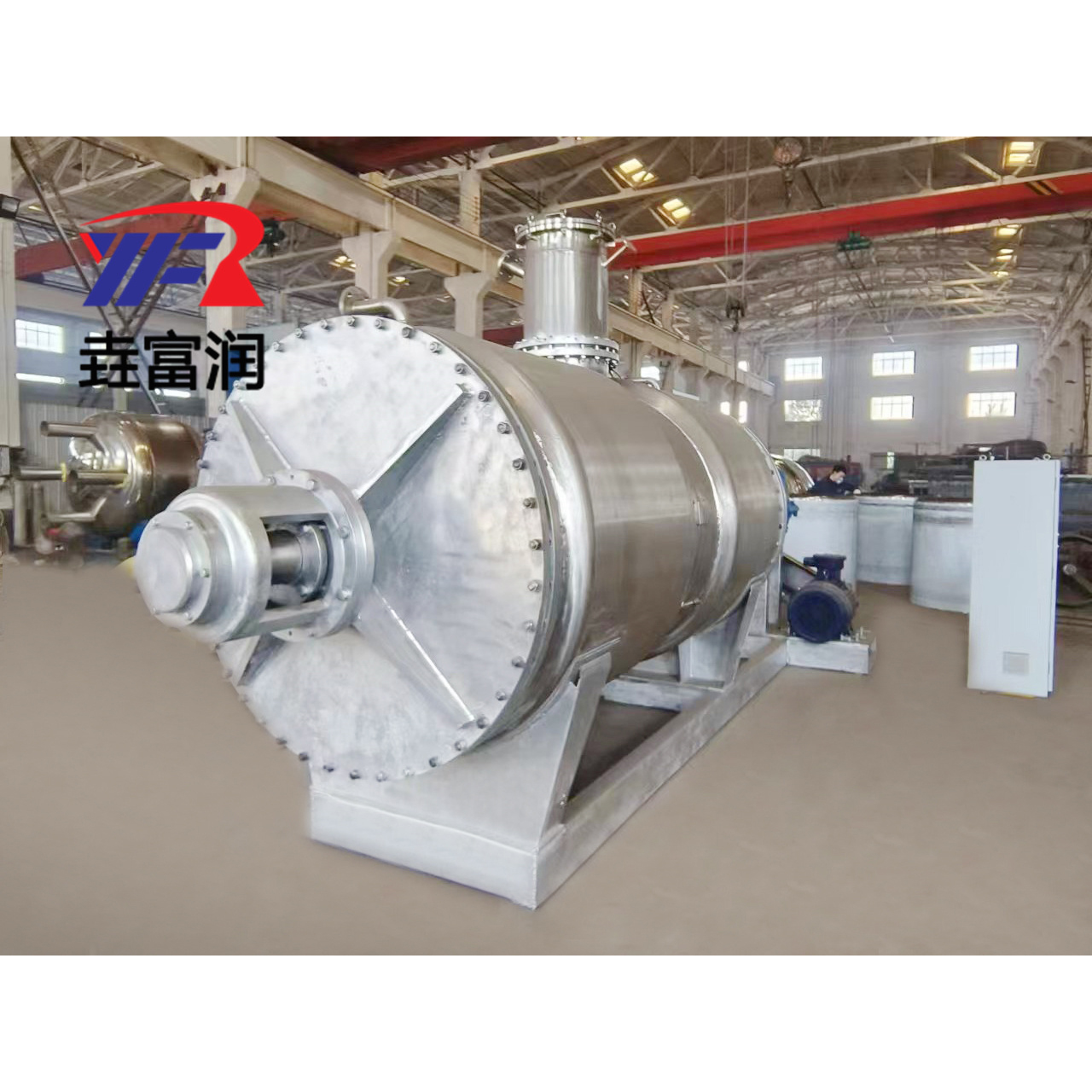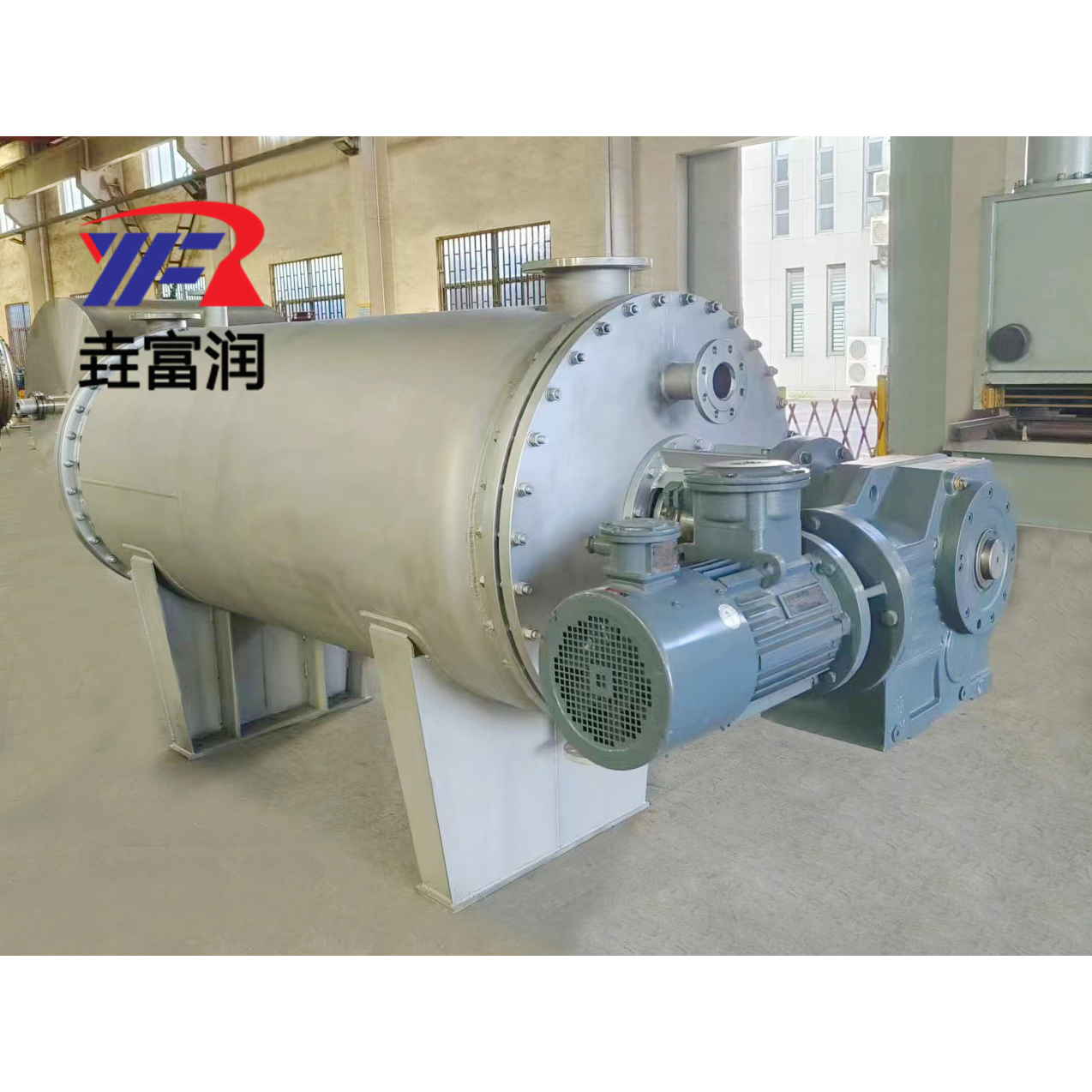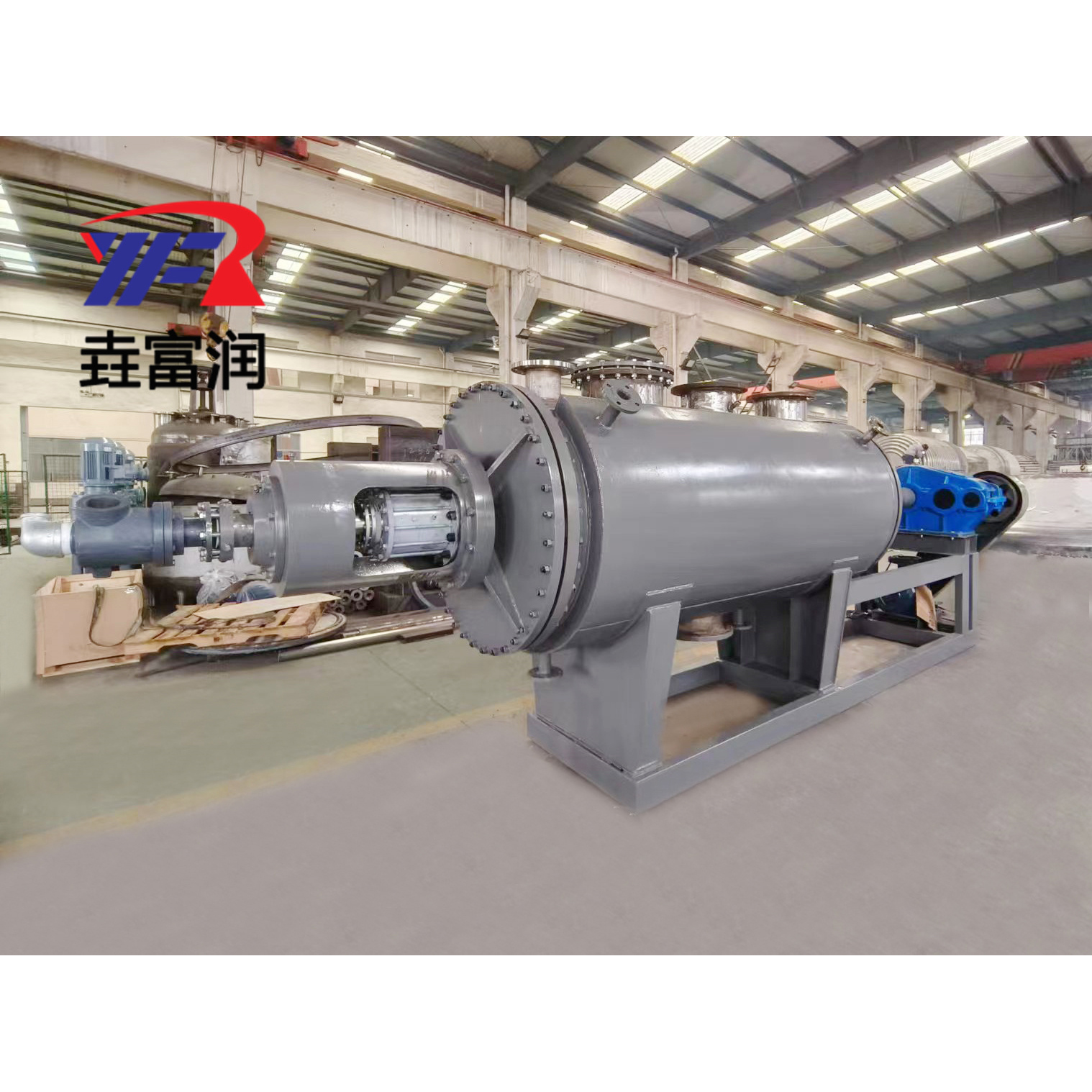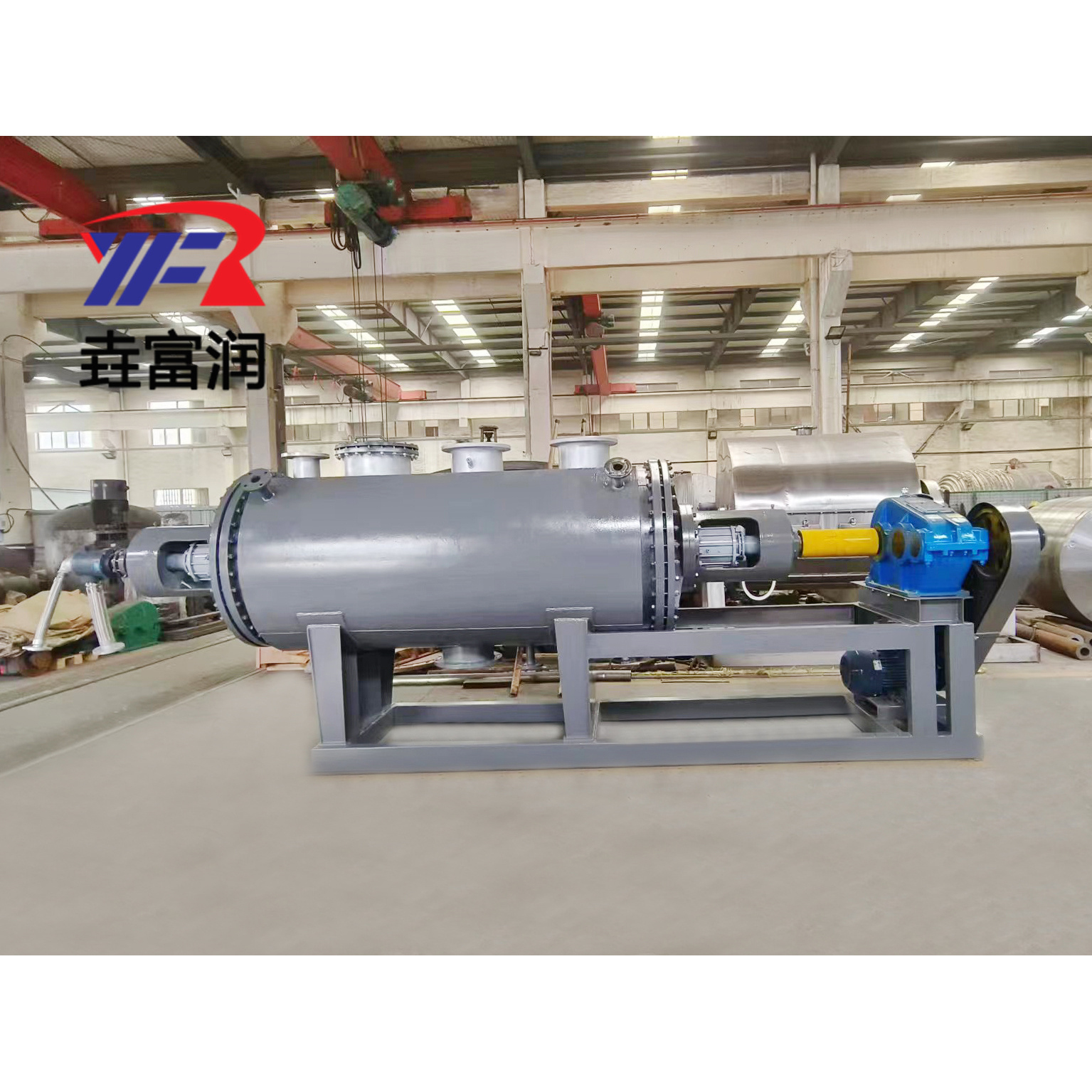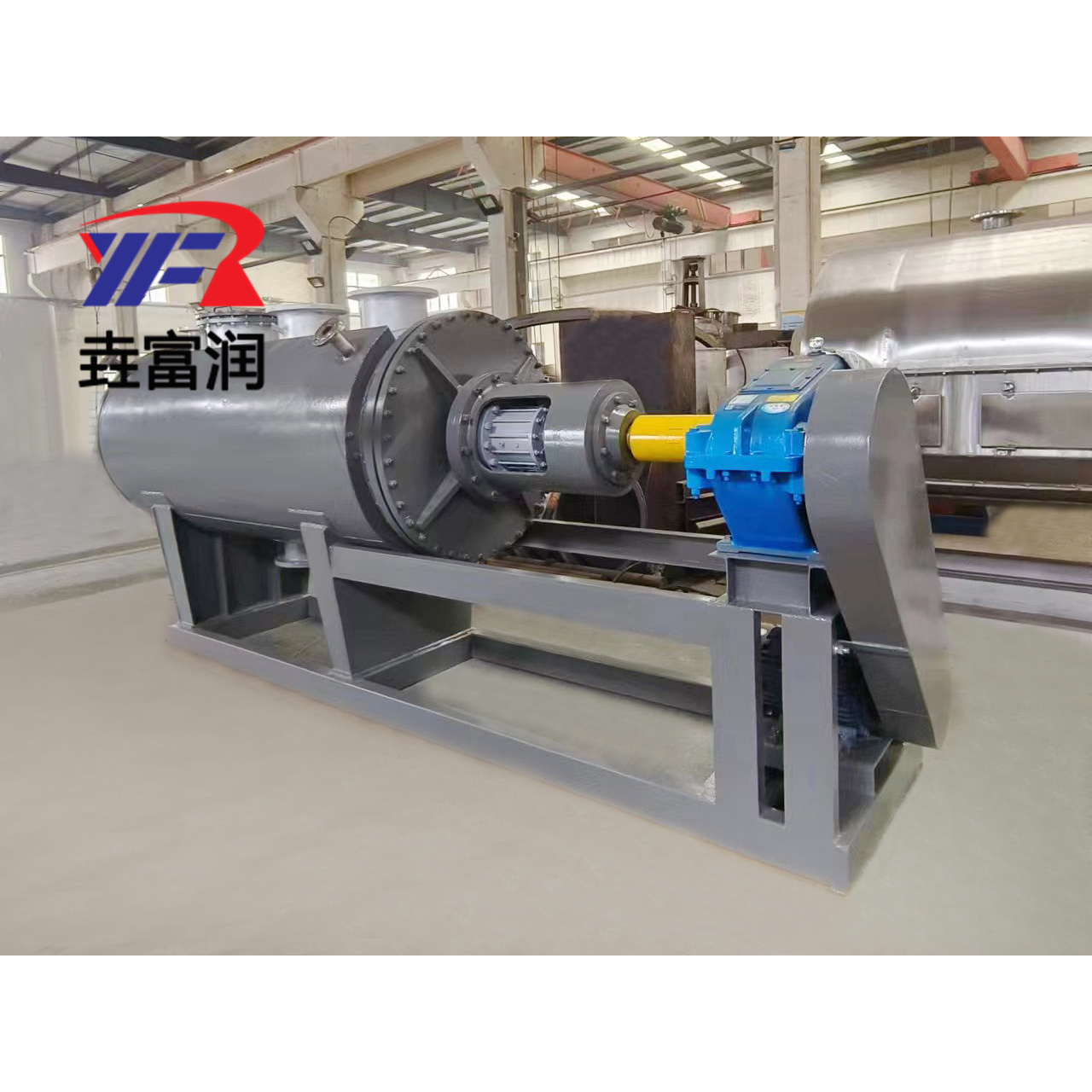




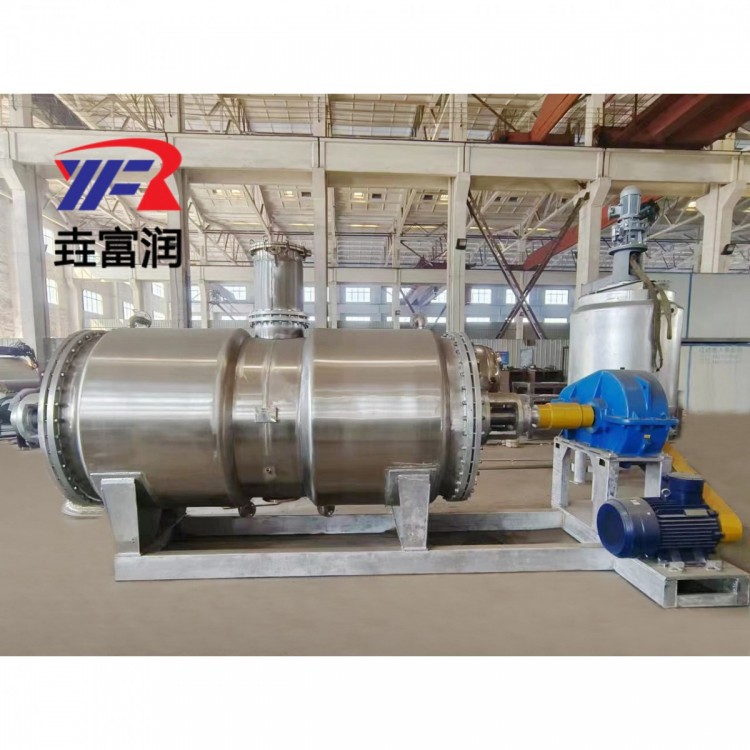
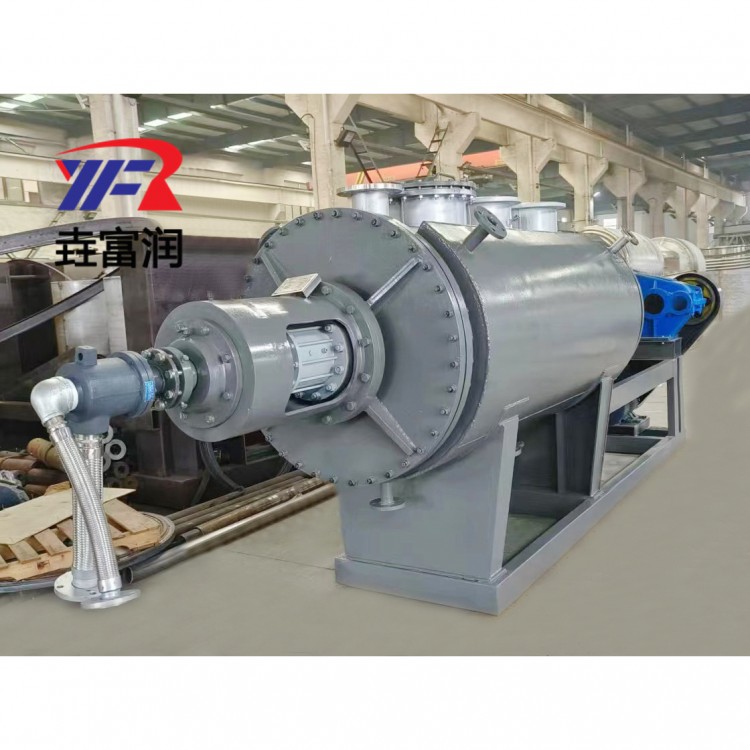
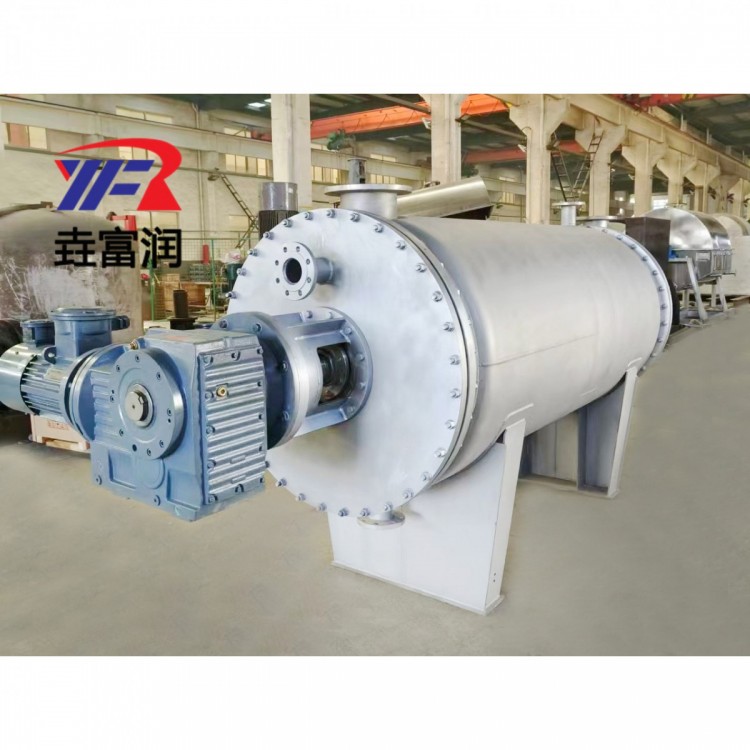
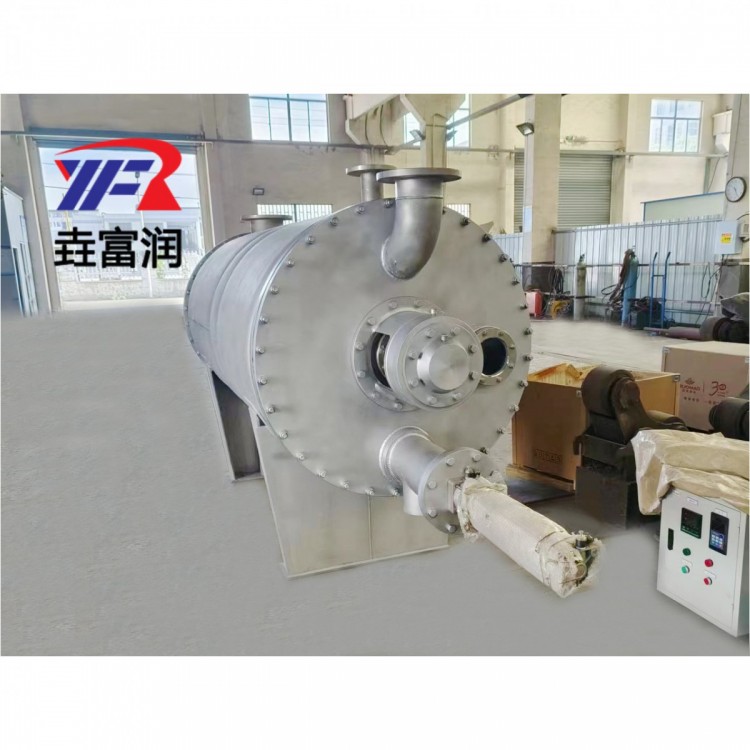





Product Details
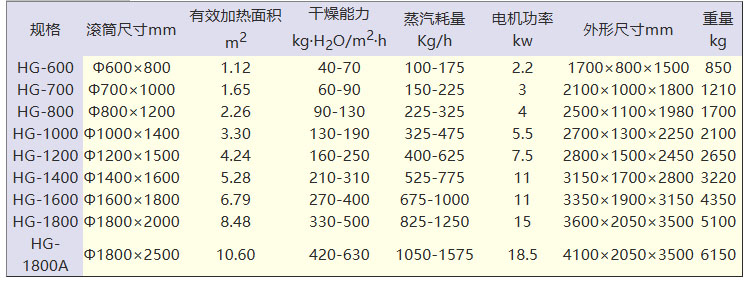
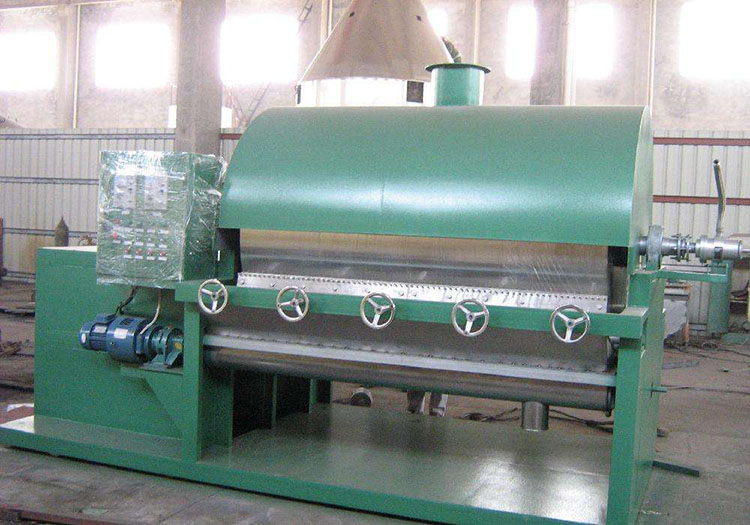
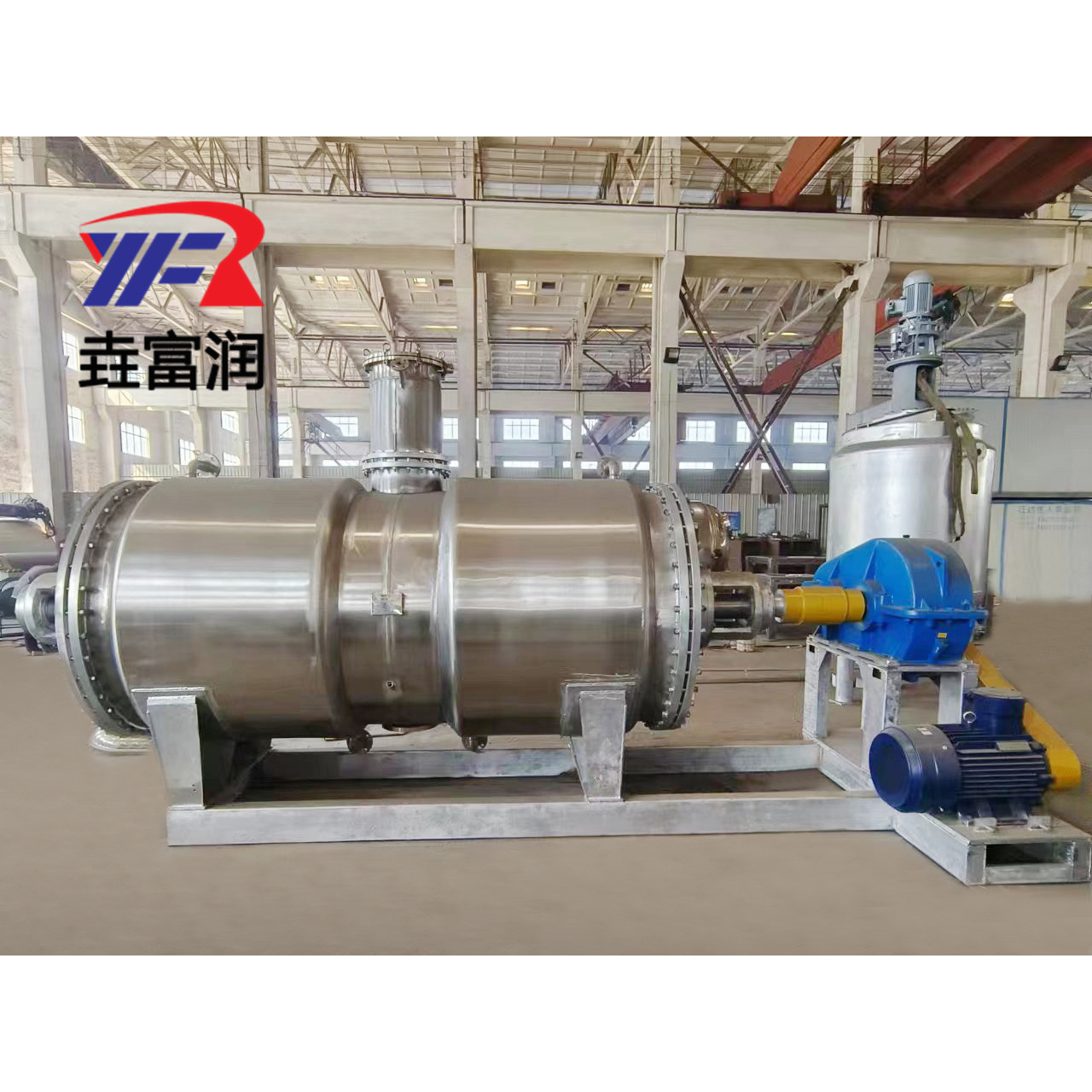
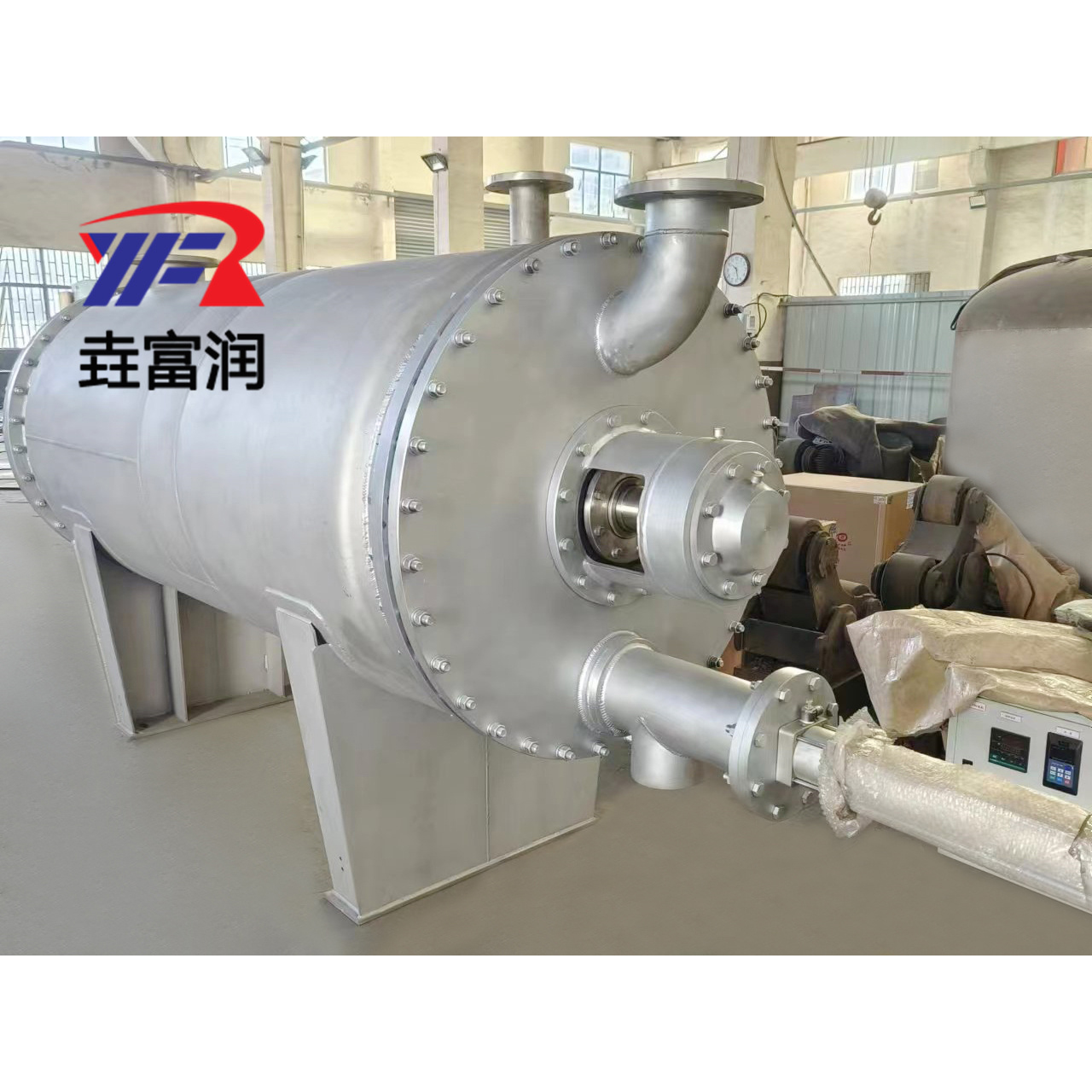
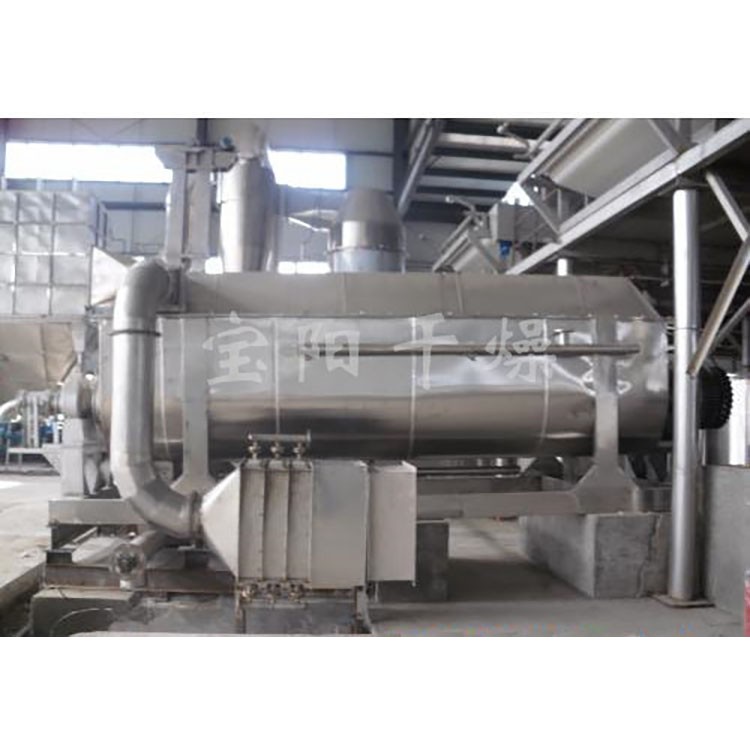
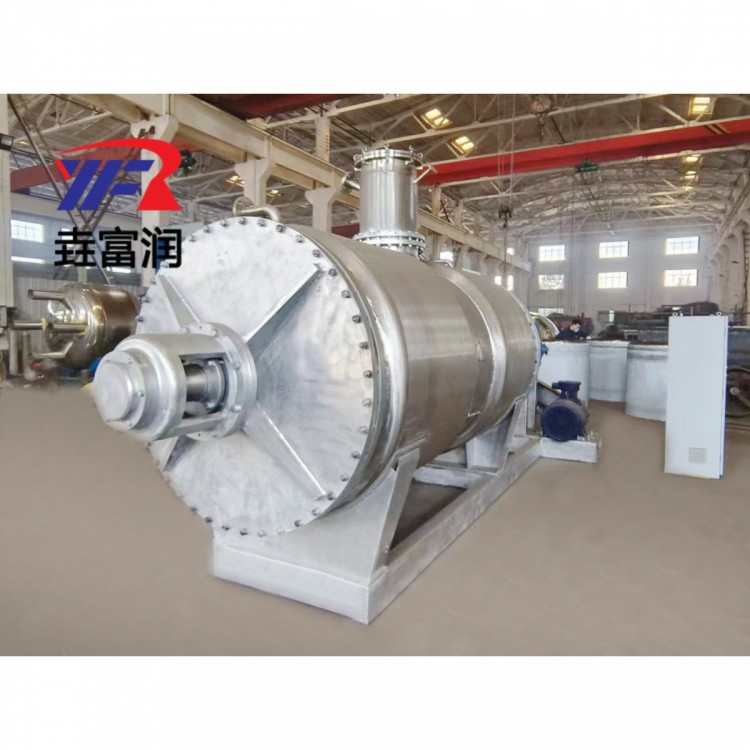
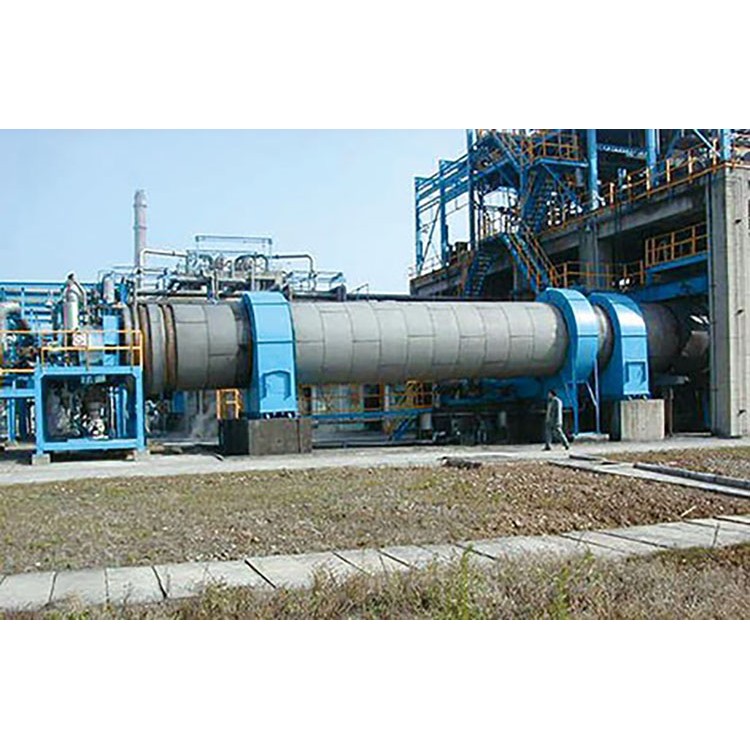
A drum dryer is a continuous rotating drying equipment with internal heat conduction. As the drum rotates, it carries a thick layer of material film through its lower trough. Heat is transferred to the inner wall of the drum via pipes, then conducted to the outer wall of the drum, and finally to the material film, causing the moisture within the film to evaporate and dehumidify, thereby drying the moisture-containing material. The dried material is scraped off the drum surface by a blade and transferred to a spiral conveyor located beneath the blade, where it is concentrated and packaged.
1. High thermal efficiency. As the drum dryer's heat transfer mechanism is thermal conduction, the heat transfer direction remains consistent throughout the operation cycle. With the exception of heat loss from the lid and thermal radiation, all remaining heat is utilized for the evaporation of moisture in the drum material film, achieving a thermal efficiency of 70%-80%.
2. High operational flexibility and wide applicability. Various drying factors of the drum dryer can be adjusted, such as the concentration of the feed material, the thickness of the coating film, the temperature of the heating medium, and the rotation speed of the drum. These factors can all alter the drying efficiency of the drum dryer, and they are mutually independent. This greatly facilitates drum drying operations, allowing it to accommodate the drying of various materials and meet different production volume requirements.
3. Short drying time. The drying cycle for materials typically ranges from 10 to 300 seconds, suitable for heat-sensitive materials. The drum dryer can operate under vacuum conditions if set within a vacuum chamber.
4. High drying rate. Due to the thin coating film applied to the cylinder wall, typically ranging from 0.3-1.5mm, and the consistent heat and mass transfer direction, the surface of the film can maintain an evaporation intensity of 20-70kg·H2O/m2·h.
Drying of liquids or semi-viscous materials suitable for industries such as chemicals, dyes, food, and metallurgy.