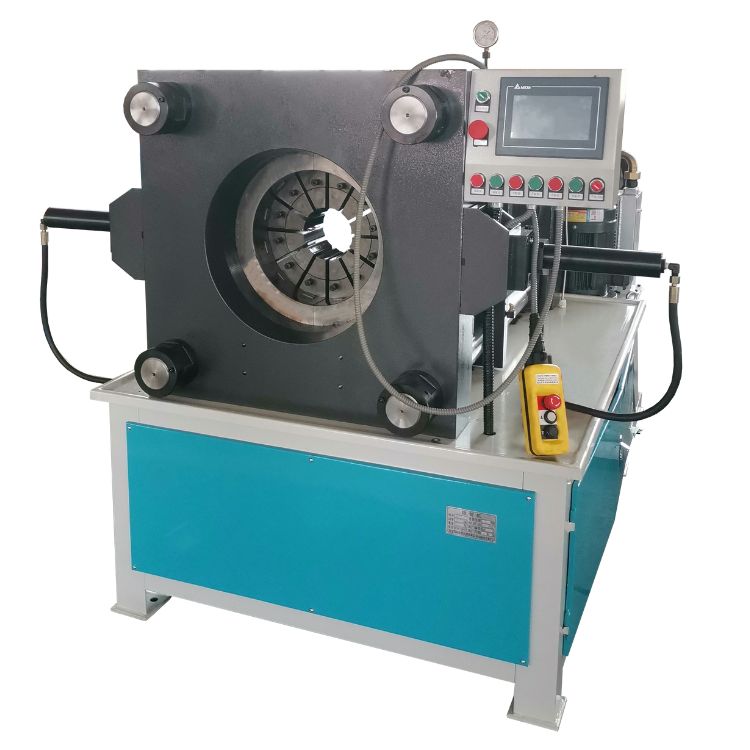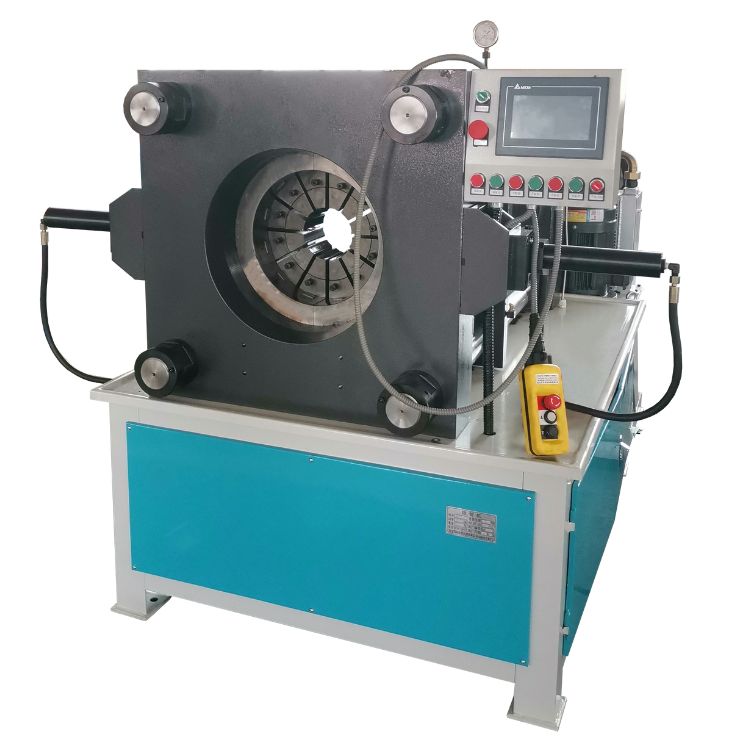

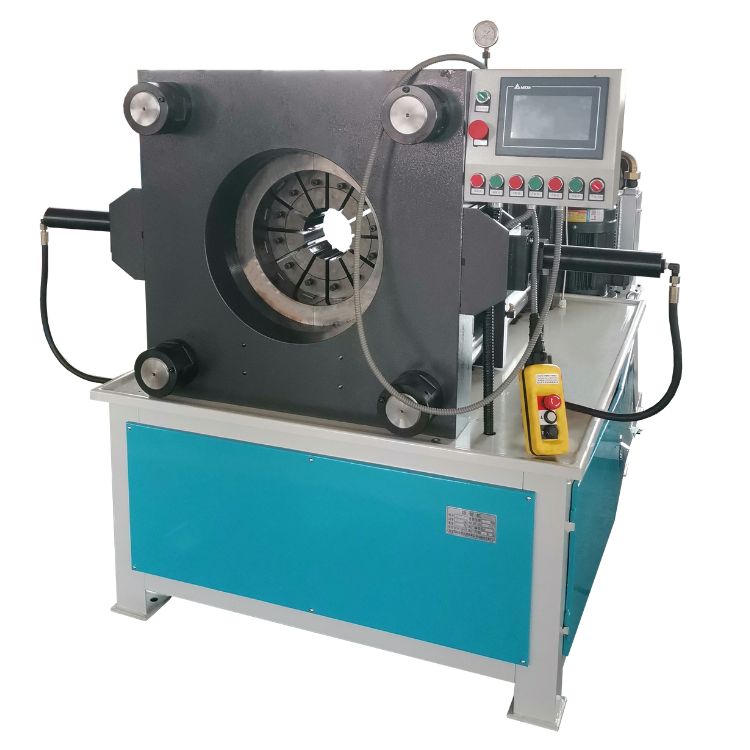


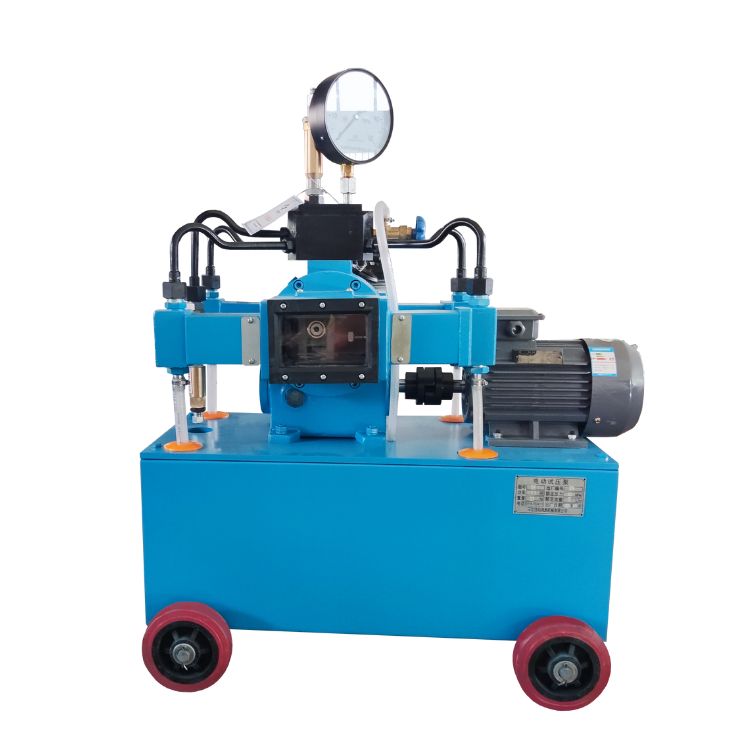










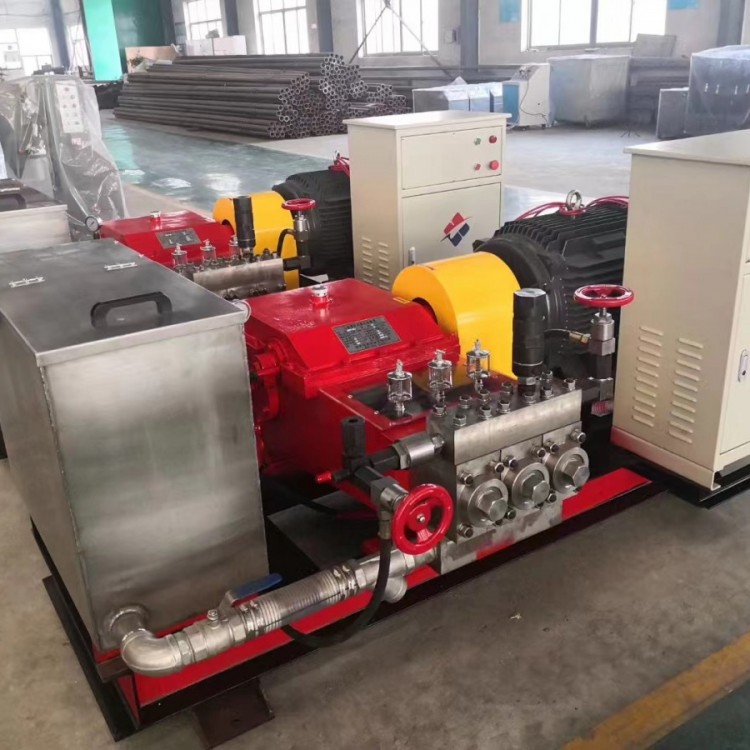


The principle of operation for the extrusion press primarily relies on the function of the hydraulic system. The oil pump is installed inside the oil tank, immersed in hydraulic oil, to achieve a scientifically designed cooling and noiseless operation. The oil pump, driven by the motor, outputs hydraulic oil, which then pushes the plunger within the extrusion cylinder, causing the mold base to radially contract and apply pressure to the sleeve of the rubber hose joint. When the contraction reaches the pre-set micron value, the extrusion stops automatically. Subsequently, the solenoid directional valve changes direction, and the plunger within the cylinder reverses its movement, causing the mold to open, completing the process of extruding the rubber hose. 12
A pipe bender is a hydraulic equipment used for bending pipe assemblies, which securely fastens metal fittings onto high-pressure hydraulic hoses for construction machinery or brake, engine oil, and air conditioning lines on vehicles, by applying clamping force through the mold of the bender. This equipment is suitable for various types of mechanical high and low-pressure oil lines, gas lines, water lines, cable joints, vehicle air conditioning lines, power steering lines, engine oil lines, and fuel supply lines, and is widely used in industries such as vehicles, construction machinery, hydraulic machinery, and welding equipment.
Press machines can be categorized into hydraulic high-pressure tube press machines, brake tube press machines, air conditioning tube press machines, power tube press machines, etc., based on their functional use; into straight tube press machines, double-column press machines, open-end press machines, C-type press machines, etc., based on their mechanical structure; and into mechanical-electrical press machines, PLC press machines, CNC press machines, etc., based on their control methods. Operators must follow the operational procedures to ensure safety and efficiency.