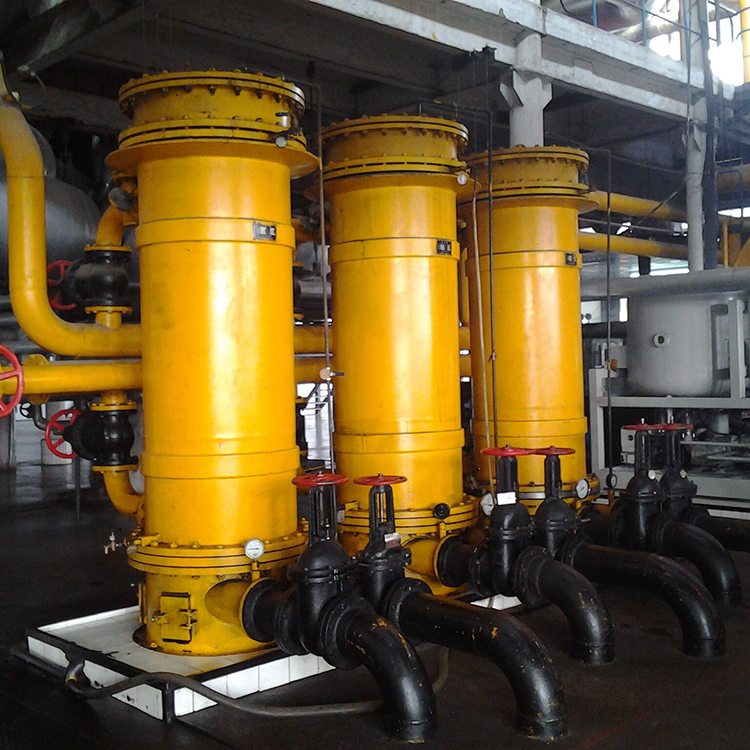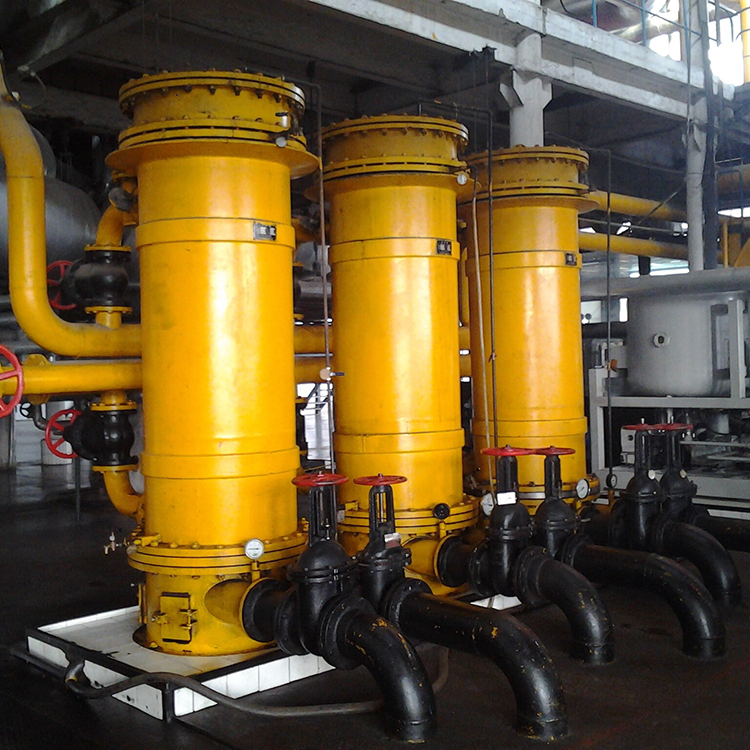

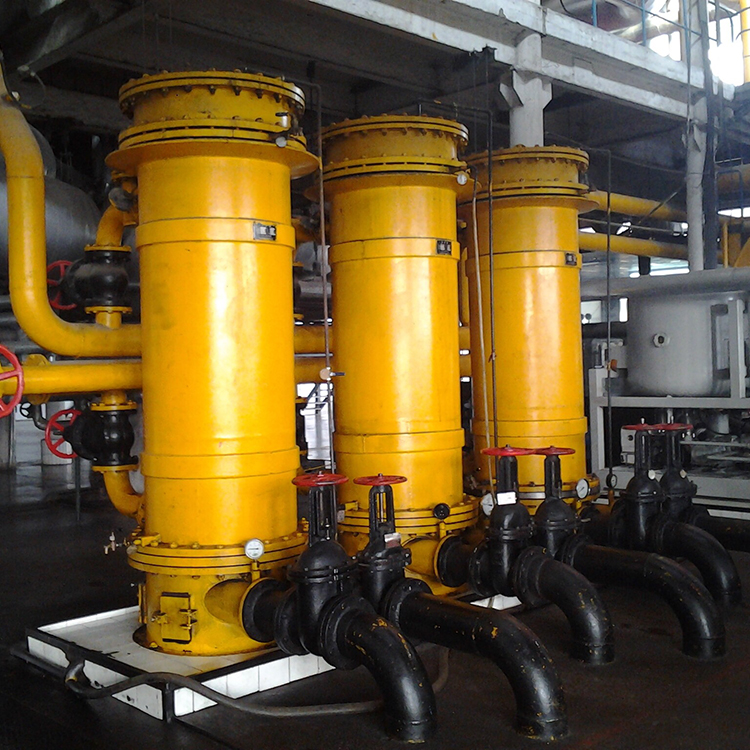

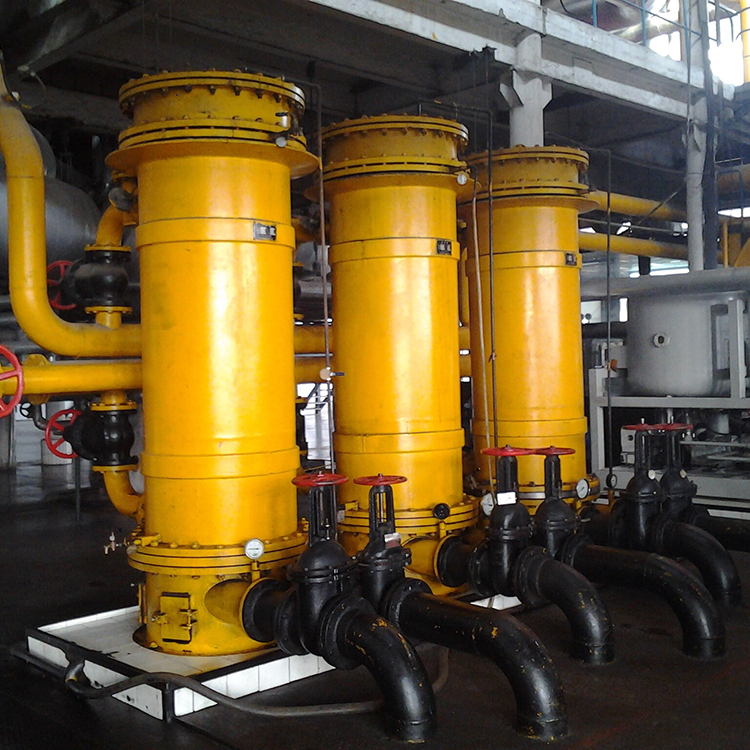

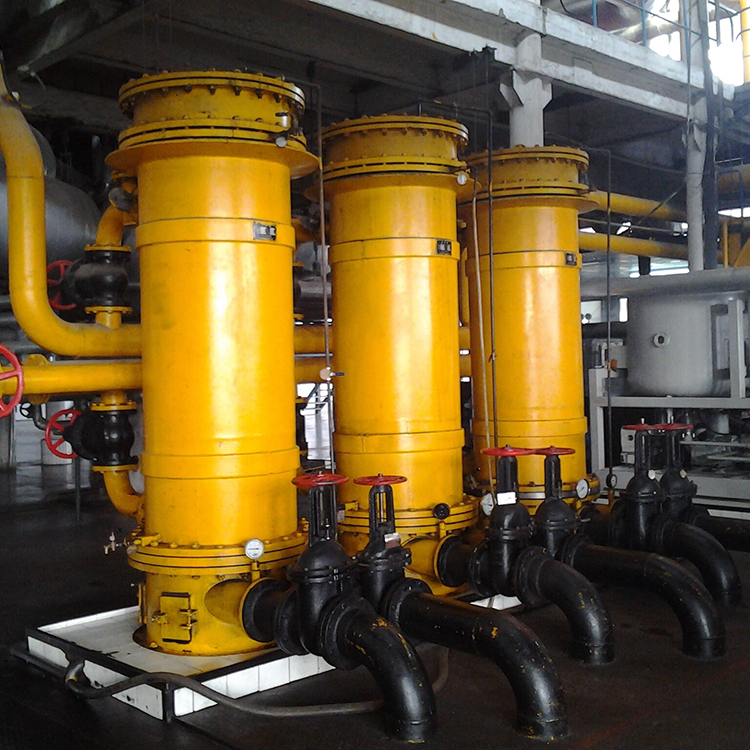









The role of the cooler in power plants
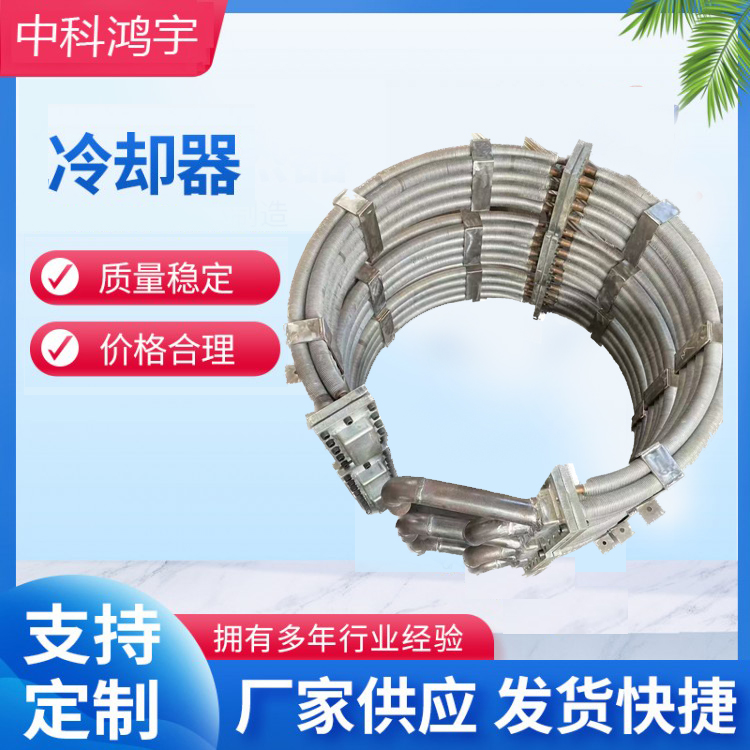
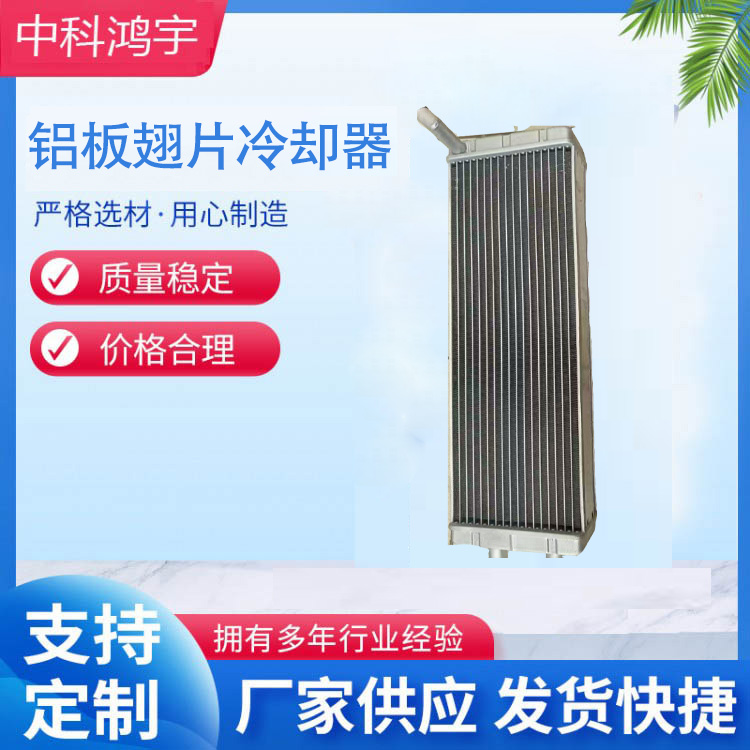
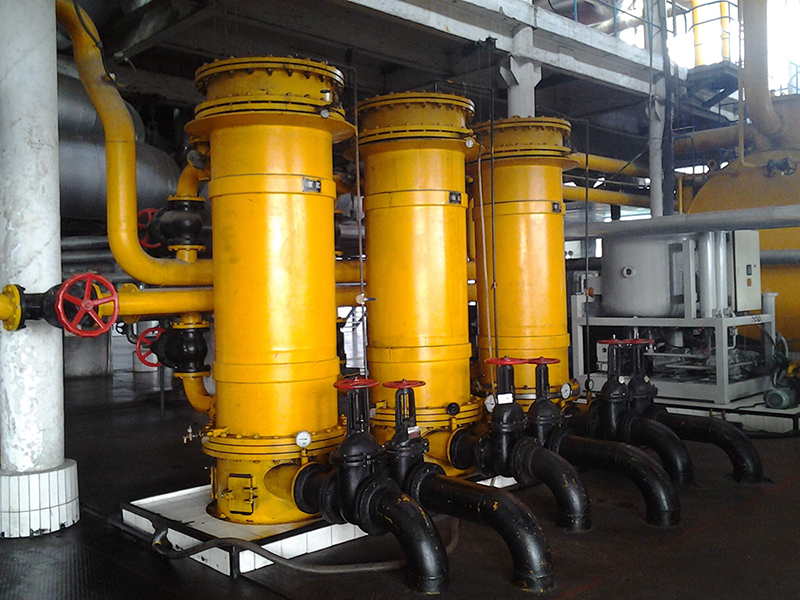
The steam turbine generator set operates normally, but a portion of the work is consumed due to bearing friction, which is converted into heat, raising the temperature of the lubricating oil for the bearings. If the oil temperature becomes too high, the bearings may soften, deform, or suffer burn damage. To ensure the normal operation of the bearings, the oil temperature must be maintained within a certain range, typically between 35-45°C for the oil entering the bearings. The oil outlet temperature rise is generally 10-15°C, so the oil discharged from the bearings must be cooled before being recirculated for lubrication. The cooler is used to cool the main engine lubricating oil. The higher-temperature lubricating oil and the lower-temperature cooling water undergo heat exchange in the cooler, and the oil temperature is controlled by adjusting the flow rate of the cooling water (Additionally, due to the higher temperature of the rotor, especially on the high-pressure cylinder inlet side, the shaft journals also transfer heat outward, so the lubricating oil also serves to cool the shaft journals).
Advantages and Disadvantages of Series and Parallel Cooling Oil Coolers
The advantages of series operation of oil coolers include: excellent cooling effect and uniform oil temperature.
2. Drawbacks of cold oil cooler series operation: high oil pressure drop, unable to isolate oil leakage.
3. Benefits of parallel operation for oil coolers: minimal pressure drop, easy isolation, and the ability to service a set while in operation.
4. The disadvantages of parallel operation of oil coolers: poor cooling effect, uneven oil temperature.
Process requirements for replacing the cold oil cooler with stainless steel pipes
1. Preparation of new stainless steel pipes: Cut the stainless steel pipes that have passed inspection according to the dimensions of the cooler, ensuring the pipes are ready for use.
Exceeds the tube plate by 4-5mm, deburr the ends of the stainless steel tube, smooth the expansion section, and temper at approximately 50mm from both ends.
2. Remove old stainless steel pipes: Use a specialized half-round triangular chisel to remove them, ensuring not to damage the pipe plate. Strip the stainless steel pipe clean, then clean the pipe plate holes thoroughly after removing the old pipes. Polish with fine sandpaper and wipe away the dust with a cloth.
3. Fitting New Pipes, Expanding Ends: After the tube plate and stainless steel pipes are prepared, new stainless steel pipes can be fitted. Be cautious not to apply excessive force or twist them; align and insert them into the designated holes. The exposed ends of the new pipes should be equal in length. The diameter of the tube plate holes should be slightly larger than the pipe diameter, about 0.5mm, but not too large or too small. Once the stainless steel pipes are fitted, use a pipe expander to expand the ends. The force and speed during expansion should not be too great or too slow. The expanded length should be two-thirds of the tube plate thickness and not exceed the thickness of the tube plate. After expansion, use a punch to chamfer the ends.
4. When replacing stainless steel pipes, replace them in halves; dismantle half, replace it, and then dismantle the other half.
The primary cause of condensate water becoming supercooled
1. Air accumulation on the condenser's vapor side reduces the steam partial pressure, thereby lowering the condensate temperature.
2. The condenser's water level is too high during operation, flooding some cooling water pipes and causing excessive condensate subcooling.
3. Poor arrangement or excessive density of the condenser cooling water pipes results in a water film forming on the exterior of the condensate cooling pipes. The outer layer of this water film is close to the steam saturation temperature, while the inner layer is in close contact with the exterior of the stainless steel pipes, thus approaching or equaling the cooling water temperature. When the water film thickens and hangs down into droplets, the temperature of these droplets is the average temperature of the water film, which is obviously lower than the saturation temperature, thereby causing supercooling.
Fault Analysis of Main Engine Coolant Separator and Technical Retrofit Recommendations
The primary function of the cooler is to cool lubricating oil, maintaining the bearing temperature within the normal range during the operation of steam turbines and generators. The main coolers for units #1, #2, and #5, #6 are manufactured by Shanghai Steam Turbine Works. During the operation of the coolers, frequent failures such as oil or water leakage from the bottom end cover have been reported. In the actual maintenance process, the author identified the causes of these frequent failures and proposed corresponding technical improvement measures, which have certain reference significance for the design and operation and maintenance of coolers.
1. Working Principle of Coolant Cooler
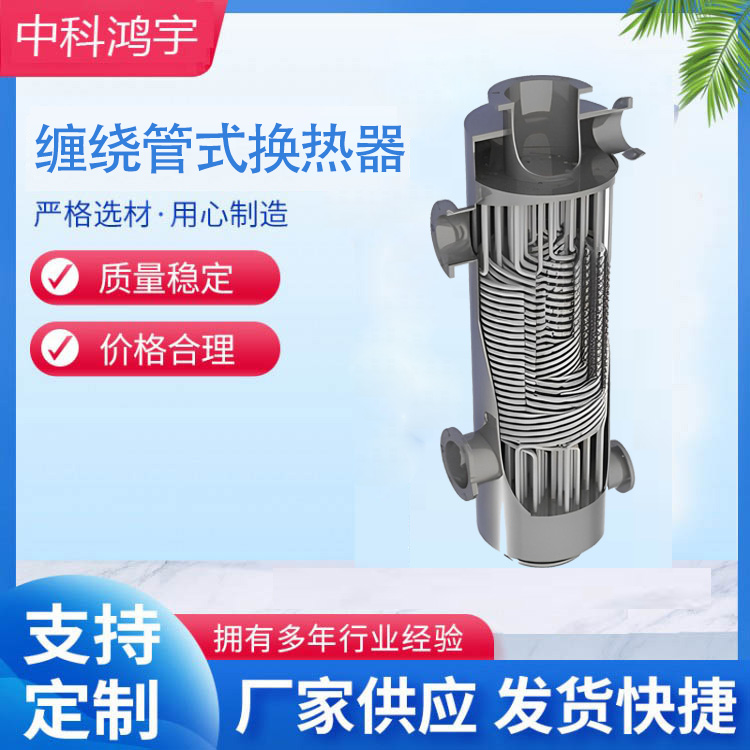
Cooling water enters the cooler through the top cover of the closed cooling system, then flows through the tiny tubes inside the cooler. Countless tiny cooling water pipes are fixed by partitions inside the cooler, dividing it into several small compartments. The lubricant flows in an S-shape around the cooling water pipes, which increases the effective heat exchange area and enhances the cooling effect. At the bottom of the cooler, a cooling water chamber is formed. The lubricant and cooling water are separated and sealed by two O-rings (glands) and a copper bed.
2. Analysis of Cold Oil Cooler Failure Causes
During the operation of the unit, faults such as leakage or oil leakage at the bottom end cover of the cool oilers for #1, #2, #5, and #6 machines have occurred multiple times, particularly during startup or shutdown processes, with the occurrence of faults being more frequent. The isolation between the oil and water in the cool oiler, as well as the leakage of oil and water, relies entirely on two O-rings. If either of the O-rings is damaged or displaced, causing a change in the gap, leakage is inevitable. Since the sealing surface of the O-rings is on the left and right sides rather than the traditional top and bottom sides, increasing the tension of the flange bolts does not reduce the amount of leakage once it occurs.
The author, after analysis, has summarized several causes that are easy to lead to the gap change and damage of O-rings.
1) During the start-up or shutdown of the unit, pressure fluctuations frequently occur in the oil and water sides of the cooler, causing the O-ring to shift and potentially lead to leakage.
2) During installation, if the cold oil cooler is installed eccentrically, it will cause abnormal gaps in the O-ring seal. During operation, even slight pressure fluctuations (on the oil or water side) can lead to leakage.
3) During each maintenance process, when replacing the O-ring, due to the limited space at the bottom end cover, installation is often difficult, leading to the O-ring being crushed by the copper bed and subsequent leakage. After each maintenance, the probability of leakage on the water side is higher than on the oil side, further proving that the current design is not conducive to maintenance and ensuring maintenance quality.
3. Economic Analysis of Technical Retrofit for Coolant Coolers
1) Each time the cooler leaks, it typically requires maintenance during major or minor equipment repairs. During the period of operation with the injury, the workload of cleaning leaked oil and water increases, adding to the team's task load.
2) The end cover of the cold oil cooler is large in volume and has limited maintenance space, so it requires five people to work simultaneously every time an O-ring is installed, resulting in a substantial labor cost each time for maintenance.
3) Replacing O-rings during maintenance often results in a significant amount of consumables, which increases maintenance costs.
Through the above analysis, it can be proven that the necessity and feasibility of technical reform for the cooler are evident, as well as the economic benefits that can be achieved after the reform is implemented. During the reform, a gradual approach can be adopted, utilizing the periodic maintenance of the units, to progressively reform the coolers of Units #1, #2, #5, and #6. Upon completion, the reform is sure to yield corresponding economic benefits, saving on equipment maintenance and repair costs.
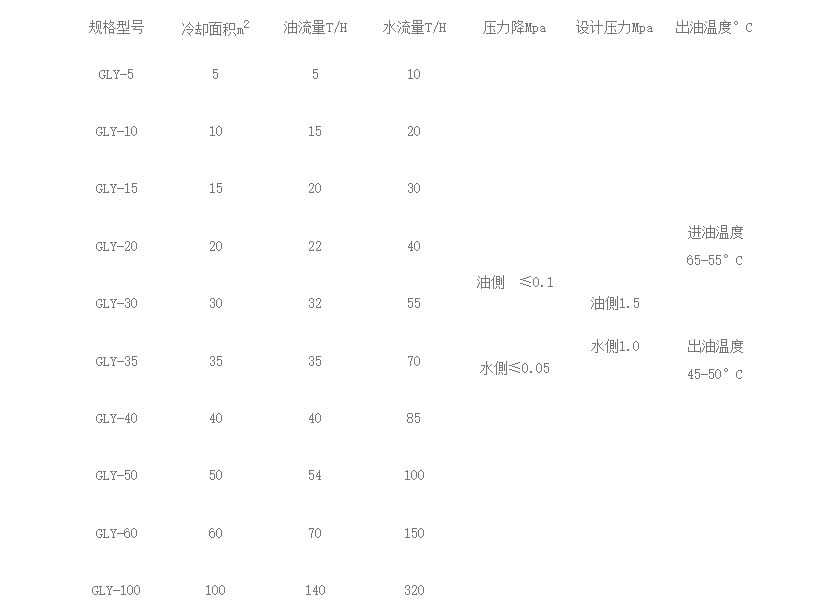
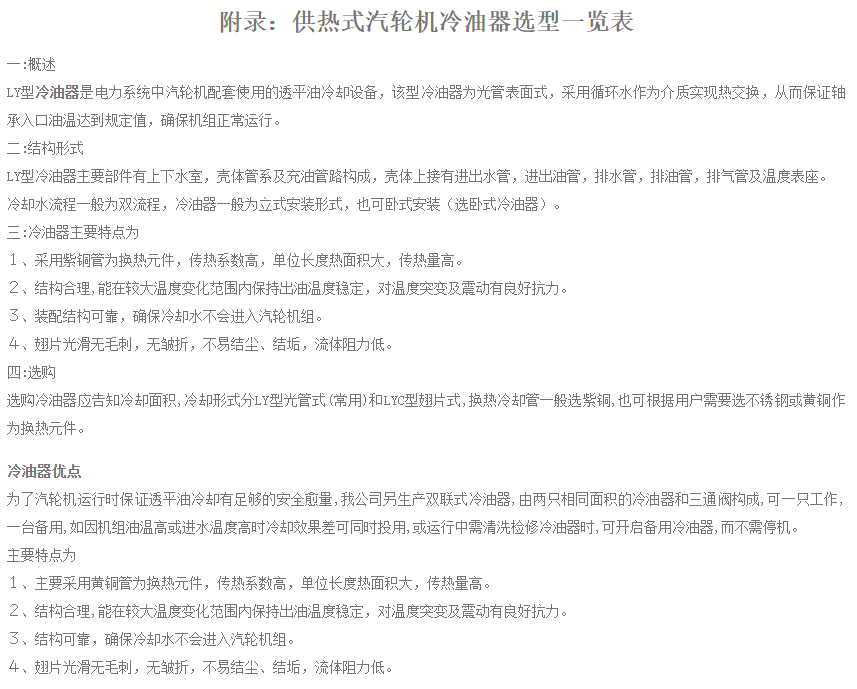
Ordering Instructions for Oil Coolers (Oil Coolers)
1) Turbine Generator Set Model
2) Coolant Oil Volume
3) Oil Cooler Cooling Area
4) Quantity Ordered