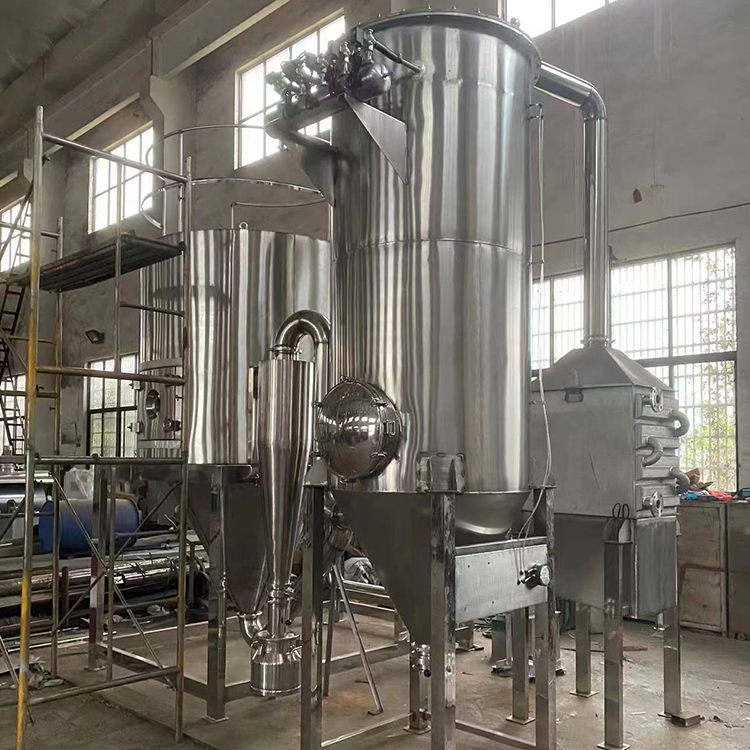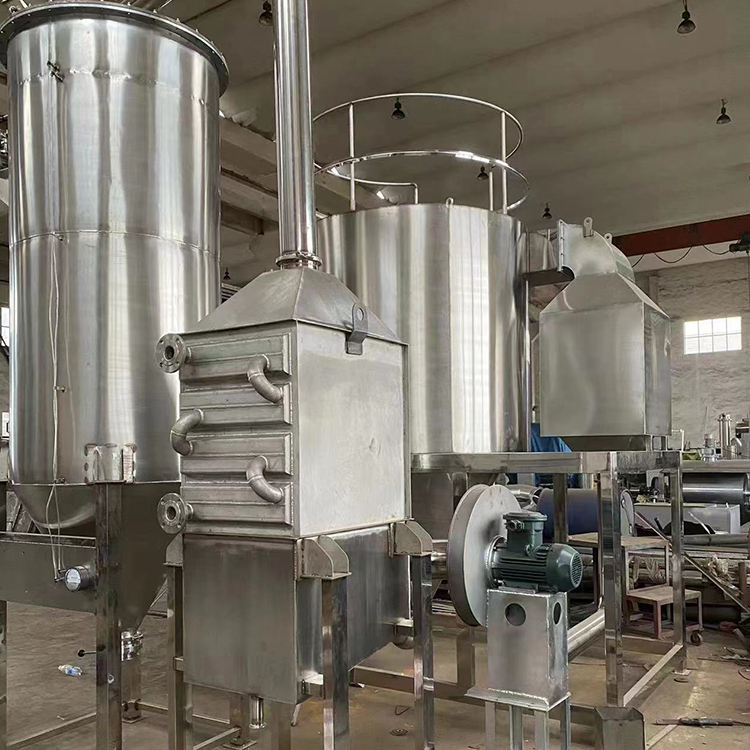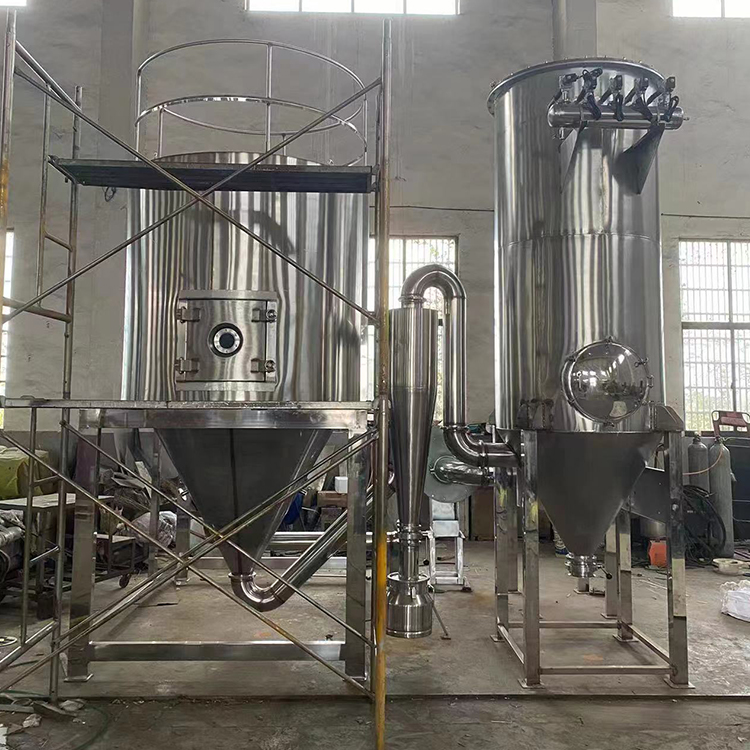










Closed-loop Circulating Spray Drying Machine Overview:
Closed-loop spray drying systems are designed for the closed-loop spray drying process of suspensions made from organic solvents such as ethanol, acetone, hexane, and gasoline, using inert gases (or nitrogen) as the drying medium. The entire process ensures no oxidation of the product, the medium is recyclable, and the inert gases (or nitrogen) can be recycled. The closed-loop system is designed for organic solvent recovery, requiring high explosion-proof control and high autonomous performance of the system.GMPStringent requirements. Commonly used in ceramics, battery materials, hard alloys.Wc.FePowder spray drying.
Closed-loop Spray Drying System, also known as a sealed cycle spray drying system, is characterized by its closed-loop system composition, allowing the heat carrier to be recycled. For materials with volatile organic solvents, toxic substances, or harmful substances that can pose risks to people or the environment upon release, and where the liquid feed contains organic solvents or products that are easily oxidizable, flammable, or explosive, it is generally necessary for such materials to avoid contact with oxygen. Therefore, inert gases (such as ...) are mostly used as the heat carrier.N₂、CO₂Exhaust gases from the desiccant are processed through gas-solid separation and then further condensed in a condenser to recover solvents or remove moisture. Post-heating, they are returned to the desiccant for recirculation. Such dryers require additional refrigeration equipment in the system, leading to higher operating costs. They demand high air tightness from the equipment. The dryer operates primarily at atmospheric or slightly positive pressure to prevent air from entering the system.
Principle of operation for closed-loop dryer:
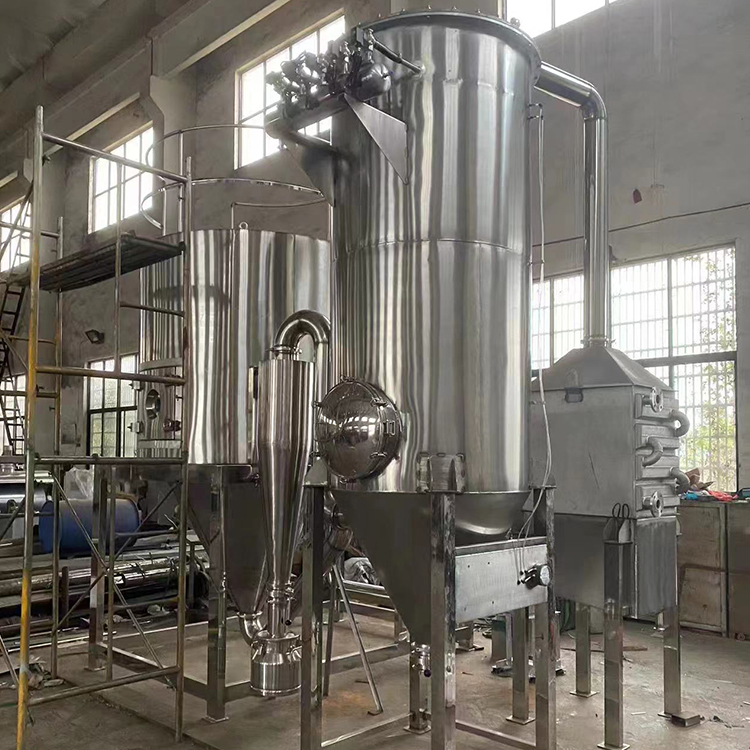
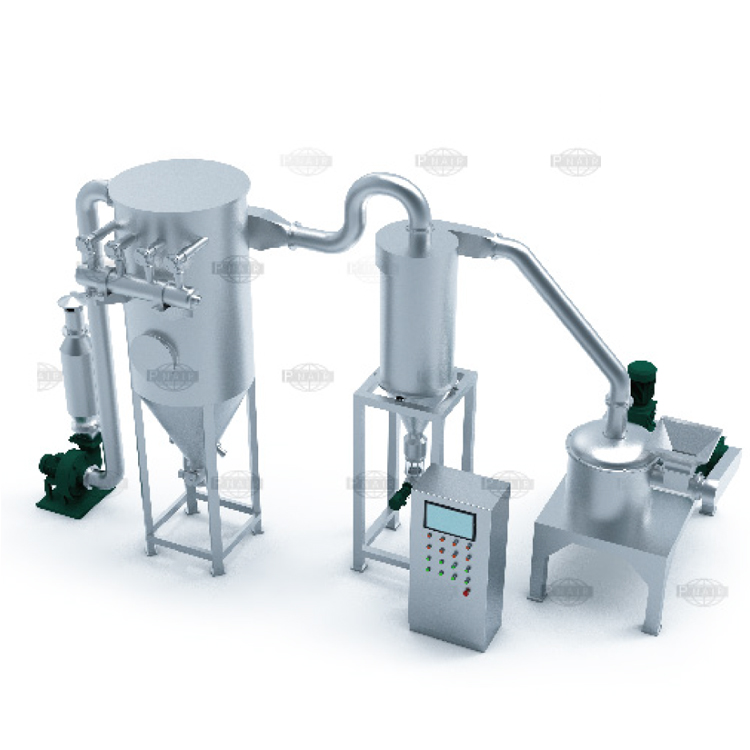
Closed-loop spray drying equipment operates in an enclosed environment, using inert gas (or nitrogen) as the drying medium. It is suitable for drying materials containing toxic gases or materials prone to oxidation during the drying process, as well as organic solvent-based materials. The system employs inert gas as the circulating gas, which protects the dried material. The circulating gas undergoes a moisture-loading and moisture-removal process, allowing for its reuse. After being heated by a heater, nitrogen enters the drying tower. Liquid materials are transported to the centrifugal spray head by a screw pump, where they are atomized into powdered material by a high-speed circulating atomizer and discharged from the bottom of the tower. The evaporated organic solvent gas, under the negative pressure of the fan, carries the dust particles. These particles are separated by a cyclone separator and a spray tower, and the saturated organic solvent gas is condensed into liquid by a condenser and drained out. The non-condensable gas medium is continuously heated and reused as the drying carrier within the system. In contrast, conventional centrifugal spray drying relies on continuous air supply and exhaust to remove moisture, which is a distinct difference from explosion-proof closed-loop centrifugal spray drying equipment. The drying system operates under positive pressure, maintaining a certain positive pressure value. If the internal pressure drops, a pressure transmitter automatically controls the inflow to ensure system pressure balance.