














The stage is the core and focal point of the entire event, making stage construction a crucial aspect. Any stage setup must be based on safety at every stage.
Stage Setup Process:
Ensure the installation area is clean, cover the floor with a cloth according to the stage size, and then place the framework and materials on the cloth. The stage should be installed in one go. When laying the platform mat, use tacks to secure it to the stage board. When laying the exhibition curtain, ensure it is completely flat, then secure it with tacks. For larger stages, the curtain may need to be pieced together, with the seams overlapped externally and secured with tacks. Install the stage skirt. After laying the curtain, construction personnel should wear shoes while walking. Also, be sure to clean up debris at all times.
Stage construction is not just a platform; it is also a part of the event itself. Therefore, it's not merely about building a platform but enhancing the event. Thus, when transforming a stage into a comprehensive project, several factors need to be considered:
1. Consider the stage location when setting up the stage.
For many promotional campaigns, stage setup is not just a platform, but a stage that attracts public attention and maximizes the effectiveness of the promotion. Such events should be set up in bustling areas or famous scenic spots locally.
2. The stage should be positioned for ease of participant gathering and dispersal.
Due to the large number of participants required for many business activities, the stage setup itself should take into account the transportation issues of the attendees. Only fast and convenient transportation can attract the maximum number of visitors to participate in the exhibition, thereby achieving the intended effect of the stage setup.
3. Stage setup equipment issues.
Only well-equipped facilities can keep the stage alive and maximize its role as a promotional platform. In this aspect, lighting and sound effects are crucial. With the advancement of modern audio-visual equipment, scenes can be created with excellent effects and can be adjusted according to the specific requirements of the venue. Therefore, attention must be paid to the use of audio-visual equipment in stage setup.
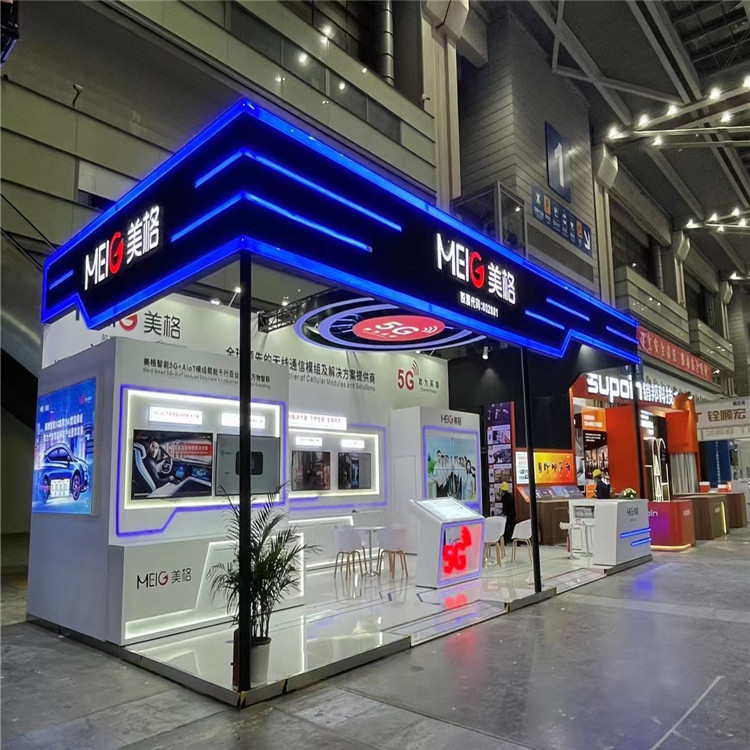
The setup of a stage is not just about constructing a platform; it's about advancing the event itself. Similarly, establishing an event stage requires considering many aspects.
1. Consider the durability issue.
The sturdiness of the stage is a fundamental issue in stage construction, concerning the safety of both performers and audience members on and off the stage.
2. Consider the performance timing issue.
If it's a daytime performance, when selecting the performance time, consider the angle of the sunlight to avoid the performers or audience from having their eyes blinded. The seating and stage should be in a position to avoid direct sunlight, otherwise the bright light can be blinding and hinder the viewing experience.
3. The stage should have distinct layers to facilitate the arrangement of numerous performers by the program directors, ensuring the performance visuals have a sense of hierarchy and aesthetic appeal.
4. When setting up the stage, for celebratory performances, ensure to fully present the on-site environment and atmosphere, creating a festive mood for the celebration event.

Stage Setup Techniques:
1. Stage height issue.
Standard庆典礼台 usually come in heights of 20cm, 40cm, and 60cm; A 20cm-high stage: is mostly used for small to medium-sized events or indoor gatherings, as its size allows for easy closeness to the audience, facilitating better communication and interaction; A 40cm-high stage: is commonly used and visually appealing, especially for celebratory stage setups like grand openings, ribbon-cutting ceremonies, unveiling events, and large corporate annual meetings, where a 40cm stage is typically employed.
2. Stage safety.
Stage safety is a fundamental issue. For clients, if heavy objects need to be placed on the stage or many people are to stand there, it is essential to communicate with the stage construction party in advance. As stage construction personnel, it is crucial to implement appropriate safety measures, such as adding more support iron frames below the stage, using double-layered wooden boards, and so on.
3. Stage aesthetics.
After the stage setup is complete, a carpet will be laid on the stage, customized to the client's specifications in color. The perimeter of the stage will be enclosed with edging, creating a beautifully adorned stage. When beautifying the stage, ensure the carpet is brand new and the edging is seamlessly joined. Attention to these details will enhance the stage's aesthetics and grandeur.
4. Stage dimensions.
Stage construction must have size restrictions, as the wooden boards laid out are of a specific specification.
Our company adheres to the business philosophy of "Integrity as our guiding principle, quality as our lifeblood, and service as our driving force for development," upholding the principles of "sincere pursuit, serving society, and reputation first," with customer satisfaction being our ultimate pursuit.




















