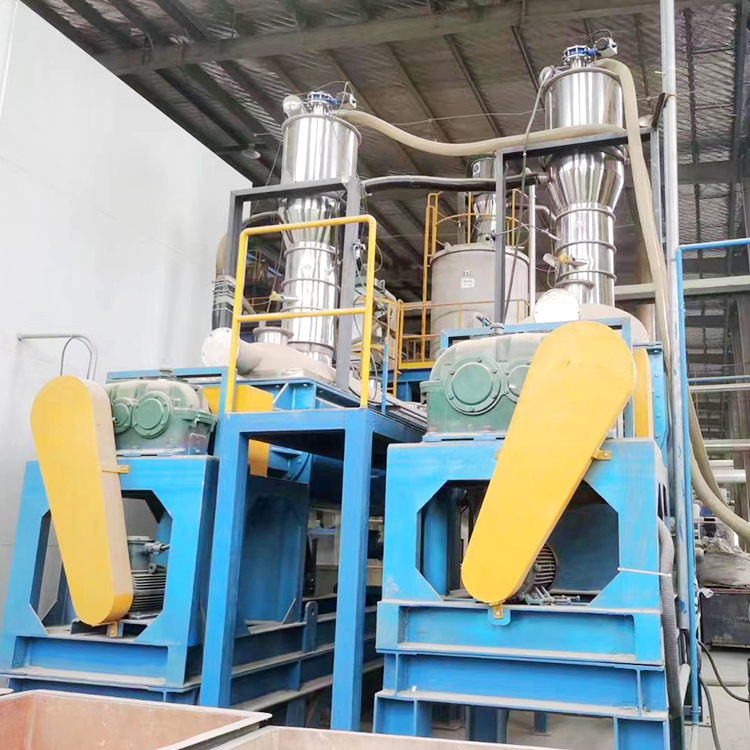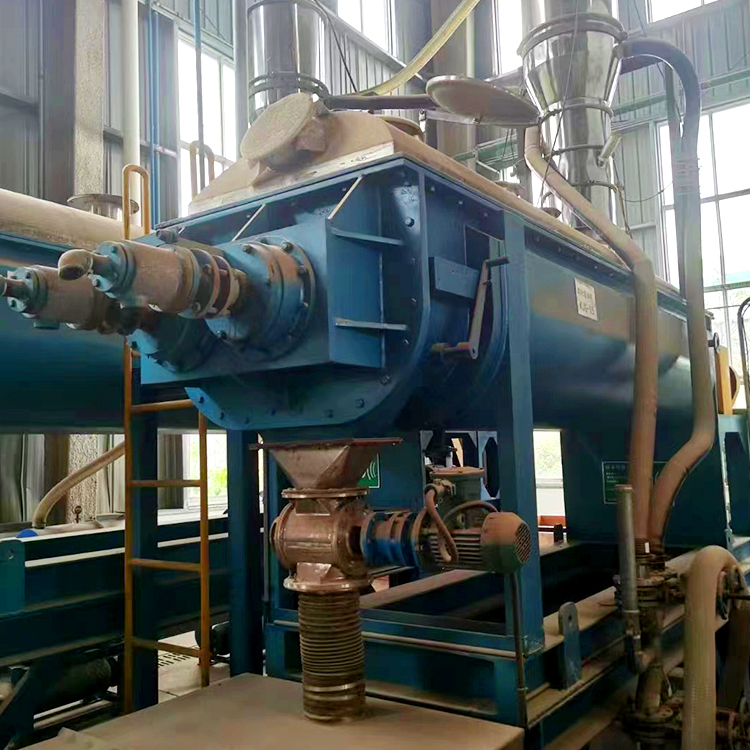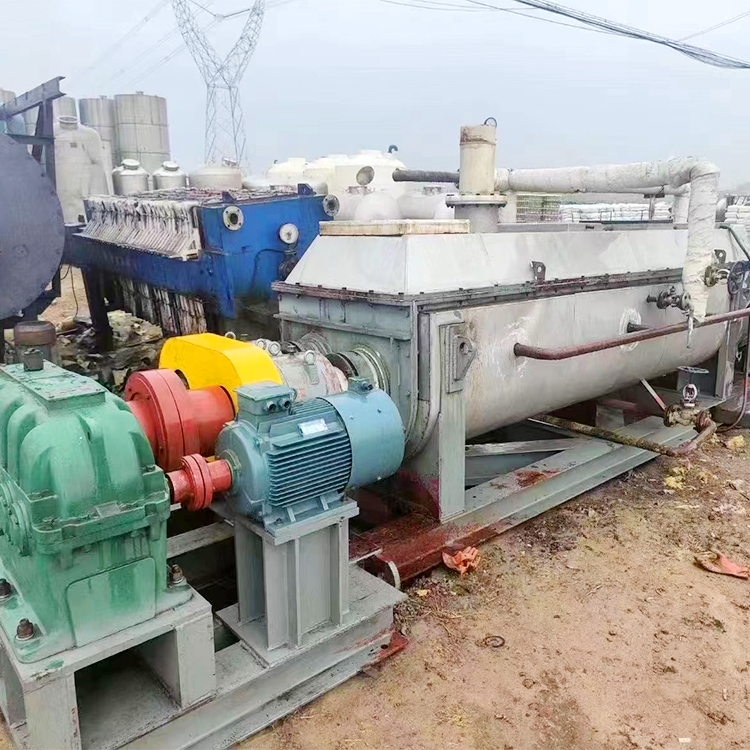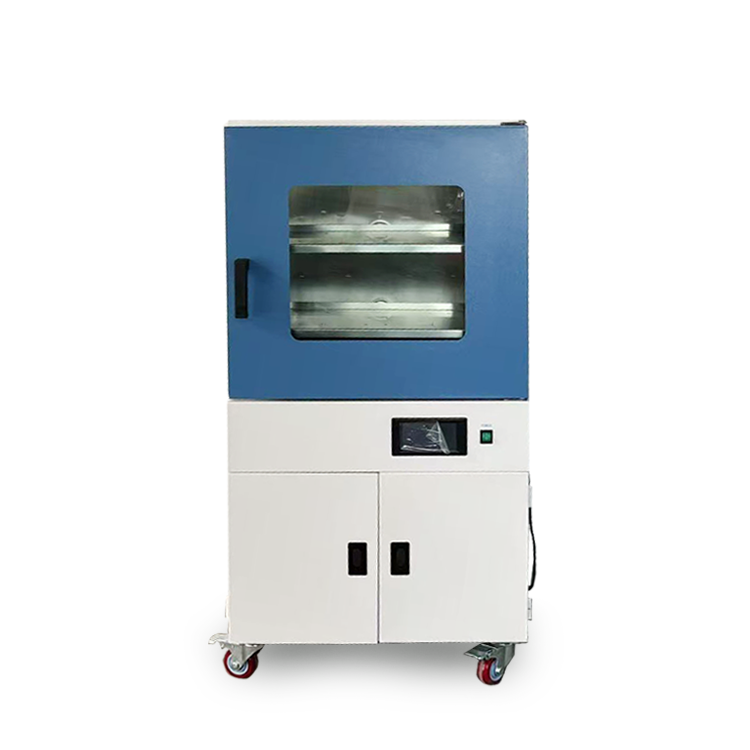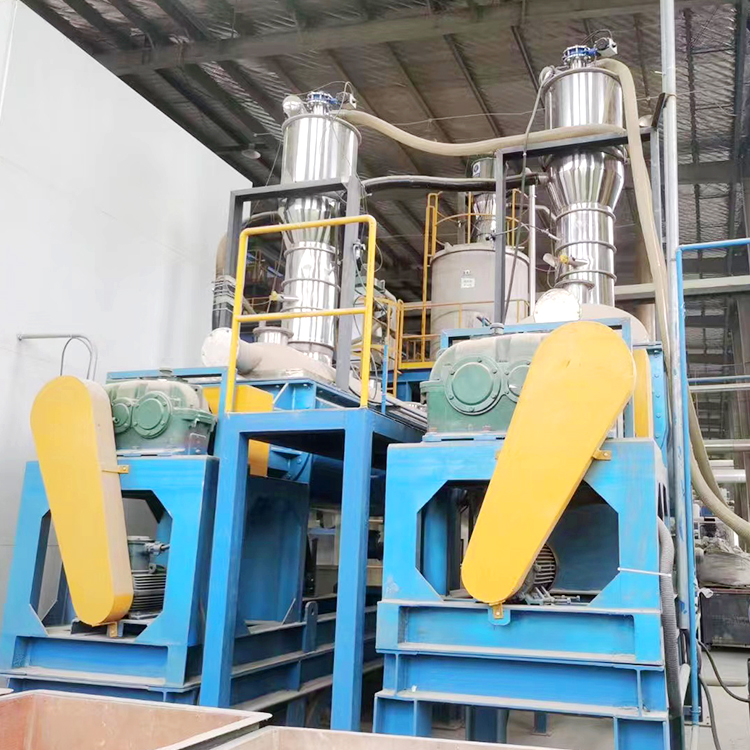

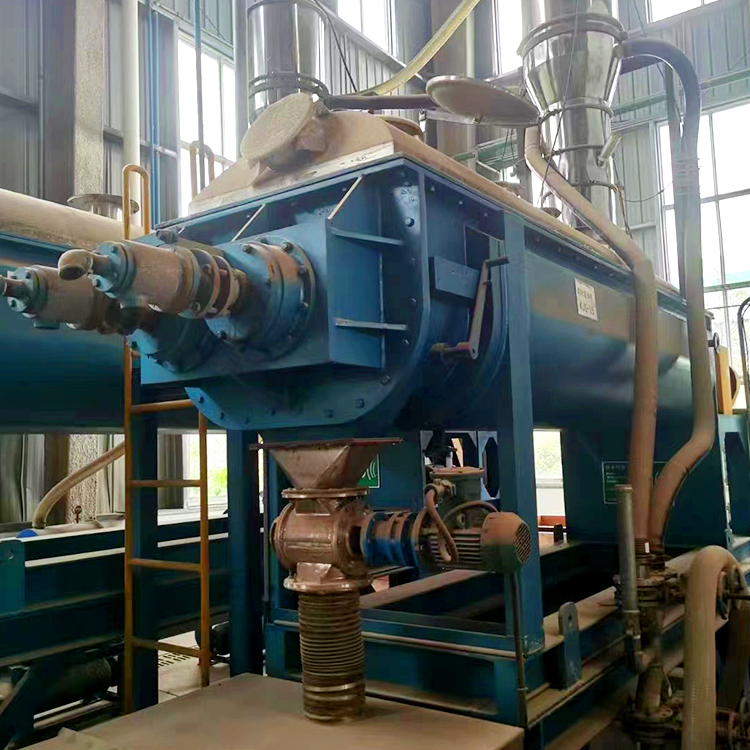









The hollow paddle blade dryer consists of several parts including the blade surface, agitator shaft, and wall, with the blade surface accounting for a significant portion of the heat transfer area. Consequently, the equipment has a compact structure and a large heat transfer area per unit volume. Moreover, the intensive mixing and blending cause the material to be vigorously agitated, achieving a high heat transfer coefficient. This results in minimal land and space requirements, thus saving construction costs for the workshop. The drying process uses little gas, with low flow rates, and the amount of dust carried away by the gas is minimal, making it easy to recover the dust after drying. The recovery equipment is compact, allowing for savings in equipment investment. For drying processes requiring solvent recovery, solvent concentration can be significantly increased. Due to the special paddle structure, the material alternates between compression and relaxation during drying, enhancing the drying process. The material filling rate in the drying chamber is very high, reaching 80%-90%. The material residence time is adjustable by regulating feeding speed, agitator shaft speed, and material filling level, from a few minutes to several hours. Additionally, the movement of the material from the feed to the discharge point in the dryer is essentially a reciprocating motion, resulting in a narrow distribution of residence times and uniform moisture content in the product. The blades on the agitator shaft have a certain axial angle, enabling continuous drying of the material.