







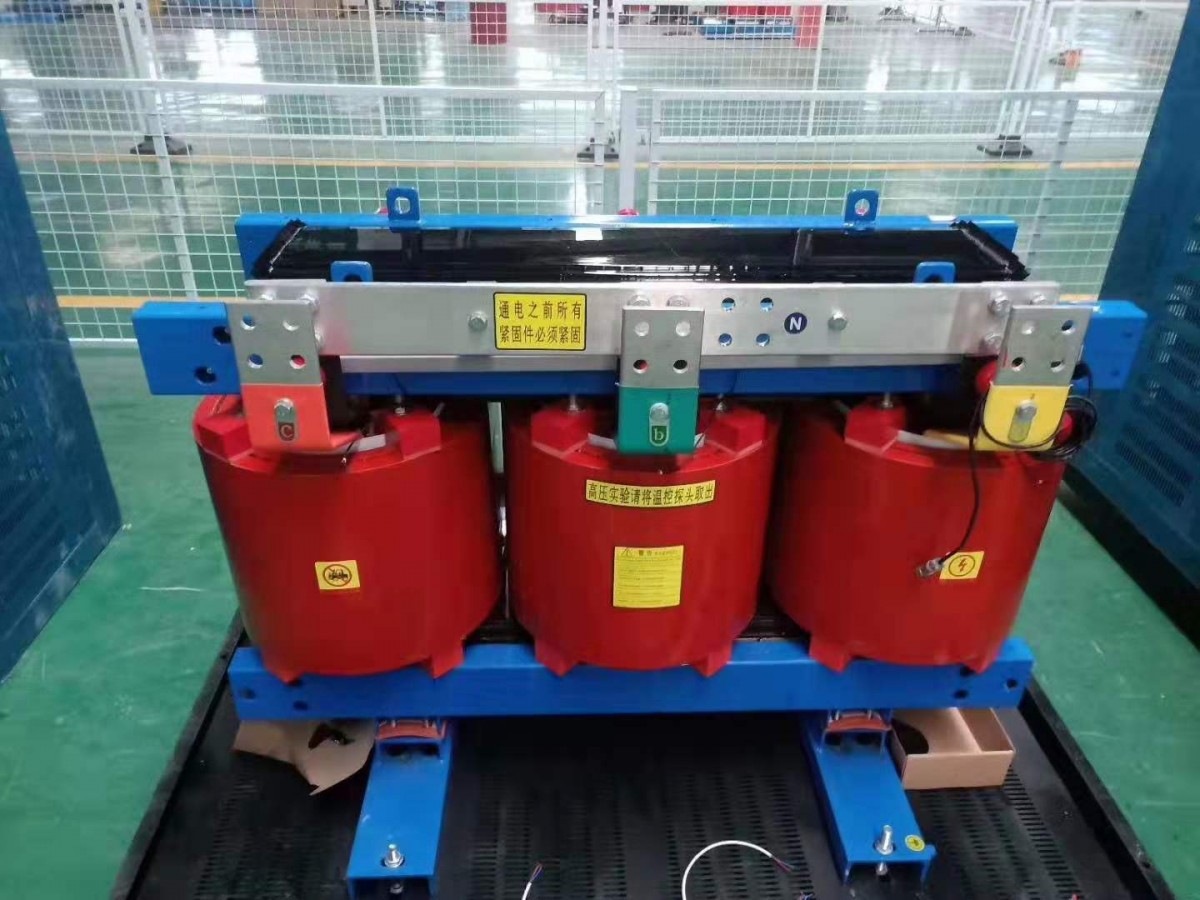
1) Multiple external short-circuit shocks lead to gradual deformation of the coil, with most cases resulting in insulation breakdown and damage.
2) Damaged due to frequent short-circuit impacts within a short period.
3) Damaged due to long-term short-circuit surges.
4) Damaged by a single short-circuit surge.
3 Main Forms of Transformer Short-Circuit Damage
Based on the damage to transformers due to export short circuits in recent years, the damage to transformers during short circuit faults primarily exhibits the following characteristics and causes.
3.1 Axial Instability
This type of damage is primarily caused by the axial electromagnetic force generated by radial magnetic leakage, leading to the axial deformation of transformer windings, accounting for 52.9% of all damage incidents.
3.1.1 Warped and deformed upper and lower line cakes
This damage is due to the wire between the two axial shims undergoing plastic deformation under the action of the axial electromagnetic force, caused by excessive bending moment. Typically, the deformation between the two disks is symmetrical.
3.1.2 Winding or coil cake collapse
This damage is due to the wires being compressed or impacted under axial force, resulting in tilt deformation. If the wires originally have a slight tilt, the axial force promotes further tilting, which can lead to collapse in severe cases; the greater the height-to-width ratio of the wires, the more prone they are to collapse.
The end leakage magnetic field, in addition to the axial component, also includes a radial component. The combined electromagnetic force generated by the leakage magnetic fields in both directions causes the inner winding wires to flip inward and the outer winding wires to flip outward.
3.1.3 Winding lifting opens the pressure plate
This damage is often due to excessive axial force, insufficient strength or rigidity of the support components at the ends, or assembly defects.
3.2 Radial Instability
This type of damage is primarily caused by the radial electromagnetic force generated by axial magnetic leakage, resulting in radial deformation of the transformer windings, accounting for 41.2% of all damage incidents.
3.2.1 Insulation damage caused by elongation of the wrapped conductor
Radial electromagnetic forces attempt to increase the diameter of the outer winding. Excessive tensile stress on the wire can cause plastic deformation. This type of deformation often leads to insulation damage in the wire, causing inter-turn shorts. In severe cases, it can result in the coil collapsing, winding out of place, or even breaking.
3.2.2 Winding End Reversal Transformation
In addition to the axial component, there is also a radial component in the end magnetic flux. The composite electromagnetic force generated by the magnetic flux in both directions causes the winding conductors to invert inward, and the outer winding to invert outward.