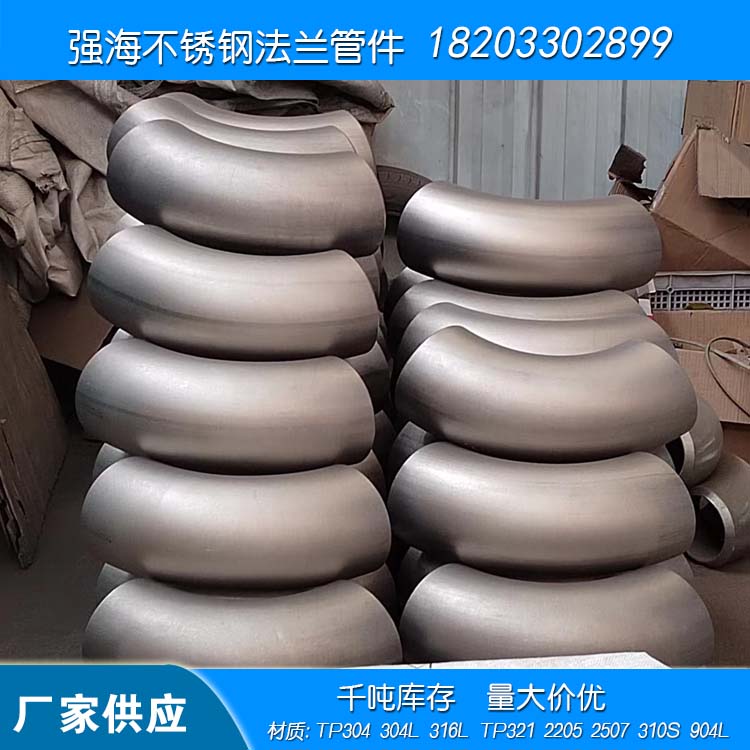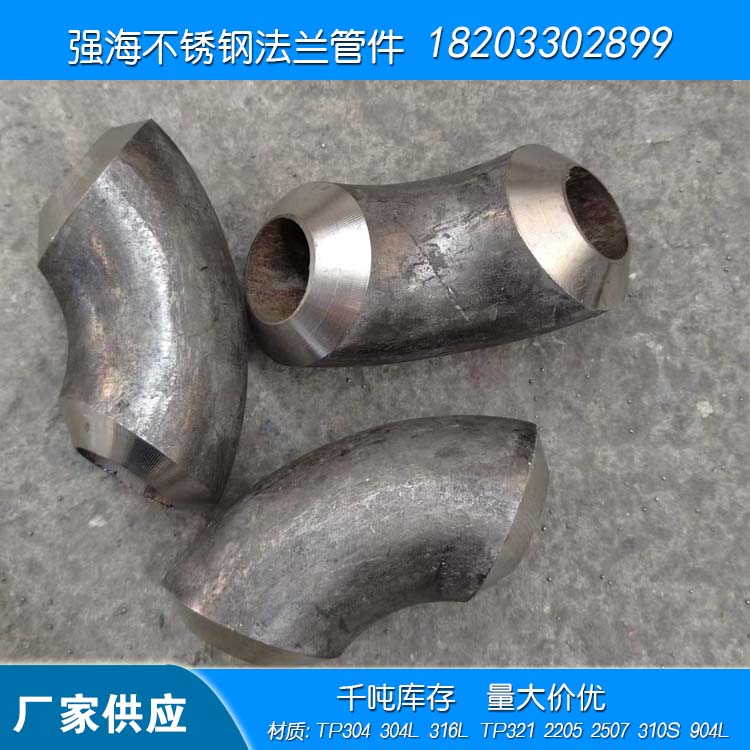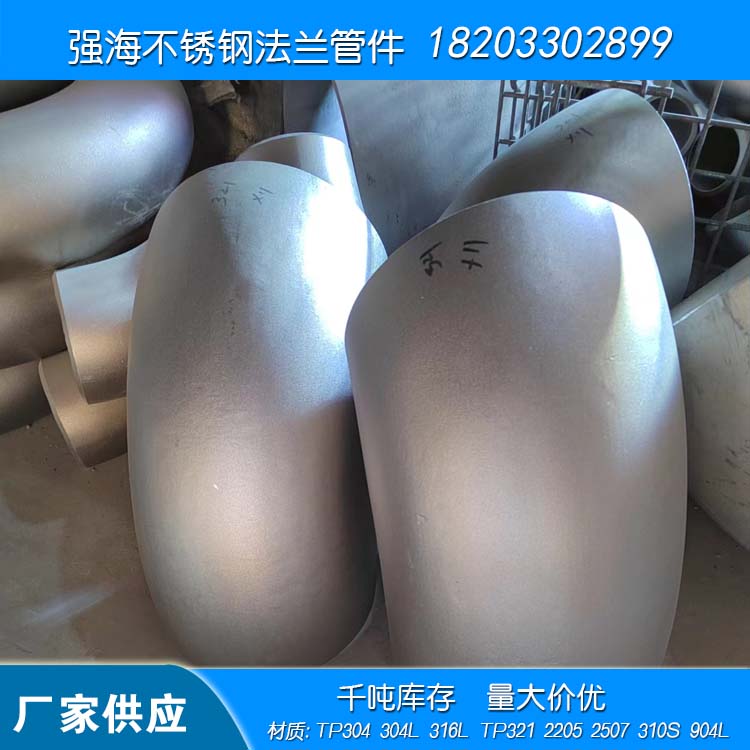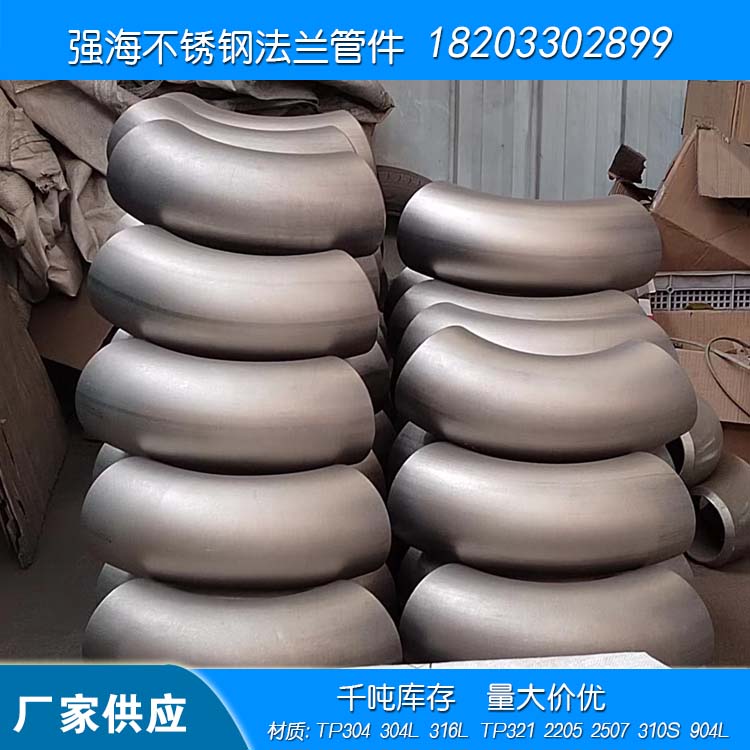


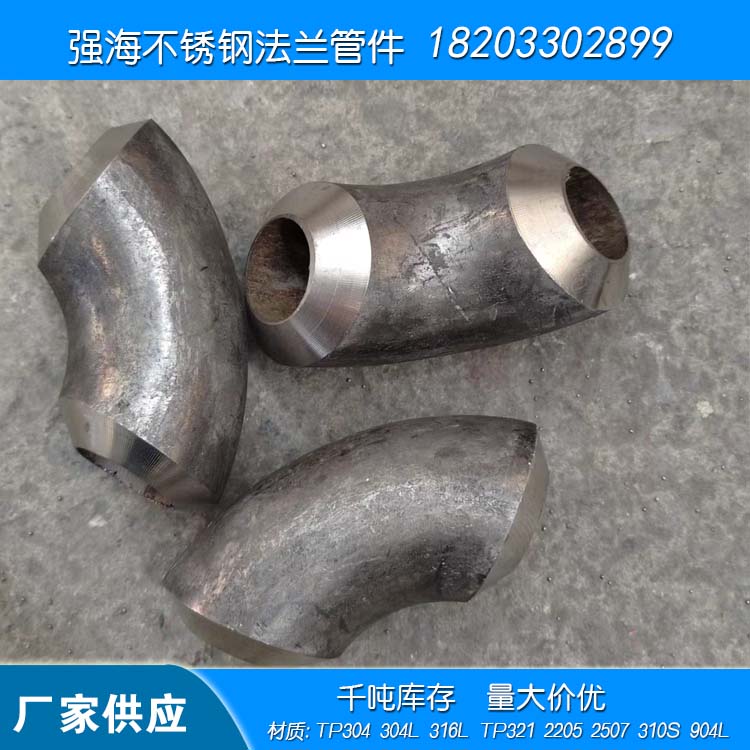
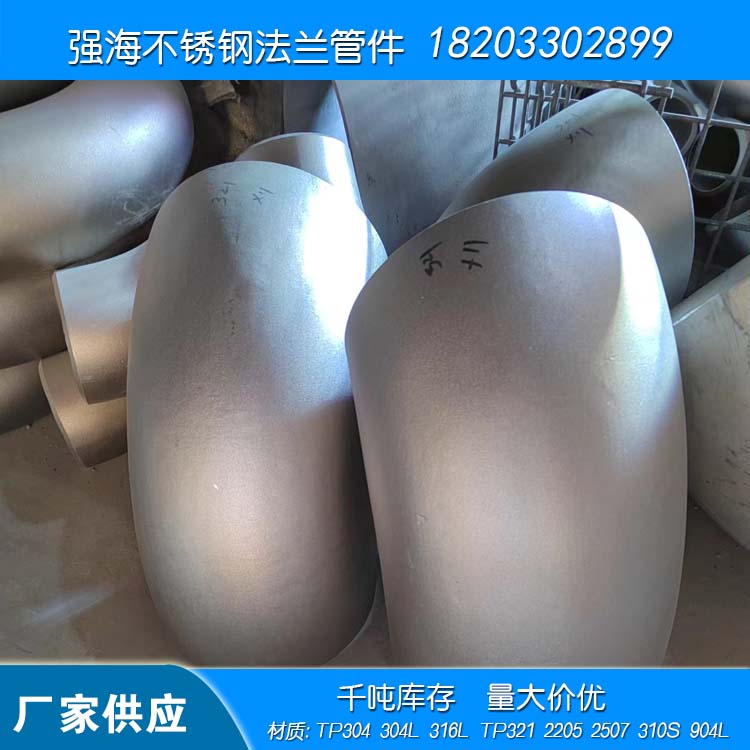


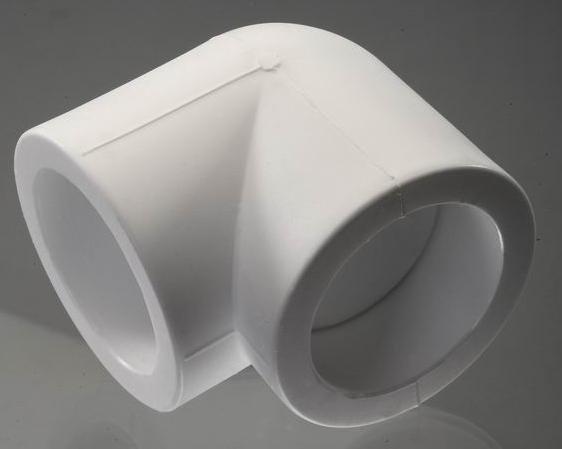





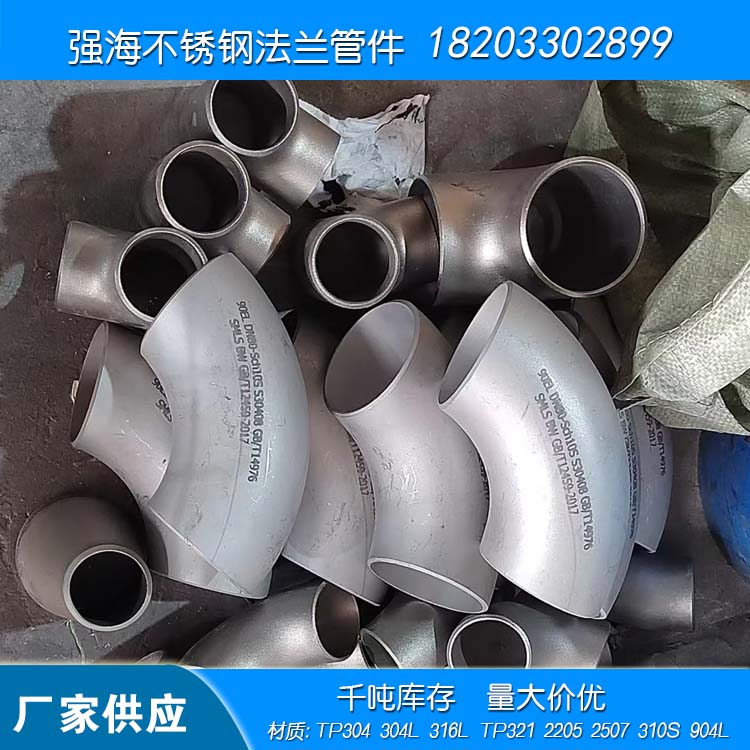


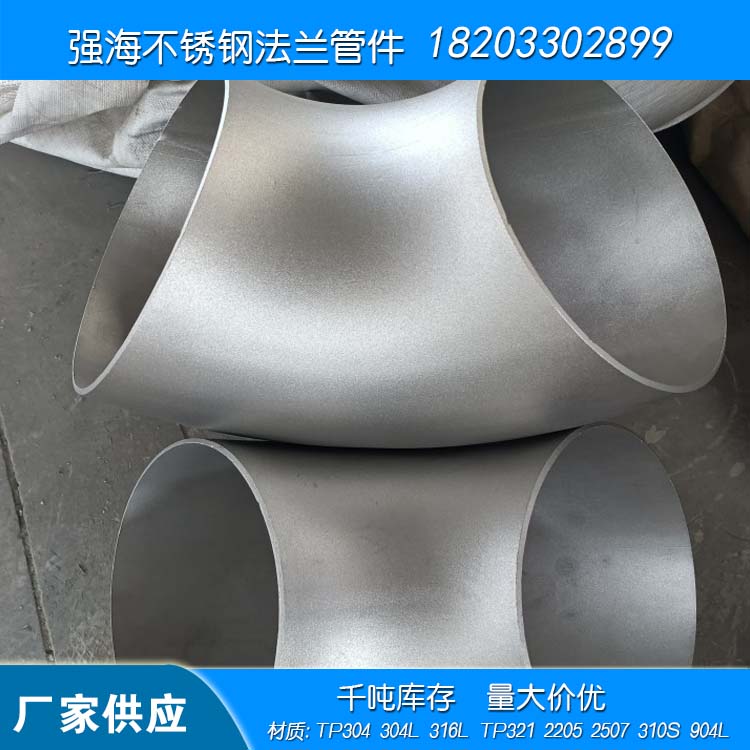
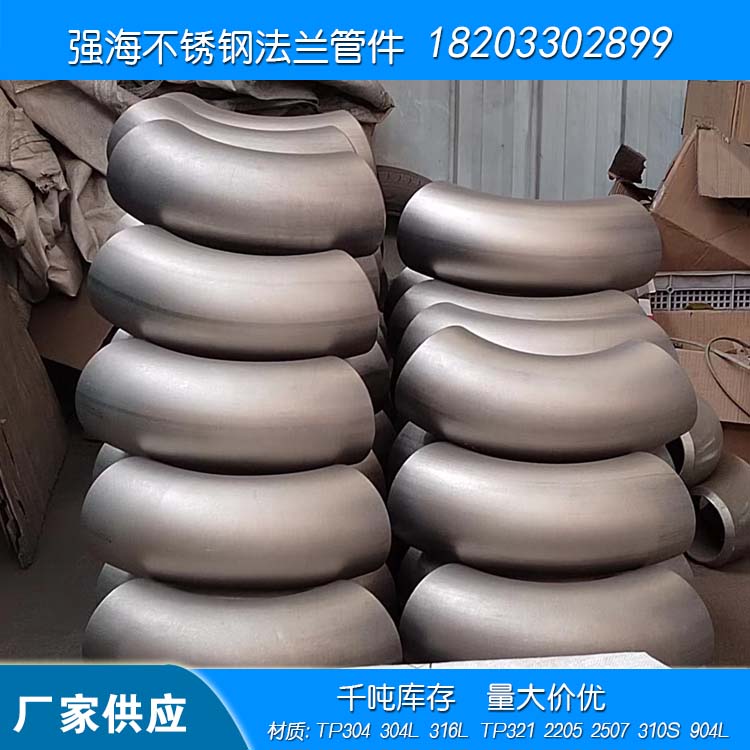
Welded elbows, forged elbows, cast elbows, etc., can be categorized according to the production process.
Material types include: carbon steel, cast steel, alloy steel, stainless steel (304, 316, 310, 321, 301), copper, aluminum alloys, etc. (However, the small wooden factory's products are all forgings.)
Manufacturing methods include: extrusion, rolling, forging, casting, etc. (Nowadays, it's mostly pure forging.)
304 stainless steel elbows can be further divided into equal-diameter elbows and unequal-diameter elbows. Equal-diameter elbows are used to connect pipes with the same outer diameter, while unequal-diameter elbows are used to connect pipes with different outer diameters.
Manufacturing standards include: National Standard, Electric Standard, Water Standard, American Standard, German Standard, Japanese Standard, etc.
In terms of curvature radius: They can be divided into long-radius elbows and short-radius elbows. A long-radius elbow refers to its curvature radius being equal to 1.5 times the outer diameter of the pipe, i.e., R = 1.5D. A short-radius elbow refers to its curvature radius being equal to the outer diameter of the pipe, i.e., R = 1.0D. (D is the elbow diameter, R is the curvature radius.)
By pressure class, there are approximately seventeen types, which are the same as the American pipe standards, including: Sch5s, Sch10s, Sch10, Sch20, Sch30, Sch40s, STD, Sch40, Sch60, Sch80s, XS; Sch80, SCH100, Sch120, Sch140, Sch160, XXS; with STD and XS being the most commonly used.