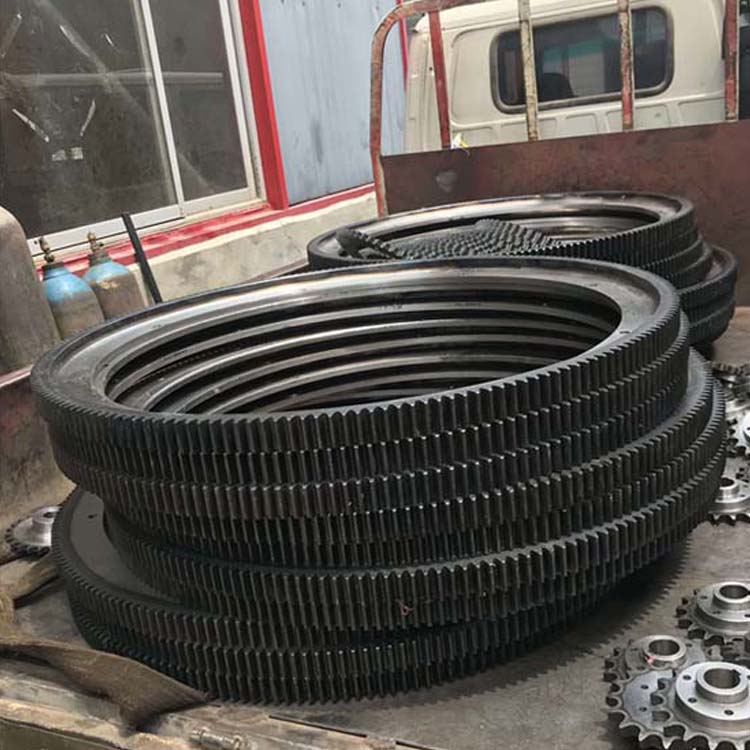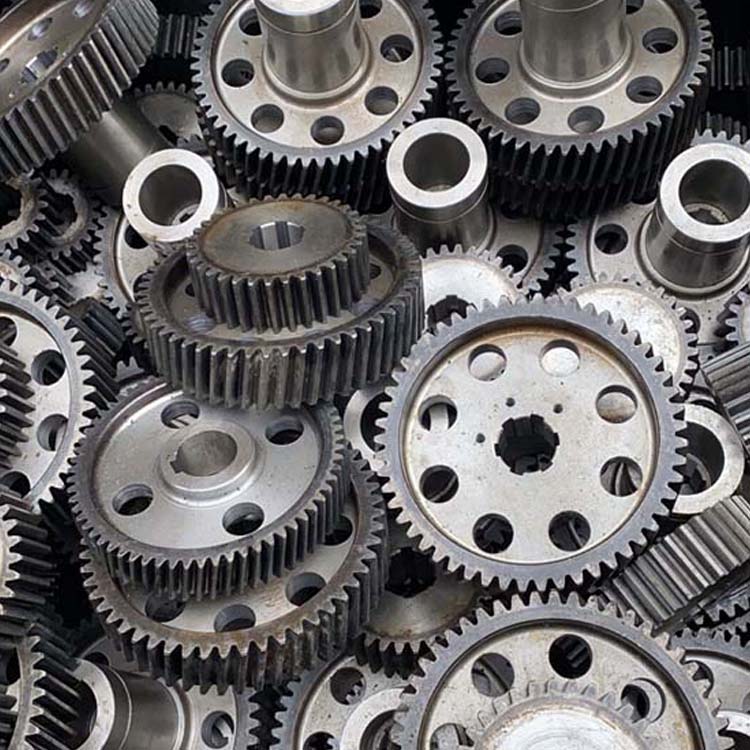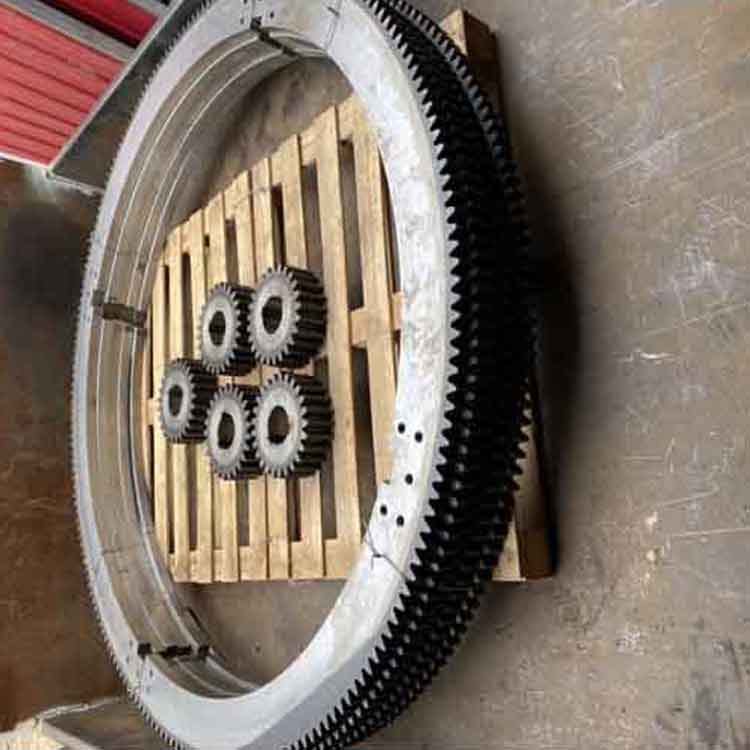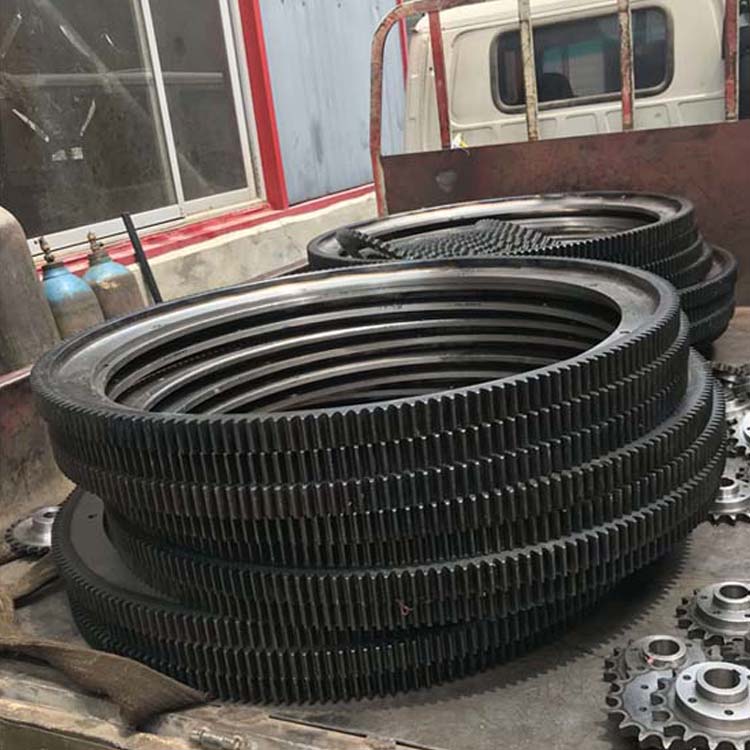


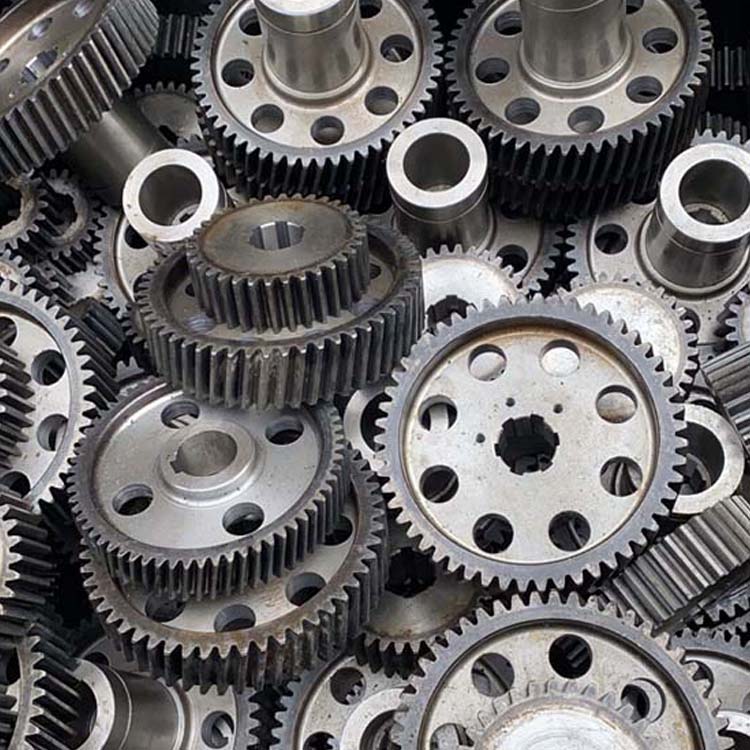
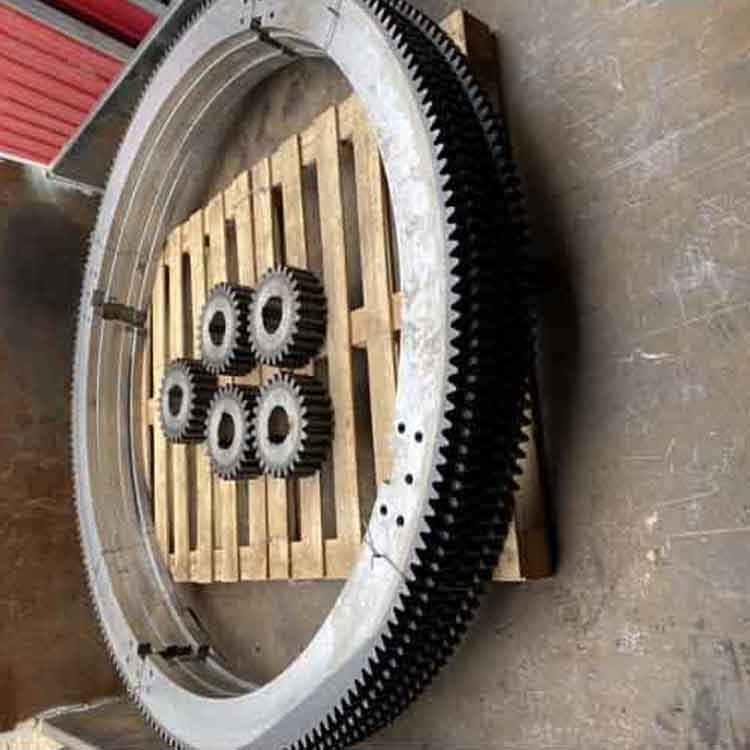







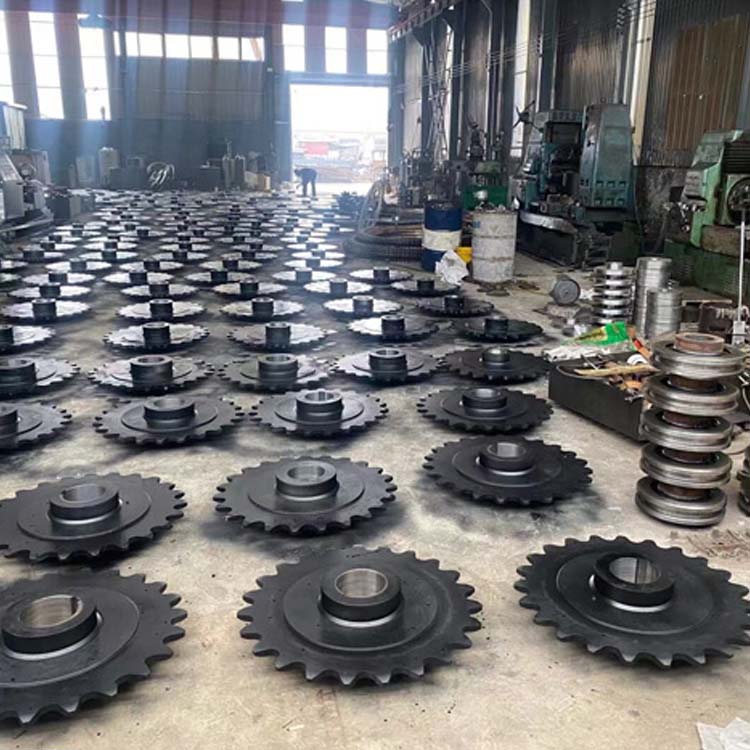
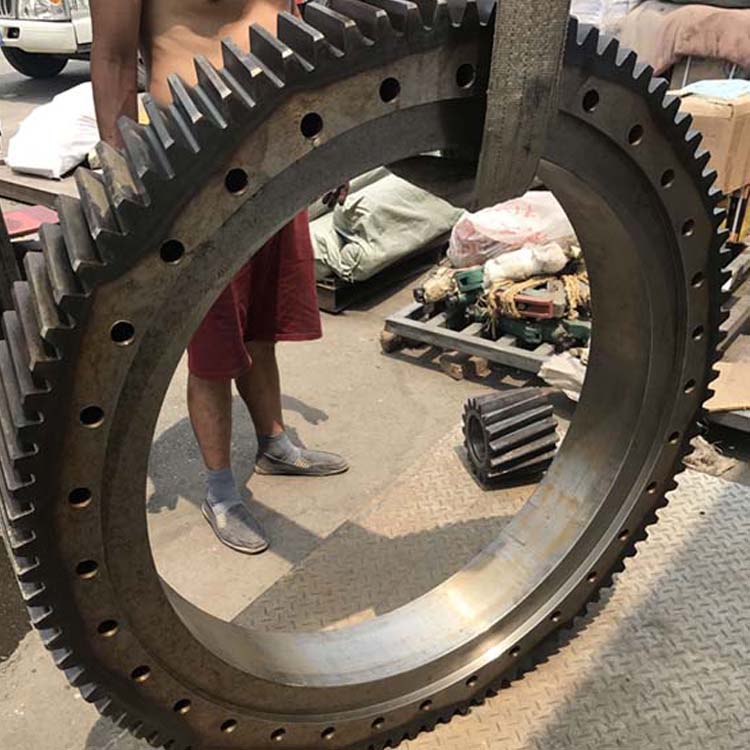
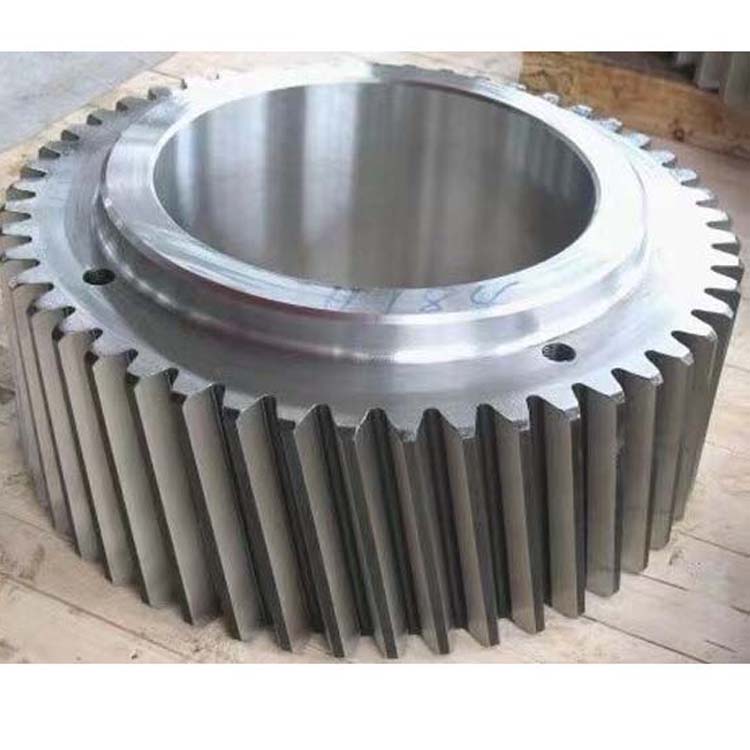
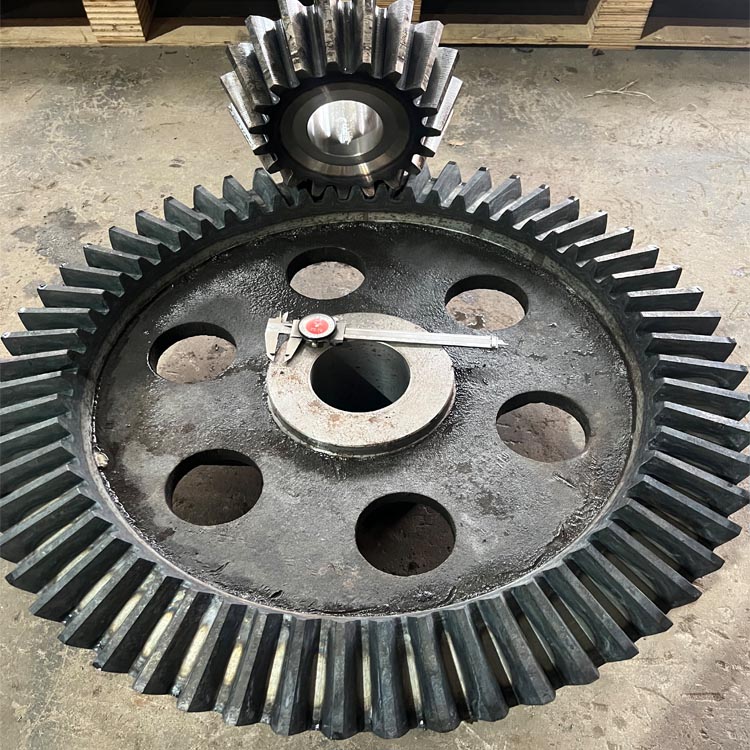
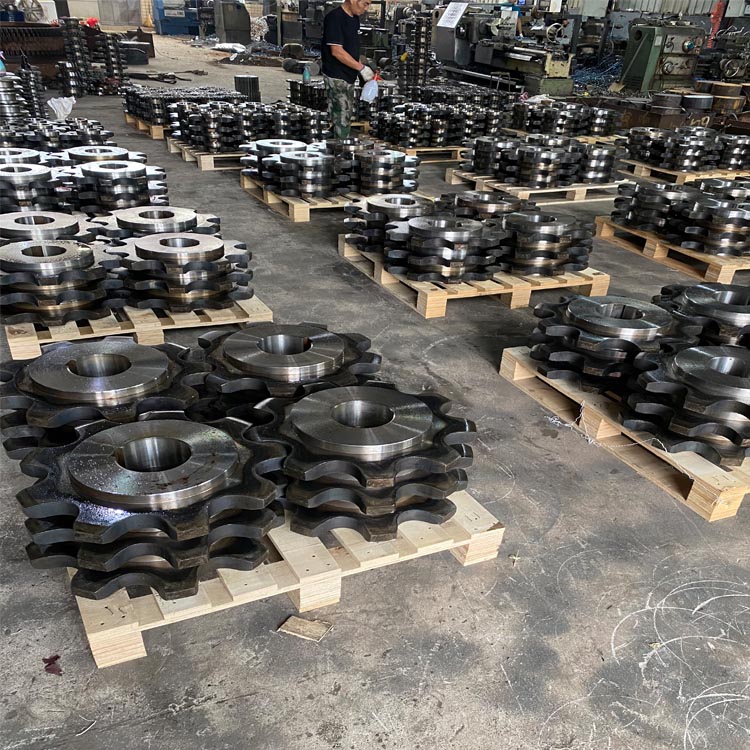
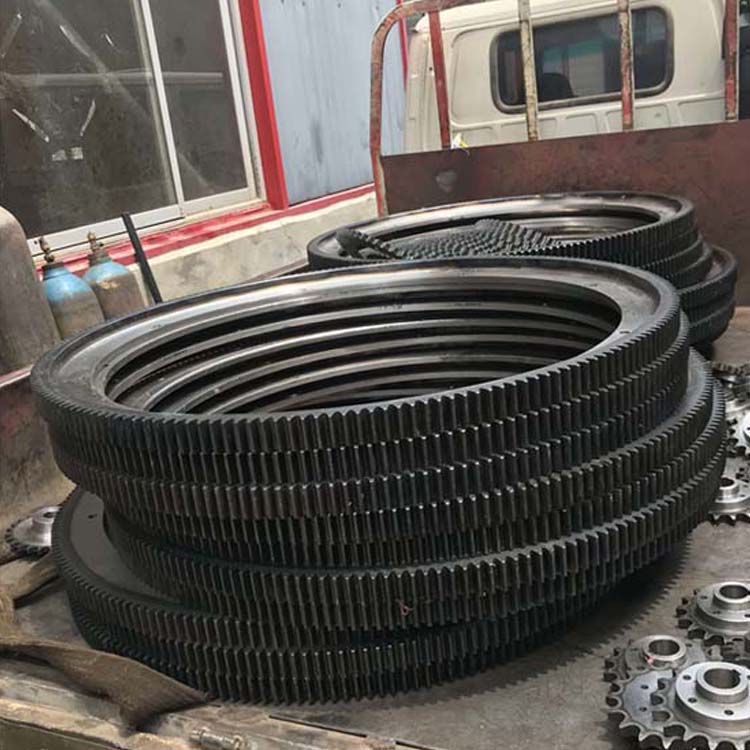
Gears; mechanical components with teeth on their rim that can continuously engage to transmit motion and power, being interlocking teethed parts. The diameter of the large gear is twice that of the small gear. If the large gear is stationary, how many revolutions does the small gear make as it completes one revolution around the large gear? Conversely, if the small gear is stationary, how many revolutions does the large gear make as it completes one revolution around the small gear? When the large gear is stationary and the small gear completes one revolution around it, the small gear makes one revolution. When the small gear is stationary and the large gear completes one revolution around it, the large gear makes one and a half revolutions, i.e., one revolution at 240°, one and a half revolutions at 360°, two revolutions at 480°, and three revolutions at 720°.