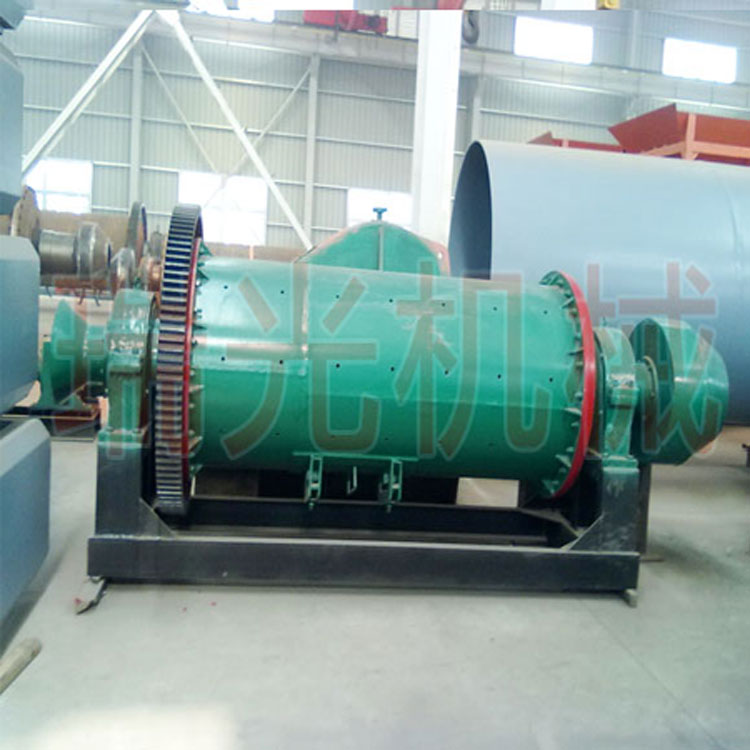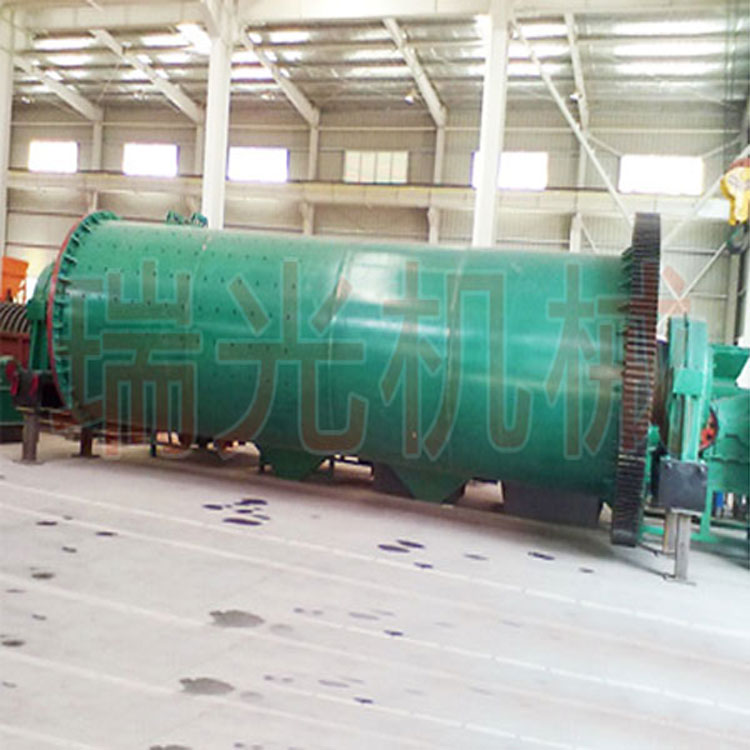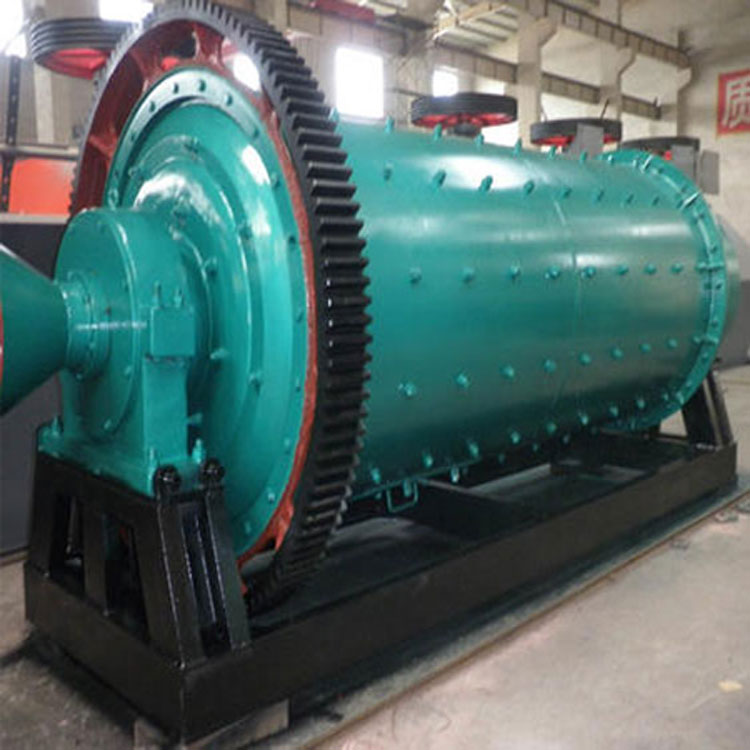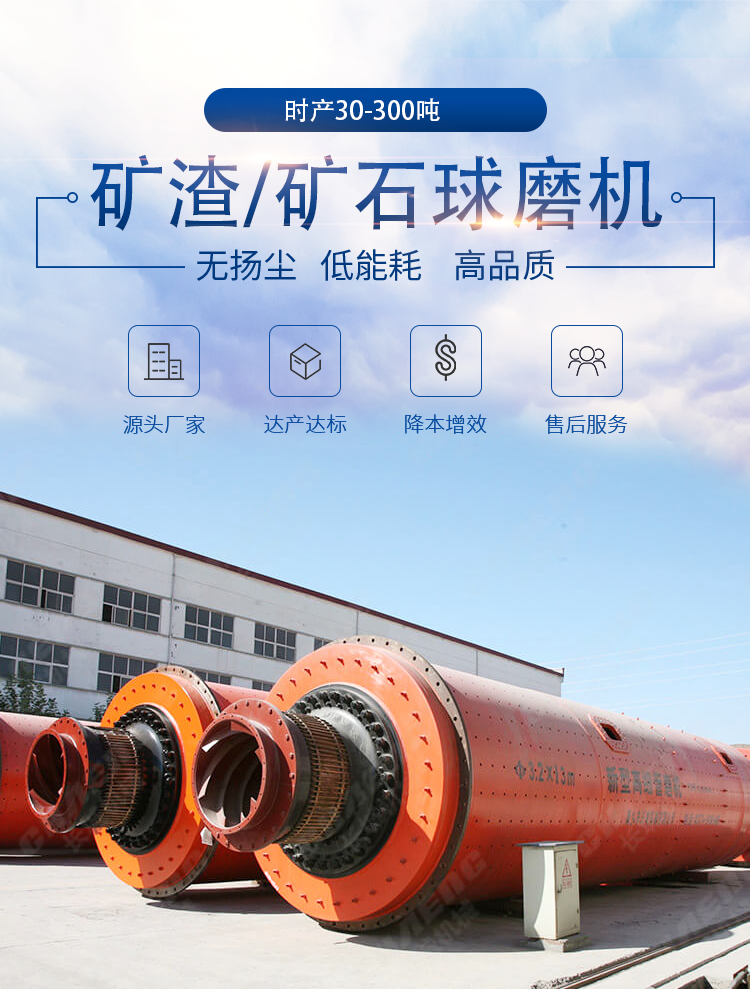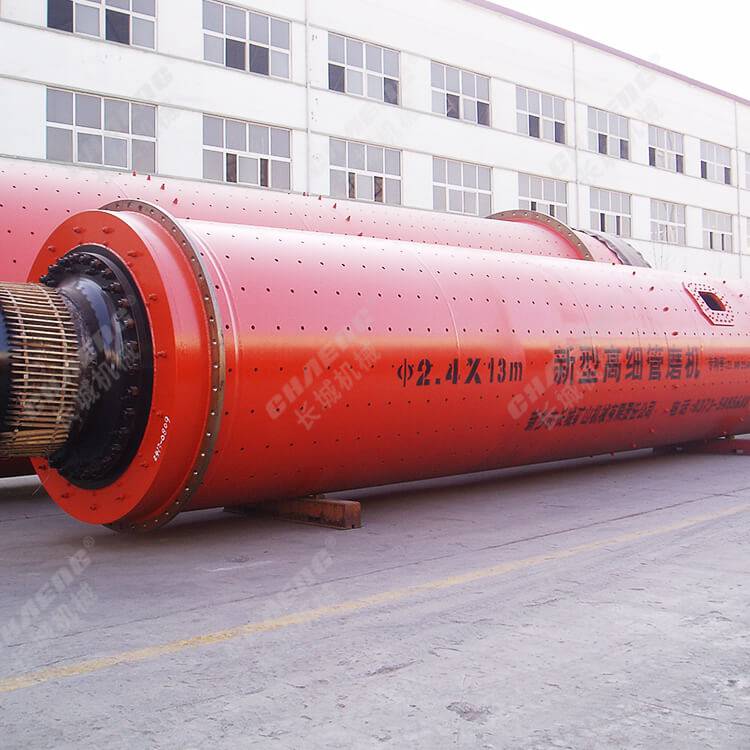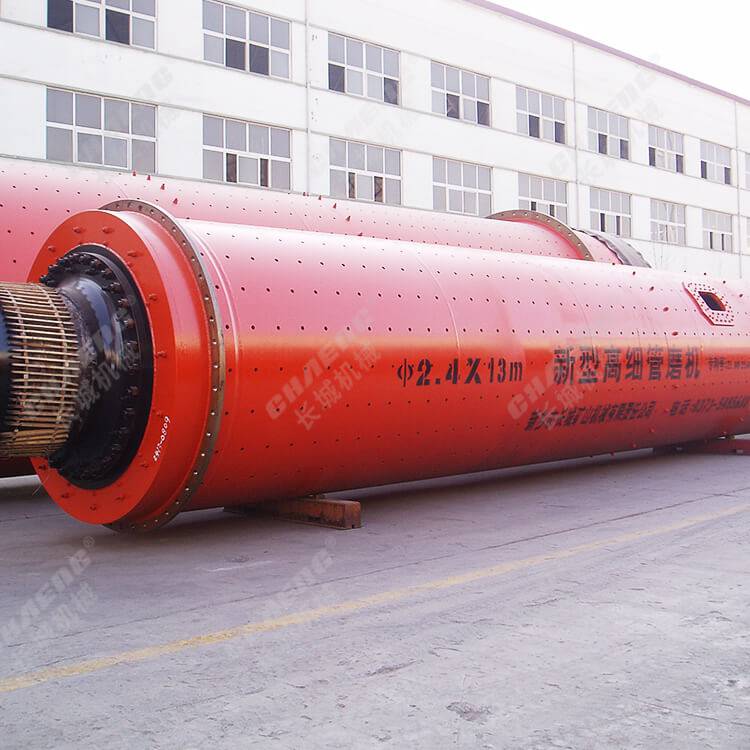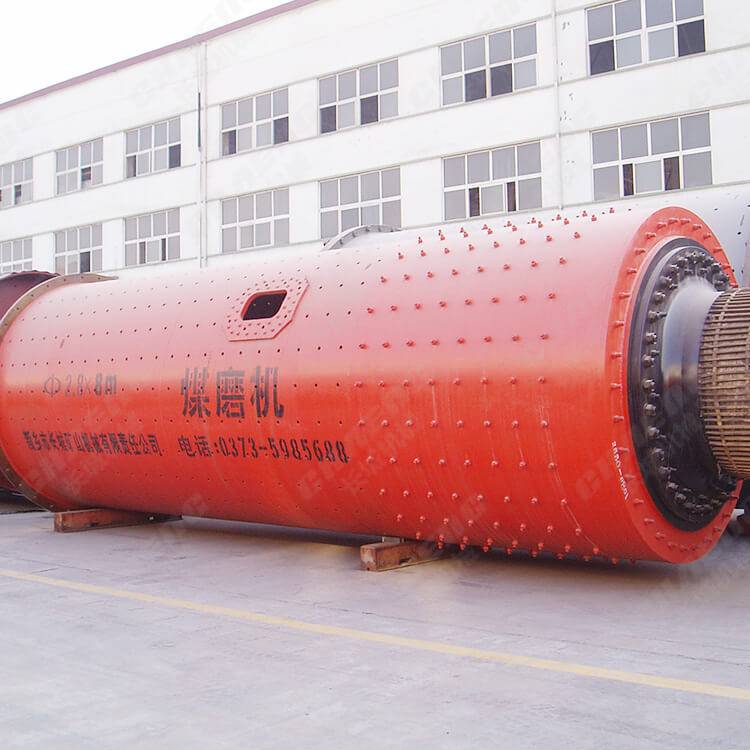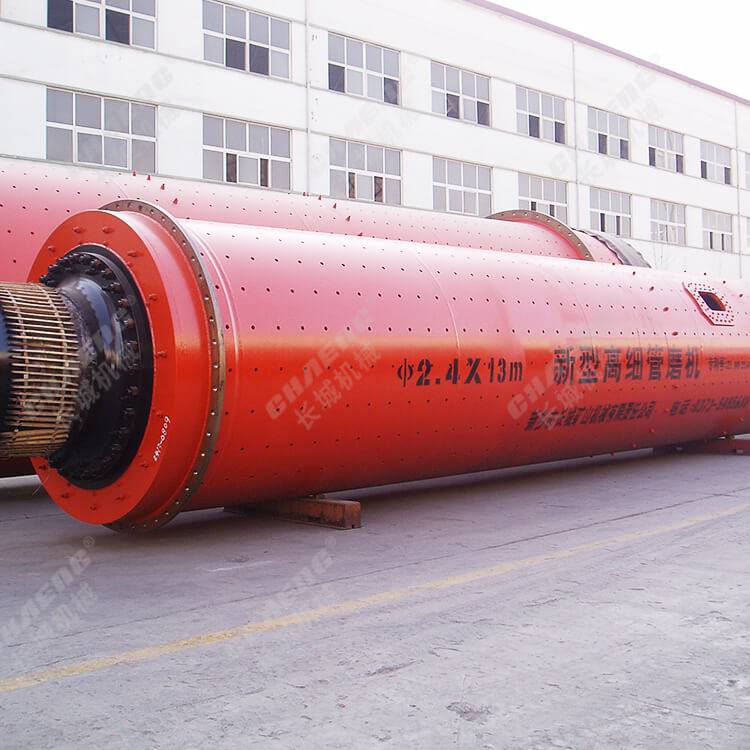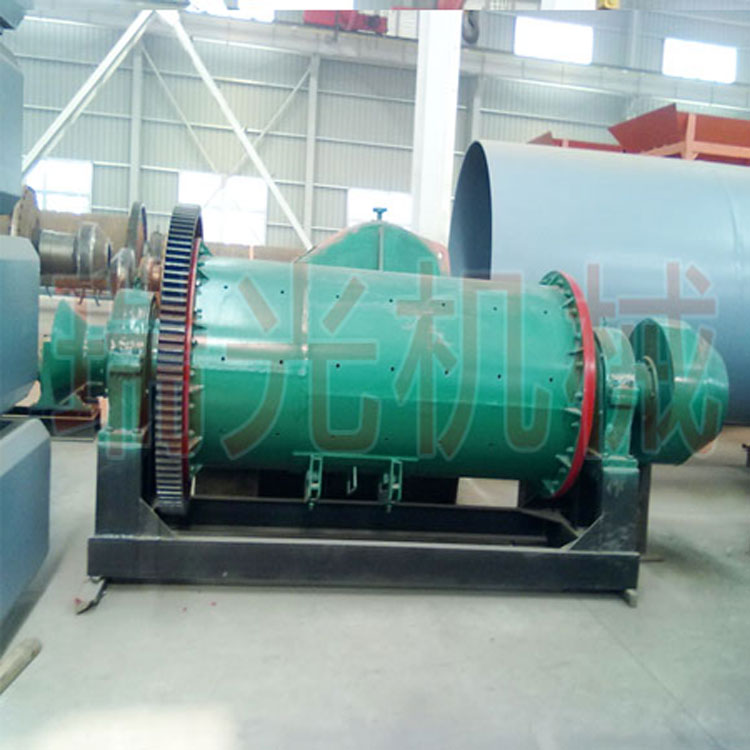

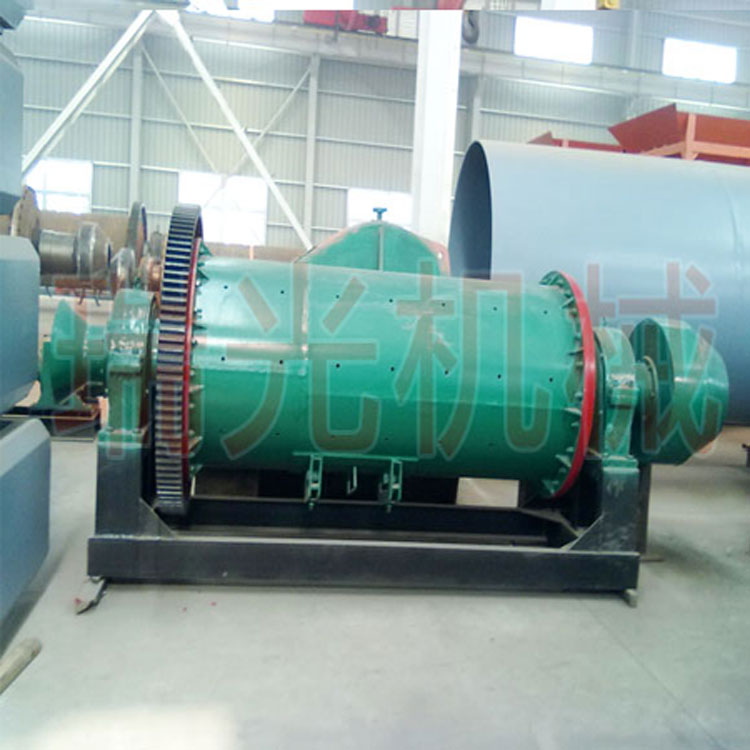
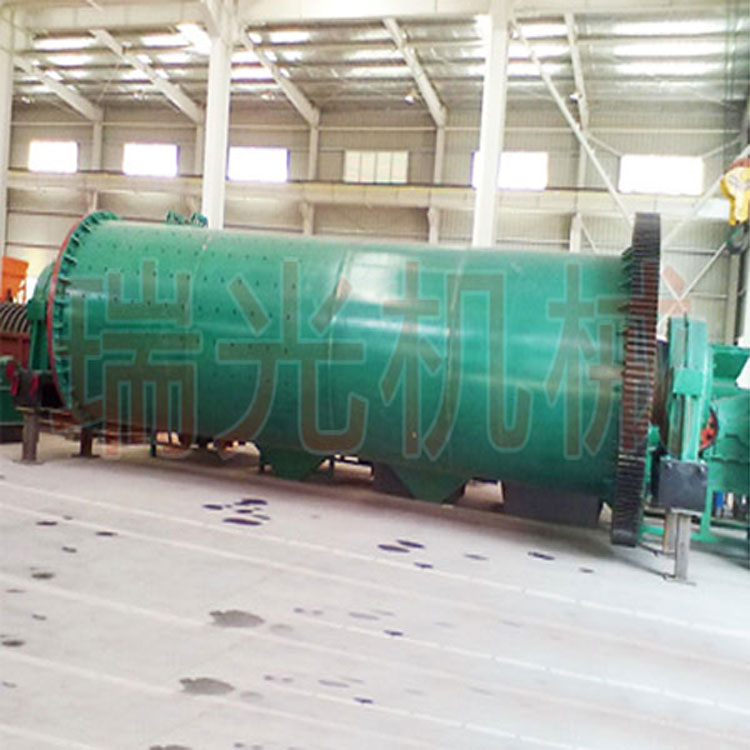
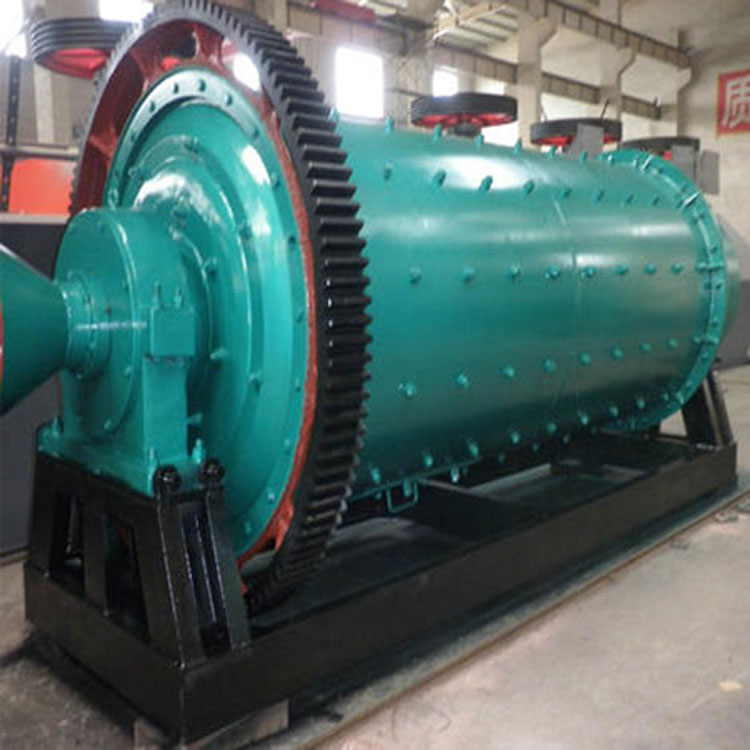


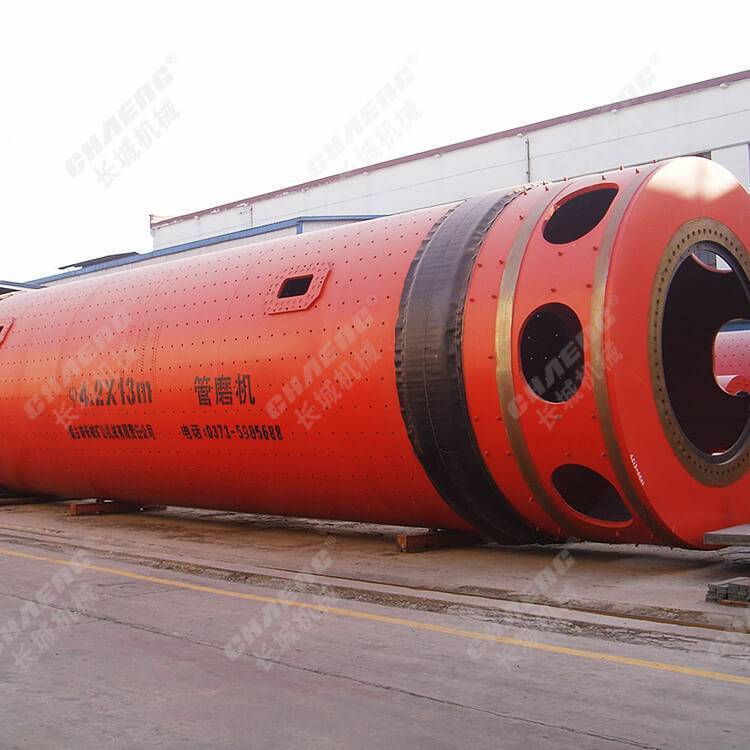
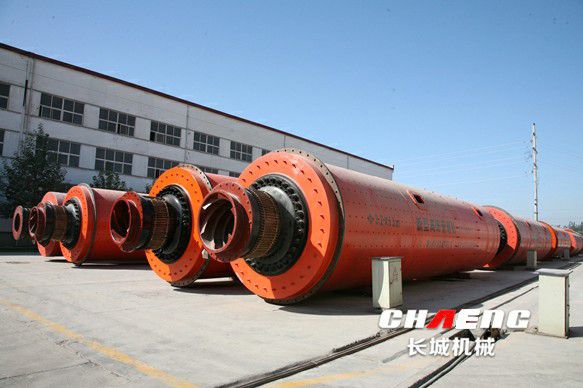
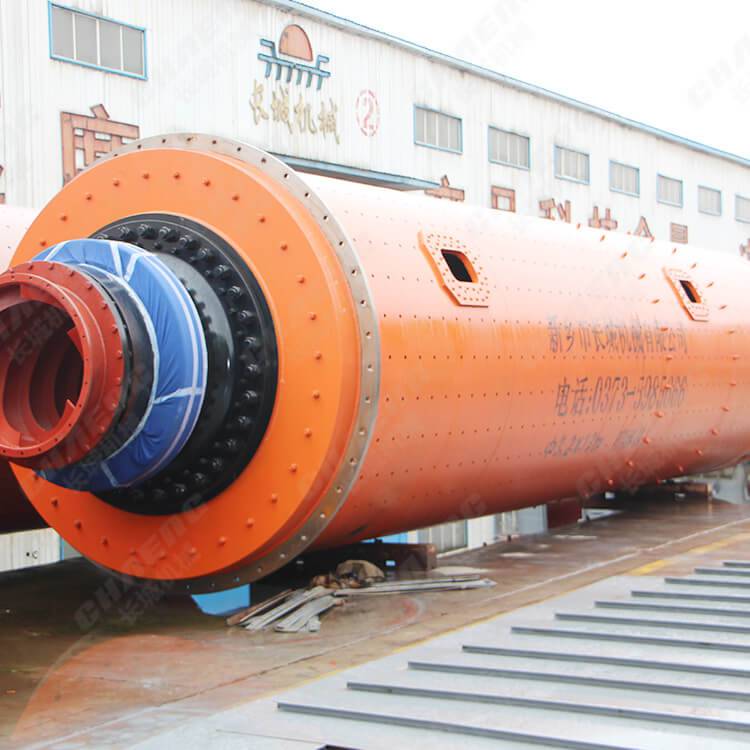






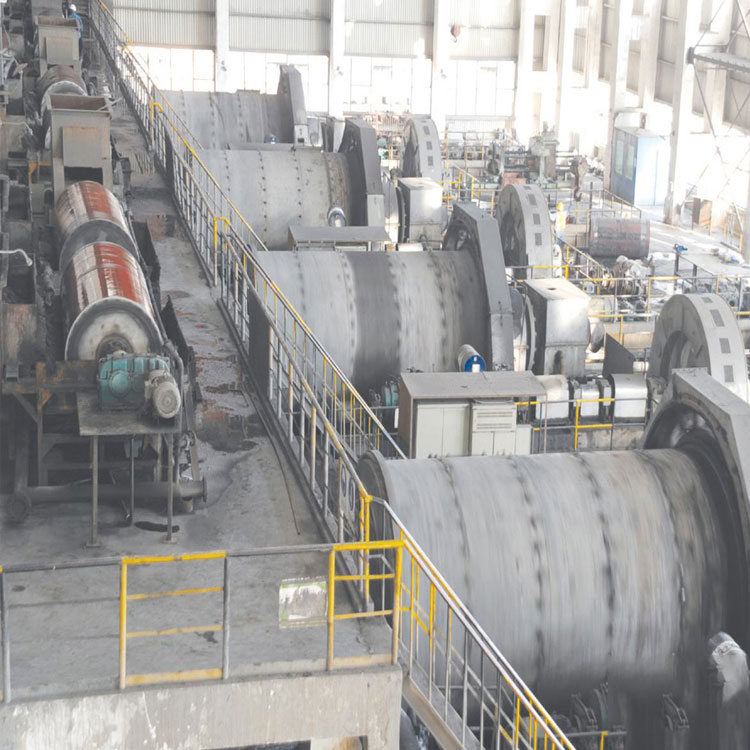
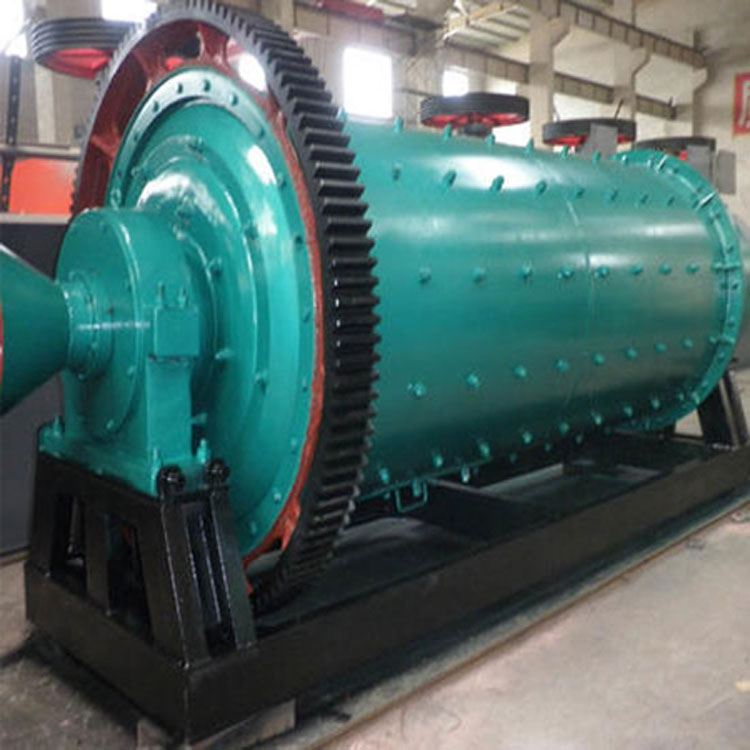
Energy-saving ball mills are crucial equipment for material crushing and further pulverization. They are widely used in the cement, silicate products, new building materials, refractory materials, fertilizer, black and non-ferrous metal ore processing, and glass ceramics industries, where they perform dry or wet grinding on various ores and other grindable materials.
The ball mill is directly driven by an electric motor via gears, with the reducer, drum, and motor aligned on the same central shaft. The mill's shaft and bearing are fitted with spherical roller bearings, resulting in rolling friction that reduces resistance and achieves energy-saving objectives. The static and dynamic ball mill operates on the principle of hydraulic lubrication, utilizing high-pressure oil喷射 to lift the mill, thereby separating the hollow shaft and sleeve from metal contact, reducing friction resistance during operation and lowering the ball mill's power consumption. This achieves energy-saving effects.
Working Principle:
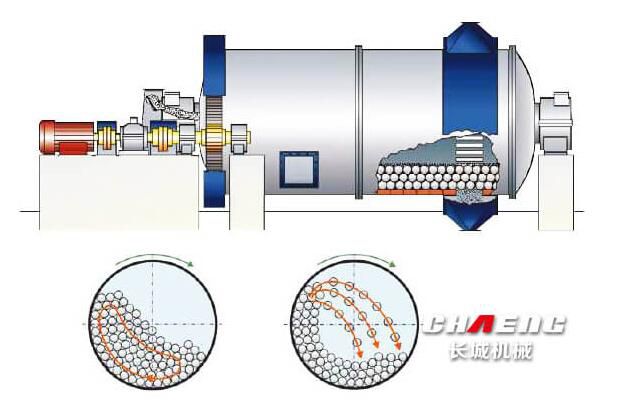
This energy-saving ball mill is a horizontal cylindrical rotating device, driven by external gears, featuring two compartments and a grid-type design. Material is evenly fed into the mill chamber through the feeding hollow shaft spiral from the feeding device. The chamber contains stepped or corrugated liners and different sizes of steel balls. As the cylinder rotates, centrifugal force elevates the steel balls to a certain height before they fall, exerting a heavy impact and grinding action on the material. After achieving coarse grinding within the chamber, the material passes through a single-layer separator plate into the next chamber, lined with flat plates and filled with steel balls for further grinding. The powdered material is discharged through a discharge grate, completing the powder grinding process.
Performance Features:
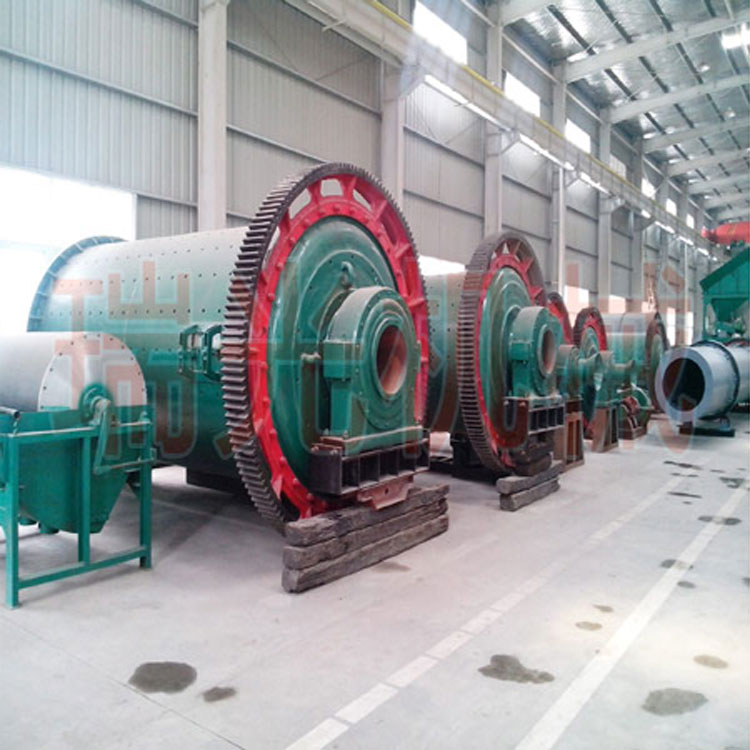
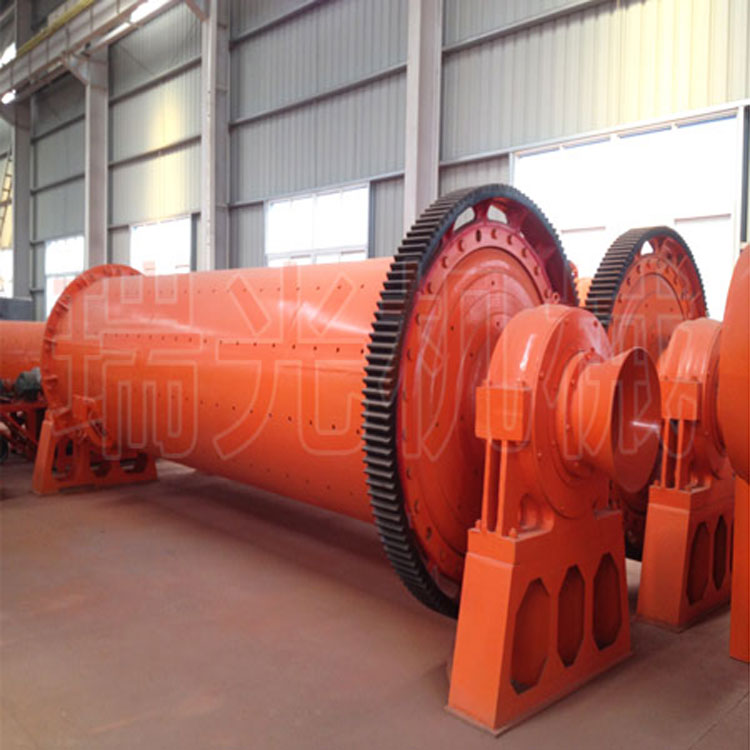
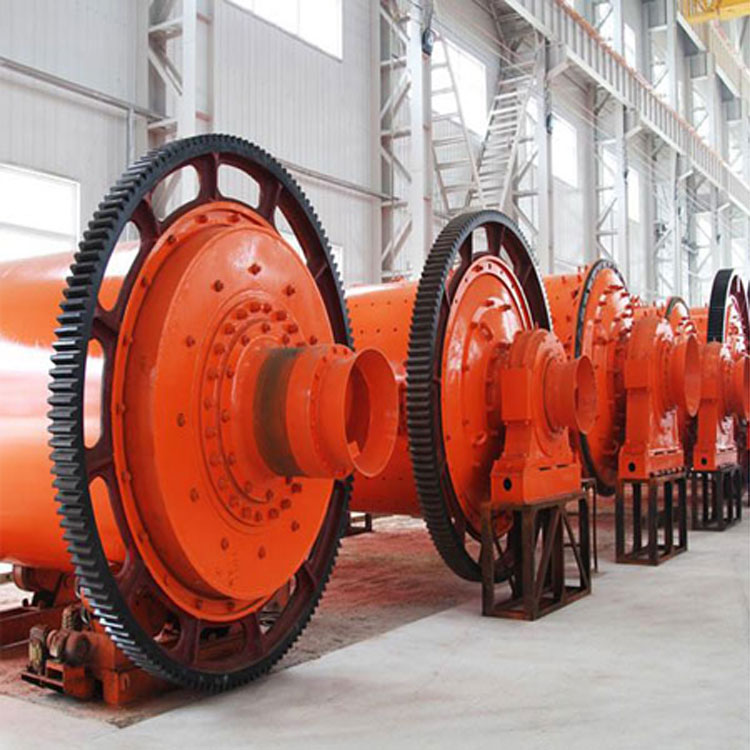
The energy-saving ball mill is composed of main parts such as the feeding section, discharge section, rotating section, and transmission section (reducer, small transmission gears, motor, and electrical control). The hollow shaft is made of cast steel, with removable lining. The large rotating gear is machined from castings. The drum is lined with wear-resistant plates, offering excellent wear resistance. The machine operates smoothly and is reliable in operation.
| Model | Tubular speed (r/min) | Higher ball loading capacity (t) | Feed Particle Size (mm) | Material Granularity (mm) | Production Output (t/h) | Power (kW) | Weight (t) |
| YMQ750×1800 | 39 | 1.0 | 0-15 | 0.075-0.3 | 0.3-0.8 | 11 | 3.5 |
| YMQ900×2100 | 37.8 | 1.5 | 0-15 | 0.075-0.3 | 0.8-2.1 | 15 | 5.2 |
| YMQ1200×2800 | 37 | 5.2 | 0-20 | 0.075-0.3 | 1.2-6.2 | 30 | 10 |
| YMQ1500×3500 | 29.7 | 8.0 | 0-25 | 0.075-0.3 | 2.8-9 | 75 | 17 |
| YMQ1500×4500 | 29.7 | 9.5 | 0-25 | 0.075-0.3 | 2.8-10 | 90 | 20 |
| YMQ1830×3600 | 25 | 11.5 | 0-25 | 0.075-0.3 | 5.2-25 | 130 | 28 |
| YMQ1830×4500 | 25 | 16.5 | 0-25 | 0.075-0.3 | 5.2-30 | 155 | 32 |
| YMQ2100×3600 | 24.6 | 17.4 | 0-25 | 0.075-0.3 | 6.5-40 | 180 | 41 |
| YMQ2100×4500 | 24.6 | 22.5 | 0-25 | 0.075-0.3 | 6.5-42 | 210 | 46 |
| YMQ2400×3600 | 22.4 | 23 | 0-25 | 0.075-0.3 | 7.2-92 | 210 | 65 |
| YMQ2400×4500 | 22.4 | 28.5 | 0-25 | 0.075-0.3 | 7.2-95 | 245 | 72 |
| YMQ2700×3600 | 20.7 | 40 | 0-25 | 0.075-0.3 | 12-145 | 320 | 80 |
| YMQ2700×4500 | 20.7 | 50 | 0-25 | 0.075-0.3 | 12-155 | 380 | 90 |