

Product Details

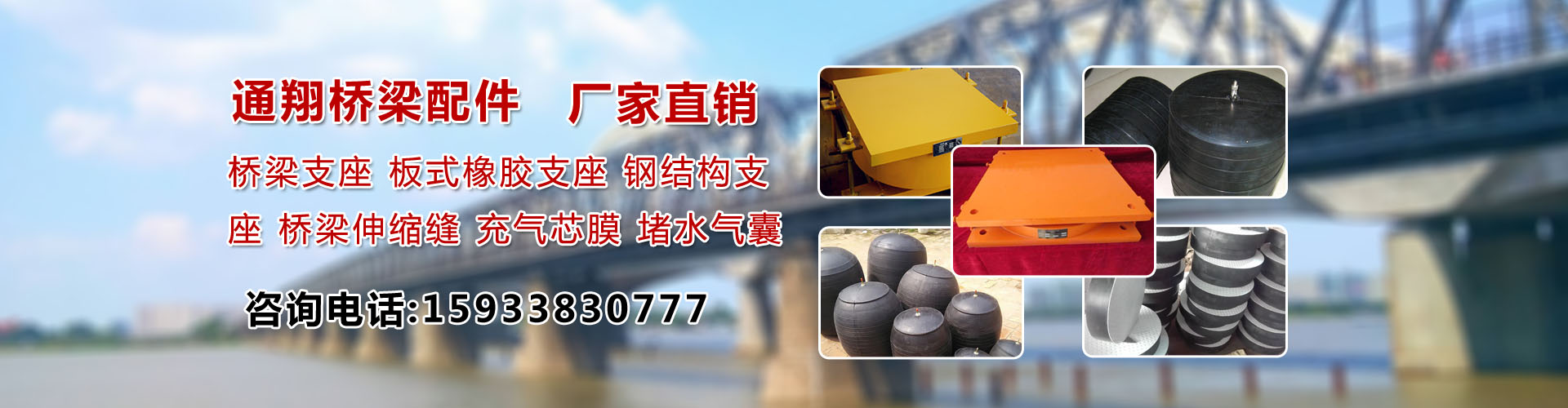
Pipe plug bladders, rubber supports, support steel plates, bowl-shaped supports, spherical supports, bridge expansion joints


价 格Negotiable
最小起订0 Piece库存0 Piece
 Business Card
Negotiable

Negotiable
Negotiable

Negotiable
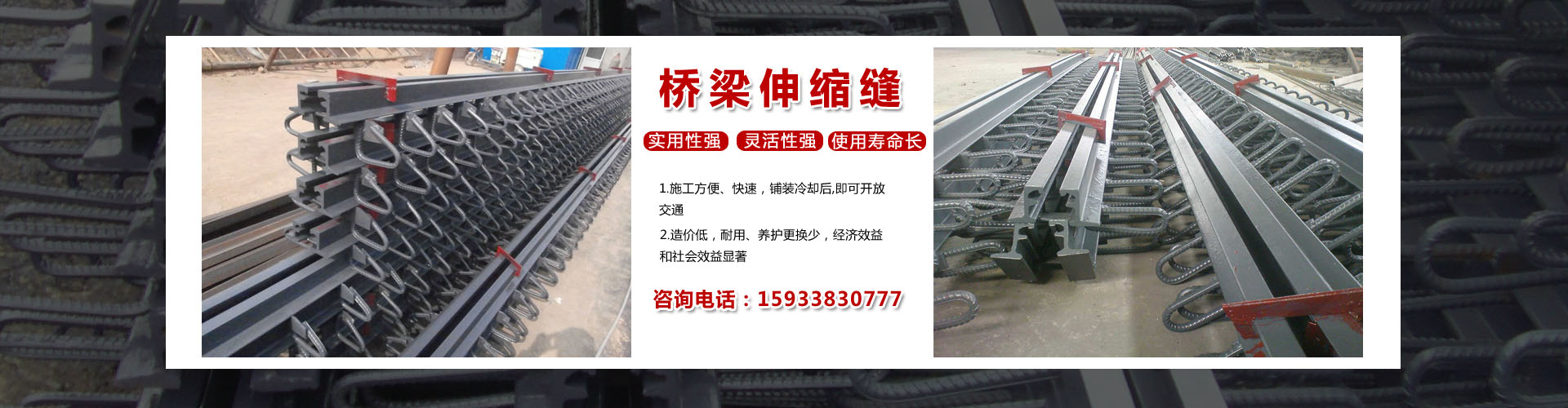
 TST Seamless Expansion Joint
Negotiable
Water Stop Air Bag for Pipes
Negotiable
TST Seamless Expansion Joint
Negotiable
Water Stop Air Bag for Pipes
Negotiable
 Bridge Leveling (Wedge) Steel Pla
Negotiable
Bridge Leveling (Wedge) Steel Pla
Negotiable
 Customizable, design drawings
Negotiable
Rubber Water Plug (Airbag)
Negotiable
Customizable, design drawings
Negotiable
Rubber Water Plug (Airbag)
Negotiable
 GPZ Series, JPZ Series Basin-Type
Negotiable
GPZ Series, JPZ Series Basin-Type
Negotiable
 Rubber Inflatable Molding Core -
Negotiable
Rubber Inflatable Molding Core -
Negotiable
 GQF-C40 60 80
Negotiable
GQF-C40 60 80
Negotiable
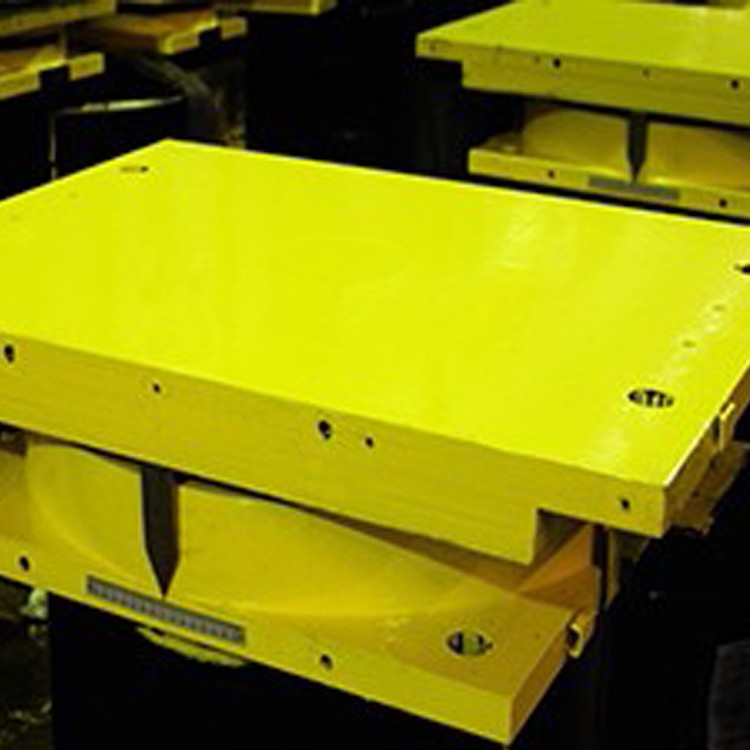 GPZ(2009) Series, GPZ(KZ) Series
Negotiable
GPZ(2009) Series, GPZ(KZ) Series
Negotiable
 Steel plate on the bracket
Negotiable
Steel plate on the bracket
Negotiable
The multi-section expansion joints consist of edge beams, middle beams, support crossbeams, displacement control boxes, bearing supports, clamping supports, anchoring components, and sealing rubber strips. Each section allows for a displacement of 0-80mm. The number of sections is determined based on the actual displacement requirements of the bridge, with the current maximum displacement reaching 1200mm. The main types include: XF-type diagonal support expansion devices and SSFB-type straight support expansion devices. These multi-section expansion joints use non-standard steel with a height of only 50mm, featuring a simple structure, easy installation, and clear advantages in safety, comfort, and durability. They are suitable for all beams with a paving layer thickness of 80mm or more, both convenient for replacing expansion devices in old bridges and for selecting during the construction of new bridges.
Engineers, after selecting the modular expansion joint system, should provide the following documents to the manufacturing factory for ease of production: Cross-sectional drawings of the bridge, including detailed design information such as the cross slope, pedestrian walkway, safety strips, and railing dimensions. The construction schedule for the expansion joint system and the installation temperature and variation range. Clearly specify any special requirements from the user. This facilitates the factory in manufacturing and assembling according to user specifications, avoiding unnecessary rework, and ensuring quality service. If installation positioning values are not provided, the factory will default to positioning the joints by compressing the width of the transverse joint by half for assembly and shipment.
How to determine the expansion and contraction range directly affects the selection of the expansion device size. An improper size selection of the expansion device can significantly impact its operational efficiency. Moreover, when choosing the size of the expansion device, one should also consider the gap between beams and plates to ensure sufficient anchoring at both ends of the expansion device, thereby achieving the desired performance. Therefore, when selecting the expansion range of the expansion device, it is crucial to leave adequate allowance to ensure its effectiveness and durability.
Features of multi-section bridge expansion joints:
1. Rigid and Dependable Expansion Joint: The edge beams and mid-beams of this expansion joint are made of 16Mn steel, capable of withstanding vertical loads and horizontal impacts from high-volume, heavy vehicles. The anchoring components are firmly welded to the beam body and pre-buried reinforcement of the bridge abutment, reliably transferring vehicle loads to the pier. The structure is rational and durable, suitable for bridges designed to handle vehicle loads up to 20 tons and trailer loads up to 120 tons.
2. This expansion joint features high flexibility: The displacement control system of this device, consisting of multiple joints, is composed of elastic elements such as rubber springs and PTFE pressure supports, as well as oblique support components. The displacements of each group are uniform, and the frictional resistance during expansion and contraction is minimal.
3. Smooth Bridge Surface, Comfortable Driving: This expansion joint device ensures both the free expansion and contraction displacement of the beam structure and forms a smooth and integrated bridge surface joint, providing a stable and comfortable driving experience.
4. Water and Corrosion Proofing: Chloroprene sealing strips embedded in the groove of each steel beam. Milled as a whole piece according to the bridge width, they offer excellent elastic deformation and waterproofing/dustproofing capabilities; effectively protecting the internal components of the expansion device and the bottom support of the beams from corrosion.
5. Large Displacement with Convenience: This device's displacement is designed and manufactured in modular increments, ranging from 80 to 1200mm. The bridge design and construction department can freely select the actual expansion and contraction amount of the bridge superstructure.
Comparison of Single Groove Expansion Joints and Multi-Groove Expansion Joints
Single Groove Expansion Joint: 1. Compression force of 1.0 KN/m during contraction; 2. Lateral shearing force of 2.0 KN/m within the expansion joint's working range.
Multi-seam expansion joint: 1. Compression force of 1.0 KN/m during contraction; 2. Tension force of 4.0 KN/m during expansion; 3. Lateral shear force of 3.0 KN/m within the working range of the expansion joint.
Multi-piece bridge expansion joint construction and installation steps:
1. The construction unit must, according to the dimensions provided in the design drawings, leave槽for installing expansion devices at the ends of beams (or slabs) and between beam ends, as well as at beam ends and bridge abutments. Anchor bars should be embedded as per the drawings, and these should have a reliable connection with the beam ends or bridge abutments. If the main reinforcement requires welding, it should comply with the relevant provisions of the bridge construction specifications.
2. Factory-assembled modular bridge expansion joints are usually transported to the construction site. During transportation, if the length of the transport is limited or for other reasons, the joints need to be assembled on-site, construction should be carried out under the guidance of the manufacturing facility. When the expansion devices need to be stored on-site, they should be elevated off the ground by at least 30cm, and they must not be stored outdoors.
3. Prior to installing the expansion joint, it is essential to verify that the gap between the ends of the main beam (or deck) after construction matches the design specifications, as well as the accuracy of the embedded anchor reinforcement or component placement.
4. Before the telescopic device is hoisted and positioned, the concrete in the reserved slots should be roughened and cleaned. During installation, the centerline of the telescopic device should align with the bridge centerline, with no deviation exceeding 10mm, and its top elevation should match the designed elevation. Then, simultaneously weld the anchoring steel bars on the telescopic device to the pre-buried steel bars on both sides of the beam.
5. After completing the aforementioned processes, install necessary molds according to the design drawings, and pour epoxy resin concrete with a strength greater than C30 into the reserved slots in the concrete. Necessary measures should be taken during the concrete pouring, ensuring it is compacted and preventing the concrete from渗入 the MZL type expansion joint displacement control box. It is also not permitted to splash concrete into the seams and surfaces of the sealed rubber belts; if this occurs, it should be cleared immediately and then properly cured. High-strength concrete with a strength of at least C50 can also be used for filling and compacting.
6. Prior to paving, the expansion joints of multi-section bridges should be covered with temporary protective measures to prevent collisions and direct load bearing from vehicles. After the bridge deck paving is completed, there should be no gaps or crevices on the bridge surface.

Phone Consultation