

Product Details

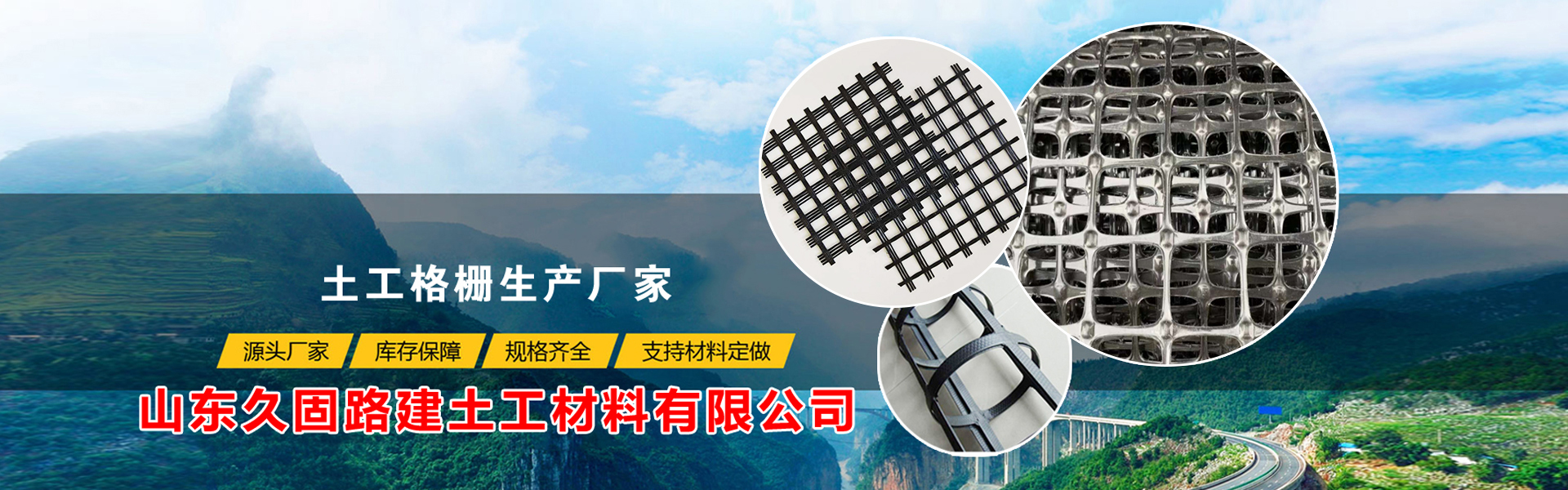
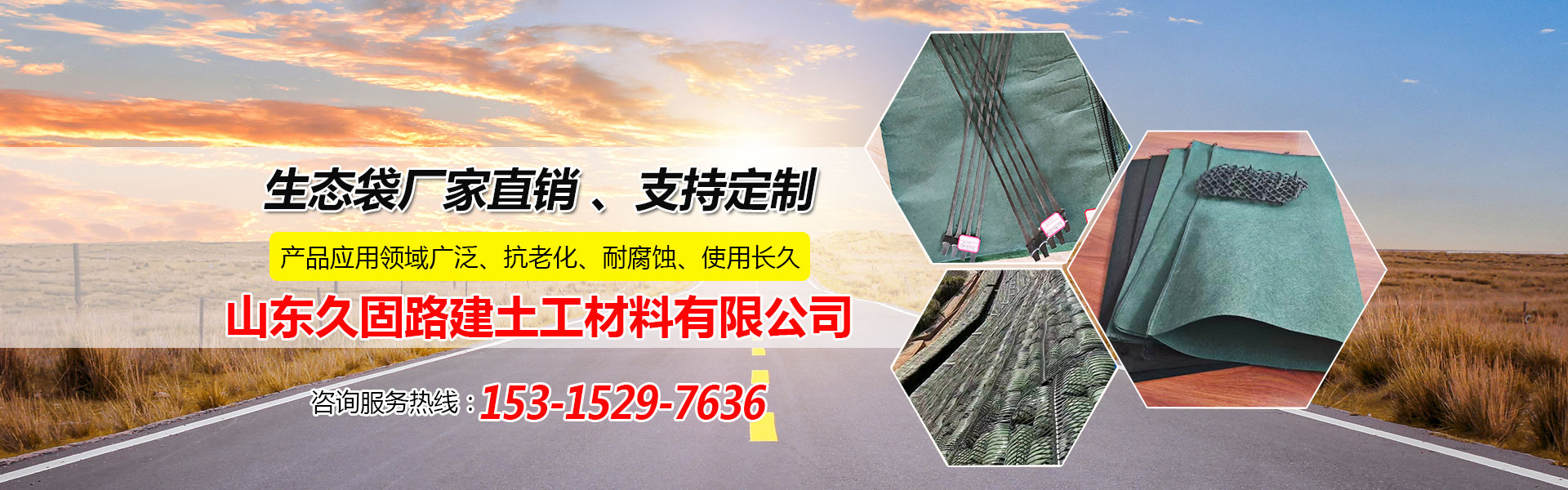
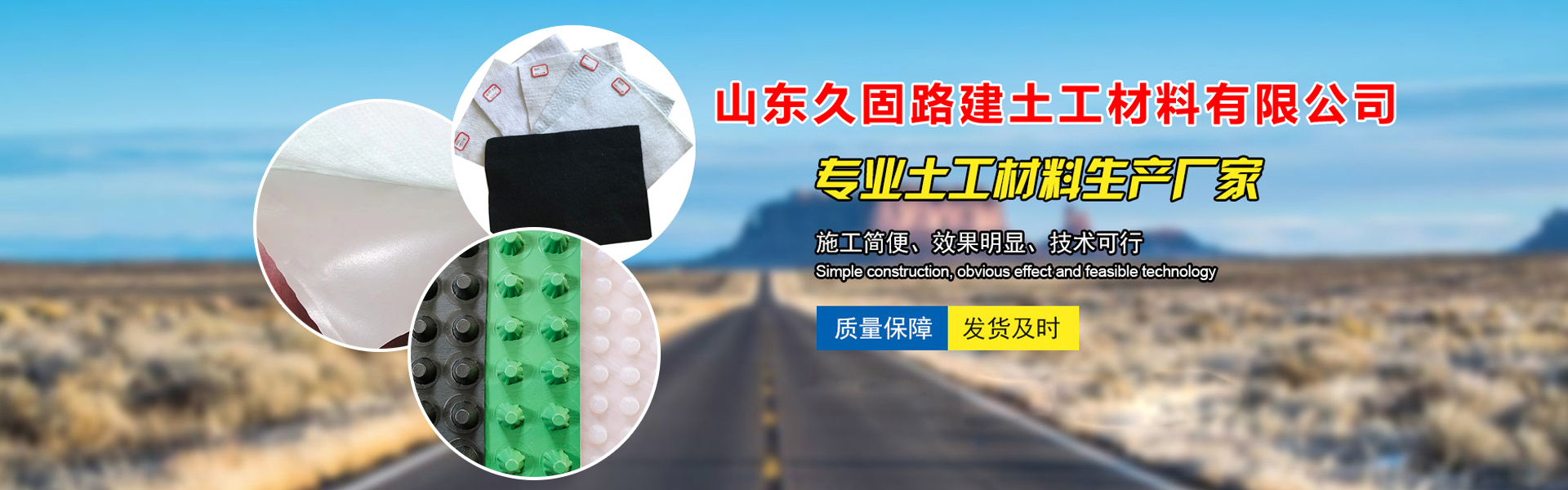
Ecological bags, glass fiber geogrids, steel-plastic geogrids, bidirectional plastic geogrids, unidirectional plastic geogrids, crack-resistant strips, etc.


价 格Negotiable
最小起订0 Piece库存0 Piece
 Business Card
Negotiable

Negotiable

Negotiable

Negotiable
 Seam tape
Negotiable
Seam tape
Negotiable
 Composite Geomembrane
Negotiable
Composite Geomembrane
Negotiable
 Grille composite geotextile
Negotiable
Grille composite geotextile
Negotiable
 Flexible Perforated Drainage Pipe
Negotiable
Flexible Perforated Drainage Pipe
Negotiable
 Sealant for joint filling
Negotiable
Sealant for joint filling
Negotiable
 Waterproof sheet
Negotiable
Waterproof sheet
Negotiable
 Double-sided stretch plastic supp
Negotiable
Double-sided stretch plastic supp
Negotiable
 Geotextile Cellular Confinement S
Negotiable
One-way grate
Negotiable
Geotextile Cellular Confinement S
Negotiable
One-way grate
Negotiable
 Polyester polyester geogrid
Negotiable
Polyester polyester geogrid
Negotiable
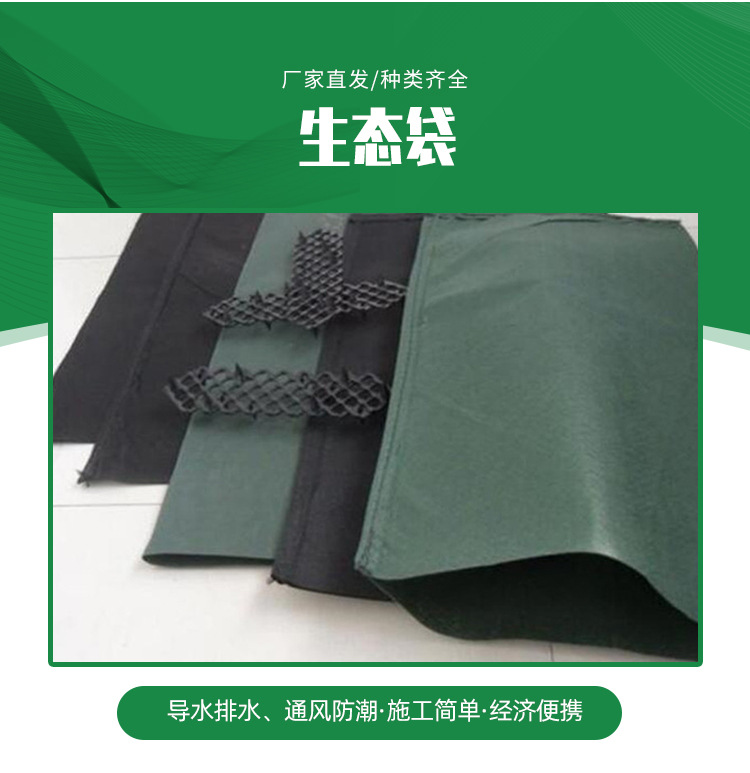
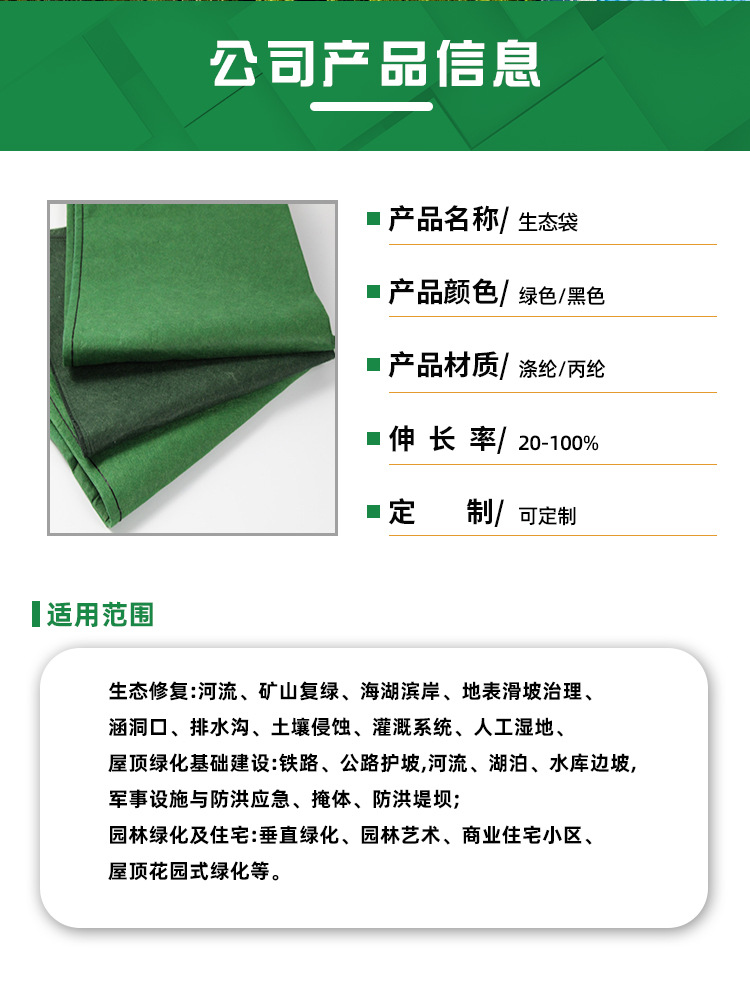
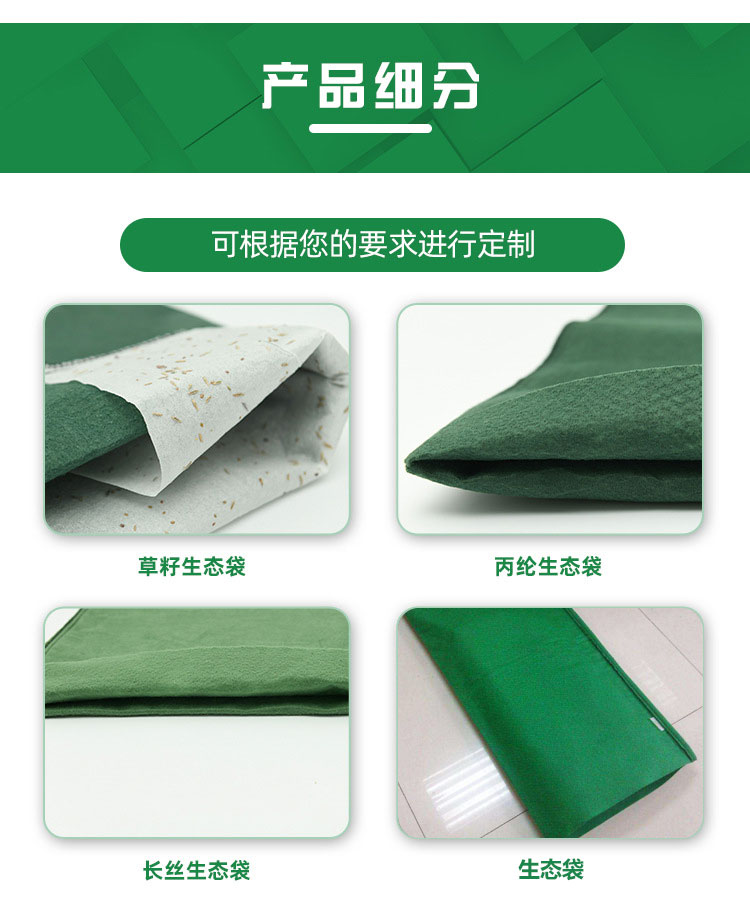
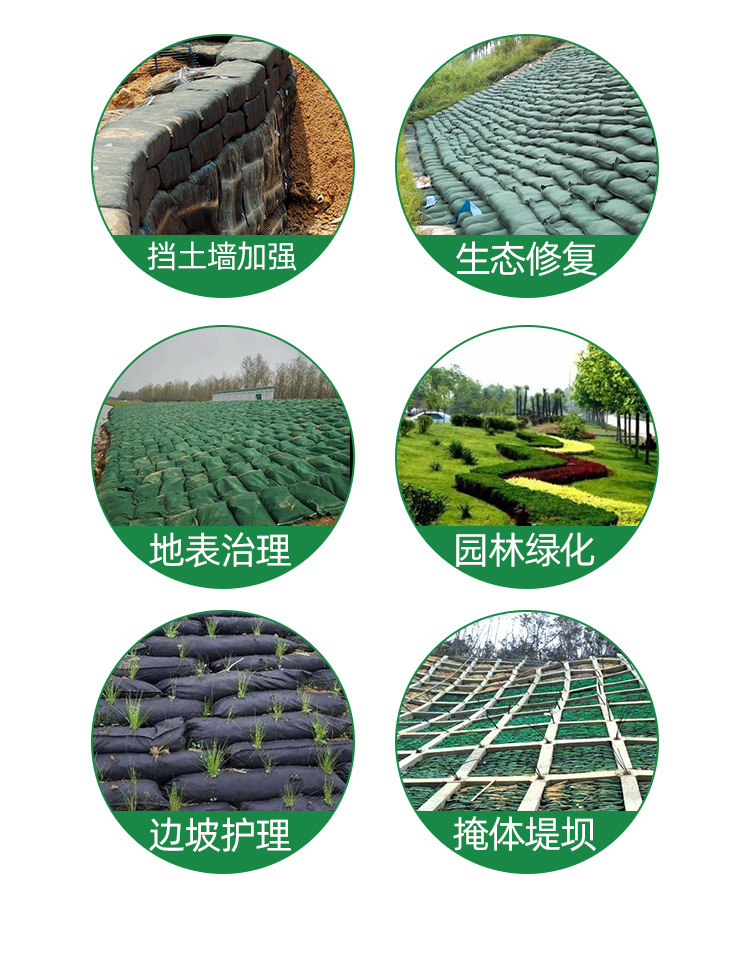
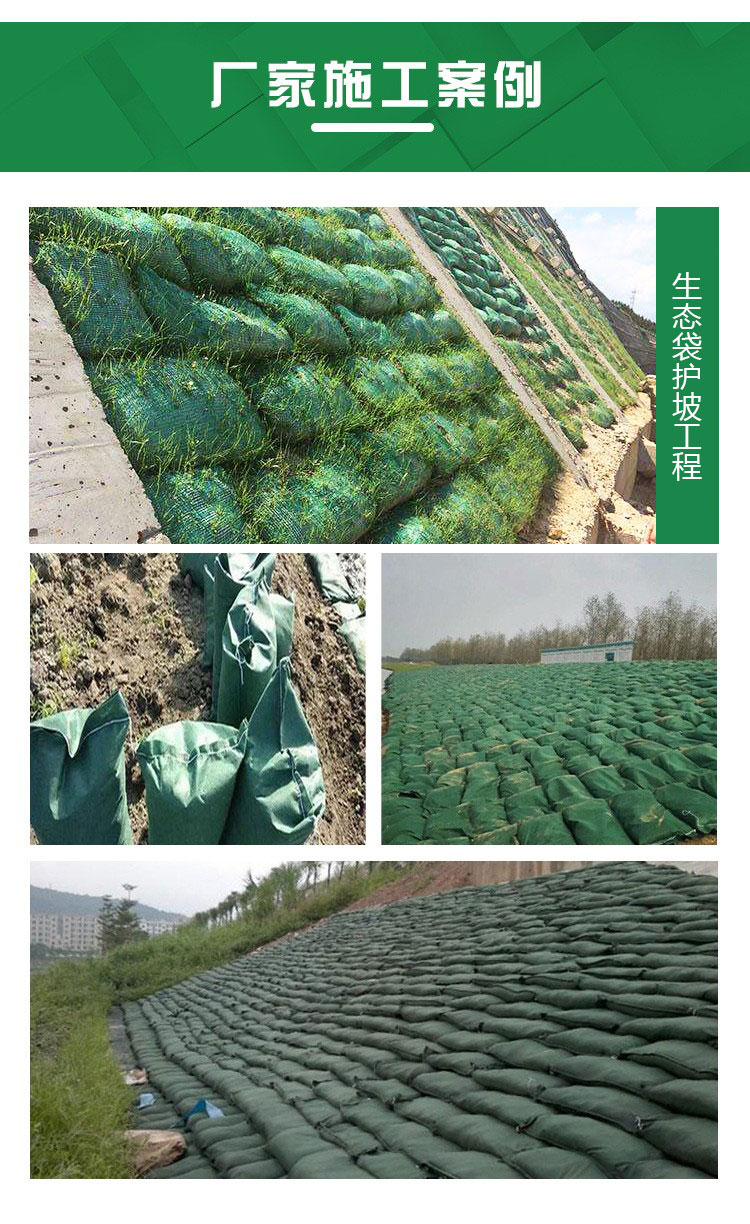
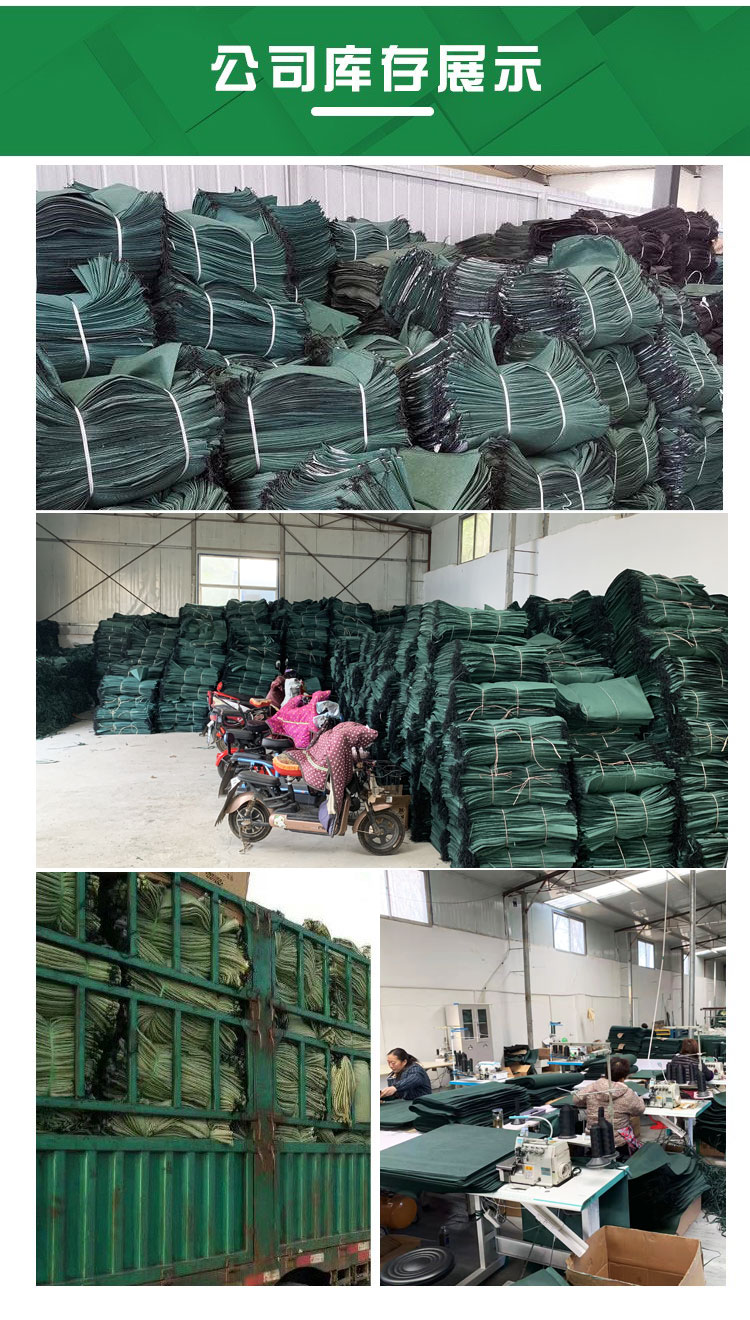
Eco Bag
Define concepts
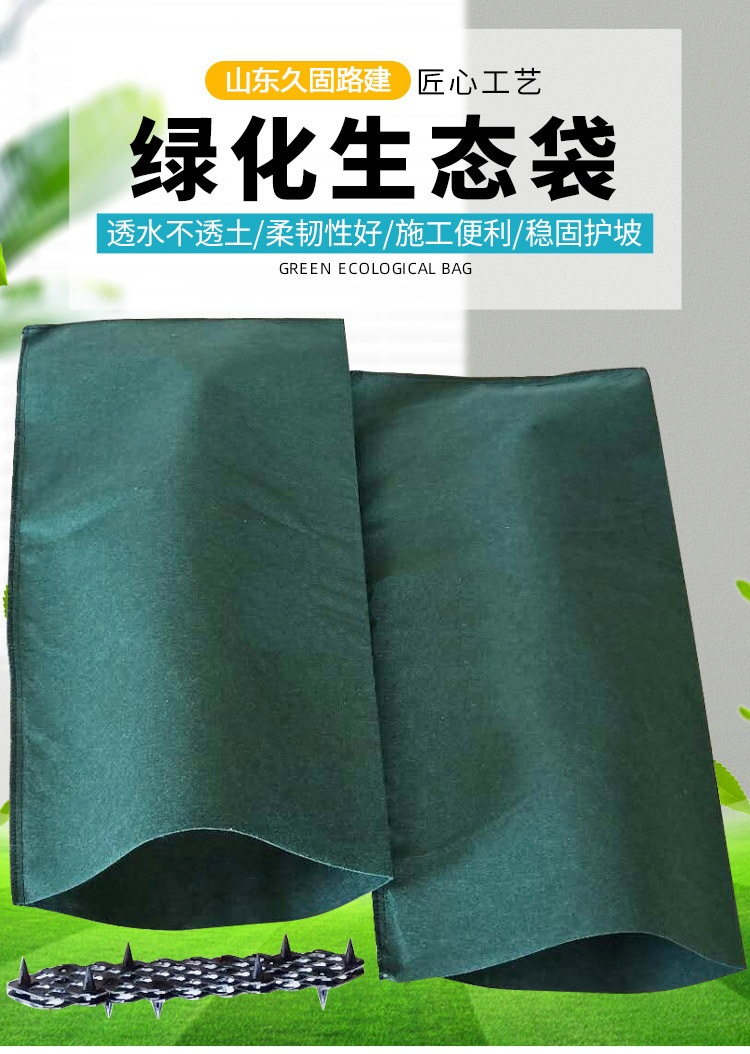
Bags made from double-sided needle-punched nonwoven fabric, which is processed from raw materials such as polypropylene (PP) or polyester fiber (PET). These bags undergo strict selection for indicators such as thickness, unit weight, physical and mechanical properties, appearance, fiber type, stress mode, direction, geometric dimensions, and water permeability, as well as equivalent pore size to meet plant growth requirements. They feature UV resistance, anti-aging, non-toxicity, non-flammability, and the characteristic of not spreading rips, truly achieving zero pollution. Mainly used for constructing flexible ecological slopes. The ecological bag slope protection greening is one of the important construction methods for mountain restoration, highway slope greening, riverbank slope protection, and river management.
Eco-bags feature excellent physical and chemical properties. This specially formulated material can withstand UV degradation, is unaffected by chemical substances in the soil, and does not undergo quality change or rot. It is non-degradable, resistant to pest infestation, anti-aging, non-toxic, and can resist erosion from acids, alkalis, salts, and microbial decomposition. It allows water to pass through but not soil, being plant-friendly and suitable for vegetation greening.
Feature Specifications
Moisture-resistant
Eco-bags are moisture-resistant; they do not absorb water, and in the presence of moisture, the bags remain intact without deforming. They are also non-soluble in contaminated liquids (EPA Method 9090).
Anti-biodegradable and animal-resistant
Eco-bags are made from a special formula material that does not support, absorb, or aid in the growth of fungi. They do not rot, mold, or degrade. Eco-bags are not digestible by insects or related animals and are not a food source for rodents, termites, woodworms, beetles, silverfish moths, and the like.
Anti-ultraviolet high polymer
Eco-bags can withstand high temperatures of up to 150 degrees Celsius without melting and can endure low temperatures down to -40 degrees Celsius.
Ultraviolet (UV) Protection
Eco-bags contain carbon ink and other UV-resistant ingredients.
Here, we illustrate with an example using the equivalent aperture:
One: Hole diameter too large (bag body, material too thin)
Apologies, but there is no Chinese content provided to translate. Please provide the text you would like translated.
A. It hinders the growth of vegetation and the extension of root systems, severely affecting the structural stability of flexible slopes.
C. The increased hydrostatic pressure along the slope due to this will cause the slope to collapse.
Advantages and Features
In slope engineering, this new material can completely replace stones and cement, significantly reducing construction costs. The post-construction slope features a surface that can be vegetated, achieving greening effects on the excavated slope and forming a natural ecological slope. It has a filtering function that allows water to pass through but not soil, resulting in a slope with high permeability. This slope provides strong protection and stabilization against soil erosion, localized mud (and) rock flows, and slope collapses, making it a highly stable and natural slope.
Application Fields
Ecological Restoration
Riverbanks: A natural riparian environment where humans and wildlife coexist
2. Mine Re-Greening: Comprehensive utilization of ore slag, scientific treatment of subsidence areas, greening barren mountains, purifying air and water, pioneering mine ecological restoration, and ushering in a new era of barren mountain re-greening.
3. Coastal and lakefront, slope stabilization, culvert inlets, drainage ditches, soil erosion, irrigation systems, etc.
4. Artificial Wetlands: Ecological Restoration
Roof Greening
Infrastructure
Roadside Slope Protection: Suitable for railway and highway slopes, applicable to excavation and embankment slopes.
2. River and Lake Slope Protection: Suitable for river, lake, and reservoir banks.
3. Special Applications: Military Facilities, Flood Emergency Measures, Shelters, Flood Dams, etc.
Landscape Gardening and Residential
Vertical Greening, Landscape Art
2. Commercial residential complex
3. Rooftop garden greening.
Specs and Parameters
Flat Size Range: (Customizable according to design and engineering requirements)
Fabric GSM Range: Wide range, commonly includes 100g, 125g, 150g, etc.
Fabric tensile strength: ≥4.5 kN/m
Fabric elongation at break: ≥40%
Volume calculation formula for soil in ecological bags after shaping:
Length = Eco Bag length - (12~15) cm.
Width = 0.7 times the width of the biodegradable bags
Height = 0.4 * Eco Bag height
Example: Bags with an outer diameter of 810mm x 430mm will measure approximately 65cm in length, 30cm in width, and 15cm in height after filled with soil (The specifications of the eco-bags and their formed dimensions after filling can be designed according to actual requirements. Allowable deviation: ±2%).
Manufacturing Requirements
Under comprehensive consideration of the requirements from various disciplines such as materials mechanics, hydraulics, biology, and botany, stringent selection has been made for the thickness, unit mass, physical and mechanical properties, shape, fiber type, loading method, direction, geometric dimensions, and permeability of the ecological bags, as well as the equivalent pore size to meet the needs of plant growth. They feature UV resistance, aging resistance, non-toxicity, non-flammability, and the characteristic of not extending cracks, truly achieving zero pollution.
The eco-bags feature targeted water-permeable and soil-impermeable filtration capabilities. They prevent the loss of filling material (a mixture of soil and nutrients) while allowing normal water exchange within the soil. This effectively preserves and timely replenishes the water required for plant growth, being highly friendly to plants, enabling them to grow freely through the bags. The roots penetrate into the engineered foundation soil, where countless anchor rods reinforce the stability between the bags and the main structure, becoming increasingly firm over time, further achieving the purpose of construction stability and slope stabilization, significantly reducing maintenance costs.
Eco-bags with special functional requirements, where the functional design includes the necessity of a flexible slope structure for stability.
Illustrate with an equivalent aperture example:
One: Hole diameter too large (bag body, material too thin)
A. Bagged materials can suffer significant loss when washed away by rain or running water, resulting in a substantial decrease in unit weight and a dramatic change in the mechanical design values, leading to the destruction of the mechanical structure.
B. Bagged materials are prone to significant loss when washed away, with settlement levels greatly exceeding their natural rates, which does not align with the original design plan, leading to collapse.
Two: Aperture too small (material of the bag too thick)
A. It will hinder the growth of vegetation and the extension of root systems, severely affecting the structural stability of flexible slopes.
B. Under certain specifications, the weight of the contents within the bag is a fixed value during the design of the flexible slope mechanical structure. The small aperture reduces its water permeability. When a large amount of moisture seeps in, its unit weight significantly increases, causing the original load-bearing structure to have a higher numerical value, leading to structural deformation and collapse.
C. Increased hydrostatic pressure along the slope, therefore, can lead to slope collapse.

Phone Consultation